
Sodium Naphthalene Sulfonate Formaldehyde Condensate (SNF) CAS 9084-06-4
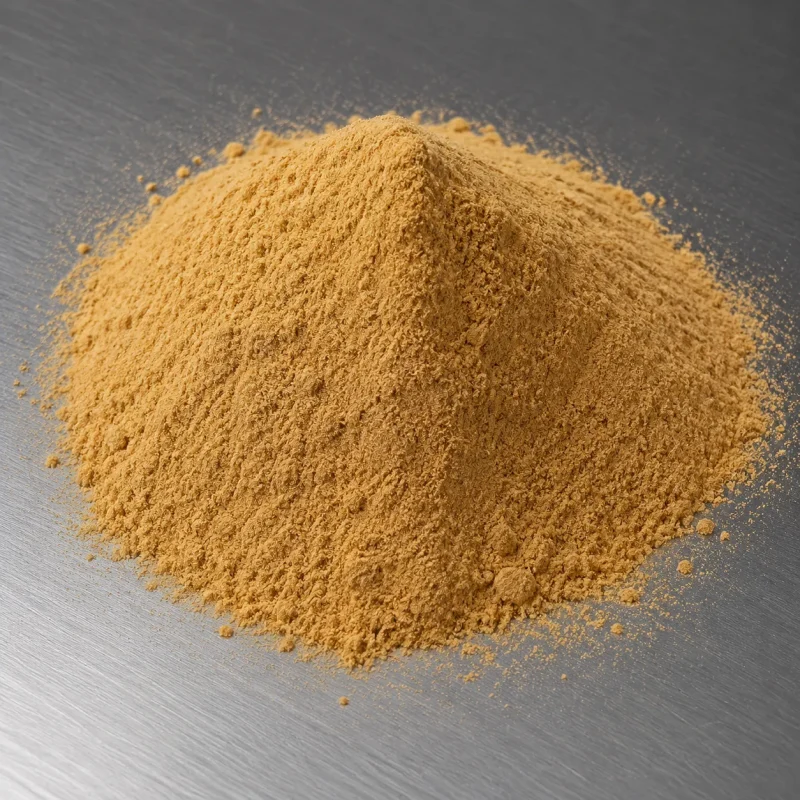
Sodium Naphthalene Sulfonate Formaldehyde Condensate (SNF) is a brown, water-soluble anionic condensate of sulfonated naphthalene and formaldehyde. It works mainly as a high-range water reducer for concrete and a dispersant for dyes, pesticides and refractories. Its methylene-bridged naphthalene backbone with multiple sodium sulfonate sites deflocculates cement or pigment surfaces at 0.4–1.0% dosage. Each lot ships with COA, TDS and SDS.
- CAS No.: 9084-06-4
- Synonyms: Polynaphthalene sulfonate sodium salt; naphthalene superplasticizer; PNS
- EINECS: 500-001-4
- Molecular Formula: (C11H9NaO3S)n
- Molecular Weight: repeat unit 244.24; polymer typical 2,000–10,000
- Appearance: brown powder; dark-brown solution
- Purity: ≥94% solids
- pH (10% aq.): 7.5–9.5
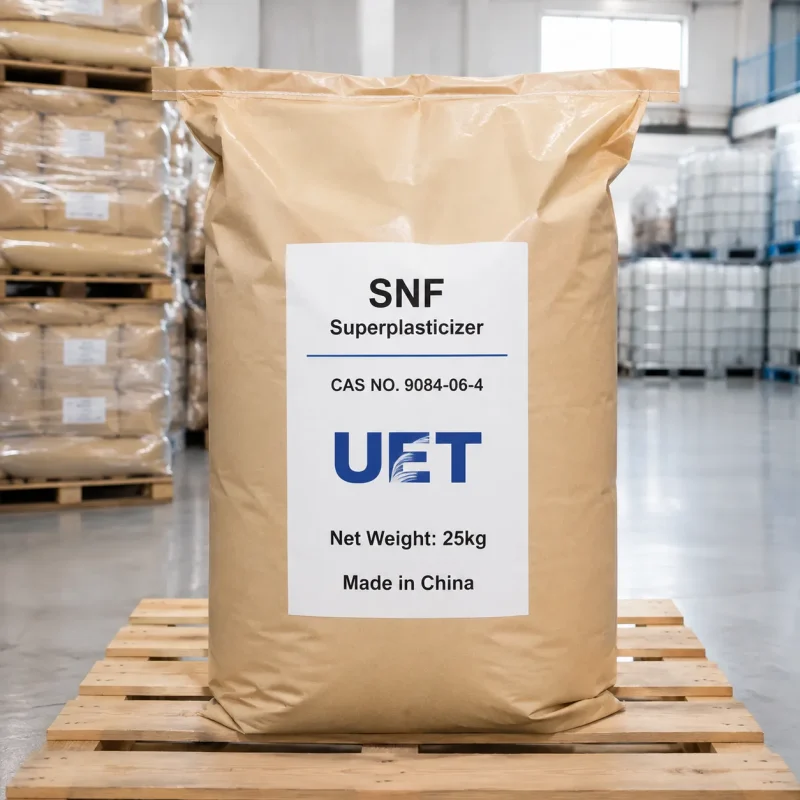
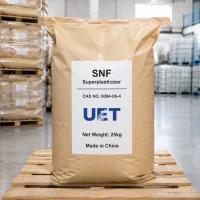
- Packaging: 25 kg (55 lbs) PP bag; 1,000 kg (2,200 lbs) jumbo bag. Custom packaging available upon request.
- Main Applications: concrete superplasticizer; cement grinding aid; dye/pesticide dispersant; refractory additive
Introduction to SNF
SNF is a dark-brown, water-soluble anionic polyelectrolyte made by sulfonating naphthalene, condensing it with formaldehyde, and neutralizing with sodium hydroxide; its chain is built from methylene-bridged naphthalene sulfonate units. The sodium sulfonate sites adsorb onto positively charged cement and pigment surfaces, break up flocs, and release trapped water. Main uses are high-range water reduction in concrete and dispersion in refractory, dye and pesticide systems.
Against lignosulfonate, SNF delivers higher water reduction at 0.5–1.0% by weight of cement—commonly 18–25% versus 8–12%—with lower air entrainment, so it suits high-strength C40–C60 mixes. The practical caution is sulfate and slump loss: sodium sulfate content can vary between batches and accelerate or retard setting depending on cement, while SNF slump retention is weaker than polycarboxylate ether systems, so trial mixing should check 30-, 60- and 90-minute slump in summer.
Key Features of SNF
- Methylene-bridged naphthalene backbone: The rigid aromatic chain holds sulfonate groups apart, helping SNF stay adsorbed on cement particles during early mixing.
- Multiple –SO3Na charge sites: Anionic sites neutralize positive cement surface charges and disperse flocs, giving 18–25% water reduction at 0.5–1.0% by weight of cement.
- Low air entrainment: Normal dosing usually keeps entrained air near 1–3%, so C40–C60 compressive strength loss is limited when dosage is controlled.
- Sodium-salt solubility: The –SO3Na form dissolves directly in mixing water without acid or alkali adjustment, which simplifies admixture tank batching.
- Dispersant transfer beyond cement: The same sulfonate adsorption works on carbon black, clay, dye intermediates and pesticide wettable powders, often at 0.1–1.0% on solid pigment or powder.
SNF Chemical & Physical Properties
| Property | Value |
|---|---|
| Molecular Formula | (C11H9NaO3S)n; repeat unit C11H9NaO3S |
| Molecular Weight | repeat unit 244.24; typical polymer 2,000–10,000, batch-dependent |
| Boiling Point | Not applicable; non-volatile polymeric solid, chars on strong heating |
| Density | Bulk density 0.45–0.65 g/cm³ (28–40 lb/ft³) for powder; 1.15–1.25 g/cm³ (72–78 lb/ft³) for 40–50% solution |
| Flash Point | Not applicable; non-flammable solid powder |
| Solubility | Freely soluble in water; insoluble in methanol, acetone and hydrocarbons |
| Appearance | Yellow-brown to dark-brown powder |
| Solid Content | ≥94% for powder, 105 °C (221 °F) / 2 h typical |
| pH, 10% aqueous solution | 7.5–9.5 |
| Sodium sulfate content | ≤20% typical; confirm COA because sulfate affects setting |
| Chloride | ≤0.1% typical |
| Water reducing rate | 18–25% at 0.5–1.0% by weight of cement, cement- and slump-dependent |
Applications of SNF
Concrete high-range water reducer: SNF adsorbs onto cement grains through –SO3Na groups, disperses flocculated cement and releases trapped water. Typical powder dosage is 0.5–1.0% by weight of cement, giving 18–25% water reduction in C30–C60 mixes. Verify slump retention and setting time with the actual cement under ASTM C494 or GB 8076.
Cement grinding aid: In ball mills, SNF reduces surface-charge agglomeration and coating on grinding media, improving fine-particle dispersion. Dosage is commonly 0.02–0.1% by weight of clinker. The effect depends on mill temperature and gypsum form, so check 3-day strength and setting before scaling up.
Refractory castables and ceramics: The anionic sulfonate sites adsorb on alumina, silica and magnesia fines, deflocculating suspensions and lowering mixing water by 5–15%. Typical addition is 0.05–0.3% of dry solids. Lower water demand helps higher green density and less shrinkage cracking after drying.
Dye and pigment dispersions: SNF acts as a milling dispersant by surrounding pigment particles with charged sulfonate layers, reducing viscosity and preventing settling. For disperse dyes or carbon black, common dosage is 0.2–2.0% on pigment solids, but optimum depends on pigment surface and milling energy.
Pesticide wettable powders: In WP and WG formulations, SNF provides particle-particle repulsion and wetting after dilution, keeping hydrophobic active-ingredient powders suspended. Typical use is 2–8% of the formulation; compatibility with other surfactants must be tested because salts can screen charge.
Storage & Safety Precautions for SNF
Storage: Store powder below 35 °C (95 °F) in sealed, dry PP bags with an intact PE liner. Keep bags on pallets, away from container walls, strong acids and strong oxidizers. SNF powder is hygroscopic; moisture uptake causes caking, dosing error and lower apparent solids. Once a bag is opened, reseal it or transfer it to a closed hopper within the same shift. Liquid SNF should be kept above 0 °C (32 °F) and agitated before use; if crystals or sediment appear, warm to 30–40 °C (86–104 °F) and recheck solids. Batch sulfate and pH may drift slightly, so retest before use in sensitive concrete or pigment mills.
Safety: SNF powder is not normally classified as dangerous for transport, but dust can irritate eyes and respiratory tract. Use safety goggles, nitrile gloves and a P2/N95 dust mask when handling open bags. For spills, collect dry material first, then wash the area with water; the wet film can be slippery.
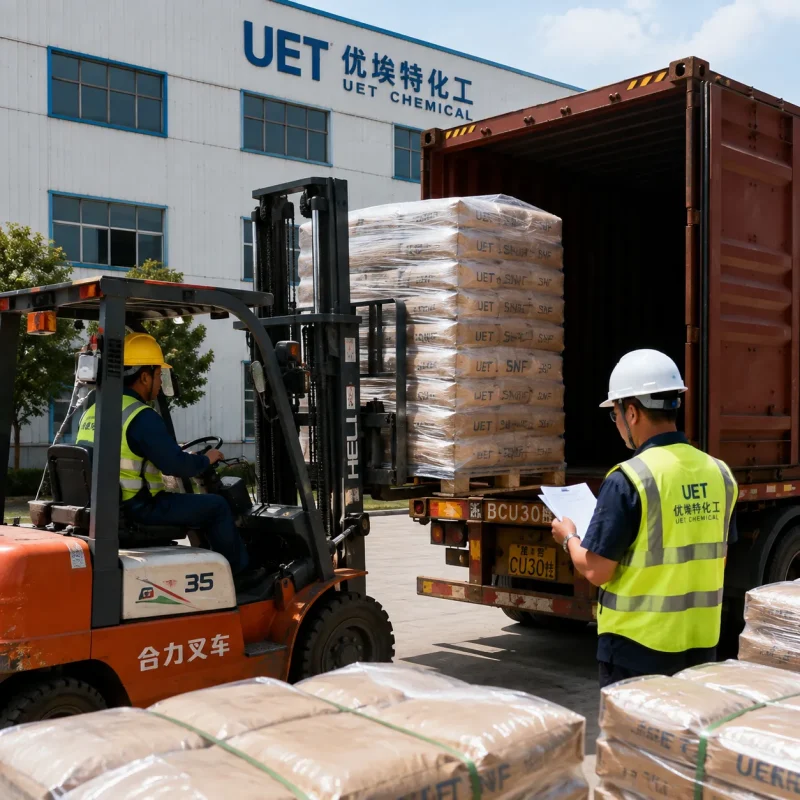
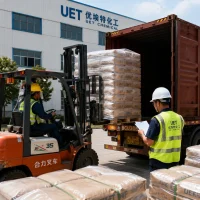
Transport: Non-DG. For sea shipments, use dry containers with desiccant if transit exceeds 20 days or humidity is high. Check bag weight and liner integrity before loading; a pinhole liner can let humidity produce lumps that block screw feeders.
SNF FAQ
Q: How does CAS 9084-06-4 SNF reduce mixing water, and why does the same dosage behave differently from one cement to another?
A: SNF adsorbs via –SO3Na groups, freeing water. Use 0.5–1.0% bwoc for 18–25% reduction. Cement C3A, sulfate and temperature alter adsorption. Always trial per ASTM C494 or GB 8076.
Q: Is SNF powder better than liquid SNF for long-distance shipping and automatic batching?
A: Powder has ≥94% solids, lower freight, better stacking; needs dry feeding. Liquid 40–50% dissolves fast but ships water; heat or agitate in cold weather. Always check for lumps.
Q: Which COA values should QA retest before accepting SNF used in concrete?
A: Retest solids, pH, sulfate and chloride. Solids <93% shows moisture uptake; pH outside 7.5–9.5 signals neutralization issues. Sulfate jumps alter setting. Confirm via ASTM C494.
Related products
Manufacturer & Exporter Since 2006
Get Tailored Chemical Raw Material Solutions — Reply Within 1 Hour
Factory-direct pricing, stable high-purity supply and complete compliance documentation for your industrial formulations.
- 1000+Products
- 200+QC Protocols
- 7–15Days Delivery
- Factory-Direct Pricing
- COA / TDS / SDS Included
- Free Samples for Testing
- 40+ Export Countries
Request a Free Quote
Our engineers reply within 1 hour during GMT+8 business hours.
Please include in your inquiry:
- Product name or CAS number
- Required quantity
- Destination country or port
- Preferred packaging