
Triethyl Phosphate (TEP) CAS 78-40-0
Triethyl Phosphate (TEP) is a multifunctional phosphate ester supplied as a colorless to pale yellow transparent liquid. With high phosphorus content, it functions as an effective flame retardant additive, plasticizer and polar solvent for polyurethane foam, cellulose coatings and agrochemical manufacturing. UETChem supplies high-purity TEP with tight acidity and moisture controls for consistent formulation performance. Each shipment includes COA, TDS, SDS.
- CAS No: 78-40-0
- Synonyms: TEP; Phosphoric acid triethyl ester; Ethyl phosphate
- EC Number: 201-115-0
- Molecular Formula: C₆H₁₅O₄P
- Molecular Weight: 182.16 g/mol
- Appearance: Colorless to pale yellow transparent liquid
- Purity (GC): ≥ 99.5%
- Phosphorus Content: ~17 wt%
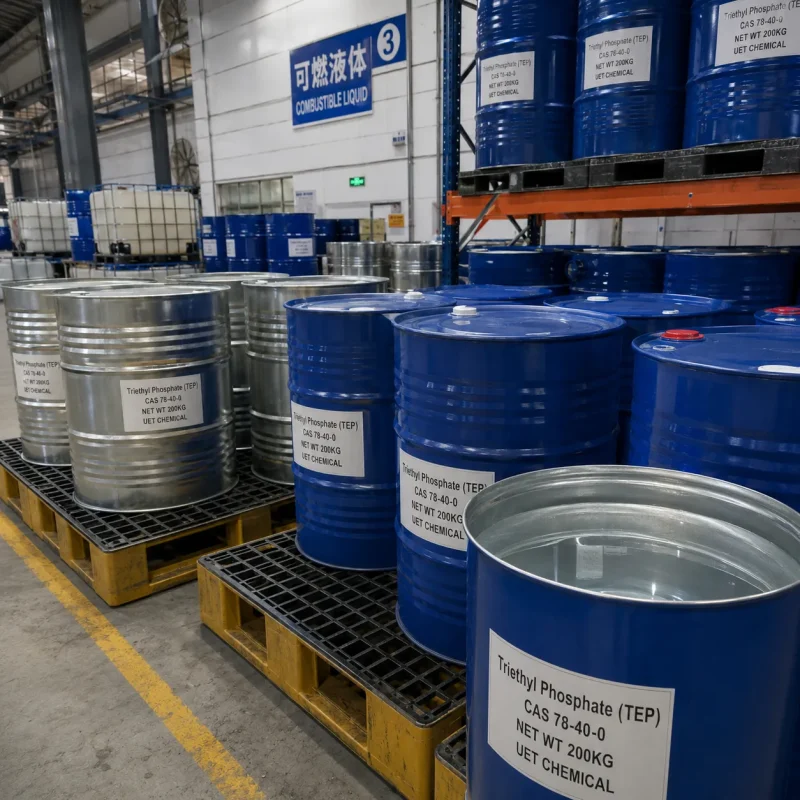
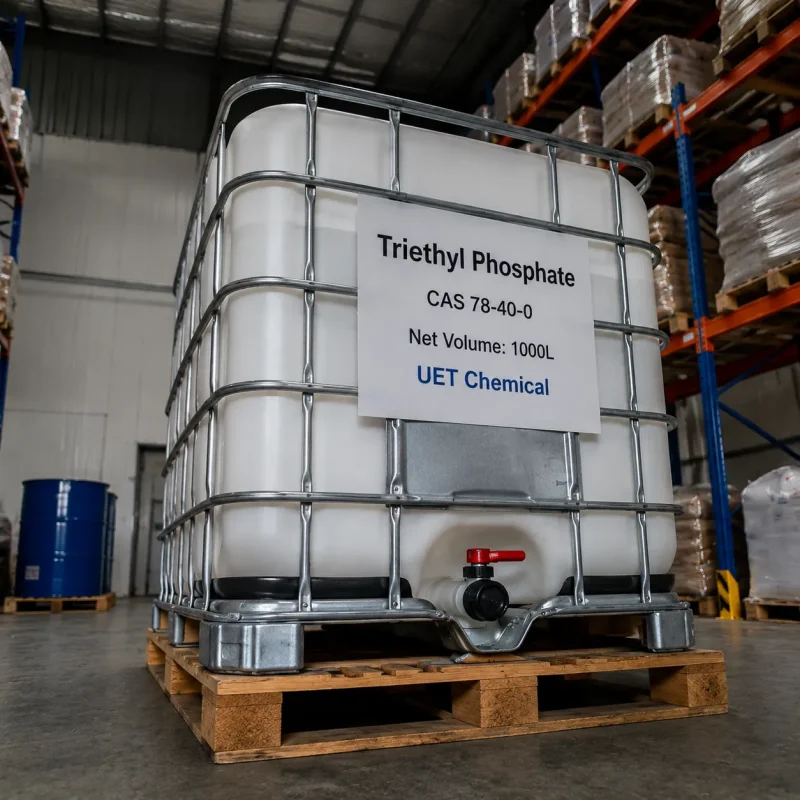
- Packaging: 200 kg galvanized steel drum; 1000 kg IBC tote. Custom packaging available.
- Main Applications: PU foam flame retardant, cellulose plasticizer, polymer solvent, pesticide intermediate
Introduction to Triethyl Phosphate
Triethyl Phosphate (TEP) is a fully esterified phosphate triester synthesized from phosphoric acid and ethanol. It is a neutral, non-corrosive liquid with approximately 17% phosphorus content. During combustion, it decomposes to release phosphoric acid and phosphorus radicals, which quench gas-phase free radicals and promote condensed-phase char formation for dual-action flame protection.
Beyond flame retardant uses, it acts as an efficient plasticizer for nitrocellulose and cellulose acetate lacquers, lowering glass transition temperature and improving film flexibility. It is fully miscible with water and most organic solvents, allowing straightforward incorporation into both solvent-based and aqueous systems. It remains stable at neutral pH but may hydrolyze under prolonged exposure to strong acids or bases at elevated temperatures.
Triethyl Phosphate Chemical & Physical Properties
| Property | Value |
|---|---|
| Molecular Formula | C₆H₁₅O₄P |
| Molecular Weight | 182.16 g/mol |
| Boiling Point | 215 °C at 760 mmHg |
| Density (20 °C) | 1.069 – 1.073 g/cm³ |
| Flash Point (Closed Cup) | 116 °C |
| Solubility | Miscible with water and most organic solvents |
| Acidity (as H₃PO₄) | ≤ 0.05% |
| Water Content | ≤ 0.2% |
Applications of Triethyl Phosphate
Polyurethane foam flame retardancy
Added to polyol premixes for flexible and rigid PU foams. It delivers dual-action flame protection by quenching gas-phase radicals and building surface char, helping foams meet furniture and building fire safety standards.
Textile & nonwoven flame retardant coatings
Formulated with acrylic or PU binders for back-coating of upholstery and curtain fabrics. It imparts flame retardant performance without yellowing during curing, preserving fabric appearance and hand feel.
Cellulose ester plasticization
Used as a plasticizer for nitrocellulose and cellulose acetate lacquers, inks and coatings. It reduces film brittleness, improves substrate adhesion and enhances low-temperature flexibility of finished films.
Polymer solvent & agrochemical intermediate
Serves as a high-boiling polar solvent for resin synthesis. In agrochemical manufacturing, it acts as a key ethylating agent for organophosphate intermediate production.
Storage & Safety Precautions for Triethyl Phosphate
- Store in tightly sealed galvanized steel drums or IBC totes at 5–35 °C in a cool, dry warehouse. Protect from direct sunlight and moisture ingress. Keep containers sealed when not in use to prevent slow hydrolysis.
- Causes serious eye irritation and may cause mild skin irritation with prolonged contact. Wear chemical splash goggles, nitrile gloves and protective clothing during handling. Flush eyes immediately with water for 15 minutes if contact occurs.
- Classified as a combustible liquid. Keep segregated from strong oxidizers, acids and bases during transport and storage.
- Verify purity, acidity and water content upon receipt. Test compatibility with base formulations before full-scale production. Reject lots showing cloudiness, sedimentation or out-of-spec pH.
Triethyl Phosphate FAQ
Q: How does TEP compare to TCPP in PU foam flame retardancy?
A: TEP delivers faster gas-phase radical quenching for quicker ignition resistance. TCPP provides more condensed-phase char promotion but can increase smoke and foam shrinkage. Blending both balances performance and foam physical properties.
Q: Can TEP be used in aqueous polyurethane dispersions?
A: Yes. TEP is fully water-miscible and stable in aqueous PU systems at pH 5–9 and temperatures below 60 °C. Monitor pH and viscosity regularly for long-term warm storage.
Q: Why does foam shrink at high TEP loadings?
A: Excess TEP plasticizes foam cell walls and reduces elastic modulus, which can cause collapse during curing. Reduce loading or adjust surfactant levels to reinforce cell structure.
Related products
Manufacturer & Exporter Since 2006
Get Tailored Chemical Raw Material Solutions — Reply Within 1 Hour
Factory-direct pricing, stable high-purity supply and complete compliance documentation for your industrial formulations.
- 1000+Products
- 200+QC Protocols
- 7–15Days Delivery
- Factory-Direct Pricing
- COA / TDS / SDS Included
- Free Samples for Testing
- 40+ Export Countries
Request a Free Quote
Our engineers reply within 1 hour during GMT+8 business hours.
Please include in your inquiry:
- Product name or CAS number
- Required quantity
- Destination country or port
- Preferred packaging