
Glycidyl Methacrylate (GMA) CAS 106-91-2
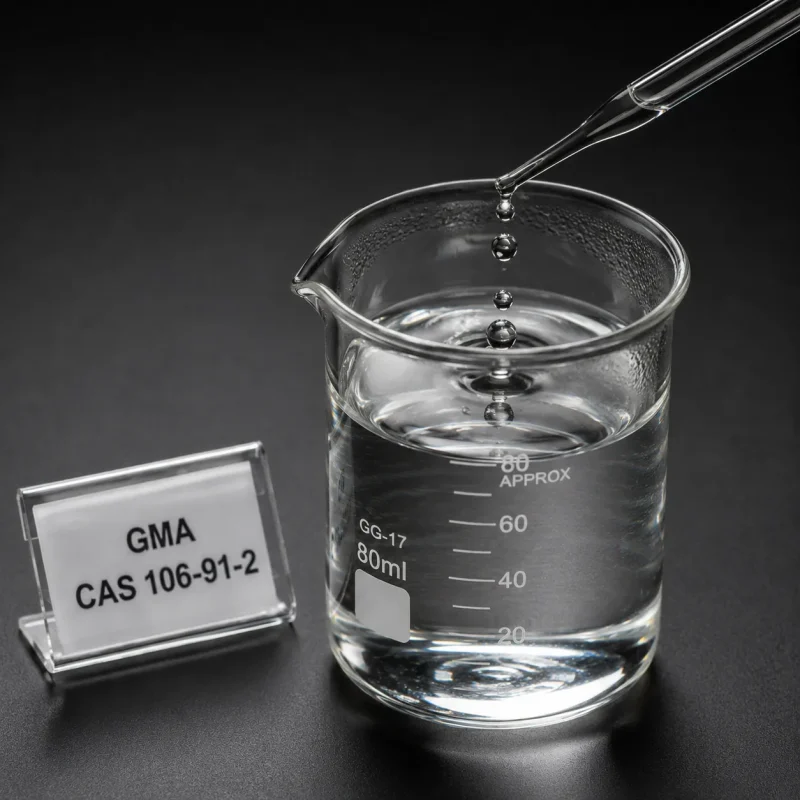
Glycidyl Methacrylate (GMA) is a dual-functional monomer bearing both epoxide and methacrylate groups supplied as a colorless to pale yellow transparent liquid. The epoxide ring enables post-polymerization crosslinking and adhesion promotion, while the methacrylate double bond participates in free-radical polymerization. Core uses include coating adhesion promotion, polymer grafting, dental composite resins, and reactive diluent formulation. Each shipment includes COA, TDS, and SDS.
- CAS No: 106-91-2
- Synonyms: GMA, 2,3-Epoxypropyl methacrylate, Glycidyl 2-methylacrylate, Methacrylic acid 2,3-epoxypropyl ester
- EC Number: 203-441-9
- Molecular Formula: C7H10O3
- Molecular Weight: 142.15 g/mol
- Appearance: Colorless to pale yellow transparent liquid
- Purity (GC): ≥ 97.0%
- Inhibitor: MEHQ 200 ± 50 ppm (standard grade); inhibitor-free available for polymerization
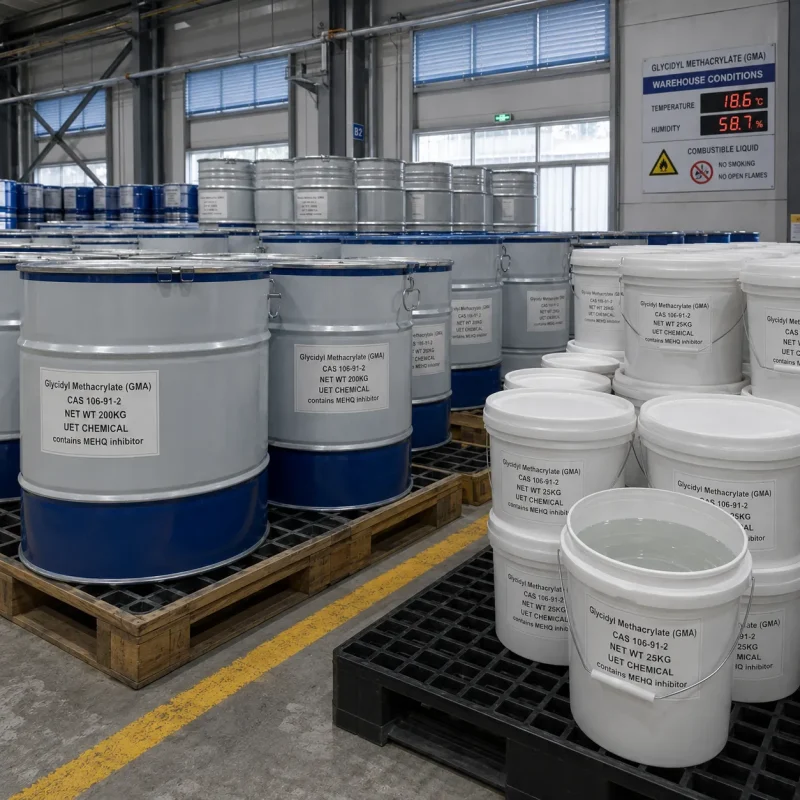
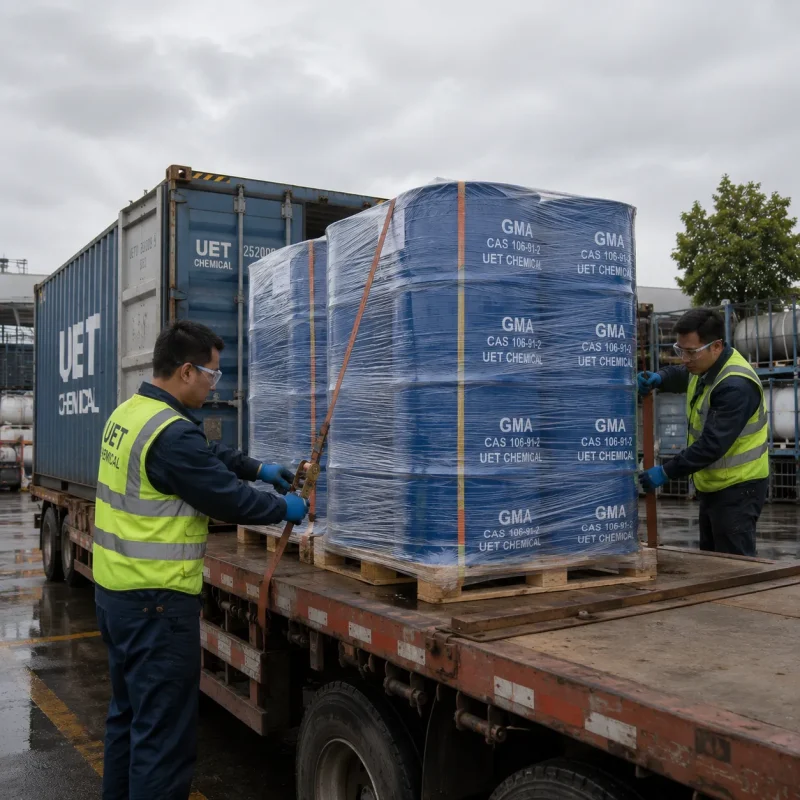
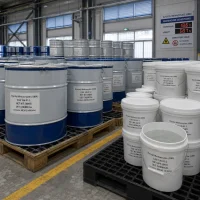
- Packaging: 25 kg (55 lb) galvanized steel drum; 200 kg (440 lb) galvanized steel drum; 1000 kg (2200 lb) IBC tote. Custom packaging available upon request.
- Main Applications: Adhesion promoter in coatings and adhesives, polymer grafting monomer, dental composite resin, UV-curable reactive diluent
Introduction to Glycidyl Methacrylate
Glycidyl Methacrylate (GMA) is an α,β-unsaturated ester carrying a pendant oxirane (epoxide) ring. The methacrylate C=C bond polymerizes via free-radical initiation alongside styrene, acrylates, and vinyl monomers, while the epoxide ring remains intact for subsequent thermal or catalytic crosslinking with amines, carboxylic acids, and anhydrides. This orthogonal reactivity makes GMA the preferred functional monomer for introducing reactive sites into otherwise inert polyolefin, polyester, and acrylic backbones.
In coating formulations, 2–10 wt% GMA incorporation dramatically improves adhesion to metals, glass, and polyolefins by forming covalent bonds with surface hydroxyl groups during bake curing. The critical processing parameter is temperature control: GMA homopolymerizes exothermically above 80 °C (176 °F) and the epoxide ring opens irreversibly in the presence of strong acids or bases. Store below 25 °C (77 °F), away from radical initiators, amines, and acidic contaminants. Inhibitor (MEHQ) must be maintained at 200 ppm minimum for storage stability; remove by passing through basic alumina before anionic or UV-cure applications.
Key Features of Glycidyl Methacrylate
- Dual orthogonal reactivity. Methacrylate C=C participates in radical polymerization at 60–90 °C (140–194 °F), while the epoxide ring crosslinks with amines and acids at 120–180 °C (248–356 °F), enabling sequential curing without mutual interference.
- Superior adhesion promotion. 2–5 wt% GMA in acrylic or polyester coatings increases cross-hatch adhesion from Grade 3 to Grade 0 (ISO 2409) on aluminum and galvanized steel by forming covalent ester linkages with surface oxides.
- Efficient polymer grafting. Grafting efficiency of 15–40% onto polyethylene and polypropylene via melt extrusion at 180–220 °C (356–428 °F) with peroxide initiators, raising surface energy from 31 to 45 mN/m for printable and coatable films.
- Low viscosity reactive diluent. Viscosity 4.5–6.0 mPa·s at 25 °C (77 °F) reduces formulation viscosity without volatile organic compounds (VOC), maintaining 100% solids content in UV-curable coatings and adhesives.
- Biocompatible dental resin component. Used at 10–30 wt% in light-cured dental composites alongside Bis-GMA and UDMA, providing reactive sites for silane coupling with silica fillers and improving flexural strength by 20–35%.
Glycidyl Methacrylate Chemical & Physical Properties
| Property | Value |
|---|---|
| Molecular Formula | C7H10O3 |
| Molecular Weight | 142.15 g/mol |
| Boiling Point | 189 °C (372 °F) at 760 mmHg; 95 °C (203 °F) at 25 mmHg |
| Density | 1.065 – 1.075 g/cm³ (66.5 – 67.1 lb/ft³) at 20 °C (68 °F) |
| Refractive Index | n20/D: 1.448 – 1.452 |
| Flash Point | 77 °C (171 °F) (closed cup) |
| Viscosity | 4.5 – 6.0 mPa·s at 25 °C (77 °F) |
| Solubility | Slightly soluble in water (< 2 g/L at 20 °C / 68 °F); miscible with acetone, THF, toluene, and most acrylate monomers. |
| Epoxide Equivalent | 140 – 146 g/eq |
| Acidity (as methacrylic acid) | ≤ 0.2% |
| Water Content | ≤ 0.2% (Karl Fischer) |
| Color (APHA) | ≤ 30 |
Applications of Glycidyl Methacrylate
Adhesion promoter in industrial coatings: Incorporate 2–10 wt% GMA into acrylic, polyester, or epoxy resin blends. During bake curing at 130–160 °C (266–320 °F), the epoxide ring reacts with surface hydroxyls on aluminum, zinc, and glass, forming covalent bonds that eliminate the need for separate primer layers. Particularly effective in automotive OEM clearcoats and coil coatings.
Polymer grafting and compatibilization: Melt-blend 0.5–3 phr GMA with 0.1–0.5 phr dicumyl peroxide into polyethylene or polypropylene via twin-screw extrusion at 190–210 °C (374–410 °F). Grafted polyolefins serve as compatibilizers in PA/PP blends and tie-layer adhesives in multilayer packaging films, improving peel strength by 200–400%.
Dental composite resins: Use 10–30 wt% GMA as a reactive diluent in Bis-GMA/UDMA/TEGDMA formulations. The epoxide group couples with silane-treated silica or zirconia fillers during mixing, while the methacrylate group copolymerizes under blue-light (460–480 nm) curing, achieving flexural strength > 120 MPa and water sorption < 30 µg/mm³ per ISO 4049.
UV-curable inks and adhesives: Add 5–20 wt% GMA to oligomer blends (epoxy acrylates, urethane acrylates) to reduce viscosity below 500 mPa·s without styrene or NVP. The epoxide functionality post-crosslinks with cationic UV initiators in hybrid cure systems, improving chemical resistance and adhesion to flexible packaging substrates.
Storage & Safety Precautions for Glycidyl Methacrylate
- Storage: Store in tightly sealed galvanized steel drums or IBC totes at 5–25 °C (41–77 °F) in a cool, dry, well-ventilated warehouse. Protect from direct sunlight and heat sources. GMA undergoes slow exothermic homopolymerization above 40 °C (104 °F); maintain inhibitor (MEHQ) at ≥ 200 ppm. Do not store near amines, strong acids, peroxides, or radical initiators. Shelf life 12 months when stored correctly.
- Safety: Causes skin sensitization (GHS Skin Sens. 1), serious eye irritation (Eye Irrit. 2), and may cause respiratory irritation. Wear nitrile gloves, chemical splash goggles, and protective apron during drum transfer. In case of skin contact, wash immediately with soap and water—do not use solvents. Repeated exposure may cause allergic contact dermatitis. Ensure local exhaust ventilation at dispensing stations.
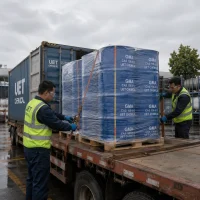
- Transport: GMA is classified as UN 3272, Class 3 (Flammable Liquid), Packing Group III under IATA/IMDG due to flash point 77 °C (171 °F). Verify carrier-specific requirements for bulk IBC shipments. Keep segregated from oxidizers, amines, and acids during transit. Avoid prolonged exposure to temperatures above 35 °C (95 °F) in shipping containers.
- QC note: Verify GC purity (≥ 97.0%), epoxide equivalent (140–146 g/eq), and inhibitor content (MEHQ 200 ± 50 ppm) upon receipt. Test color (≤ 30 APHA) and water content (≤ 0.2%). Reject lots showing yellow-brown discoloration, gelation, or viscosity increase above 8 mPa·s, which indicate partial polymerization or hydrolysis.
Glycidyl Methacrylate FAQ
Q: Why does GMA need inhibitor (MEHQ), and when must it be removed?
A: MEHQ (200 ppm) prevents spontaneous radical polymerization during storage and transport. It must be removed by passing through basic alumina or washing with 5% NaOH when GMA is used in anionic polymerization, UV-cationic hybrid systems, or applications where trace phenolic inhibitors interfere with cure speed or optical clarity.
Q: Can GMA replace HEMA (hydroxyethyl methacrylate) in adhesion formulations?
A: GMA provides superior adhesion to metals and glass because the epoxide ring forms covalent bonds with surface hydroxyls at elevated temperatures, whereas HEMA relies on weaker hydrogen bonding. However, GMA is more hydrophobic and may require adjustment of water sensitivity in humid-environment applications.
Q: My GMA drum arrived with a yellow color and higher viscosity. Is it still usable?
A: Yellow color and viscosity increase above 6 mPa·s indicate partial thermal polymerization or epoxide hydrolysis. Run a GC assay; if purity drops below 95% or epoxide equivalent exceeds 150 g/eq, reject the lot. Prevent recurrence by storing below 25 °C (77 °F) and verifying drum seal integrity before acceptance.
Related products
Manufacturer & Exporter Since 2006
Get Tailored Chemical Raw Material Solutions — Reply Within 1 Hour
Factory-direct pricing, stable high-purity supply and complete compliance documentation for your industrial formulations.
- 1000+Products
- 200+QC Protocols
- 7–15Days Delivery
- Factory-Direct Pricing
- COA / TDS / SDS Included
- Free Samples for Testing
- 40+ Export Countries
Request a Free Quote
Our engineers reply within 1 hour during GMT+8 business hours.
Please include in your inquiry:
- Product name or CAS number
- Required quantity
- Destination country or port
- Preferred packaging