
1,6-Hexanediol (HDO) CAS 629-11-8
1,6-Hexanediol (HDO) is a primary aliphatic diol supplied as white crystalline flakes or clear liquid. Featuring a linear six-carbon backbone with terminal primary hydroxyl groups, it imparts exceptional flexibility, hydrophobicity, and chemical resistance to polymer networks. Core uses include polyurethane elastomers, UV-curable acrylate monomers, and high-performance polyester resins. Each shipment includes COA, TDS, and SDS.
- CAS No: 629-11-8
- Synonyms: HDO, 1,6-Dihydroxyhexane, Hexamethylene glycol
- EC Number: 211-070-9
- Molecular Formula: C6H14O2
- Molecular Weight: 118.17 g/mol
- Appearance: White crystalline flakes or colorless liquid (above 42 °C / 108 °F)
- Purity (GC): ≥ 99.0%
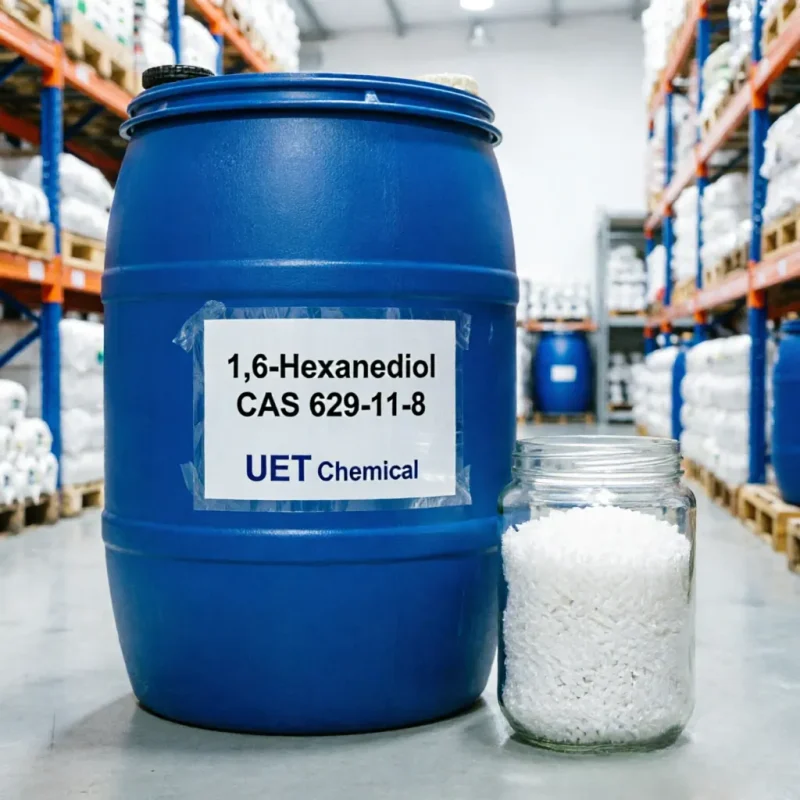
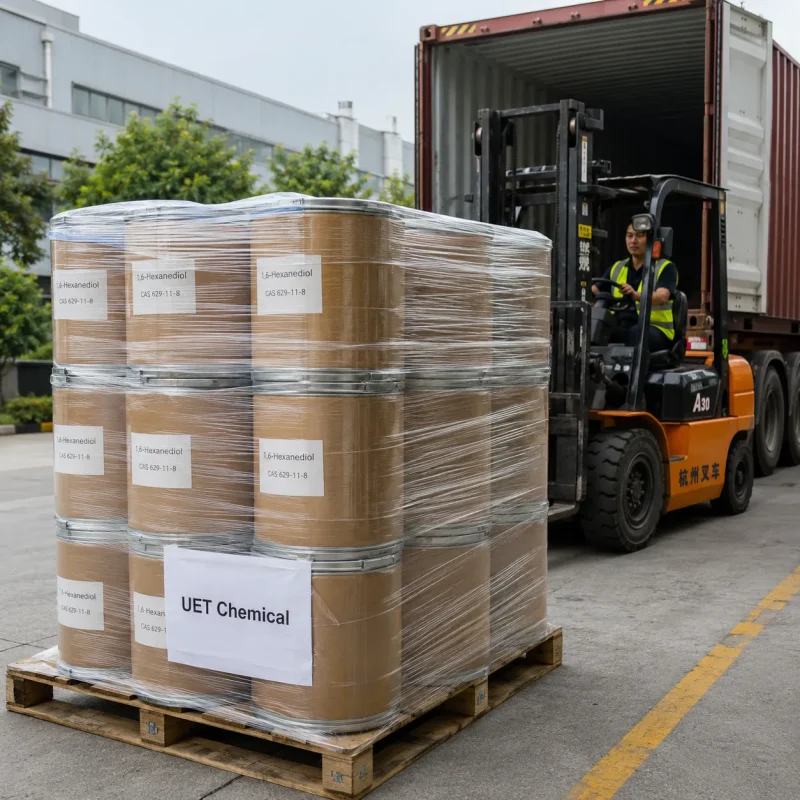
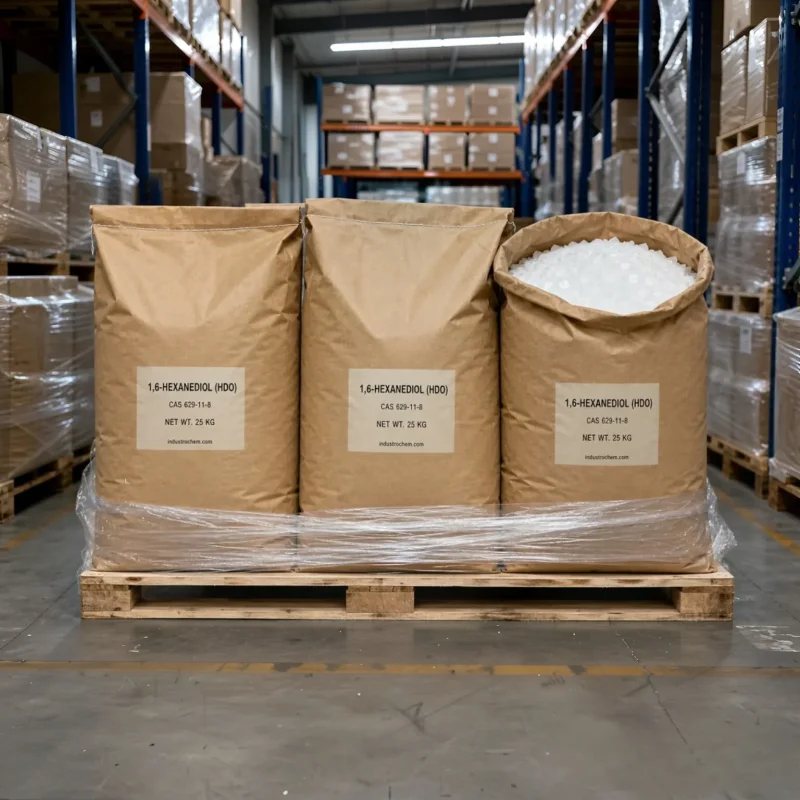
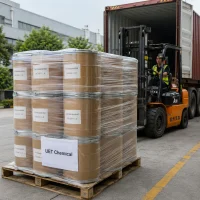
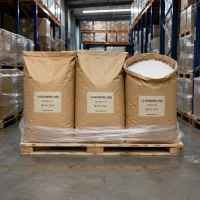
- Packaging: 25 kg (55 lb) PP woven bag with PE liner; 200 kg (440 lb) HDPE drum; 1000 kg (2200 lb) IBC tote. Custom packaging available upon request.
- Main Applications: Polyurethane chain extender, HDDA precursor for UV coatings, polyester resin monomer, synthetic lubricants, adhesives and sealants
Introduction to 1,6-Hexanediol
1,6-Hexanediol (HDO) is a versatile, straight-chain aliphatic diol widely utilized as a critical building block in advanced polymer chemistry. Its symmetrical structure and terminal primary hydroxyl groups provide high reactivity with isocyanates and carboxylic acids. The six-carbon aliphatic chain introduces excellent flexibility, low glass transition temperatures (Tg), and superior hydrolytic stability to the resulting polymer matrices, making it superior to shorter-chain glycols like ethylene glycol or 1,4-butanediol for demanding outdoor and industrial applications.
Due to its melting point of approximately 42 °C (108 °F), HDO is commercially supplied either as crystalline flakes in bags or as a molten liquid in heated drums and IBC totes. It is highly hygroscopic in the molten state; therefore, drums and tanks must be kept tightly sealed and blanketed with dry nitrogen if stored for extended periods. Store flake bags in a cool, dry warehouse to prevent caking and premature melting during summer transit.
Key Features of 1,6-Hexanediol
- Superior polymer flexibility. The linear six-carbon spacer acts as an internal plasticizer in polyurethane and polyester backbones, yielding elastomers and coatings with high impact resistance and elongation at break.
- Excellent hydrophobicity and weatherability. Imparts strong water resistance and UV stability to coil coatings, automotive paints, and exterior adhesives, outperforming shorter-chain diols.
- High reactivity for crosslinking. Primary hydroxyl groups ensure rapid and efficient esterification and urethane formation, reducing catalyst requirements and curing times in manufacturing.
- Key precursor for UV-curable acrylates. Serves as the foundational raw material for synthesizing 1,6-Hexanediol Diacrylate (HDDA), a highly reactive, low-viscosity crosslinking monomer essential for UV-cured wood, plastic, and metal finishes.
- Low toxicity and low VOC profile. Exhibits a favorable environmental and safety profile compared to aromatic or halogenated alternatives, supporting the formulation of eco-friendly, high-solid coatings.
1,6-Hexanediol Chemical & Physical Properties
| Property | Value |
|---|---|
| Molecular Formula | C6H14O2 |
| Molecular Weight | 118.17 g/mol |
| Melting Point | 42 – 43 °C (108 – 109 °F) |
| Boiling Point | 250 °C (482 °F) |
| Density | 0.96 g/cm³ (liquid at 50 °C / 122 °F); bulk flake density approx. 0.80 g/cm³ (50.0 lb/ft³). |
| Solubility in Water | Highly soluble, miscible in warm water; soluble in alcohols, esters, and ketones. |
| Hydroxyl Value | 930 – 960 mg KOH/g |
| Moisture Content | ≤ 0.10% |
| Acid Value | ≤ 0.10 mg KOH/g |
| Color (APHA) | ≤ 10 |
Applications of 1,6-Hexanediol
Polyurethane elastomers and CASE (Coatings, Adhesives, Sealants, Elastomers): Used as a chain extender or polyol component in the synthesis of thermoplastic polyurethanes (TPU) and PU dispersions. The HDO segment provides excellent abrasion resistance, flexibility, and hydrolytic stability for synthetic leather, automotive interiors, and industrial sealants.
UV-curable coatings and inks: Reacted with acrylic acid to manufacture 1,6-Hexanediol Diacrylate (HDDA). HDDA is a staple reactive diluent in UV-curable formulations, providing fast cure speeds, high crosslink density, and excellent adhesion to plastics and metal substrates without emitting VOCs.
Polyester resins and coil coatings: Condensed with dicarboxylic acids (like adipic or terephthalic acid) to produce durable, weather-resistant polyester resins. These resins are widely used in powder coatings, architectural paints, and exterior wood finishes where long-term gloss retention and flexibility are required.
Synthetic lubricants and greases: Esterified with synthetic fatty acids to produce high-performance ester base oils. These synthetic lubricants offer exceptional thermal stability, low volatility, and excellent lubricity for extreme-temperature automotive and aerospace applications.
Storage & Safety Precautions for 1,6-Hexanediol
- Storage: Store flake bags in a cool, dry, and well-ventilated warehouse below 30 °C (86 °F). Because the melting point is 42 °C (108 °F), flakes may melt into a liquid during hot summer transit or storage; this is a physical phase change and does not degrade the chemical. Liquid drums or IBC totes should be kept in heated storage (50–60 °C / 122–140 °F) to maintain pumpability. Keep containers tightly sealed to prevent moisture absorption.
- Safety: Mild irritant to eyes and skin. Not classified as highly hazardous, but prolonged contact may cause mild dermatitis. Wear chemical-resistant gloves, safety goggles, and long sleeves during handling. In case of eye contact, flush immediately with water for 15 minutes.
- Transport: 1,6-Hexanediol is Non-DG under IATA/IMDG/ADR. No UN number, no packing group. Standard dry container or heated ISO tank shipping is acceptable. Ensure flake bags are palletized and protected from direct sunlight to prevent localized melting and bag deformation.
- QC note: Verify GC purity (≥ 99.0%) and moisture content (≤ 0.10%) upon receipt. High moisture in molten HDO can interfere with downstream isocyanate reactions by generating CO2 gas (causing foaming in PU). If moisture exceeds spec, dry under vacuum or nitrogen sparge before use.
1,6-Hexanediol FAQ
Q: My 1,6-Hexanediol flakes melted into a liquid block during summer transit. Is the product ruined?
A: No, the product is perfectly fine. The melting point of HDO is 42 °C (108 °F), so melting inside a hot shipping container is a normal physical phase change. You can either melt the entire bag in a heated oven (50–60 °C / 122–140 °F) and pour it into your reactor, or allow it to re-crystallize at room temperature. Neither process affects the chemical purity or performance.
Q: How does 1,6-Hexanediol compare to 1,4-Butanediol (BDO) in polyurethane formulations?
A: 1,6-Hexanediol has a longer, six-carbon aliphatic chain compared to the four-carbon chain of BDO. This provides the resulting polyurethane with greater flexibility, lower hardness, and significantly better hydrolytic stability (water resistance). BDO is chosen for rigid, high-hardness PU, while HDO is preferred for flexible, durable elastomers and coatings.
Q: Can I use 1,6-Hexanediol directly as a monomer in UV-curable coatings?
A: No. HDO itself is not UV-reactive. It must first undergo esterification with acrylic acid to produce 1,6-Hexanediol Diacrylate (HDDA). It is the acrylate double bonds in HDDA that undergo free-radical polymerization under UV light. HDO is the raw material precursor purchased by chemical synthesis plants to manufacture HDDA.
Related products
Manufacturer & Exporter Since 2006
Get Tailored Chemical Raw Material Solutions — Reply Within 1 Hour
Factory-direct pricing, stable high-purity supply and complete compliance documentation for your industrial formulations.
- 1000+Products
- 200+QC Protocols
- 7–15Days Delivery
- Factory-Direct Pricing
- COA / TDS / SDS Included
- Free Samples for Testing
- 40+ Export Countries
Request a Free Quote
Our engineers reply within 1 hour during GMT+8 business hours.
Please include in your inquiry:
- Product name or CAS number
- Required quantity
- Destination country or port
- Preferred packaging