
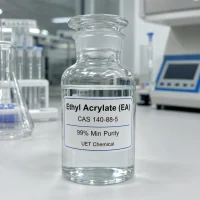
Ethyl Acrylate (EA) CAS 140-88-5
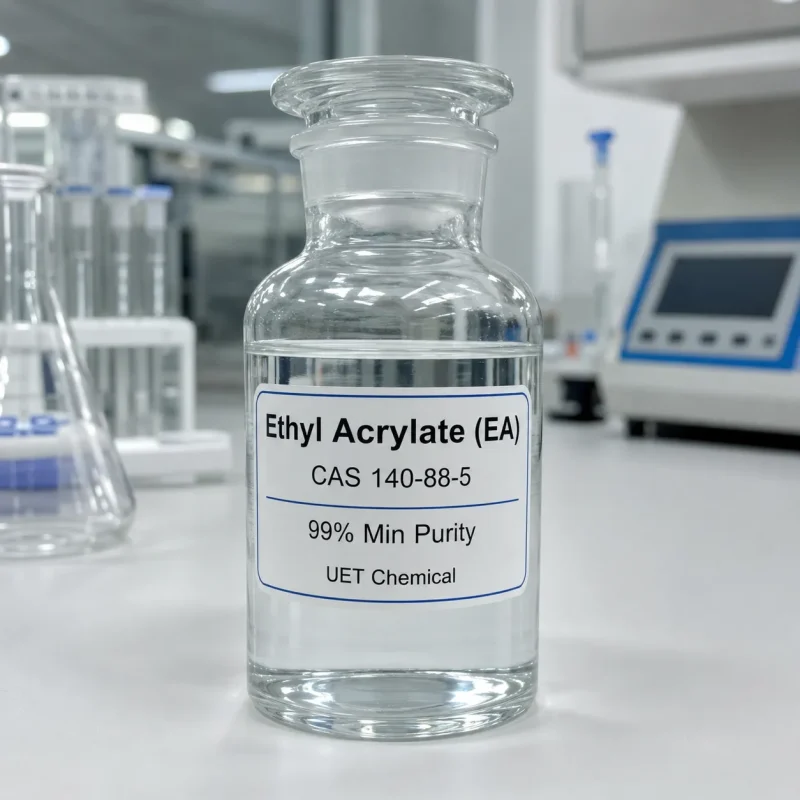
Ethyl Acrylate (EA) is a high-reactivity acrylic monomer supplied as colorless transparent liquid with characteristic acrylate odor. As the ethyl ester of acrylic acid, it provides low glass-transition temperature (Tg ≈ –24 °C) and excellent flexibility to homopolymers and copolymers. Core uses include architectural latex paint emulsions, pressure-sensitive adhesives, textile finishing binders, and paper coating formulations. Each shipment includes COA, TDS, and SDS.
- CAS No: 140-88-5
- Synonyms: Ethyl 2-propenoate, Acrylic acid ethyl ester, EA, Prop-2-enoic acid ethyl ester
- EC Number: 205-435-1
- Molecular Formula: C5H8O2
- Molecular Weight: 100.12 g/mol
- Appearance: Colorless transparent liquid
- Purity (GC): ≥ 99.5%
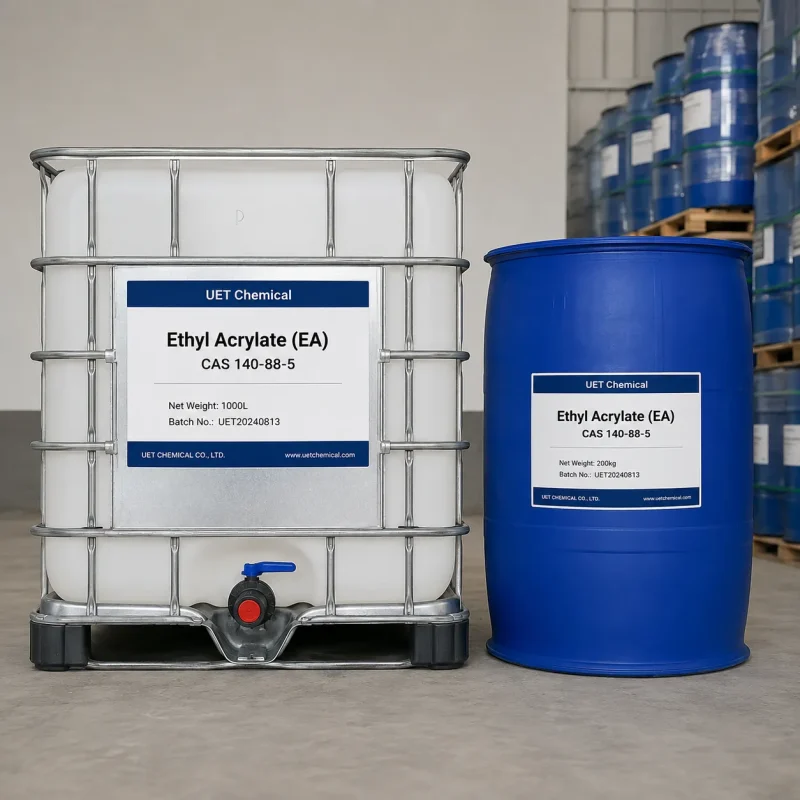
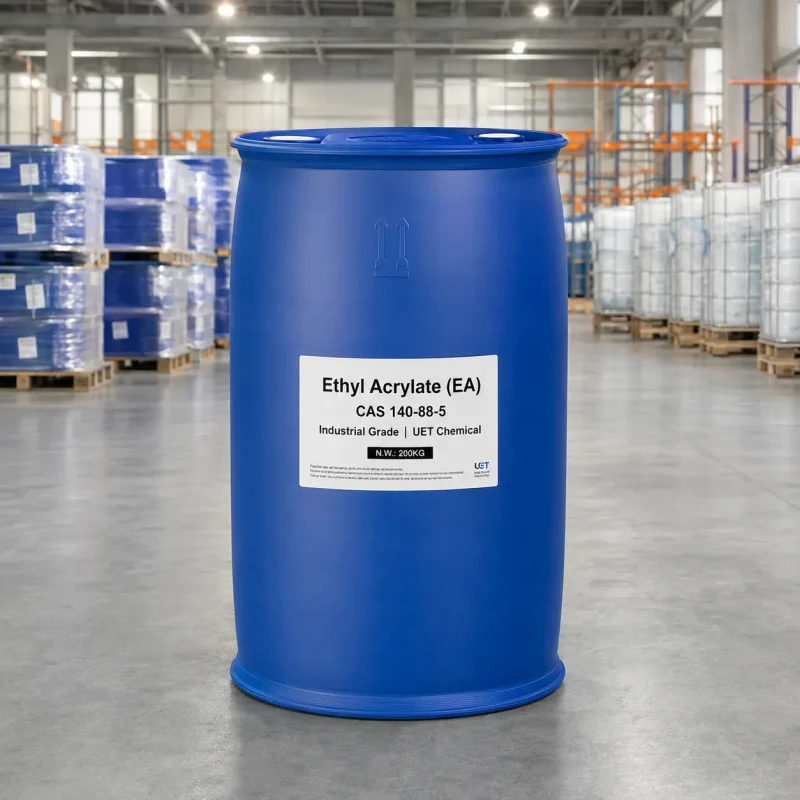
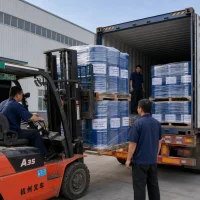
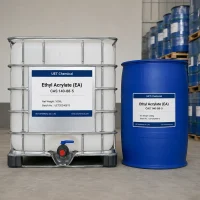
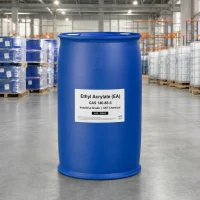
- Packaging: 200 kg (440 lb) galvanized steel drum; 1000 kg (2200 lb) IBC tote; ISO tank bulk. Custom packaging available upon request.
- Main Applications: Acrylic latex emulsions for coatings, pressure-sensitive adhesives (PSA), textile finishing agents, paper coating binders, leather finishing, plastic and rubber modification
Introduction to Ethyl Acrylate (EA)
Ethyl Acrylate (EA) is the simplest commercially available acrylate ester monomer, produced by direct esterification of acrylic acid with ethanol in the presence of an acid catalyst, or by carbonylation of ethylene via the Reppe process. The vinyl group (CH₂=CH–) provides rapid free-radical polymerization reactivity, while the ethyl ester side chain imparts low Tg (–24 °C / –11 °F for homopolymer), softness, and internal flexibility to the resulting polymer matrix. EA is almost always copolymerized with harder monomers (methyl methacrylate, styrene, vinyl acetate) or functional monomers (acrylic acid, hydroxyethyl methacrylate) to tailor film hardness, adhesion, and crosslink density.
EA is highly susceptible to spontaneous polymerization. Industrial-grade material is stabilized with 15–20 ppm MEHQ (4-methoxyphenol) inhibitor to prevent thermal runaway during storage and transit. Store below 25 °C (77 °F), away from heat, sparks, and direct sunlight. Do not store above 35 °C (95 °F); inhibitor effectiveness drops sharply at elevated temperatures. If bulk temperature exceeds 40 °C (104 °F) during summer transit, immediate cooling or nitrogen blanketing is required. Shelf life is 6 months unopened under proper conditions; once a drum is opened, use within 30 days or re-blanket with dry nitrogen.
Key Features of Ethyl Acrylate (EA)
- Ultra-low Tg for film flexibility. EA homopolymer Tg is –24 °C (–11 °F), producing soft, elastomeric films at ambient temperature. Copolymerizing EA with MMA or styrene allows precise Tg tuning from –20 °C to +60 °C (–4 °F to 140 °F) for any coating or adhesive performance target.
- High free-radical polymerization rate. The electron-deficient vinyl group reacts rapidly with persulfate, AIBN, or redox initiators, enabling high-conversion emulsion polymerization at 60–85 °C (140–185 °F) with short batch cycle times.
- Excellent substrate adhesion. The polar ester group and flexible backbone provide strong adhesion to cellulose fibers, PVC, wood, concrete, and metal substrates without additional adhesion promoters.
- Low viscosity for easy dosing. Liquid viscosity of 0.6 mPa·s at 25 °C (77 °F) allows gravity-fed or pump-metered addition to reactor systems without pre-heating or solvent dilution.
- Broad copolymer compatibility. Miscible and copolymerizable with MMA, butyl acrylate, vinyl acetate, styrene, acrylic acid, and 2-ethylhexyl acrylate, enabling infinite formulation latitude for coatings, adhesives, and sealants.
Ethyl Acrylate Chemical & Physical Properties
| Property | Value |
|---|---|
| Molecular Formula | C5H8O2 |
| Molecular Weight | 100.12 g/mol |
| Boiling Point | 99.8 °C (211.6 °F) at 101.3 kPa |
| Melting Point | –75 °C (–103 °F) |
| Density | 0.923 g/cm³ (57.6 lb/ft³) at 20 °C (68 °F) |
| Flash Point | 9 °C (48 °F) closed cup |
| Autoignition Temperature | 400 °C (752 °F) |
| Solubility in Water | 1.5 g/100 mL at 20 °C (68 °F); miscible with most organic solvents |
| Viscosity | 0.6 mPa·s at 25 °C (77 °F) |
| Refractive Index | n²⁰_D = 1.4040 – 1.4070 |
| Inhibitor (MEHQ) | 15 – 20 ppm (standard); inhibitor-free grade available on request |
| Water Content | ≤ 0.10% (Karl Fischer) |
| Acidity (as acrylic acid) | ≤ 0.02% |
Applications of Ethyl Acrylate (EA)
Architectural and industrial latex coatings: Copolymerized with MMA, butyl acrylate, and vinyl acetate at 30–60% EA loading in emulsion polymerization. Produces interior/exterior wall paints with excellent flexibility, scrub resistance, and dirt pick-up resistance. Typical polymerization: semi-continuous monomer addition at 80–85 °C (176–185 °F) with ammonium persulfate initiator, 45–55% solids content.
Pressure-sensitive adhesives (PSA): EA is the primary soft monomer in acrylic PSA formulations for packaging tapes, labels, and medical adhesive plasters. Copolymerized with 2-ethylhexyl acrylate (tack) and acrylic acid (cohesion), producing adhesives with peel strength 8–15 N/25mm and shear holding time > 10,000 hours.
Textile finishing and nonwoven binders: EA-acrylic latex applied at 5–20% add-on to polyester, cotton, and nonwoven substrates for soft hand feel, wrinkle resistance, and dimensional stability. Cured at 150–170 °C (302–338 °F) for 60–90 seconds on tenter frames.
Paper coating and leather finishing: EA-based acrylic emulsions used as binder in paper coating colors (5–15 parts per 100 parts pigment) to improve gloss, ink holdout, and wet-rub resistance. In leather finishing, EA copolymers provide flexible, water-resistant top coats.
Storage & Safety Precautions for Ethyl Acrylate (EA)
- Storage: Store in tightly sealed, grounded steel drums or IBC totes in a cool, well-ventilated warehouse below 25 °C (77 °F), away from heat, sparks, open flame, and direct sunlight. Do NOT store above 35 °C (95 °F). Keep away from oxidizers, strong acids, strong bases, and free-radical initiators. Nitrogen blanket recommended for bulk storage tanks. Shelf life 6 months unopened; 30 days after opening with nitrogen re-blanketing.
- Safety: EA is a flammable liquid (Flash point 9 °C / 48 °F) and harmful by inhalation and skin contact. Causes skin and eye irritation; suspected respiratory sensitizer. Wear chemical-resistant gloves (butyl rubber), safety goggles, and organic vapor respirator during handling. Use explosion-proof electrical equipment in storage and transfer areas. Ensure adequate ventilation to keep airborne concentration below 5 ppm (TWA). In case of spill, contain with inert absorbent—do NOT use sawdust or combustible absorbents.
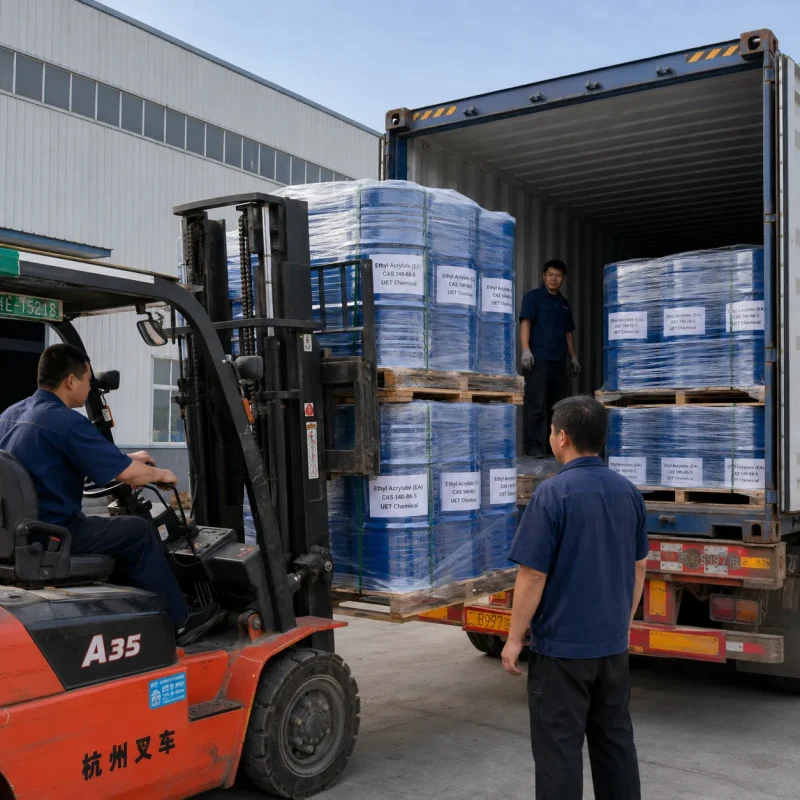
- Transport: Ethyl Acrylate is classified as UN 2524, Class 3 (Flammable Liquid), Packing Group II under IATA/IMDG/ADR. DG documentation, placarding, and trained handler certification required. Do not co-load with oxidizers, peroxides, or strong acids. Ensure drums are upright, secured, and protected from temperature extremes above 35 °C (95 °F) during transit. Summer shipments in tropical regions may require insulated or temperature-controlled containers.
- QC note: On receipt, verify GC purity (≥ 99.5%), water content (≤ 0.10%), and MEHQ inhibitor level (15–20 ppm). Check for premature polymerization: presence of gel particles, cloudiness, or viscosity increase above 1.0 mPa·s indicates inhibitor depletion or thermal exposure—reject the lot. Confirm drum integrity and pressure relief vent functionality before opening.
Ethyl Acrylate (EA) FAQ
Q: Why does my Ethyl Acrylate drum show slight viscosity increase or gel particles after summer transit?
A: This indicates partial thermal polymerization caused by inhibitor depletion at sustained temperatures above 35 °C (95 °F). MEHQ inhibitor requires dissolved oxygen to remain effective; in sealed drums at high temperature, inhibitor consumption accelerates. If gel content is below 0.1% and viscosity remains under 1.0 mPa·s, the material is still usable after filtration. Prevent recurrence by specifying nitrogen-blanketed drums for summer shipments and storing below 25 °C (77 °F).
Q: How does Ethyl Acrylate compare to Butyl Acrylate (BA) in latex paint formulations?
A: EA has a lower Tg homopolymer (–24 °C vs –54 °C for BA) and lower molecular weight, providing slightly harder films with better block resistance and dirt pick-up resistance. BA is preferred when maximum flexibility at very low temperature is needed. EA is generally more cost-effective and provides better scrub resistance in interior paint systems. Many formulators blend EA and BA to balance flexibility, cost, and performance.
Q: Can I request inhibitor-free Ethyl Acrylate for UV-cure or anionic polymerization?
A: Yes, inhibitor-free EA is available but requires strict cold-chain handling (below 15 °C / 59 °F) and nitrogen blanketing from production to point-of-use. Standard 15–20 ppm MEHQ grade is recommended for all free-radical emulsion and solution polymerization processes. Inhibitor-free material has a maximum transport window of 72 hours at ≤ 10 °C (50 °F) with continuous nitrogen pad.
Related products
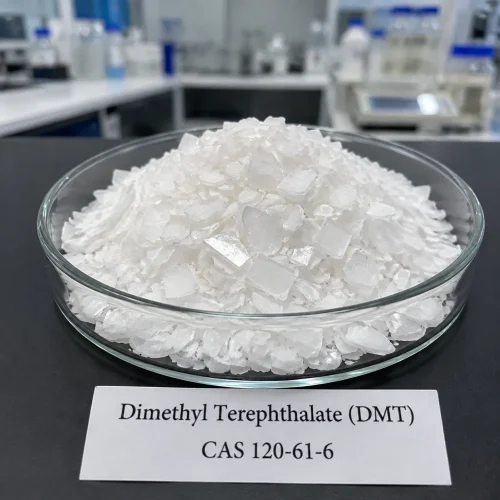
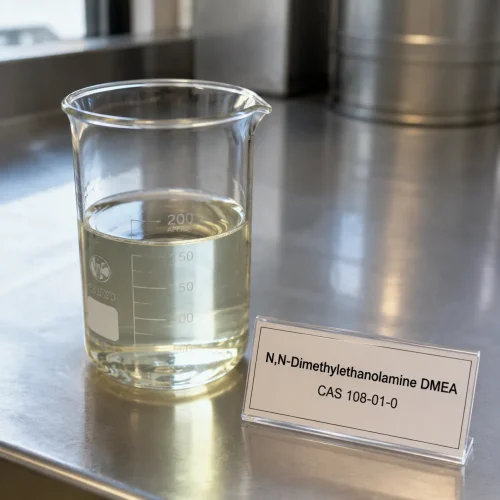
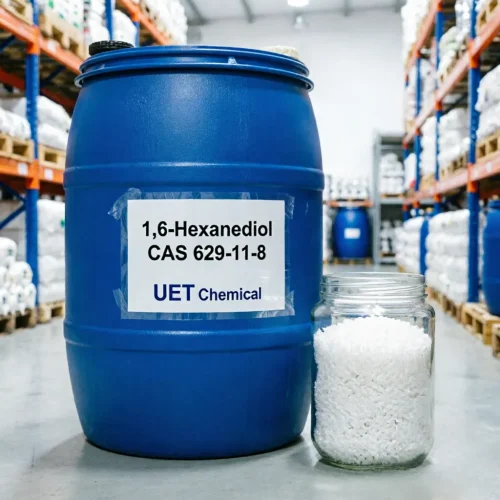
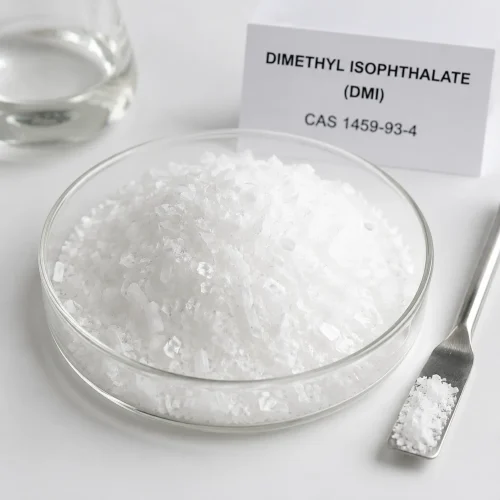
Manufacturer & Exporter Since 2006
Get Tailored Chemical Raw Material Solutions — Reply Within 1 Hour
Factory-direct pricing, stable high-purity supply and complete compliance documentation for your industrial formulations.
- 1000+Products
- 200+QC Protocols
- 7–15Days Delivery
- Factory-Direct Pricing
- COA / TDS / SDS Included
- Free Samples for Testing
- 40+ Export Countries
Request a Free Quote
Our engineers reply within 1 hour during GMT+8 business hours.
Please include in your inquiry:
- Product name or CAS number
- Required quantity
- Destination country or port
- Preferred packaging