
Bisphenol A Epoxy Resin CAS 61788-97-4
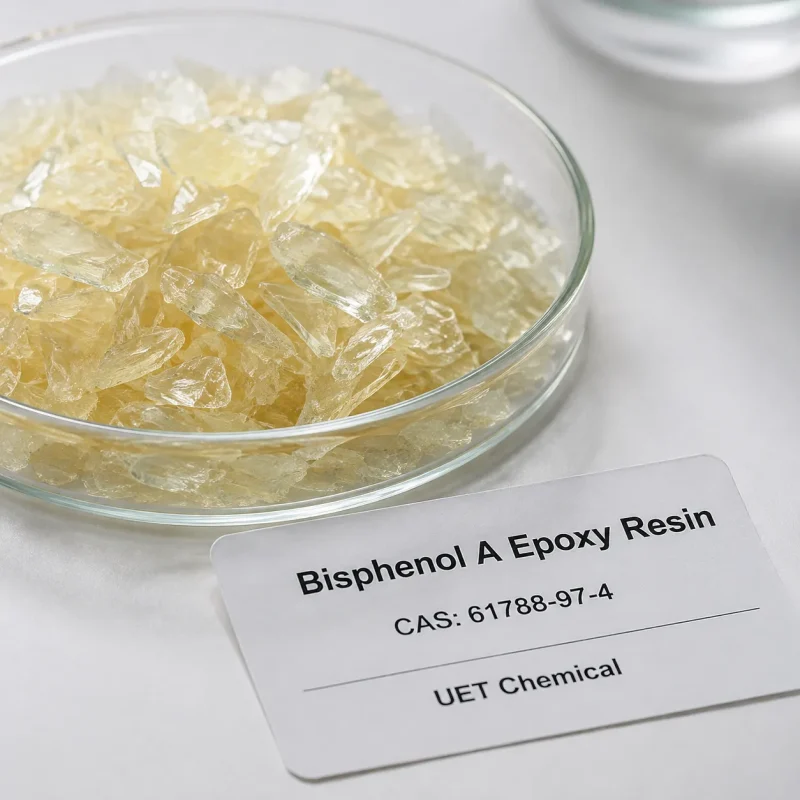
Bisphenol A Epoxy Resin (DGEBA) is a thermosetting prepolymer featuring terminal oxirane rings on a bisphenol-A backbone. Supplied as a clear, viscous liquid or solid flakes, it solves adhesion, chemical resistance, and structural integrity challenges in heavy-duty formulations. Industrial compounders rely on it for marine coatings, electronic encapsulation, and carbon fiber composites. UETChem provides this resin with strict control over epoxy equivalent weight (EEW) and hydrolyzable chlorine, ensuring predictable gel times and high glass transition temperatures (Tg). Each shipment includes COA, TDS, SDS.
- CAS No: 61788-97-4
- Synonyms: DGEBA; Epoxy Resin E-51; Bisphenol A diglycidyl ether
- EINECS: 612-375-2
- Molecular Formula: (C11H12O3)n (n=0 for liquid grade)
- Molecular Weight: 340.41 g/mol (monomer) / 380-420 g/mol (EEW)
- Appearance: Clear, viscous liquid or transparent solid flakes
- Epoxy Equivalent Weight (EEW): 185 – 192 g/eq (Liquid E-51 grade)
- Viscosity: 11,000 – 15,000 mPa·s at 25 °C
- Hydrolyzable Chlorine: 0.05% max
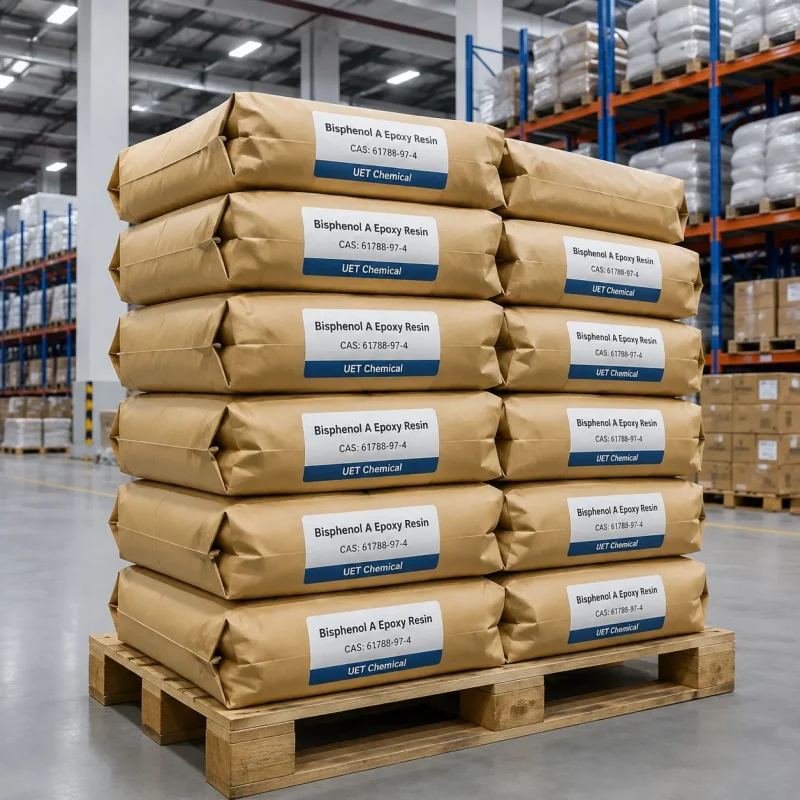
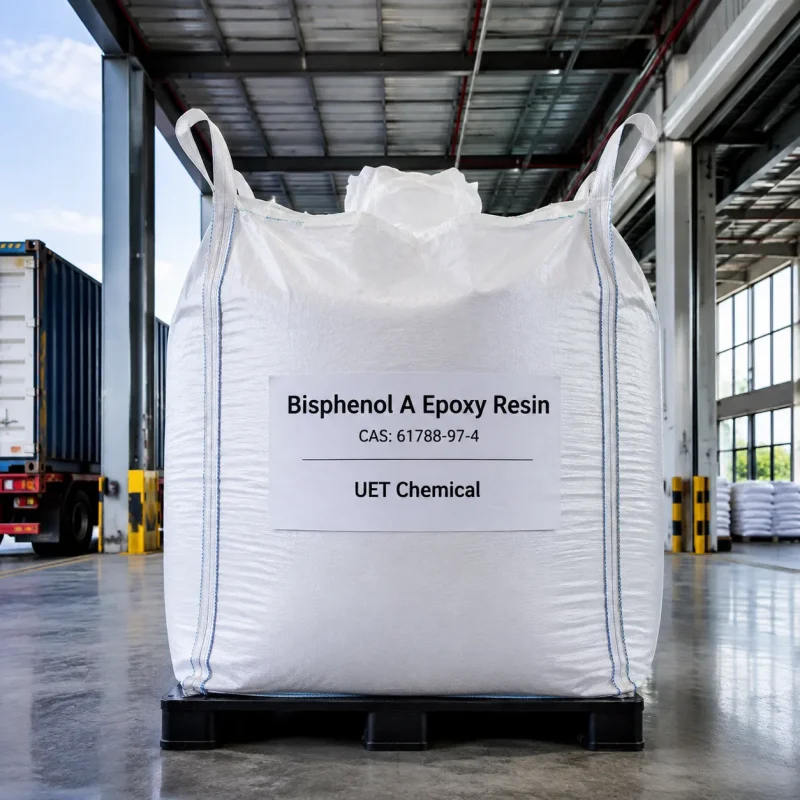
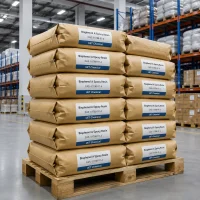
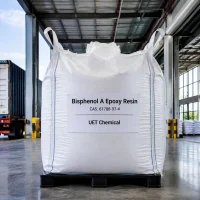
- Packaging: 200 kg (441 lb) HDPE drum, 1000 kg (2205 lb) IBC. Custom packaging available upon request.
- Main Applications: Anti-corrosion coatings, electronic encapsulation, composite matrices, structural adhesives
Introduction to Bisphenol A Epoxy Resin
Bisphenol A Epoxy Resin is a thermosetting prepolymer characterized by terminal epoxide rings attached to a bisphenol-A backbone. The molecular structure consists of repeating ether linkages and secondary hydroxyl groups flanked by reactive glycidyl ends. Upon mixing with polyfunctional amines or acid anhydrides, the epoxide rings undergo ring-opening addition reactions. This crosslinking process transforms the prepolymer into a rigid, three-dimensional thermoset network. The aromatic rings provide structural stiffness, while the aliphatic hydroxyl groups participate in hydrogen bonding with substrate surfaces.
Key Features of DGEBA
- Terminal oxirane rings: React with active hydrogens in amines or carboxyl groups in anhydrides to form covalent crosslinks.
- Secondary hydroxyl groups: Generated during the initial ring-opening step, these groups autocatalyze further curing and form hydrogen bonds with metal and mineral substrates.
- Bisphenol-A backbone: The rigid aromatic structure dictates the mechanical strength and chemical resistance of the final cured matrix.
- Tunable molecular weight: Available in liquid (n=0) or solid (n>1) grades, allowing formulators to adjust viscosity and crosslink density.
DGEBA Chemical & Physical Properties
| Property | Value |
|---|---|
| CAS Number | 61788-97-4 |
| Epoxy Equivalent Weight (EEW) | 185 – 192 g/eq (Liquid grade) |
| Viscosity | 11,000 – 15,000 mPa·s at 25 °C (77 °F) |
| Density | 1.16 g/cm³ (9.68 lb/gal) at 20 °C |
| Flash Point | > 200 °C (> 392 °F) closed cup |
| Hydrolyzable Chlorine | 0.05% max |
| Appearance | Clear, viscous liquid |
Applications of Bisphenol A Epoxy Resin
Anti-corrosion and marine coatings: Crosslinks with polyamides or cycloaliphatic amines to form impermeable barrier films. Formulators disperse pigments like Anatase Titanium Dioxide into the resin to provide UV opacity and hide underlying steel substrates.
Electronic encapsulation: Poured over microchips and high-voltage coils to protect against moisture and arcing. When cured with Methyltetrahydrophthalic Anhydride (MTHPA), the system achieves a high Tg and low exotherm, preventing thermal stress on delicate electronic components.
Fiber-reinforced composites: Used as the matrix for carbon and glass fiber prepregs. The secondary hydroxyl groups bond strongly to silane-sized fibers. Storage of the prepreg requires temperature control, and facilities often use Calcium Chloride Anhydrous in warehouse dehumidifiers to prevent moisture uptake during layup.
Storage & Safety Precautions for DGEBA
- Temperature and crystallization: Store drums tightly sealed between 15–25 °C (59–77 °F). Liquid grades may crystallize into a cloudy white solid if exposed to temperatures below 10 °C (50 °F) for extended periods. This is a physical phase change, not chemical degradation.
- Skin and eye contact: The uncured resin is a known skin sensitizer. Wear nitrile gloves and splash goggles during dispensing. Do not use solvents to clean skin; wash immediately with soap and water to prevent sensitization.
- Field note: If the resin crystallizes, warm the drum to 50 °C (122 °F) using a band heater or warm water bath. Stir gently until completely clear and homogeneous before dispensing. Avoid localized high heat from steam, which can cause premature homopolymerization.
Bisphenol A Epoxy Resin FAQ
Q: How does moisture affect the curing of Bisphenol A Epoxy Resin with amines?
A: Moisture reacts with amine hardeners, forming carbamates and blushing the surface, leaving Bisphenol A Epoxy Resin uncured and sticky. Maintain ambient humidity below 70% during application. Store resin drums tightly sealed to prevent water absorption that alters the critical mixing stoichiometry.
Q: What is the ideal mix ratio for Bisphenol A Epoxy Resin and anhydride?
A: Calculate the ratio using the Epoxy Equivalent Weight (EEW) of the Bisphenol A Epoxy Resin and the Anhydride Equivalent Weight (AEW). A typical stoichiometric factor is 0.85. You must also add a tertiary amine accelerator to initiate the ring-opening reaction and ensure a complete crosslinked network.
Q: Why does liquid Bisphenol A Epoxy Resin crystallize in cold storage?
A: Liquid grades crystallize into a white solid below 15 °C due to the bisphenol-A backbone structure. To restore Bisphenol A Epoxy Resin, gently heat the drum to 50 °C with slow agitation until crystals melt. Cool to room temperature before batching to ensure uniform reactivity and accurate weighing.
Related products
Manufacturer & Exporter Since 2006
Get Tailored Chemical Raw Material Solutions — Reply Within 1 Hour
Factory-direct pricing, stable high-purity supply and complete compliance documentation for your industrial formulations.
- 1000+Products
- 200+QC Protocols
- 7–15Days Delivery
- Factory-Direct Pricing
- COA / TDS / SDS Included
- Free Samples for Testing
- 40+ Export Countries
Request a Free Quote
Our engineers reply within 1 hour during GMT+8 business hours.
Please include in your inquiry:
- Product name or CAS number
- Required quantity
- Destination country or port
- Preferred packaging