
L-Tyrosine CAS 60-18-4
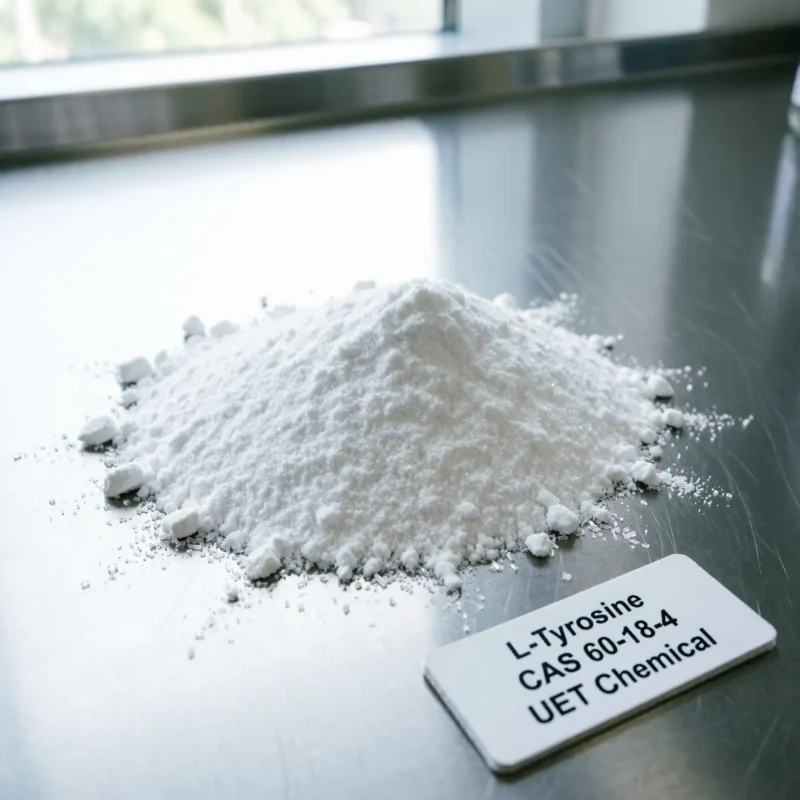
L-Tyrosine is a non-essential aromatic amino acid bearing a para-hydroxyphenyl side chain—the direct biosynthetic precursor of dopamine, norepinephrine, and melanin. White crystalline powder, ≥99.0% HPLC purity. Serves as the active in sports-nutrition and nootropic supplements, an infant-formula fortificant, and a pharmaceutical intermediate for L-DOPA synthesis. We supply fermentation-grade material with full batch traceability; each shipment includes COA, TDS, and SDS.
- CAS No.: 60-18-4
- Synonyms: L-Tyrosine; (S)-2-Amino-3-(4-hydroxyphenyl)propanoic acid; L-β-(p-Hydroxyphenyl)alanine
- EINECS: 200-460-4
- Molecular Formula: C₉H₁₁NO₃
- Molecular Weight: 181.19 g/mol
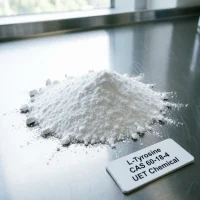
- Appearance: White crystalline powder or colorless crystals
- Purity (HPLC): ≥99.0%
- Specific Rotation [α]D20: −9.5° to −11.5° (c = 2, 1 M HCl)
- Loss on Drying: ≤0.5%
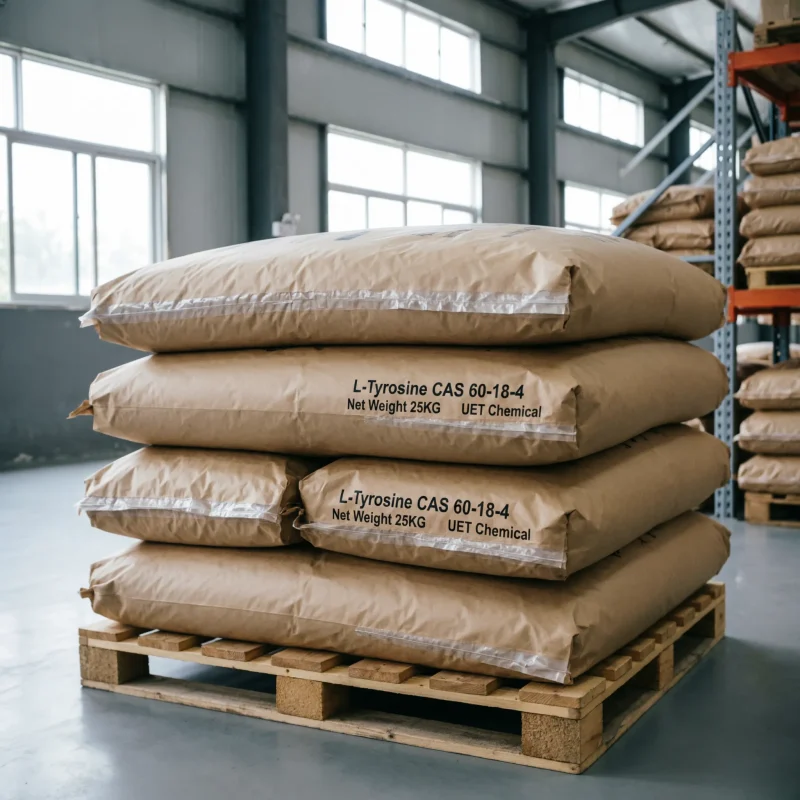
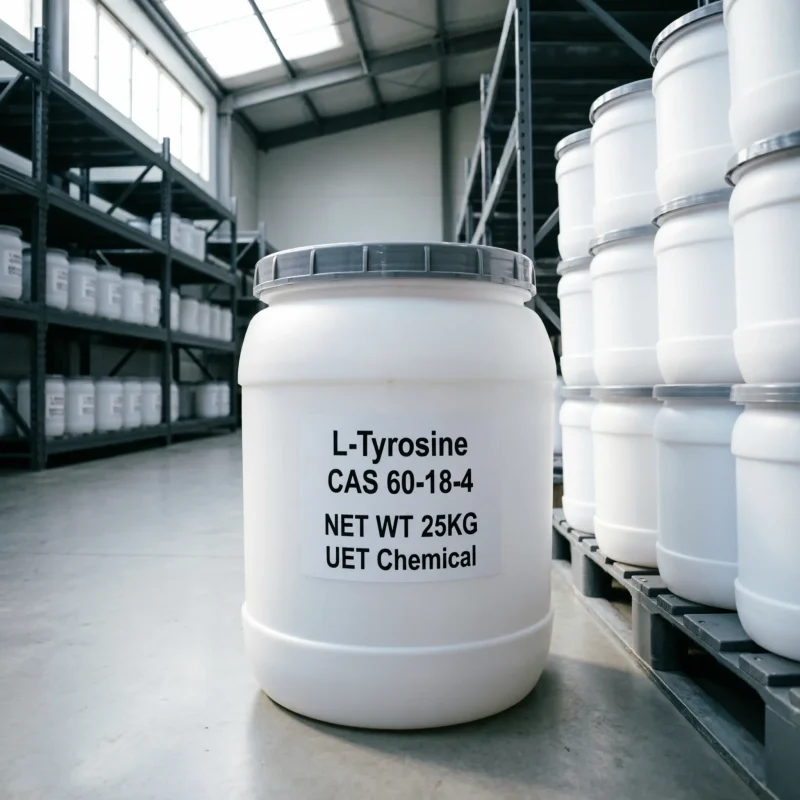
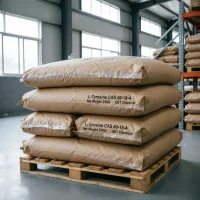
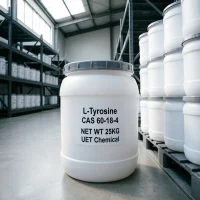
- Packaging: 25 kg kraft bag with PE liner / 25 kg HDPE drum. Custom packaging available upon request.
- Main Applications: Sports nutrition; infant formula fortification; L-DOPA intermediate; cell culture media
Introduction to L-Tyrosine
L-Tyrosine is a white crystalline powder, an aromatic amino acid whose para-hydroxyphenyl side chain makes it the rate-limiting substrate for catecholamine synthesis—dopamine, norepinephrine, epinephrine—and the biological entry point for melanin formation. Supplement brands dose it at 500–2,000 mg per serving for stress-buffering and focus support; pharmaceutical producers use it as the starting material for L-DOPA and iodinated thyroid-agent synthesis.
The phenolic –OH also defines the handling constraints: water solubility is only ~0.45 g/L at 25 °C and drops further near the isoelectric point (pI 5.66), so liquid formulas must be acidified below pH 3 or raised above pH 9 to dissolve. One practical caution: at alkaline pH the phenol ring oxidises in the presence of trace Cu²⁺/Fe³⁺, turning solutions pink-brown; chelate with 0.01% EDTA or hold the process at pH 4–6.
Key Features of L-Tyrosine
- Catecholamine precursor. Tyrosine hydroxylase converts it to L-DOPA in vivo; oral dosing raises plasma tyrosine and supports dopamine and norepinephrine output under acute stress, cold exposure, and sleep deprivation.
- Phenolic functionality for melanin chemistry. The 4-hydroxyphenyl group is the substrate for tyrosinase, placing L-tyrosine in tanning accelerators and pigment-pathway research.
- pH-switchable solubility. Only 0.45 g/L at 25 °C, but dissolves rapidly below pH 3 or above pH 9—allowing clean acid- or alkali-driven processing without organic solvents.
- Fermentation-grade purity. ≥99.0% by HPLC with ≤0.5% loss on drying and heavy metals ≤10 ppm, meeting USP/EP/FCC specifications for food and pharmaceutical use.
- Stable solid, light-sensitive solution. Dry powder stores 24–36 months sealed at 15–25 °C; aqueous solutions must be protected from light and transition metals to prevent phenol oxidation.
L-Tyrosine Chemical & Physical Properties
| Property | Value |
|---|---|
| Molecular Formula | C₉H₁₁NO₃ |
| Molecular Weight | 181.19 g/mol |
| Decomposition Point | ~340–345 °C (melts with decomposition) |
| Density (solid) | ~1.34 g/cm³ |
| Solubility in Water | ~0.45 g/L (25 °C); soluble in dilute acids and alkalis; practically insoluble in ethanol |
| Isoelectric Point (pI) | 5.66 |
| Specific Rotation [α]D20 | −9.5° to −11.5° (c = 2, 1 M HCl) |
| Purity (HPLC, dry basis) | ≥99.0% |
| Loss on Drying | ≤0.5% |
| Residue on Ignition | ≤0.4% |
| Heavy Metals | ≤10 ppm |
Applications of L-Tyrosine
Sports nutrition and nootropic supplements: Dosed at 500–2,000 mg per serving, typically with vitamin B6 as cofactor. Raises the plasma tyrosine pool so tyrosine hydroxylase maintains catecholamine output during endurance exercise and cognitive load. Common stack partners: caffeine 100–200 mg and rhodiola extracts.
Infant formula and clinical nutrition: Added to match the reference amino-acid profile of human milk protein. Fortification runs at 80–120 mg tyrosine per gram of total protein; dispersion is done at pH 6.5–7.0 with high-shear mixing to keep particles below 50 µm.
Pharmaceutical intermediate: The phenol ring accepts enzymatic hydroxylation to L-DOPA and iodination to thyroid intermediates. Batch-to-batch enantiomeric purity (D-tyrosine <0.1%) is the critical QC parameter for synthesis routes.
Cosmetics and tanning accelerators: Used at 0.1–0.5% as the tyrosinase substrate in tanning lotions and as a skin-conditioning agent. Formulas are buffered at pH 5–6 with 0.01% EDTA to stop metal-catalysed browning of the phenol group.
Cell culture and fermentation media: Supplied at 0.1–0.5 g/L in defined media for mammalian and microbial cultures, where the aromatic ring also serves as a UV-absorbing marker in protein assays.
Storage & Safety Precautions for L-Tyrosine
Storage conditions. Store in sealed, PE-lined kraft bags or HDPE drums at 15–25 °C, dry and protected from direct sunlight. The phenol group is light-sensitive in solution but stable in the dry state. Keep away from strong oxidisers and from copper or iron salt contamination, which catalyse browning. Reseal opened bags immediately; humidity above 70% RH causes caking.
Safety and PPE. GHS: Not classified as hazardous. Non-toxic and non-irritating. Wear an N95 dust mask and safety glasses during bag emptying to avoid nuisance dust inhalation. Spills: sweep up dry, then wash the floor with water.
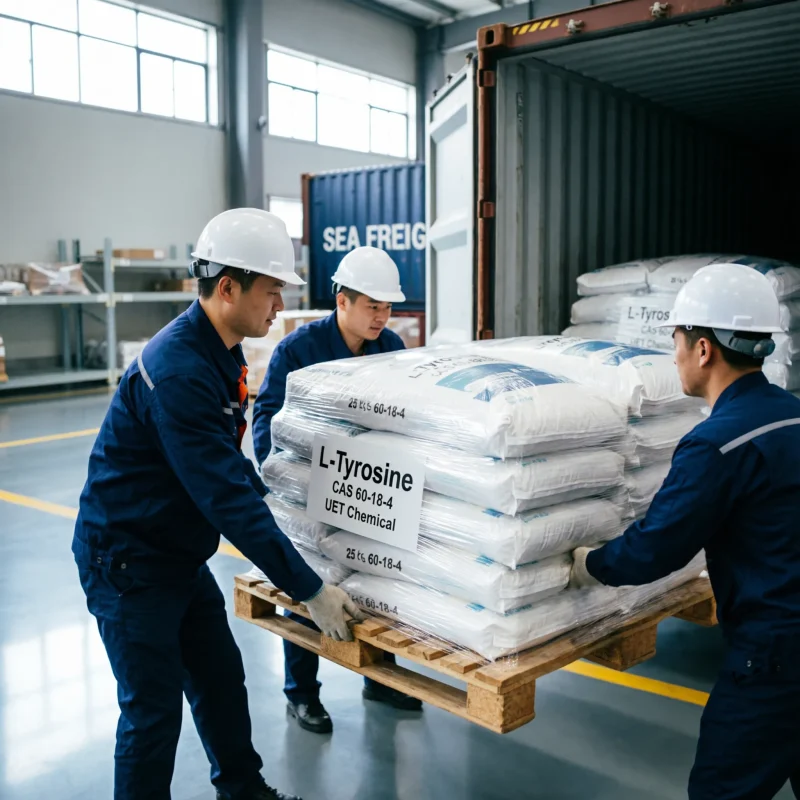
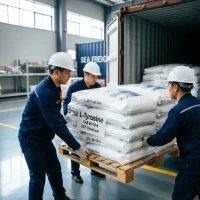
Transport classification. Non-DG. Not regulated under IMDG, IATA, or ADR. Ship as standard general cargo. Ensure container liners are intact to prevent moisture ingress during ocean freight.
Practitioner note: For incoming QC, confirm identity by specific rotation in 1 M HCl (−9.5° to −11.5°) and assay by non-aqueous potentiometric titration with perchloric acid in glacial acetic acid per USP. Run a clarity test in 1 M HCl: a hazy solution flags insoluble particulates or D-isomer contamination. Crystal habit (fine needles vs granules) varies between crystallisation lots without affecting assay.
L-Tyrosine FAQ
Q: Why won’t L-Tyrosine (CAS 60-18-4) fully dissolve in my ready-to-drink formula at pH 6?
A: You are sitting on the isoelectric point (pI 5.66), where solubility hits its minimum (~0.45 g/L at 25 °C). Shift the formula to pH ≤3 with citric acid or ≥9 with sodium hydroxide to ionise the molecule, or switch to a soluble derivative such as N-acetyl-L-tyrosine for neutral-pH drinks. Keep the dose under the solubility ceiling at the chosen pH.
Q: My tyrosine solution turned pink-brown during processing. What happened?
A: Phenol oxidation. At alkaline pH, trace Cu²⁺ or Fe³⁺ catalyses oxidation of the 4-hydroxyphenyl ring into coloured dopachrome-type pigments. Prevent it by holding the process at pH 4–6, adding 0.01% EDTA to chelate transition metals, and protecting the tank from light and headspace oxygen. Discoloured solution should be rejected for cosmetic use.
Q: How do I verify enantiomeric purity of a delivered L-Tyrosine lot?
A: Check specific rotation first: −9.5° to −11.5° in 1 M HCl at c = 2. A reading outside this window signals D-tyrosine admixture. Confirm by chiral HPLC (crown-pack or Cu-proline column) with D-tyrosine <0.1%. Fermentation-grade material should also show residue on ignition ≤0.4% and heavy metals ≤10 ppm per USP.
Related products
Manufacturer & Exporter Since 2006
Get Tailored Chemical Raw Material Solutions — Reply Within 1 Hour
Factory-direct pricing, stable high-purity supply and complete compliance documentation for your industrial formulations.
- 1000+Products
- 200+QC Protocols
- 7–15Days Delivery
- Factory-Direct Pricing
- COA / TDS / SDS Included
- Free Samples for Testing
- 40+ Export Countries
Request a Free Quote
Our engineers reply within 1 hour during GMT+8 business hours.
Please include in your inquiry:
- Product name or CAS number
- Required quantity
- Destination country or port
- Preferred packaging