
Ammonium Bicarbonate CAS 1066-33-7
Ammonium Bicarbonate is a volatile inorganic salt featuring a single ammonium cation paired with a bicarbonate anion. Supplied as a white crystalline powder (≥99.0% purity), it acts as a zero-residue leavening agent in low-moisture bakery products, a fast-acting nitrogen fertilizer, and a polymer blowing agent. Upon heating, it decomposes entirely into ammonia, carbon dioxide, and water vapor, leaving absolutely no alkaline salts behind. Each shipment includes COA, TDS, and SDS.
- CAS No.: 1066-33-7
- Synonyms: Ammonium hydrogen carbonate; Bicarbonate of ammonia; Hartshorn
- EINECS: 213-911-5
- Molecular Formula: NH₄HCO₃
- Molecular Weight: 79.06 g/mol
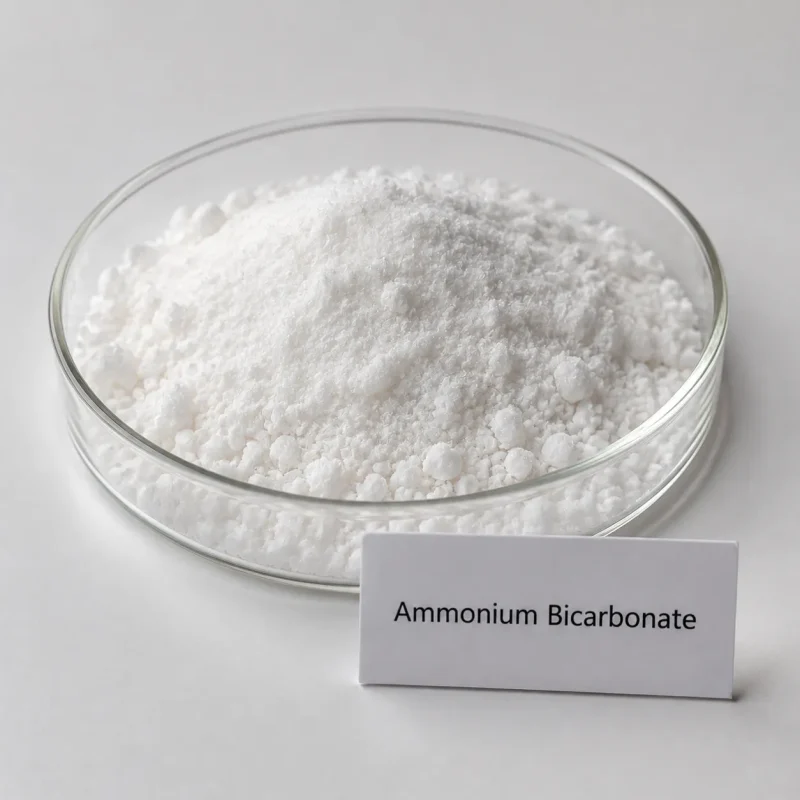
- Appearance: White crystalline powder with a mild ammonia odour
- Assay: ≥99.0%
- Decomposition Temperature: Starts at 36 °C; complete >60 °C
- Bulk Density: 0.80–0.90 g/cm³
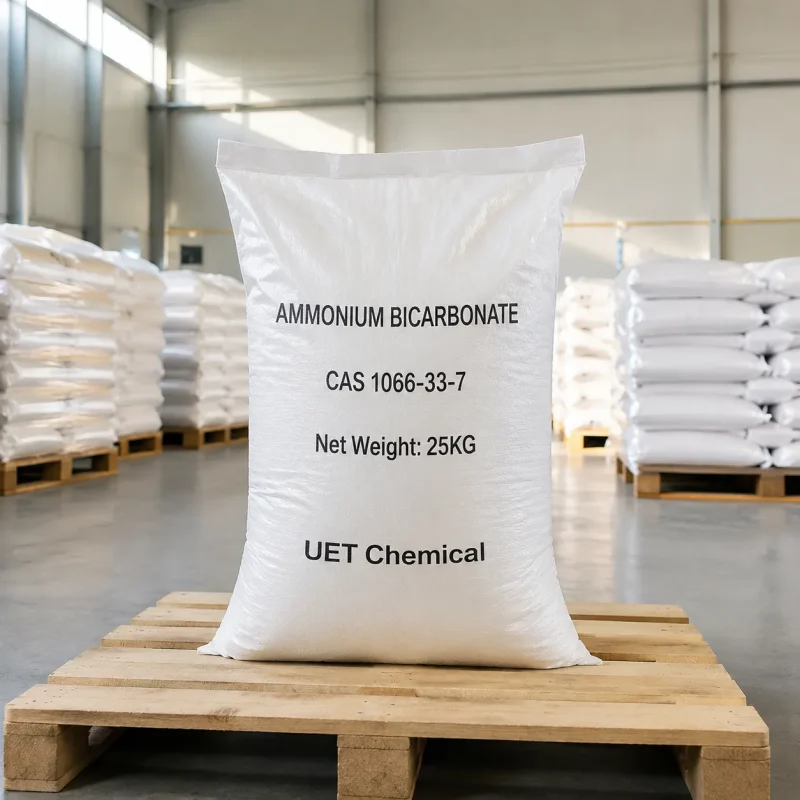
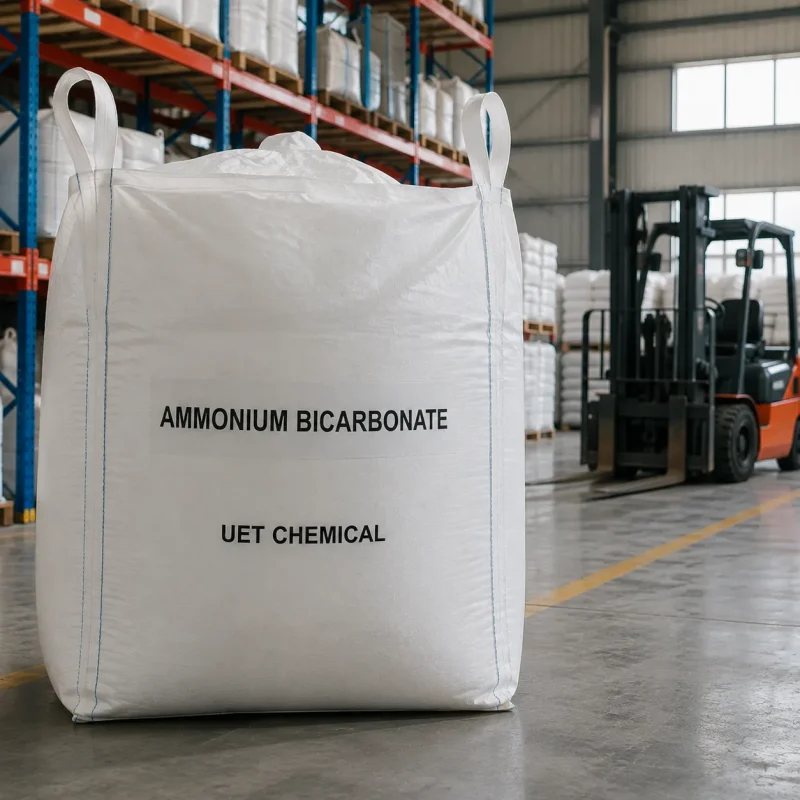
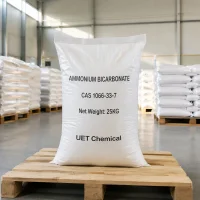
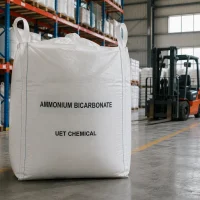
- Packaging: 25 kg multi-wall paper bag with PE liner / 500 kg bulk bag. Custom packaging available upon request.
- Main Applications: Bakery leavening agent; agricultural nitrogen fertilizer; polymer blowing agent; dye intermediate
Introduction to Ammonium Bicarbonate
Ammonium Bicarbonate is a white crystalline powder with a distinct ammonia odour, belonging to the volatile inorganic salt family. The molecule consists of a single ammonium cation paired with a bicarbonate anion. When exposed to heat above 60 °C or moisture, it rapidly decomposes into ammonia, carbon dioxide, and water vapour. Formulators rely on it as a zero-residue leavening agent in low-moisture bakery goods, a fast-acting nitrogen source in agriculture, and a chemical blowing agent in polymer foams.
The molecule delivers 100% gas conversion with zero solid residue upon thermal decomposition, eliminating the alkaline aftertaste and pH shifts typical of standard bicarbonate salts. One practical caution: Ammonium Bicarbonate is thermodynamically unstable and continuously sublimes at room temperature. If warehouse temperatures exceed 25 °C or humidity breaches the inner PE liner, the powder releases ammonia gas, loses leavening power, and cakes into hard blocks. Always store strictly below 20 °C in sealed, moisture-barrier packaging.
Key Features of Ammonium Bicarbonate
- Zero-residue thermal decomposition. Breaks down entirely into three gases (NH₃, CO₂, H₂O) above 60 °C. Leaves no sodium carbonate or alkaline salts behind, preserving the natural colour and delicate flavour profile of baked goods.
- Massive gas expansion yield. Generates roughly three times the leavening gas volume per gram compared to standard sodium bicarbonate, creating an exceptionally porous, crisp crumb structure in thin-dough applications.
- Fast-acting agricultural nitrogen. Contains roughly 17% nitrogen in the ammonium form, which is immediately available for root uptake without requiring soil microbial conversion, making it ideal for rapid vegetative growth phases.
- Endothermic blowing action. Decomposition absorbs heat (endothermic reaction), preventing localized thermal degradation in polymer matrices like EVA or PVC during the foam extrusion process.
Ammonium Bicarbonate Chemical & Physical Properties
| Property | Value |
|---|---|
| Molecular Formula | NH₄HCO₃ |
| Molecular Weight | 79.06 g/mol |
| Decomption Point | Starts ~36 °C; Complete >60 °C (No true boiling point) |
| Bulk Density | 0.80–0.90 g/cm³ |
| Solubility | Soluble in water (~216 g/L at 20 °C); insoluble in ethanol |
| pH (1% aq. solution) | ~7.8 (mildly alkaline) |
| Assay | ≥99.0% |
| Heavy Metals (as Pb) | ≤2 ppm |
| Arsenic (As) | ≤1 ppm |
Applications of Ammonium Bicarbonate
Low-moisture bakery products (crackers, cookies, puff dough): Dosed at 0.5–2.0% of flour weight. The rapid gas release at 60–90 °C forces a highly porous, crisp texture. Because moisture content in these goods is below 5%, the released ammonia gas fully evaporates during baking, leaving zero chemical aftertaste.
Polymer and rubber blowing agent: Added at 2–5% in EVA, PVC, or nitrile rubber compounds. The endothermic decomposition prevents polymer scorching while generating fine, uniform cellular structures. Activation temperature is often modified by adding urea or zinc oxide activators.
Agricultural top-dress fertilizer: Applied directly to soil at 30–50 kg per hectare. The ammonium nitrogen is immediately bioavailable for crop uptake. Must be deep-applied and covered with soil immediately to prevent rapid ammonia volatilisation into the atmosphere.
Dye and pharmaceutical intermediates: Used as a mild buffering agent and ammonia source in organic synthesis. Provides a controlled alkaline environment without introducing alkali metal ions (Na⁺, K⁺) that could interfere with sensitive catalytic reactions.
Storage & Safety Precautions for Ammonium Bicarbonate
Storage conditions. Store in tightly sealed, PE-lined multi-wall bags on pallets at 5–20 °C in a dry, well-ventilated warehouse. This compound is thermodynamically unstable and continuously sublimes at room temperature. If warehouse temperatures exceed 25 °C, the bags will inflate with ammonia gas and the powder will degrade. Keep strictly away from strong acids and oxidising agents.
Safety and PPE. GHS: Not classified as highly hazardous, but dust and ammonia vapour are severe respiratory and eye irritants. Wear an N95 dust mask, chemical-splash goggles, and standard nitrile gloves during bag emptying. Spills are non-toxic; sweep up dry material and wash the floor with water.
Transport classification. Non-DG. Not regulated under IMDG, IATA, or ADR. Ship as standard general cargo. Ensure container ventilation is adequate to prevent ammonia gas accumulation during ocean freight.
Practitioner note: When verifying incoming QC via acid-base titration, dissolve the sample in ice-cold distilled water (below 10 °C) and titrate immediately. At room temperature, the aqueous solution rapidly loses ammonia to the atmosphere, causing a false-low assay reading. We have seen QC labs report 92% purity on a 99% batch simply because they used 25 °C tap water.
Ammonium Bicarbonate FAQ
Q: Why use Ammonium Bicarbonate (CAS 1066-33-7) in crackers instead of Sodium Bicarbonate?
A: Zero alkaline residue. Sodium bicarbonate leaves behind sodium carbonate, which raises pH, causes Maillard browning, and adds a soapy aftertaste. Ammonium Bicarbonate decomposes 100% into gas. This keeps crackers pale, crisp, and flavour-neutral. It only works in low-moisture (<5%) baked goods where ammonia gas can fully escape; in high-moisture cakes, the ammonia gets trapped and ruins the flavour.
Q: My warehouse bags are swollen and smell strongly of ammonia. Is the product ruined?
A: Partial degradation has occurred. Ammonium Bicarbonate naturally sublimes and decomposes when exposed to heat (>25 °C) or moisture, releasing NH₃ and CO₂ that inflate the bags. Open the bags, crush the caked lumps, and run an assay. If purity remains above 95%, it is still usable for industrial applications, but leavening power for food is compromised. Always store strictly below 20 °C.
Q: How do I prevent ammonia odour in the final baked cracker?
A: Ensure adequate ventilation in the oven tunnel and keep the final product moisture below 5%. The ammonia gas must physically escape the dough matrix before the surface crust seals. Baking at high initial heat (200–250 °C) flashes the gas off rapidly. If residual odour persists, formulators often blend it with a small amount of acidic salts (like sodium acid pyrophosphate) to neutralise trace ammonia into odourless ammonium ions.
Related products
Manufacturer & Exporter Since 2006
Get Tailored Chemical Raw Material Solutions — Reply Within 1 Hour
Factory-direct pricing, stable high-purity supply and complete compliance documentation for your industrial formulations.
- 1000+Products
- 200+QC Protocols
- 7–15Days Delivery
- Factory-Direct Pricing
- COA / TDS / SDS Included
- Free Samples for Testing
- 40+ Export Countries
Request a Free Quote
Our engineers reply within 1 hour during GMT+8 business hours.
Please include in your inquiry:
- Product name or CAS number
- Required quantity
- Destination country or port
- Preferred packaging