
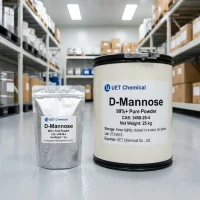
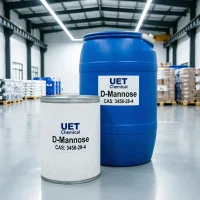
D-Mannose CAS 3458-28-4
D-Mannose is the C-2 epimer of D-glucose, a six-carbon aldose with a free aldehyde at C1. White crystalline powder, ≥99.0% HPLC purity. Serves as the active in urinary-tract health supplements and as a glycosylation precursor in cell culture and glycoprotein synthesis. The inverted C2 hydroxyl keeps it out of glycolysis—~90% of an oral dose is excreted renally unchanged. Each shipment includes COA, TDS, and SDS.
- CAS No.: 3458-28-4
- Synonyms: D-Mannose; D-(+)-Mannose; Mannose
- EINECS: 222-386-4
- Molecular Formula: C₆H₁₂O₆
- Molecular Weight: 180.16 g/mol
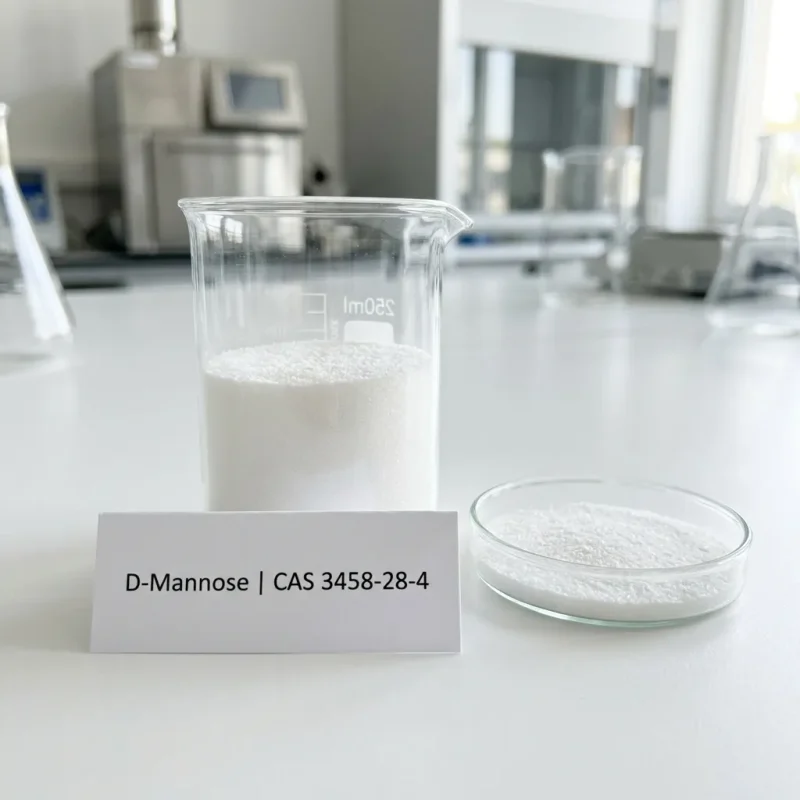
- Appearance: White crystalline powder
- Purity (HPLC): ≥99.0%
- Specific Rotation [α]D20: +13.5° to +15.5° (equilibrium)
- Loss on Drying: ≤0.5%
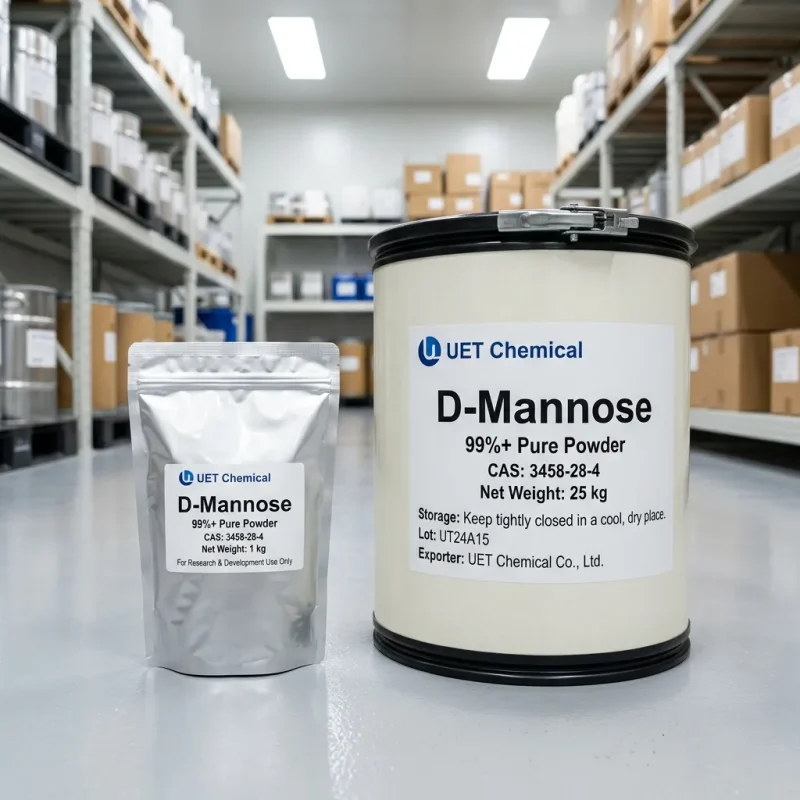
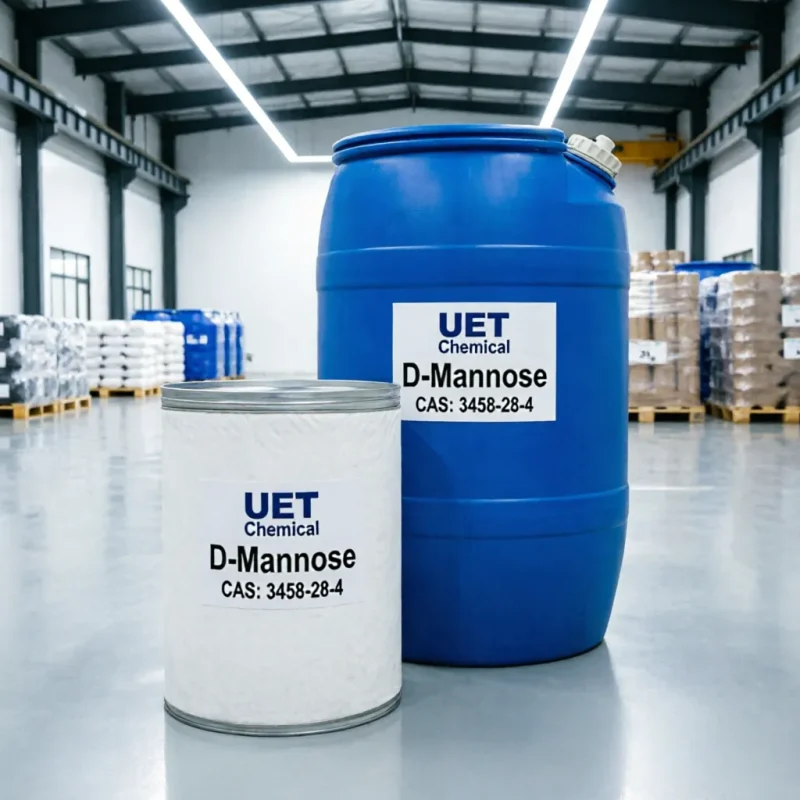
- Packaging: 1 kg aluminium foil bag / 25 kg fibre drum. Custom packaging available upon request.
- Main Applications: UTI supplements; functional foods; cell culture media; glycoprotein synthesis
Introduction to D-Mannose
D-Mannose is a white crystalline powder, the C-2 epimer of D-glucose. The inverted hydroxyl at C2 makes it a poor substrate for hexokinase, so roughly 90% of an oral dose bypasses glycolysis and is excreted unchanged in urine. Supplement brands use it as the active for urinary-tract comfort; bioprocess engineers use it as a glycosylation precursor in cell culture and glycoprotein synthesis.
That unmetabolised route is the commercial value: mannose reaches the bladder intact, saturates the FimH adhesin on type-1-piliated E. coli and blocks bacterial docking to uroplakin receptors. One practical caution: mannose is a reducing sugar. Above 60 °C it browns rapidly with free amino groups (Maillard), so keep spray-drying inlet temperatures moderate and never co-granulate with primary amines or amino acids.
Key Features of D-Mannose
- C-2 epimer configuration. The C2 hydroxyl inversion prevents phosphorylation by hexokinase; less than 10% of the dose enters glycolysis, giving a negligible glycemic response.
- Renal excretion intact. ~90% of an oral dose is excreted unchanged within 24 h, delivering the full dose to the urinary tract without hepatic first-pass loss.
- FimH anti-adhesion activity. Free mannose competitively binds the type-1 pilus lectin of E. coli, preventing bacterial adhesion to mannosylated uroplakins on bladder epithelium—a physical, non-antibiotic mechanism.
- Reducing aldose chemistry. The free C1 aldehyde enables reductive amination for glycoconjugate synthesis, but also drives Maillard browning with amines above 60 °C—formulations must respect this window.
- High water solubility, clean taste. Very soluble in water with mild, low-intensity sweetness (~20–30% of sucrose), allowing sugar-free stick packs and effervescent blends without masking agents.
D-Mannose Chemical & Physical Properties
| Property | Value |
|---|---|
| Molecular Formula | C₆H₁₂O₆ |
| Molecular Weight | 180.16 g/mol |
| Melting Point | 133–140 °C |
| Density (solid) | 1.54 g/cm³ |
| Specific Rotation [α]D20 | +13.5° to +15.5° (equilibrium, water) |
| Solubility in Water | ~2,480 g/L (17 °C); slightly soluble in ethanol |
| Purity (HPLC, dry basis) | ≥99.0% |
| Loss on Drying | ≤0.5% |
| Residue on Ignition | ≤0.1% |
Applications of D-Mannose
Urinary-tract health supplements: Dosed at 500 mg–2 g per day in capsules or stick packs. Free mannose saturates FimH adhesin sites on E. coli type-1 pili, so bacteria cannot anchor to the bladder wall and are flushed out with urine. Typical label dose: 2 g daily for comfort maintenance.
Functional foods and low-GI sweetening: Used at 0.5–3%. With sweetness at only 20–30% of sucrose and minimal glycolytic uptake, it adds bulk and mild sweetness to diabetic-friendly and keto-positioned products without raising blood glucose.
Cell culture and bioprocessing: Supplemented at 1–10 mM in CHO and HEK293 media. Mannose incorporation modulates N-glycan processing of therapeutic glycoproteins, shifting the mannose-type glycoform distribution in antibody production.
Glycoconjugate synthesis and metabolic research: The C1 aldehyde allows reductive amination onto amine-bearing carriers for neoglycoprotein preparation. Mannose also serves as the substrate-replacement sugar in phosphomannose-isomerase deficiency (MPI-CDG) research programs.
Storage & Safety Precautions for D-Mannose
Storage conditions. Store in sealed foil bags or PE-lined fibre drums at 15–25 °C, in a dry warehouse. Mannose is mildly hygroscopic; above 65% RH the powder cakes and colour drifts toward off-white. Keep away from strong oxidisers and from primary amines or amino acids—solid-state Maillard browning accelerates above 40 °C in mixed storage.
Safety and PPE. GHS: Not classified as hazardous. Non-toxic and non-irritating. Wear an N95 dust mask and safety glasses during bag emptying to avoid nuisance dust. Spills are non-toxic but slippery when wet; sweep dry first, then wash the floor.
Transport classification. Non-DG. Not regulated under IMDG, IATA, or ADR. Ship as standard general cargo. Ensure container liners are intact to prevent moisture ingress during ocean freight.
Practitioner note: For incoming QC by polarimetry, allow the freshly prepared solution to stand 2–3 h before reading. Mannose mutarotates: a fresh solution reads near +29° and drifts to the +13.5° to +15.5° equilibrium window. Reading too early flags good lots as out-of-spec. Confirm assay by HPLC-RI against a reference standard.
D-Mannose FAQ
Q: How do I verify identity and purity of D-Mannose (CAS 3458-28-4) at incoming QC?
A: Run HPLC-RI against a reference standard (≥99.0% dry basis), then polarimetry after 2–3 h mutarotation equilibrium (+13.5° to +15.5°). Check loss on drying ≤0.5% and residue on ignition ≤0.1%. A fresh polarimetric reading near +29° is normal drift, not an impurity—wait for equilibrium before judging the lot.
Q: Why did my mannose stick packs turn yellow-brown in storage?
A: Maillard browning. Mannose is a reducing sugar and reacts with any co-blended primary amine (amino acids, peptide actives, some botanical extracts) above ~40–60 °C or at high water activity. Keep pack water activity below 0.3, store below 25 °C, and never co-granulate mannose with amine-bearing ingredients. Isolate the affected lots; browning is irreversible.
Q: Is D-Mannose suitable for diabetic or sugar-free formulations?
A: Yes. Less than 10% of an oral dose enters glycolysis, so a 2 g serving produces negligible blood-glucose movement. Sweetness is only 20–30% of sucrose, so pair it with a high-intensity sweetener for palatability. It also ferments slowly by yeast, which helps stability in low-pH beverage matrices.
Related products
Manufacturer & Exporter Since 2006
Get Tailored Chemical Raw Material Solutions — Reply Within 1 Hour
Factory-direct pricing, stable high-purity supply and complete compliance documentation for your industrial formulations.
- 1000+Products
- 200+QC Protocols
- 7–15Days Delivery
- Factory-Direct Pricing
- COA / TDS / SDS Included
- Free Samples for Testing
- 40+ Export Countries
Request a Free Quote
Our engineers reply within 1 hour during GMT+8 business hours.
Please include in your inquiry:
- Product name or CAS number
- Required quantity
- Destination country or port
- Preferred packaging