
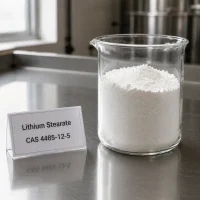
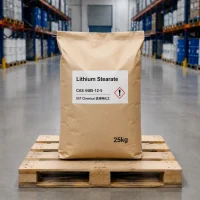
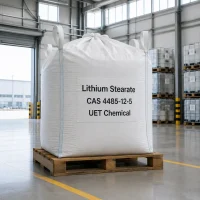
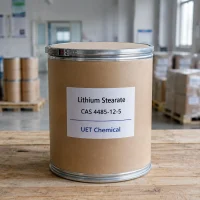
Lithium Stearate CAS 4485-12-5
Lithium Stearate is a lithium soap of a long-chain fatty acid that solves high-temperature grease bleeding, mold sticking, and polymer friction challenges in mechanical and plastics manufacturing. Lubricant formulators and polymer processors rely on it for multi-purpose lithium greases, plastic release agents, and powder metallurgy binders. UETChem supplies this product with strict control over free fatty acid content, moisture, and particle size distribution, ensuring exceptional colloidal stability and mechanical shear resistance. Each shipment includes COA, TDS, SDS.
- CAS No: 4485-12-5
- Synonyms: Lithium octadecanoate; Stearic acid lithium salt
- EINECS: 224-772-5
- Molecular Formula: C18H35LiO2
- Molecular Weight: 290.41 g/mol
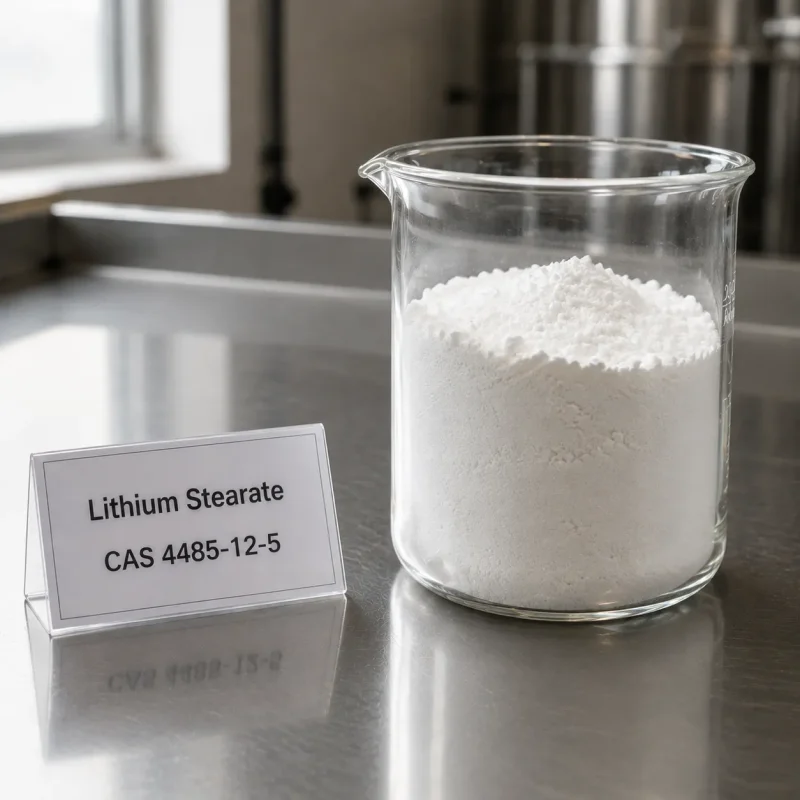
- Appearance: White to off-white fine powder
- Purity (Lithium Stearate): 98.0% min
- Free Fatty Acid: 0.5% max
- Moisture: 1.0% max
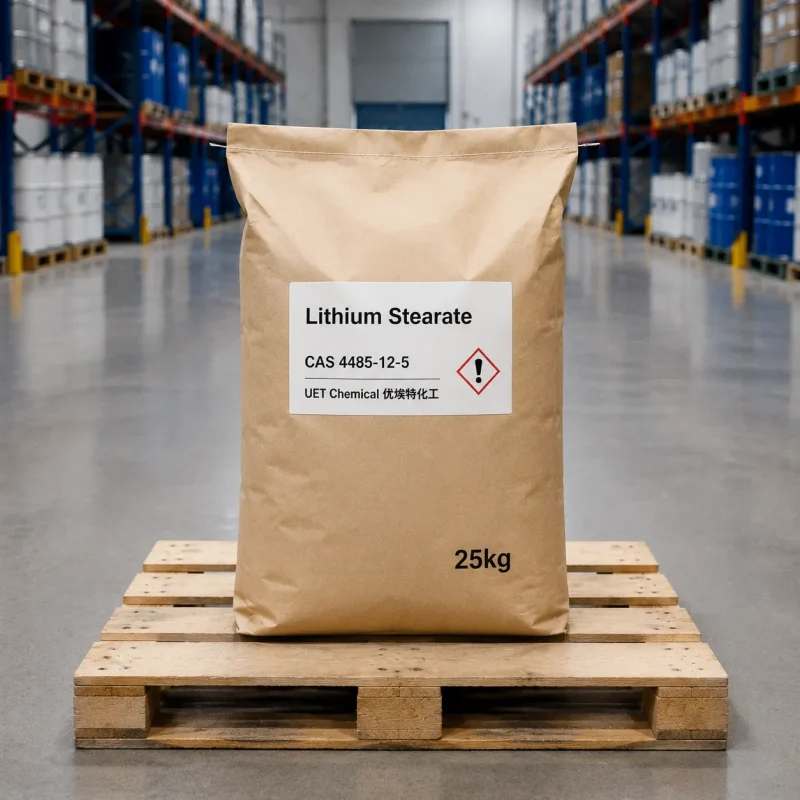
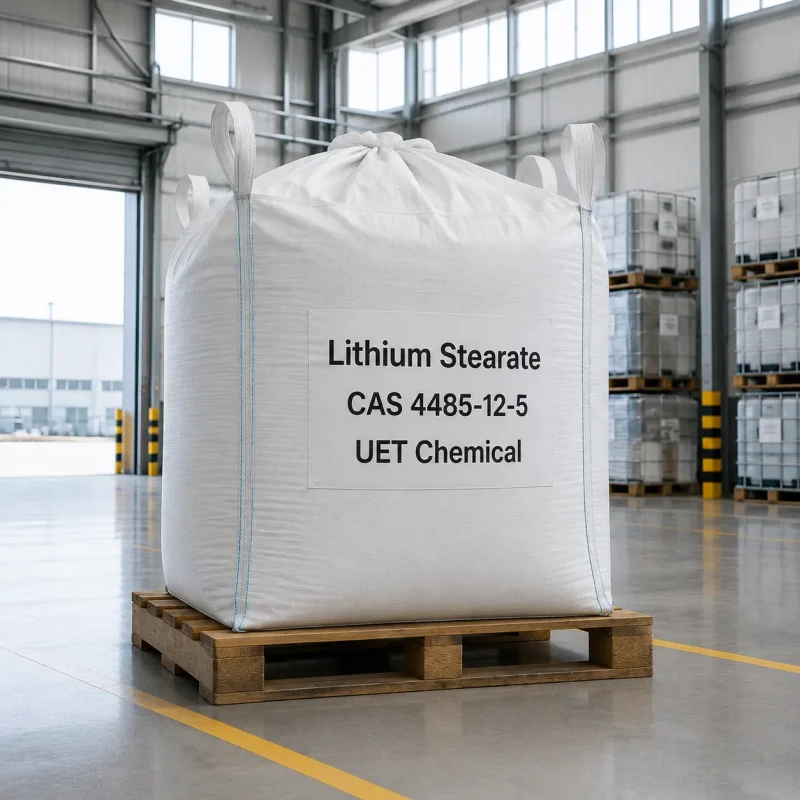
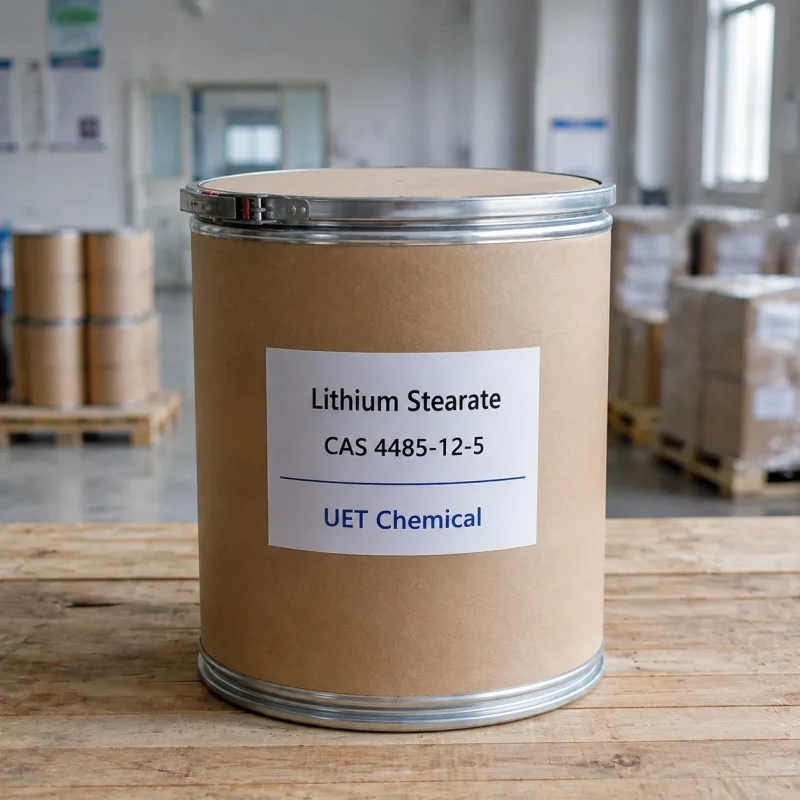
- Packaging: 20 kg (44 lb) kraft bag, 500 kg (1102 lb) pallet. Custom packaging available upon request.
- Main Applications: Lithium-based lubricating greases, plastic mold release agents, powder metallurgy, cosmetics
Introduction to Lithium Stearate
Lithium Stearate is a metallic soap synthesized through the neutralization of stearic acid with lithium hydroxide. The molecular structure consists of a polar lithium cation bonded to a long, non-polar octadecyl hydrocarbon chain. This specific amphiphilic architecture dictates the material’s physical behavior in both organic and inorganic matrices. At room temperature, the compound presents as a white to off-white fine powder with a faint, characteristic fatty odor.
The material remains insoluble in water but dissolves readily in hot alcohols and mineral oils. Industrial manufacturing facilities consume this intermediate to construct stable three-dimensional gel networks in lubricants, modify the surface energy of thermoplastic molds, and reduce inter-particle friction during powder compaction processes.
Key Features of Lithium Stearate
- Fibrous crystall lattice: The specific crystal morphology intertwines to form a robust sponge-like matrix capable of retaining large volumes of liquid base oil.
- High dropping point: Maintains its solid structural integrity at elevated temperatures, preventing the lubricant from melting and leaking out of the bearing housing.
- Surface activity: The polar lithium head anchors to metallic surfaces while the aliphatic tail projects outward, creating a low-friction, non-stick boundary layer.
Lithium Stearate Chemical & Physical Properties
| Property | Value |
|---|---|
| Molecular Formula | C18H35LiO2 |
| Molecular Weight | 290.41 g/mol |
| Appearance | White to off-white fine powder |
| Melting Point / Dropping Point | ~220 °C (428 °F) |
| Density | 1.02 g/cm³ (8.51 lb/gal) at 20 °C |
| Solubility | Insoluble in water; soluble in hot alcohols and hot oils |
Applications of Lithium Stearate
Lithium-based lubricating greases: Reacts with base oils and excess fatty acids like Stearic Acid to manufacture multi-purpose lithium greases. The soap fibers thicken the fluid phase, creating a semi-solid lubricant that resists water washout and mechanical shearing in heavy-duty automotive and industrial bearings.
Polymer processing and mold release: Blended into thermoplastic resins or applied directly to metal tooling surfaces. The metallic soap reduces the coefficient of friction, facilitating the smooth ejection of complex plastic parts. Manufacturers frequently combine it with hydrocarbon waxes like Paraffin Wax to optimize the slip and anti-blocking properties of extruded plastic films.
Powder metallurgy and ceramics: Added at 0.5% – 2.0% to metal or ceramic powder blends prior to cold isostatic pressing. The powder coats the individual particles, reducing die-wall friction and preventing crack formation during the compaction and subsequent sintering phases.
Storage & Safety Precautions for Lithium Stearate
- Moisture and contamination control: Store in tightly sealed, multi-wall kraft bags on pallets below 35 °C (95 °F). The powder is slightly hygroscopic; moisture ingress causes clumping and complicates automated dosing into grease kettles.
- Dust management: The fine dust poses a mild nuisance hazard and can create combustible dust clouds in enclosed silos. Use local exhaust ventilation and wear N95 respirators during bag slitting and bulk transfer operations.
- Handling and PPE: Wear safety goggles and nitrile gloves. The material is generally non-toxic but can cause mild mechanical irritation to the eyes and respiratory tract due to its particulate nature.
- Field note: When cooking lithium grease in a saponification kettle, pre-disperse the Lithium Stearate powder into the cold base oil before applying heat. Dumping the dry powder into hot oil creates severe, un-dispersible agglomerates that ruin the smooth texture of the final grease batch.
Lithium Stearate FAQ
Q: How does Lithium Stearate function in lubricating greases?
A: Lithium Stearate acts as a primary thickener in multi-purpose lithium greases. Its fibrous crystall structure forms a stable matrix that traps base oils, preventing leakage under high shear and elevated temperatures while ensuring excellent mechanical stability.
Q: Why is Lithium Stearate preferred as a polymer release agent?
A: Lithium Stearate provides a non-stick, thermally stable barrier on metal molds. During high-temperature injection molding or extrusion, it migrates to the surface, reducing friction and ensuring smooth part ejection without leaving oily residues on the final product.
Q: What causes Lithium Stearate to degrade in extreme conditions?
A: Lithium Stearate maintains stability up to its dropping point, but prolonged exposure to excessive heat or water washout can break down the soap matrix. Formulators must select appropriate base oils and antioxidants to preserve the structural integrity of the grease.
Related products
Manufacturer & Exporter Since 2006
Get Tailored Chemical Raw Material Solutions — Reply Within 1 Hour
Factory-direct pricing, stable high-purity supply and complete compliance documentation for your industrial formulations.
- 1000+Products
- 200+QC Protocols
- 7–15Days Delivery
- Factory-Direct Pricing
- COA / TDS / SDS Included
- Free Samples for Testing
- 40+ Export Countries
Request a Free Quote
Our engineers reply within 1 hour during GMT+8 business hours.
Please include in your inquiry:
- Product name or CAS number
- Required quantity
- Destination country or port
- Preferred packaging