
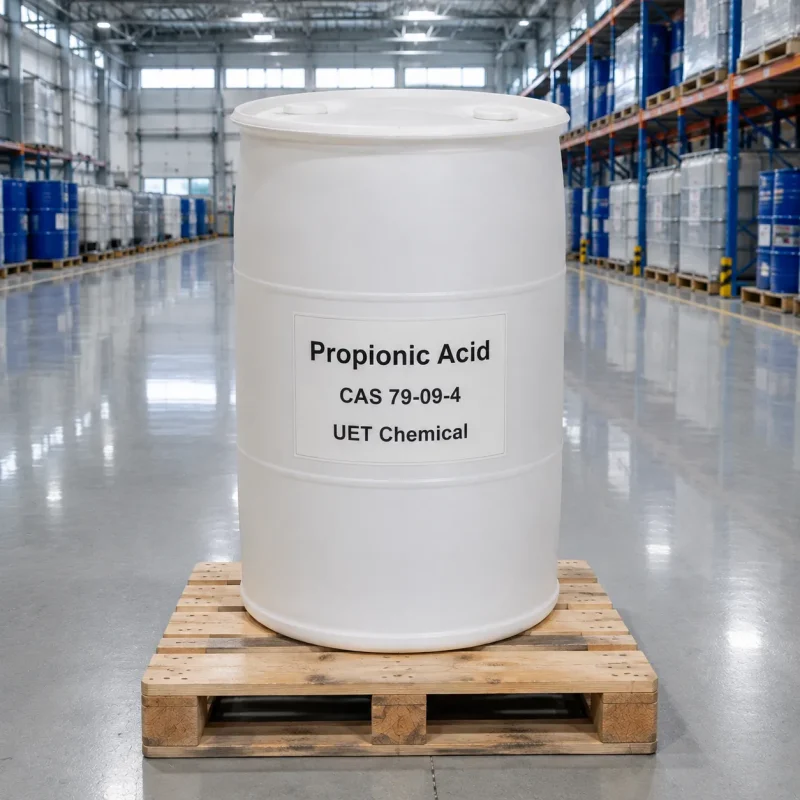
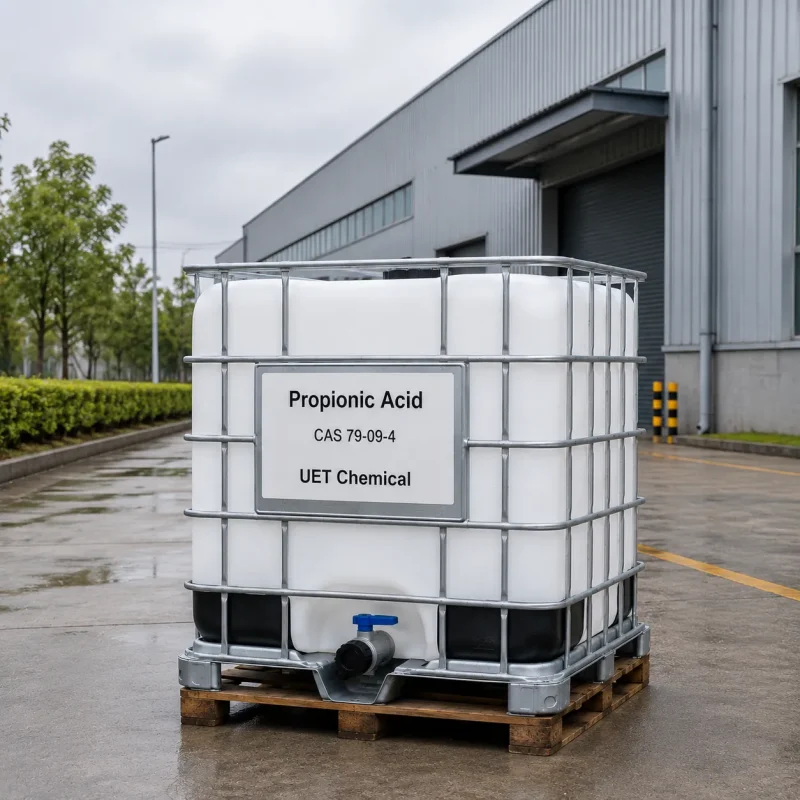
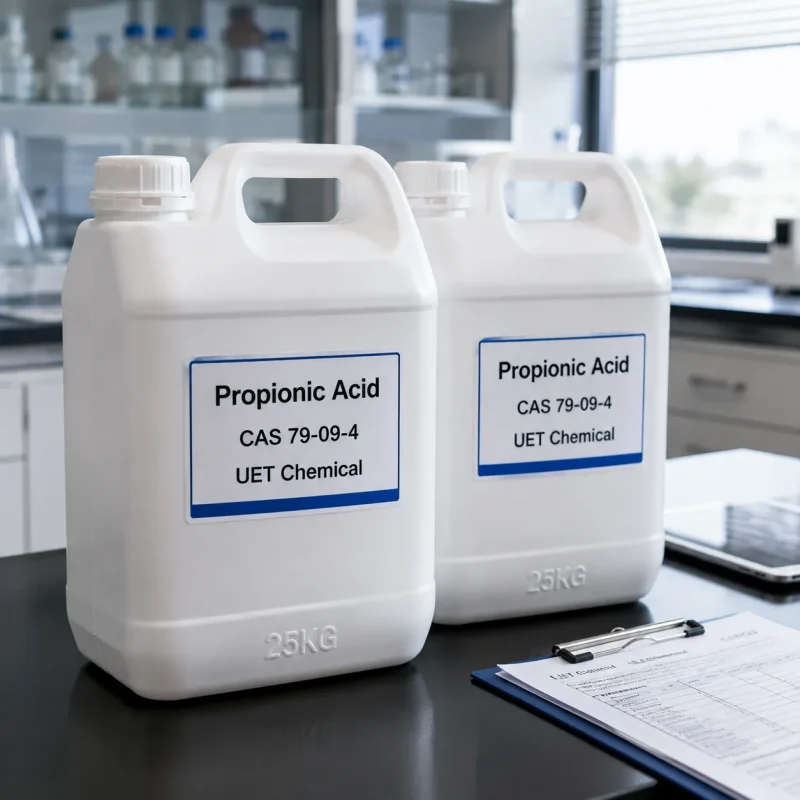
Propionic Acid CAS 79-09-4
Propionic Acid is a three-carbon aliphatic carboxylic acid that solves mold proliferation, feed spoilage, and low-yield esterification challenges in agricultural and chemical manufacturing. Feed millers and fine chemical producers rely on it for grain preservatives, herbicide intermediates, and fragrance esters. UETChem supplies this product with strict control over purity, moisture, and color, ensuring maximum salt conversion rates and zero unwanted side reactions. Each shipment includes COA, TDS, SDS.
- CAS No: 79-09-4
- Synonyms: Propanoic acid; Ethylformic acid; Methylacetic acid
- EINECS: 201-176-3
- Molecular Formula: C3H6O2
- Molecular Weight: 74.08 g/mol
- Appearance: Colorless to pale yellow clear liquid
- Purity: 99.5% min
- Moisture: 0.15% max
- Flash Point: 52 °C (126 °F) closed cup
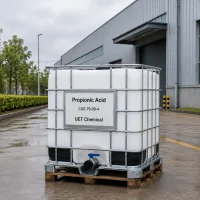
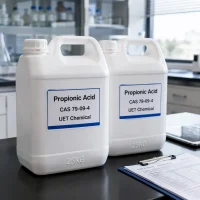
- Packaging: 200 kg (441 lb) HDPE drum, 1000 kg (2205 lb) IBC. Custom packaging available upon request.
- Main Applications: Feed preservatives, pesticide intermediates, pharmaceutical synthesis, flavor and fragrance esters
Introduction to Propionic Acid
Propionic Acid is a short-chain aliphatic carboxylic acid consisting of a three-carbon backbone terminating in a carboxyl group. The molecular structure imparts high volatility and a distinct, pungent odor at room temperature. The liquid remains completely miscible with water and dissolves readily in most organic solvents, alcohols, and ethers. Chemical processing facilities consume this intermediate to synthesize antimicrobial salts, formulate crop protection agents, and manufacture specialty esters. The compound maintains chemical stability under standard storage conditions but actively participates in neutralization and esterification reactions when exposed to bases or alcohols.
Key Features of Propionic Acid
- Short-chain volatility: The low molecular weight allows the acid to vaporize easily, providing effective fumigation properties in enclosed grain storage silos.
- Strong acidic nature: Readily donates protons to lower the pH of aqueous systems, disrupting the cellular metabolism of mold and bacteria.
- High reactivity: The terminal carboxyl group undergoes rapid neutralization with metal hydroxides and smooth esterification with aliphatic alcohols.
Propionic Acid Chemical & Physical Properties
| Property | Value |
|---|---|
| Molecular Formula | C3H6O2 |
| Molecular Weight | 74.08 g/mol |
| Appearance | Colorless to pale yellow clear liquid |
| Boiling Point | 141 °C (286 °F) |
| Freezing Point | -21 °C (-6 °F) |
| Density | 0.99 g/cm³ (8.26 lb/gal) at 20 °C |
| Flash Point | 52 °C (126 °F) closed cup |
Applications of Propionic Acid
Feed and grain preservatives: Applied directly to silage and stored grains to inhibit mold growth and prevent spontaneous combustion. The acid is frequently neutralized with calcium hydroxide to produce Calcium Propionate, a stable, odorless powder widely used as a dough conditioner and preservative in commercial bakeries.
Pesticide and pharmaceutical intermediates: Serves as a foundational building block for synthesizing aryloxyphenoxypropionate herbicides. In pharmaceutical manufacturing, the acid provides the propionyl group required for various active pharmaceutical ingredients. Formulators often handle it alongside other organic acids like Benzoic Acid to engineer specific antimicrobial profiles for crop protection formulations.
Flavor and fragrance esters: Reacted with alcohols to produce fruity-smelling esters used in artificial flavorings and perfumes. The reaction kinetics are often optimized by blending the feedstock with catalysts and other acidulants like Citric Acid to fine-tune the final aromatic profile of the fragrance compound.
Storage & Safety Precautions for Propionic Acid
- Corrosion and material compatibility: Store in tightly sealed 316L stainless steel, HDPE, or fluoropolymer-lined tanks. The acid is highly corrosive to carbon steel, aluminum, and copper, especially when trace moisture is present. Never use standard galvanized fittings for transfer lines.
- Ventilation and odor control: The pungent, rancid odor is detectable at extremely low concentrations. Operate local exhaust ventilation in the dispensing area and store drums in a well-ventilated, cool warehouse away from oxidizing agents.
- Handling and PPE: The concentrated liquid causes severe chemical burns and permanent eye damage. Wear a full-face shield, heavy-duty butyl rubber gloves, and a chemical apron during drum decanting and reactor charging operations.
Propionic Acid FAQ
Q: How is Propionic Acid used in food preservation?
A: Propionic Acid acts as a precursor for food-grade preservatives. Manufacturers neutralize it with calcium hydroxide to produce calcium salts that inhibit mold growth in baked goods. The high purity of the acid ensures no off-odors are transferred to the final food products.
Q: Does Propionic Acid corrode storage tanks?
A: Yes, Propionic Acid is highly corrosive to carbon steel and aluminum, especially when trace moisture is present. Facilities must store it in 316L stainless steel or high-density polyethylene (HDPE) tanks. Proper grounding and ventilation are required during transfer operations.
Q: Why does Propionic Acid have a pungent odor?
A: Propionic Acid is a volatile short-chain fatty acid that naturally emits a sharp, rancid, and irritating odor. This volatility allows it to act as an effective fumigant in grain storage. Operators must use local exhaust ventilation and respiratory protection when handling the liquid.
Related products
Manufacturer & Exporter Since 2006
Get Tailored Chemical Raw Material Solutions — Reply Within 1 Hour
Factory-direct pricing, stable high-purity supply and complete compliance documentation for your industrial formulations.
- 1000+Products
- 200+QC Protocols
- 7–15Days Delivery
- Factory-Direct Pricing
- COA / TDS / SDS Included
- Free Samples for Testing
- 40+ Export Countries
Request a Free Quote
Our engineers reply within 1 hour during GMT+8 business hours.
Please include in your inquiry:
- Product name or CAS number
- Required quantity
- Destination country or port
- Preferred packaging