
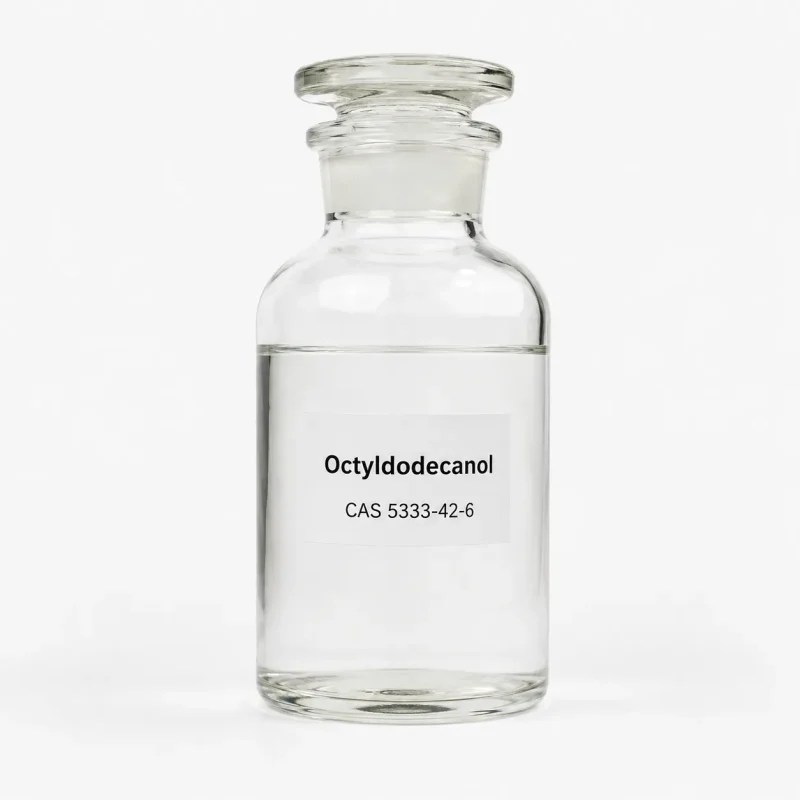
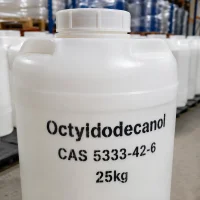
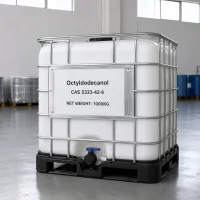
Octyldodecanol CAS 5333-42-6
Octyldodecanol is a branched aliphatic primary alcohol synthesized via the Guerbet reaction, solving oxidation rancidity, low-temperature crystallization, and greasy skin feel challenges in personal care formulations. Cosmetic and pharmaceutical manufacturers rely on it as a premium emollient, pigment dispersant, and lipstick base. UETChem supplies this product with strict control over acid value, hydroxyl value, and color, ensuring exceptional oxidative stability and a silky texture. Each shipment includes COA, TDS, SDS.
- CAS No: 5333-42-6
- Synonyms: 2-Octyl-1-dodecanol; Eutanol G; 2-Octyldodecan-1-ol
- EINECS: 226-242-9
- Molecular Formula: C20H42O
- Molecular Weight: 298.55 g/mol
- Appearance: Colorless to pale yellow clear viscous liquid
- Hydroxyl Value: 175 – 190 mg KOH/g
- Acid Value: 0.5 mg KOH/g max
- Pour Point: < -30 °C (< -22 °F)
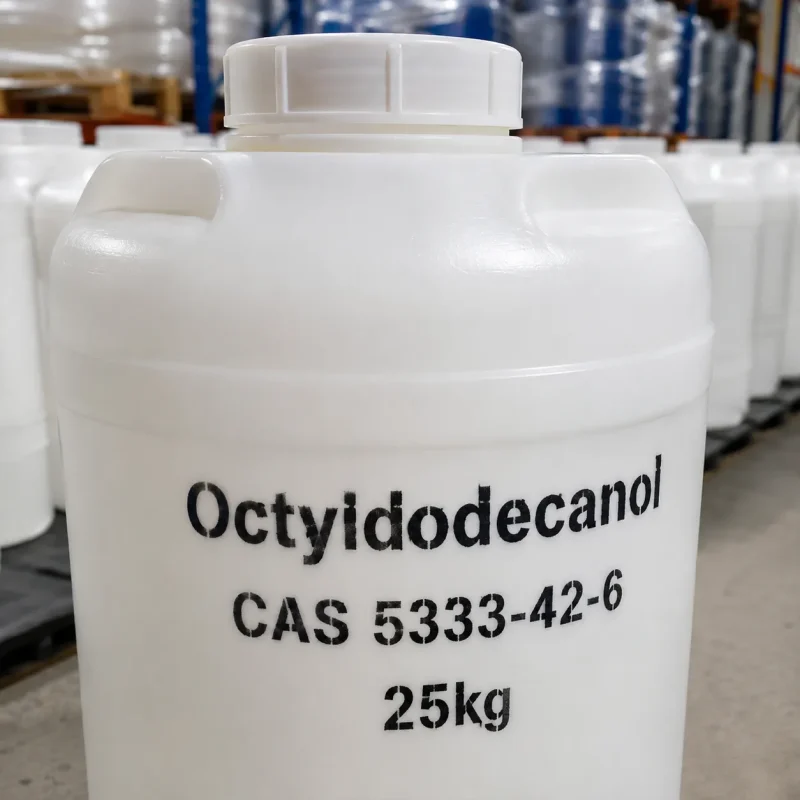
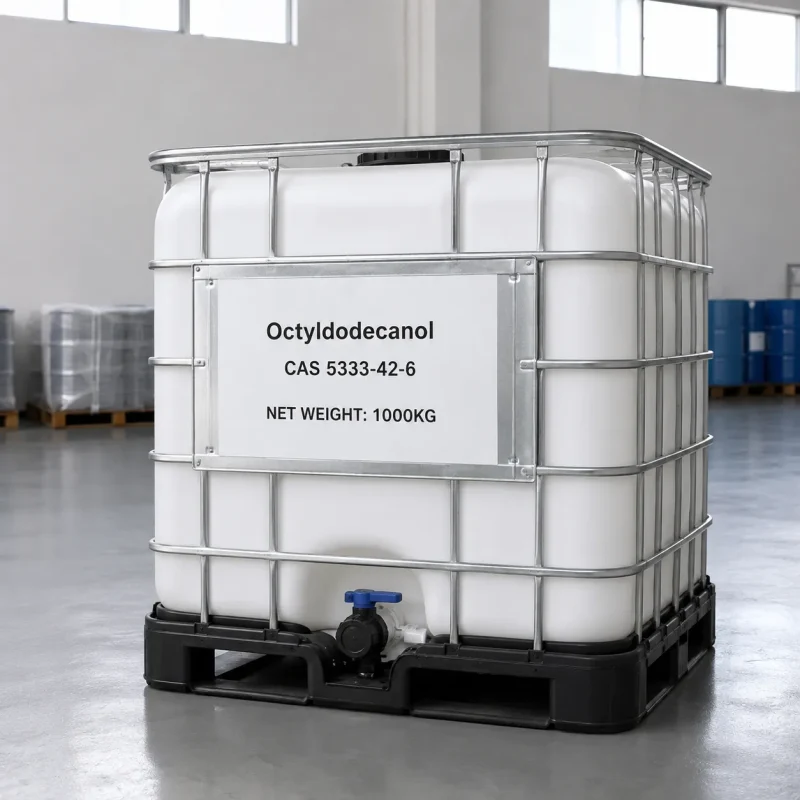
- Packaging: 190 kg (419 lb) HDPE drum, 900 kg (1984 lb) IBC. Custom packaging available upon request.
- Main Applications: Skincare emollients, color cosmetics, hair conditioners, pharmaceutical ointments
Introduction to Octyldodecanol
Octyldodecanol is a C20 branched aliphatic primary alcohol produced by the condensation of two decanol molecules through the Guerbet reaction. The molecular structure features a long hydrophobic carbon chain with a bulky octyl branch located at the second carbon position adjacent to the primary hydroxyl group. This specific branching prevents the molecules from packing tightly together, maintaining a liquid state even at extremely low temperatures.
The compound exists as a colorless to pale yellow viscous liquid with a faint, characteristic odor. It is insoluble in water but mixes completely with mineral oils, vegetable fats, and most organic solvents. Formulators utilize this medium-polarity lipid to dissolve solid active ingredients, disperse inorganic pigments, and modify the rheology of emulsions without leaving a heavy, occlusive film on the skin.
Key Features of Octyldodecanol
- Branched C20 structure: The steric hindrance from the octyl branch depresses the melting point below -30 °C, eliminating winter crystallization issues common in straight-chain fatty alcohols.
- Absence of double bonds: The fully saturated carbon backbone provides outstanding resistance to autoxidation, preventing the development of rancid off-odors in long-shelf-life products.
- Medium polarity profile: Effectively solubilizes polar UV filters and disperses hydrophobic pigments, ensuring uniform color payoff in lipsticks and foundations.
Octyldodecanol Chemical & Physical Properties
| Property | Value |
|---|---|
| Molecular Formula | C20H42O |
| Molecular Weight | 298.55 g/mol |
| Appearance | Colorless to pale yellow viscous liquid |
| Hydroxyl Value | 175 – 190 mg KOH/g |
| Acid Value | 0.5 mg KOH/g max |
| Refractive Index | 1.450 – 1.455 at 20 °C |
| Density | 0.84 – 0.85 g/cm³ at 20 °C |
| Pour Point | < -30 °C (< -22 °F) |
Applications of Octyldodecanol
Skincare and sun care formulations: Dosed at 2-10% in creams and lotions to provide a rich, velvety spreadability. The lipid acts as an excellent solvent for crystalline UV filters and active compounds. Formulators frequently combine it with Dexpanthenol to enhance skin barrier repair while maintaining a breathable, non-tacky finish.
Color cosmetics and lipsticks: Serves as a primary binder and pigment wetting agent in stick cosmetics. The liquid prevents the wax matrix from becoming brittle. Blending it with Stearic Acid and natural waxes adjusts the hardness and melting profile of the lipstick bullet, ensuring a smooth glide without dragging on the lips.
Haircare and bath oils: Incorporated into conditioning masks and shower oils to impart high gloss and detangling properties. The emollient coats the hair cuticle, reducing friction and static flyaway without weighing down fine hair strands.
Storage & Safety Precautions for Octyldodecanol
- Container and environment: Store in tightly sealed HDPE drums or stainless steel tanks away from direct sunlight. Although highly stable, prolonged UV exposure can slowly degrade the liquid over several years. Keep the warehouse temperature between 5 °C and 35 °C (41 °F – 95 °F).
- Handling and PPE: The material is non-hazardous for transport and exhibits very low skin and eye irritation. Standard chemical splash goggles and nitrile gloves are recommended during bulk transfer to prevent slip hazards from oily spills on concrete floors.
- Field note: When manufacturing water-in-oil (W/O) emulsions, pre-mix the Octyldodecanol with the lipophilic emulsifier and heat to 75 °C (167 °F) before adding the aqueous phase. This ensures the formation of a stable, fine-particle emulsion network.
Octyldodecanol FAQ
Q: Why is Octyldodecanol preferred over natural oils in lipsticks?
A: Octyldodecanol provides excellent pigment wetting and a non-greasy glide on lips. Unlike unsaturated natural oils, its saturated branched C20 structure prevents oxidation and rancidity, ensuring the lipstick maintains its color payoff and shelf life without developing off-odors.
Q: Does Octyldodecanol oxidize or turn rancid over time?
A: Octyldodecanol exhibits exceptional oxidative stability because it is a fully saturated, branched alcohol lacking double bonds. It resists rancidity and off-odors when exposed to air, making it an ideal long-lasting emollient for sensitive cosmetic and pharmaceutical formulations.
Q: How does Octyldodecanol affect the texture of skincare creams?
A: Octyldodecanol imparts a rich, silky, and non-tacky skin feel to emulsions. Its medium polarity allows it to dissolve active ingredients and UV filters easily. When blended with emulsifiers, it improves the spreadability of the cream, leaving a breathable, velvety finish without heavy greasiness.
Related products
Manufacturer & Exporter Since 2006
Get Tailored Chemical Raw Material Solutions — Reply Within 1 Hour
Factory-direct pricing, stable high-purity supply and complete compliance documentation for your industrial formulations.
- 1000+Products
- 200+QC Protocols
- 7–15Days Delivery
- Factory-Direct Pricing
- COA / TDS / SDS Included
- Free Samples for Testing
- 40+ Export Countries
Request a Free Quote
Our engineers reply within 1 hour during GMT+8 business hours.
Please include in your inquiry:
- Product name or CAS number
- Required quantity
- Destination country or port
- Preferred packaging