
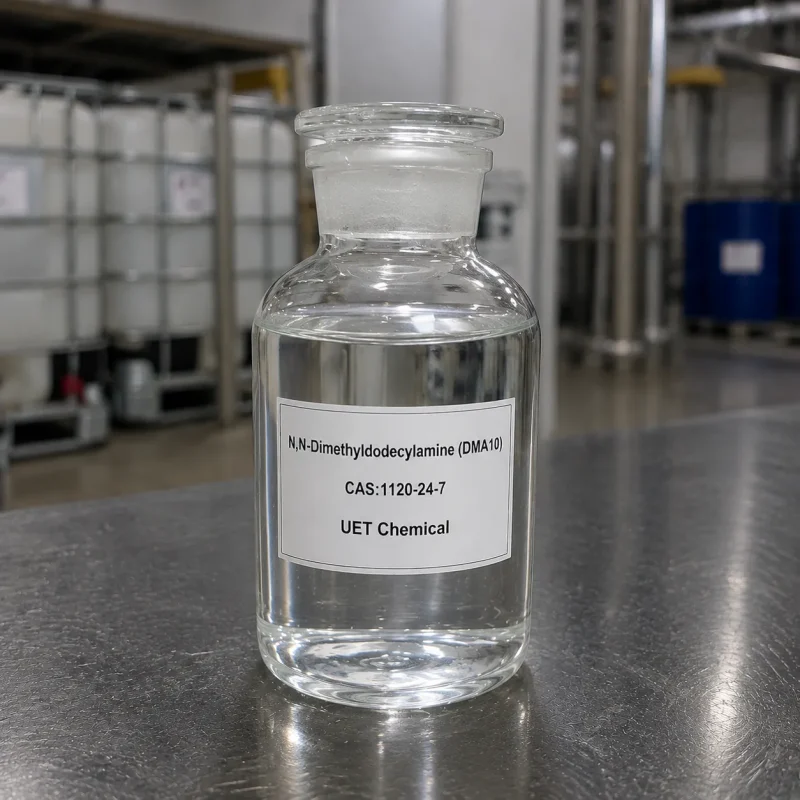
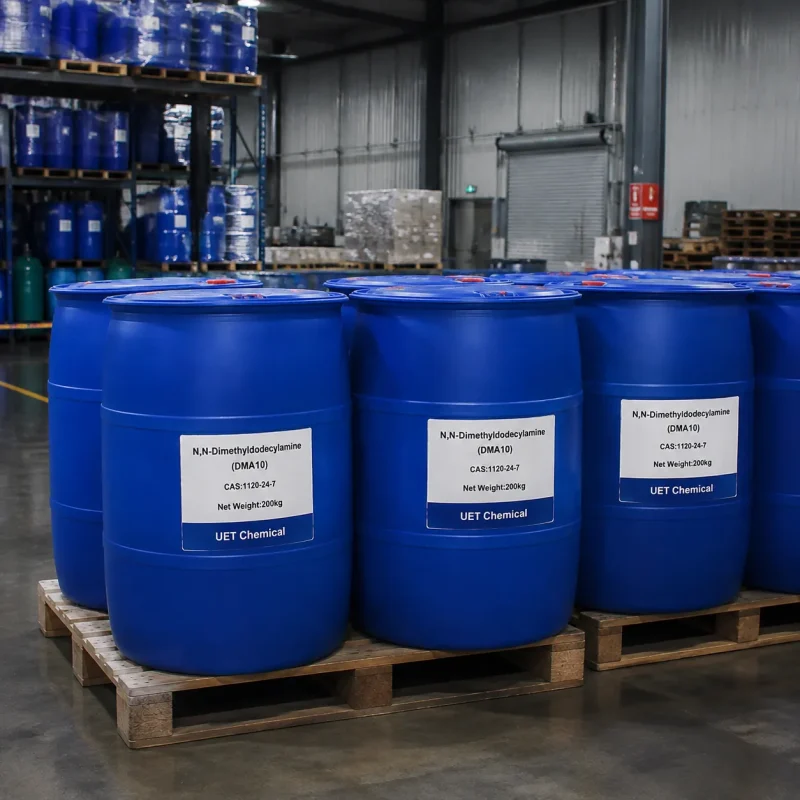
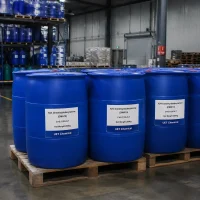
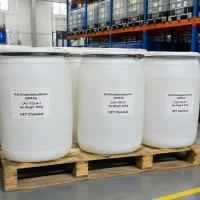
N,N-Dimethyldecylamine (DMA10) CAS 1120-24-7
N,N-Dimethyldecylamine (DMA10) is a C10 tertiary aliphatic amine with a straight decyl chain and dimethylamino functional group. It serves as a key intermediate for quaternary ammonium biocides, amine oxide surfactants, and polyurethane catalysts, addressing low efficacy of short-chain variants and excessive foaming in industrial systems. UETChem supplies high-purity DMA10 with tight moisture and color control for consistent downstream reactivity. Each shipment includes COA, TDS, SDS.
- CAS No: 1120-24-7
- Synonyms: DMA10; N,N-Dimethyl-1-decanamine; Decyldimethylamine; N,N-Dimethyl-n-decylamine; 1-Decanamine, N,N-dimethyl-; Capric dimethylamine
- EINECS: 214-304-8
- Molecular Formula: C12H27N
- Molecular Weight: 185.35 g/mol
- Appearance: Clear colorless to pale yellow liquid
- Assay: 98.0% min
- Color (APHA): 30 max
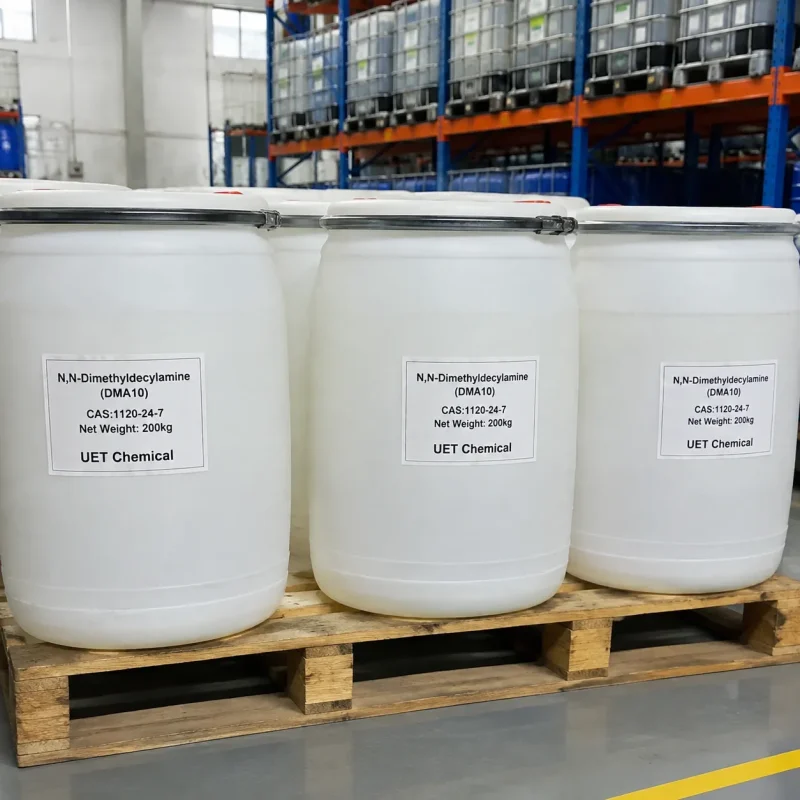
- Packaging: 150 kg HDPE drum, ISO tank. Custom packaging available upon request.
- Main Applications: Quaternary ammonium biocides, amine oxide surfactants, PU catalysts, oilfield corrosion inhibitors
Introduction to DMA10
N,N-Dimethyldecylamine is built on a ten-carbon linear alkyl chain bonded to a reactive dimethylamino headgroup. The C10 chain length strikes a balance between lipophilicity and water dispersibility, supporting effective microbial membrane penetration without causing heavy foaming in formulated products. It appears as a clear colorless to pale yellow liquid at room temperature, with a characteristic pungent fishy amine odor.
The compound is practically insoluble in water and miscible with ethanol, isopropanol and non-polar hydrocarbon solvents. Industrial production uses precision fractionation to achieve target purity and mild odor profiles. It readily undergoes quaternization with alkyl halides and oxidation with peroxide-based reagents.
DMA10 Chemical & Physical Properties
| Property | Value |
|---|---|
| Molecular Formula | C12H27N |
| Molecular Weight | 185.35 g/mol |
| Assay | 98.0% min |
| Color (APHA) | 30 max |
| Appearance | Clear colorless to pale yellow liquid |
| Water Solubility | Practically insoluble |
Applications of DMA10
Quaternary ammonium biocides: Reacts with benzyl chloride to produce decyl benzalkonium chloride (C10 BKC), a cationic biocide with targeted activity against gram-negative bacteria and algae. The low-foaming profile makes it suitable for clean-in-place systems and cooling tower water treatment.
Amine oxide and betaine surfactants: Oxidizes to form decyl dimethyl amine oxide, a hydrotrope and foam stabilizer for heavy-duty hard surface cleaners. It also serves as a precursor for decyl betaine, used in personal care formulations for mild skin feel.
Polyurethane catalysts: Acts as a specialized co-catalyst in polyurethane foam production, balancing blowing and gelling reactions to promote uniform cell structure and consistent foam quality.
Oilfield chemicals: Serves as a precursor for filming amine corrosion inhibitors in downhole operations. The C10 chain anchors to steel pipe surfaces, forming a protective barrier against acidic brines and hydrogen sulfide exposure.
Storage & Safety Precautions for DMA10
- Store in cool, dry conditions with nitrogen blanketing on bulk tanks. Avoid exposure to atmospheric oxygen and carbon dioxide to preserve color and active amine value.
- Use only 316 stainless steel or PTFE-lined equipment for transfer and storage. Contact with copper or brass alloys catalyzes oxidation and forms dark colored complexes that degrade downstream product quality.
- Handle concentrated material as corrosive and a skin sensitizer. Wear chemical splash goggles, heavy-duty nitrile gloves and long sleeve protective clothing during bulk transfer operations.
DMA10 FAQ
Q: How does N,N-Dimethyldecylamine (DMA10) improve biocide performance?
A: It reacts into decyl benzalkonium chloride. The C10 chain enables rapid bacterial cell penetration, delivering strong algae activity with minimal foam for clean-in-place systems.
Q: Why is N,N-Dimethyldecylamine (DMA10) preferred for amine oxide synthesis?
A: It oxidizes cleanly to decyl dimethyl amine oxide with balanced surface activity. High-purity feedstock preserves water-white color in final surfactant products.
Q: What causes N,N-Dimethyldecylamine (DMA10) to turn dark during storage?
A: Exposure to air or trace copper catalyzes oxidation and forms dark complexes. Store in nitrogen-blanketed stainless steel equipment to avoid discoloration.
Related products
Manufacturer & Exporter Since 2006
Get Tailored Chemical Raw Material Solutions — Reply Within 1 Hour
Factory-direct pricing, stable high-purity supply and complete compliance documentation for your industrial formulations.
- 1000+Products
- 200+QC Protocols
- 7–15Days Delivery
- Factory-Direct Pricing
- COA / TDS / SDS Included
- Free Samples for Testing
- 40+ Export Countries
Request a Free Quote
Our engineers reply within 1 hour during GMT+8 business hours.
Please include in your inquiry:
- Product name or CAS number
- Required quantity
- Destination country or port
- Preferred packaging