
N-Ethyl-2-Pyrrolidone (NEP) CAS 2687-91-4
N-Ethyl-2-Pyrrolidone (NEP) is a high-boiling cyclic amide dipolar aprotic solvent built on a five-member lactam ring with an N-ethyl side chain. It acts as a high-solvency carrier for agrochemical concentrates, photoresist stripping and polyimide synthesis, dissolving non-polar active ingredients and polar polymers without additional co-solvents. UETChem supplies high-purity NEP with tight moisture control to prevent hydrolysis and ensure formulation stability. Each shipment includes COA, TDS, SDS.
- CAS No: 2687-91-4
- Synonyms: 1-Ethyl-2-pyrrolidone; NEP; N-Ethylpyrrolidone; 1-Ethylpyrrolidin-2-one
- EINECS: 220-249-0
- Molecular Formula: C6H11NO
- Molecular Weight: 113.16 g/mol
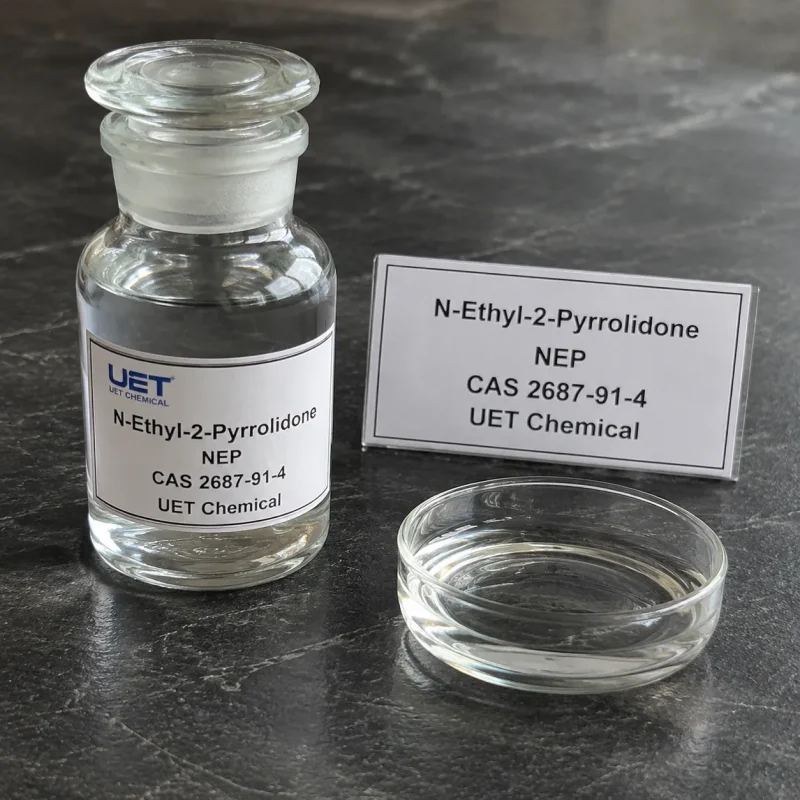
- Appearance: Colorless to pale yellow liquid
- Purity: 99.5% min (GC area normalization)
- Water Content: 0.10% max (Karl Fischer)
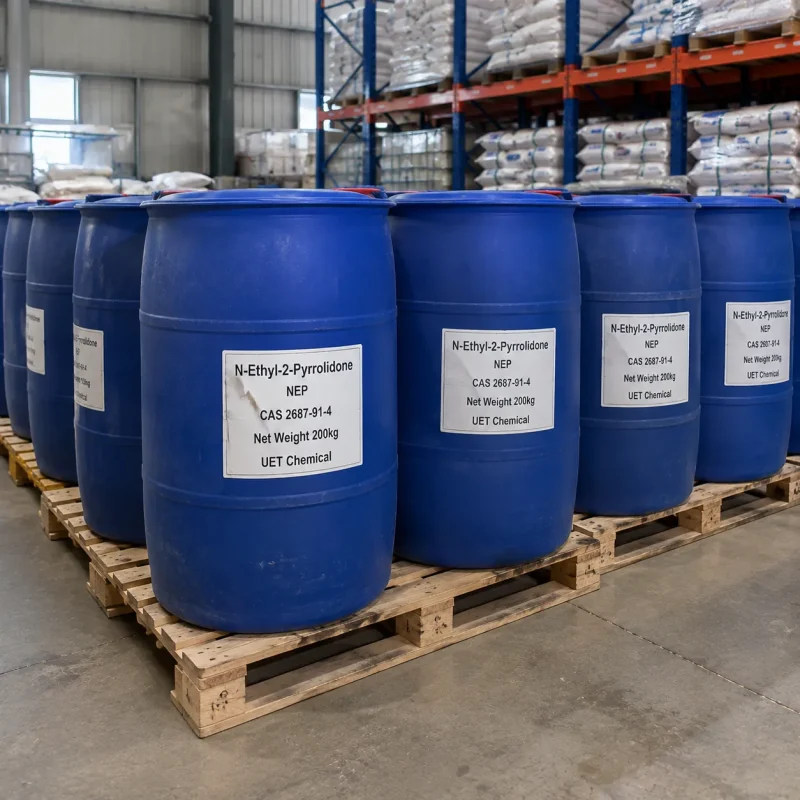
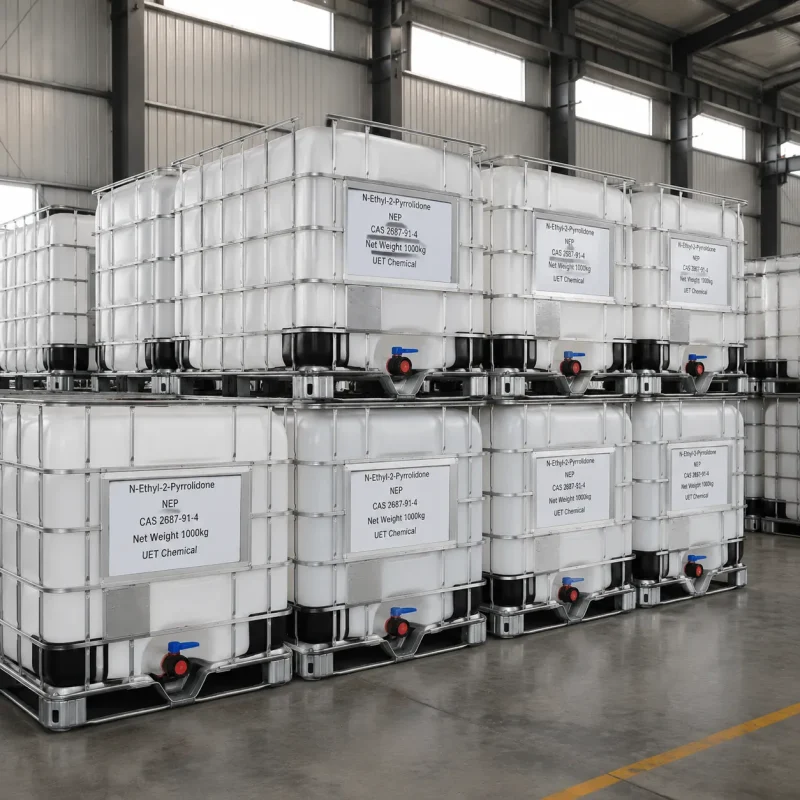
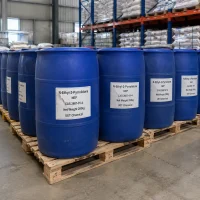
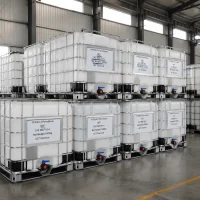
- Packaging: 200 kg HDPE drum, 1000 kg IBC. Custom packaging available upon request.
- Main Applications: Agrochemical carriers, photoresist stripping, polyimide synthesis, industrial process solvent
Introduction to NEP
N-Ethyl-2-Pyrrolidone is a dipolar aprotic solvent combining a cyclic lactam structure with an ethyl alkyl group. The structure balances polar and lipophilic character, enabling it to dissolve a wide range of organic compounds, polymers and solid active ingredients. It appears as a colorless to pale yellow liquid at room temperature, miscible with water and most common organic solvents.
The compound exhibits good thermal stability at elevated temperatures, and is not classified as a Substance of Very High Concern under REACH. It is highly hygroscopic; excess moisture triggers ring-opening hydrolysis at high temperatures, forming basic amine byproducts that disrupt acid-sensitive formulations.
NEP Chemical & Physical Properties
| Property | Value |
|---|---|
| Molecular Formula | C6H11NO |
| Molecular Weight | 113.16 g/mol |
| Boiling Point | 212–214 °C (ASTM D1078) |
| Density (20 °C) | 1.025–1.035 g/cm³ |
| Flash Point (Closed Cup) | 98 °C (ASTM D93) |
| Water Solubility | Miscible |
| Refractive Index (nD20) | 1.468–1.472 |
| Vapor Pressure (20 °C) | ~0.1 mmHg |
Applications of NEP
Agrochemical formulations: Serves as a carrier solvent for emulsifiable concentrates and suspension concentrates. It dissolves solid active ingredients such as pyrethroids, maintaining low-temperature stability and preventing crystallization during cold storage.
Photoresist stripping: Used in semiconductor manufacturing to swell and remove crosslinked photoresist polymers from silicon wafers. It breaks adhesive bonds between resist layers and substrate surfaces under moderate temperature conditions.
Polyimide processing: Dissolves dianhydride and diamine monomers for polyamic acid preparation. It supports controlled viscosity for film casting and coating processes in electronic and advanced material applications.
Industrial process solvent: Functions as a specialty solvent for specialty chemical reactions, polymer processing and surface cleaning operations, with low evaporative loss due to its low vapor pressure.
Storage & Safety Precautions for NEP
- Store in sealed HDPE or stainless steel drums below 35 °C. Blanket bulk tanks with dry nitrogen to prevent moisture ingress. Excess water causes ring-opening hydrolysis, pH drift and formulation incompatibility.
- Wear splash goggles, nitrile gloves and protective aprons during bulk transfer. The material causes serious eye irritation. Contain spills with absorbent material and flush with water.
- Heat IBC containers to 30 °C with band heaters before winter transfer. Low temperatures increase viscosity significantly, which can cause pump cavitation during dispensing.
NEP FAQ
Q: How do you test water content in N-Ethyl-2-Pyrrolidone (NEP)?
A: Tested via Karl Fischer titration per ASTM E203. Strict moisture control below 0.10% prevents hydrolysis and amine formation.
Q: Does NEP require MEHQ stabilizers for bulk storage?
A: No. It has no double bonds so polymerization cannot occur. Dry nitrogen blanketing is sufficient for stabilization.
Q: Why does pH rise in aged NEP drums?
A: Moisture ingress triggers ring-opening hydrolysis, forming basic amines. Nitrogen blanketing controls moisture and prevents pH drift.
Q: What happens to NEP in cold winter conditions?
A: Viscosity increases sharply at low temperatures, causing pump cavitation. Pre-warm containers to 30 °C before transfer.
Related products
Manufacturer & Exporter Since 2006
Get Tailored Chemical Raw Material Solutions — Reply Within 1 Hour
Factory-direct pricing, stable high-purity supply and complete compliance documentation for your industrial formulations.
- 1000+Products
- 200+QC Protocols
- 7–15Days Delivery
- Factory-Direct Pricing
- COA / TDS / SDS Included
- Free Samples for Testing
- 40+ Export Countries
Request a Free Quote
Our engineers reply within 1 hour during GMT+8 business hours.
Please include in your inquiry:
- Product name or CAS number
- Required quantity
- Destination country or port
- Preferred packaging