
Methyl Tetrahydrophthalic Anhydride (MTHPA) CAS 19438-64-3
Methyl Tetrahydrophthalic Anhydride (MTHPA) is a methyl-substituted cyclic acid anhydride curing agent supplied as a low-viscosity liquid. It eliminates the melting requirement of solid anhydrides and reduces initial viscosity in epoxy casting systems, serving electronic encapsulation, electrical insulation and composite manufacturing. UETChem supplies high-purity MTHPA with tight control over color, acid value and moisture, delivering consistent mixing performance and excellent electrical insulation properties. Each shipment includes COA, TDS, SDS.
- CAS No: 19438-64-3
- Synonyms: MTHPA; Methyltetrahydrophthalic anhydride; 3-Methyl-1,2,3,6-tetrahydrophthalic anhydride; 4-Methyl-1,2,3,6-tetrahydrophthalic anhydride; MeTHPA; Methyl tetrahydrophthalic anhydride isomer mixture
- EINECS: 243-062-6
- Molecular Formula: C9H10O3
- Molecular Weight: 166.17 g/mol
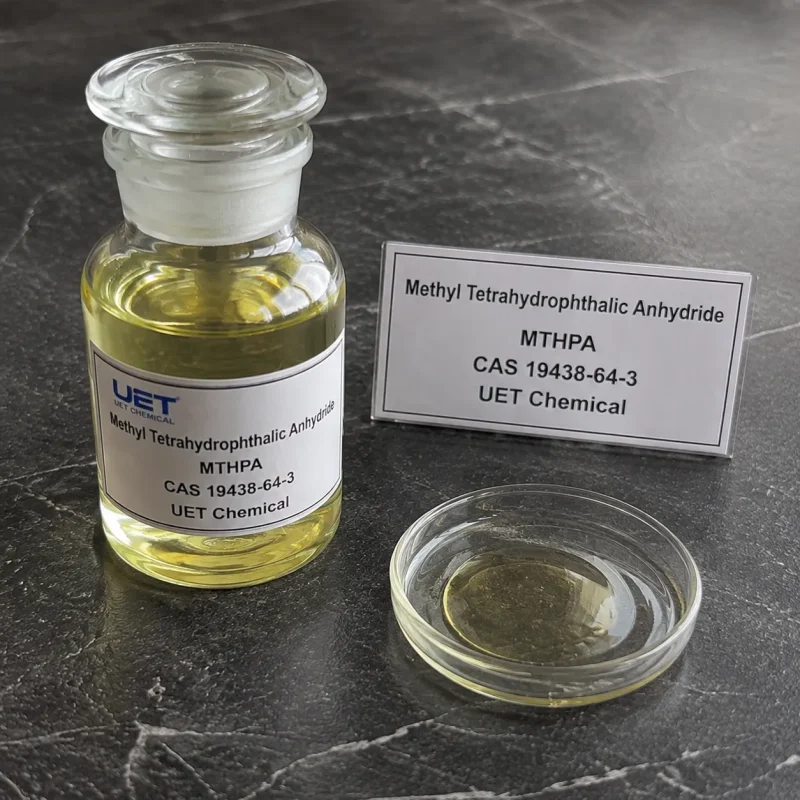
- Appearance: Clear colorless to pale yellow liquid
- Purity: 98.0% min
- Viscosity: ~150 mPa·s at 25 °C
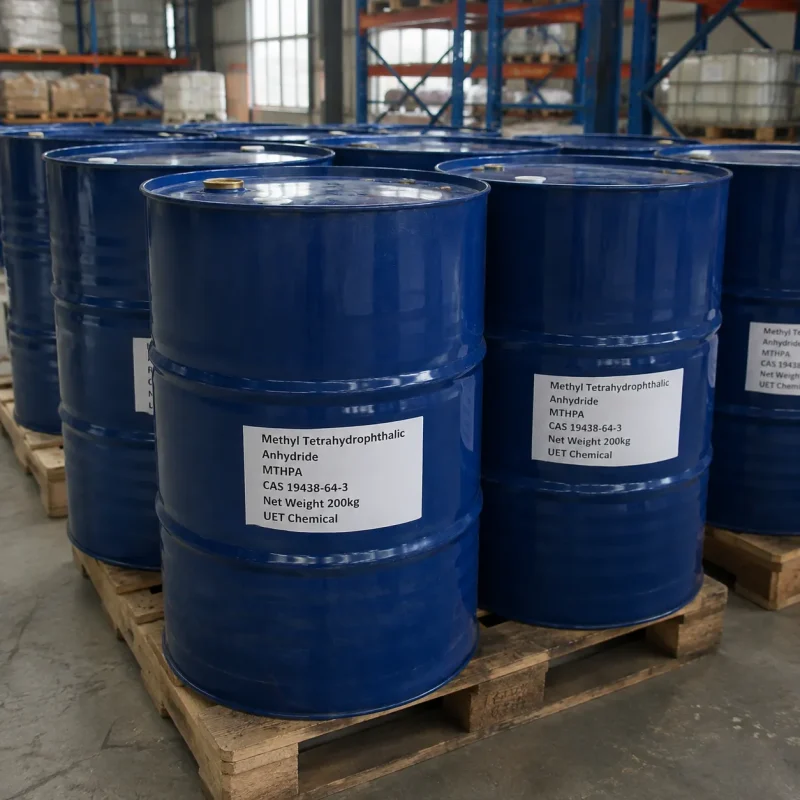
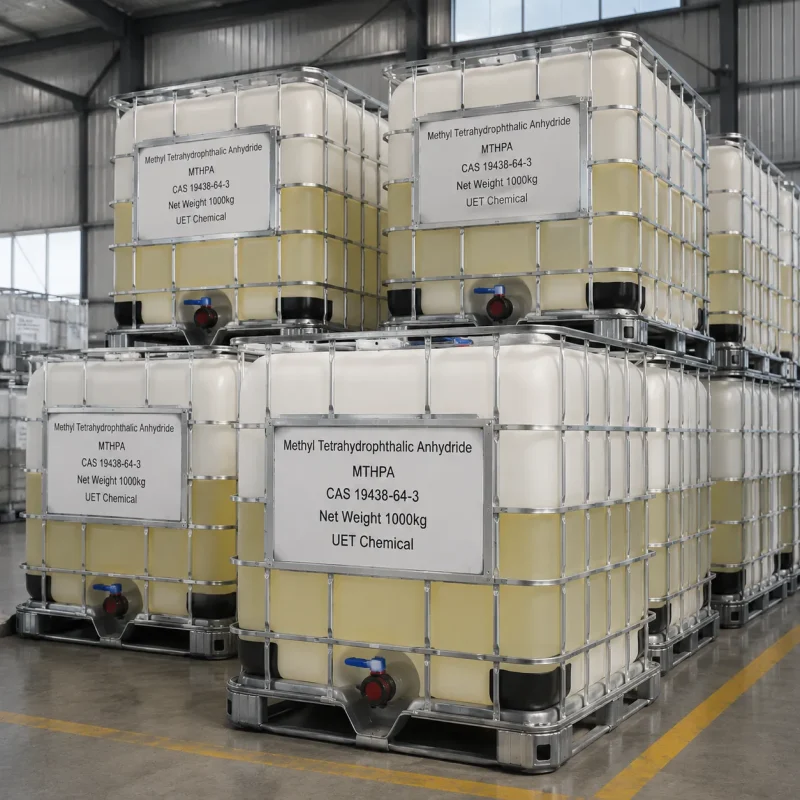
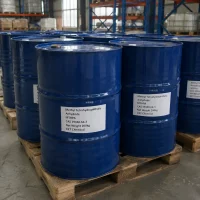
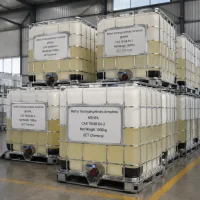
- Packaging: 220 kg HDPE drum, 1000 kg IBC. Custom packaging available upon request.
- Main Applications: Epoxy curing agents, LED encapsulation, electrical insulation casting, composite manufacturing
Introduction to MTHPA
Methyl Tetrahydrophthalic Anhydride is a cyclic anhydride with a methyl group on the tetrahydrophthalic ring backbone, carrying two reactive carbonyl groups for epoxy crosslinking. It appears as a clear colorless to pale yellow liquid at room temperature, with low volatility and good compatibility with bisphenol-A epoxy resins, reducing the need for reactive diluents in formulations.
Industrial production uses precision fractionation to control isomer ratio and impurity levels. The compound reacts with moisture to form dicarboxylic acids, which increases viscosity and disrupts curing stoichiometry.
MTHPA Chemical & Physical Properties
| Property | Value |
|---|---|
| Molecular Formula | C9H10O3 |
| Molecular Weight | 166.17 g/mol |
| Appearance | Clear colorless to pale yellow liquid |
| Viscosity (25 °C) | ~150 mPa·s |
| Flash Point (Closed Cup) | >150 °C |
| Solubility | Soluble in most organic solvents; reacts with water |
| Purity | 98.0% min |
Applications of MTHPA
Electronic encapsulation and LED packaging: Blended with epoxy resins for semiconductor and high-power LED encapsulation. Its liquid form supports vacuum degassing and precise mold filling without premature gelation. Cured networks deliver high glass transition temperature and thermal shock resistance, protecting chips from moisture and mechanical stress.
Electrical insulation casting: Used for casting current transformers, voltage transformers and high-voltage bushings. Low initial viscosity enables deep penetration into complex winding structures. The cured thermoset matrix provides high dielectric strength and partial discharge resistance, extending service life of grid equipment.
Composite manufacturing: Combined with glass or carbon fibers in filament winding and pultrusion processes. The cured system delivers high heat deflection temperature and chemical resistance, suitable for corrosive environments such as chemical storage tanks and offshore piping.
Storage & Safety Precautions for MTHPA
- Store in tightly sealed containers in dry warehouses. Purge opened containers with dry nitrogen before resealing. Moisture triggers anhydride ring opening to form dicarboxylic acids, raising viscosity and disrupting curing stoichiometry.
- Handle as a skin sensitizer and severe eye irritant. Wear chemical splash goggles, nitrile gloves and long-sleeve protective clothing during weighing and mixing. Wash contaminated skin immediately with soap and water; do not use organic solvents for skin cleaning.
- Avoid contact with water or aqueous systems during processing. Use dedicated stainless steel or HDPE equipment to prevent contamination and unintended hydrolysis.
MTHPA FAQ
Q: How does Methyl Tetrahydrophthalic Anhydride (MTHPA) improve epoxy casting?
A: It is a liquid curing agent that eliminates solid anhydride melting steps. Low viscosity enables easy mixing and degassing, and cured products offer high thermal stability and electrical insulation.
Q: Why is moisture control critical when handling MTHPA?
A: Moisture triggers ring-opening hydrolysis to form dicarboxylic acids, raising resin viscosity and ruining curing stoichiometry. Store in tightly sealed, nitrogen-purged containers.
Q: What makes MTHPA suitable for LED encapsulation?
A: It cures into transparent, heat-resistant epoxy networks. Low viscosity fills fine gaps around chips, delivering good thermal shock resistance and yellowing resistance.
Related products
Manufacturer & Exporter Since 2006
Get Tailored Chemical Raw Material Solutions — Reply Within 1 Hour
Factory-direct pricing, stable high-purity supply and complete compliance documentation for your industrial formulations.
- 1000+Products
- 200+QC Protocols
- 7–15Days Delivery
- Factory-Direct Pricing
- COA / TDS / SDS Included
- Free Samples for Testing
- 40+ Export Countries
Request a Free Quote
Our engineers reply within 1 hour during GMT+8 business hours.
Please include in your inquiry:
- Product name or CAS number
- Required quantity
- Destination country or port
- Preferred packaging