
Benzalkonium Chloride CAS 8001-54-5
Benzalkonium Chloride (BKC 80%) is a broad-spectrum quaternary ammonium biocide and cationic surfactant supplied as a colorless to pale yellow viscous liquid. It disrupts microbial cell membranes, providing rapid bactericidal, fungicidal, and virucidal action. Core uses include institutional disinfectants, industrial water treatment, and personal care preservation. Each shipment includes COA, TDS, and SDS.
- CAS No: 8001-54-5
- Synonyms: BKC, BAC, ADBAC, Alkyl dimethyl benzyl ammonium chloride
- EC Number: 269-919-4
- Molecular Formula: C22H40ClN (representative C12) / Mixture of C8-C18 alkyl chains
- Molecular Weight: 339.99 g/mol (C12 basis)
- Appearance: Colorless to pale yellow viscous liquid
- Active Content: 80% ± 2%
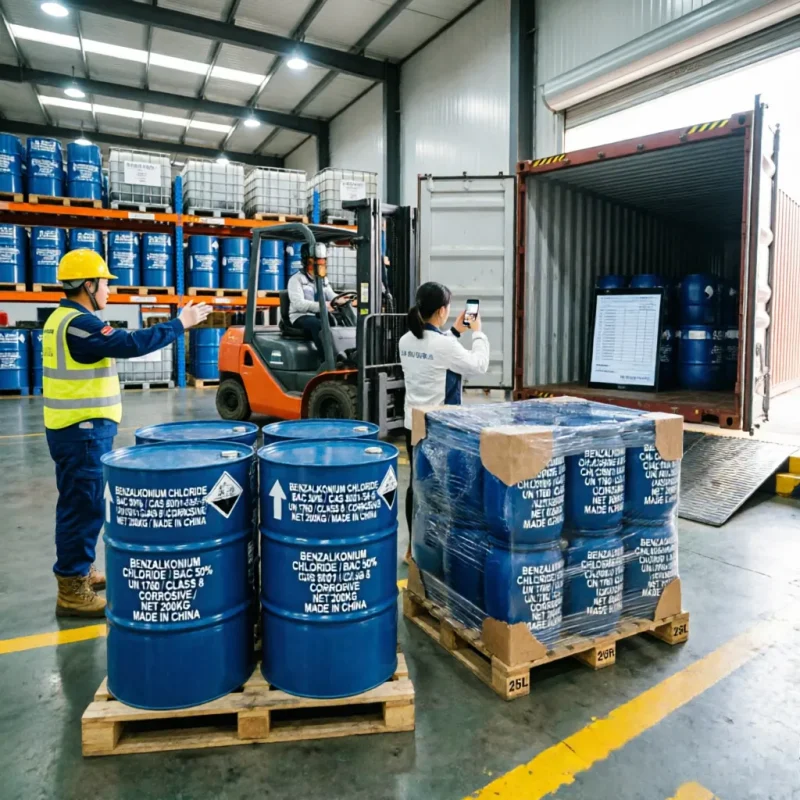
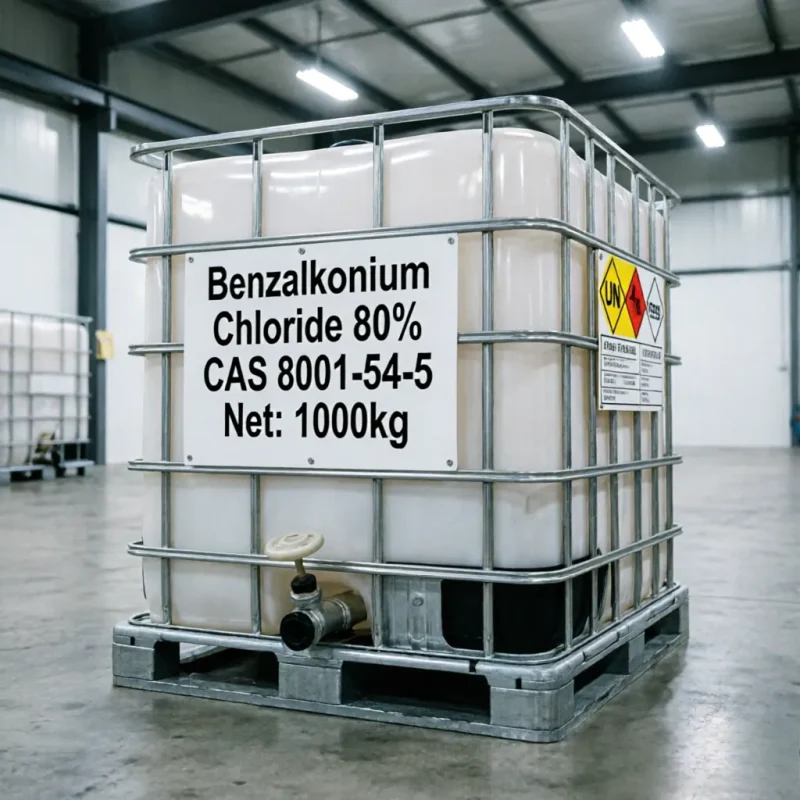
- Packaging: 200 kg (440 lb) HDPE drum; 1000 kg (2200 lb) IBC tote. Custom packaging available upon request.
- Main Applications: Hard surface disinfectants, cooling tower water treatment, cosmetic preservatives, veterinary sanitizers
Introduction to Benzalkonium Chloride
Benzalkonium Chloride (BKC) is a nitrogenous cationic surface-active agent belonging to the quaternary ammonium compound (QAC) family. The commercial 80% aqueous solution contains a targeted distribution of alkyl chains (primarily C12 and C14). The C12 homologue exhibits the highest bactericidal activity, while the C14 homologue provides superior fungicidal and virucidal efficacy. It functions by adsorbing to the negatively charged bacterial cell wall, disrupting membrane permeability, and causing lethal leakage of intracellular contents.
The critical formulation parameter is its strict incompatibility with anionic surfactants (such as soaps, SLES, and SLS), which will precipitate the QAC and neutralize its biocidal efficacy. Unlike older generation QACs, BKC demonstrates excellent tolerance to hard water and remains stable across a wide pH range (4–10). Bulk storage must utilize plastic (HDPE) containers, as the concentrated 80% solution can be corrosive to amphoteric metals like aluminum and unlined steel.
Key Features of Benzalkonium Chloride
- Broad-spectrum antimicrobial efficacy. Highly effective against Gram-positive and Gram-negative bacteria, enveloped viruses, and fungi at low active concentrations (typically 100–500 ppm in end-use dilutions).
- Hard water tolerance. Maintains full biocidal activity in water hardness up to 400 ppm CaCO₃, eliminating the need for water softeners in institutional cleaning formulations.
- Non-corrosive to surfaces. Safe for use on metals, plastics, rubber, and painted surfaces at working dilutions, making it ideal for hospital and food processing equipment sanitization.
- Dual-action surfactant properties. Acts as a wetting agent and emulsifier, providing inherent cleaning and deodorizing benefits alongside microbial control.
- Thermal stability. Stable at temperatures up to 100 °C (212 °F), allowing its use in industrial cooling water systems and hot-water sanitation cycles without degradation.
Benzalkonium Chloride Chemical & Physical Properties
| Property | Value |
|---|---|
| Molecular Formula | C22H40ClN (C12 basis) / Alkyl (C8-C18) dimethyl benzyl ammonium chloride |
| Molecular Weight | 339.99 g/mol (C12 basis) |
| Boiling Point | > 100 °C (> 212 °F); water boils off, leaving active residue. |
| Density | 0.98 – 1.02 g/cm³ (61.2 – 63.7 lb/ft³) at 20 °C (68 °F) |
| Solubility | Fully miscible in water and ethanol; soluble in acetone; insoluble in non-polar solvents like hexane. |
| pH (10% aqueous solution) | 5.0 – 8.0 |
| Flash Point | > 100 °C (> 212 °F) (closed cup, based on aqueous solvent) |
| Free Amine | ≤ 1.0% |
| Ash Content | ≤ 0.5% |
Applications of Benzalkonium Chloride
Institutional and household disinfectants: Formulated into hard surface cleaners, hospital disinfectants, and sanitizing wipes. Typical end-use concentration ranges from 200 to 1000 ppm active ingredient. Often blended with non-ionic surfactants and builders to create one-step cleaner-disinfectants for clinical and food service environments.
Industrial water treatment: Dosed continuously or intermittently into cooling towers, paper mill white water, and oilfield injection water at 10–50 ppm to control slime-forming bacteria, sulfate-reducing bacteria (SRB), and algae. Prevents biofilm buildup and maintains heat exchange efficiency.
Personal care and cosmetics: Used as a preservative and antimicrobial agent in shampoos, conditioners, wet wipes, and eye drops at concentrations of 0.01–0.1%. Requires careful formulation to avoid interaction with anionic thickeners like carbomers.
Agriculture and veterinary sanitizers: Applied in hatchery disinfection, livestock housing sanitation, and aquaculture water treatment. Effective against avian influenza and foot-and-mouth disease viruses on porous and non-porous farm surfaces.
Storage & Safety Precautions for Benzalkonium Chloride
- Storage: Store in tightly sealed original HDPE drums or IBC totes at 5–35 °C (41–95 °F). Protect from freezing; if the 80% solution freezes or crystallizes during winter transit, gently warm to 40 °C (104 °F) and agitate until fully homogeneous before use. Do not store in unlined steel, aluminum, or galvanized containers.
- Safety: Concentrated 80% BKC is corrosive to skin and eyes and toxic if ingested. Wear heavy-duty nitrile gloves, chemical splash goggles, and an apron during drum handling and dispensing. In case of eye contact, flush immediately with water for at least 15 minutes and seek medical attention.
- Transport: Benzalkonium Chloride 80% aqueous solution is generally classified as UN 1903, Class 8 (Corrosive), Packing Group III for international transport. Verify exact classification with the specific carrier based on the final formulation’s pH and concentration. Keep segregated from strong oxidizers and anionic materials.
- QC note: Verify active content on receipt by titration with sodium tetraphenylborate using dimethyl yellow/methylene blue indicator. Confirm pH (5.0–8.0 at 10% dilution) and check for visual clarity. Reject lots showing persistent stratification or sedimentation after warming and mixing.
Benzalkonium Chloride FAQ
Q: Can Benzalkonium Chloride be mixed with anionic surfactants like SLES or liquid soap?
A: No. Mixing cationic BKC with anionic surfactants will cause immediate precipitation and mutual neutralization, destroying both the foaming/cleaning ability of the anionic surfactant and the biocidal efficacy of the BKC. Use non-ionic (e.g., AEO, APG) or amphoteric surfactants for compatible formulations.
Q: What is the optimal alkyl chain distribution for maximum disinfection?
A: A balanced distribution is optimal. C12 (lauryl) provides the fastest bactericidal kill, while C14 (myristyl) is more effective against fungi and certain viruses. Standard commercial BKC maintains a C12:C14 ratio of approximately 60:40 or 50:50 to ensure broad-spectrum coverage.
Q: The BKC 80% drum arrived cloudy and semi-solid. Is the product degraded?
A: No, this is typical crystallization caused by low temperatures during winter transit. BKC 80% has a pour point around 10–15 °C (50–59 °F). Move the drum to a warm room (25–30 °C / 77–86 °F) or apply gentle drum heaters, and agitate thoroughly once melted. The biocidal efficacy remains fully intact.
Related products
Manufacturer & Exporter Since 2006
Get Tailored Chemical Raw Material Solutions — Reply Within 1 Hour
Factory-direct pricing, stable high-purity supply and complete compliance documentation for your industrial formulations.
- 1000+Products
- 200+QC Protocols
- 7–15Days Delivery
- Factory-Direct Pricing
- COA / TDS / SDS Included
- Free Samples for Testing
- 40+ Export Countries
Request a Free Quote
Our engineers reply within 1 hour during GMT+8 business hours.
Please include in your inquiry:
- Product name or CAS number
- Required quantity
- Destination country or port
- Preferred packaging