
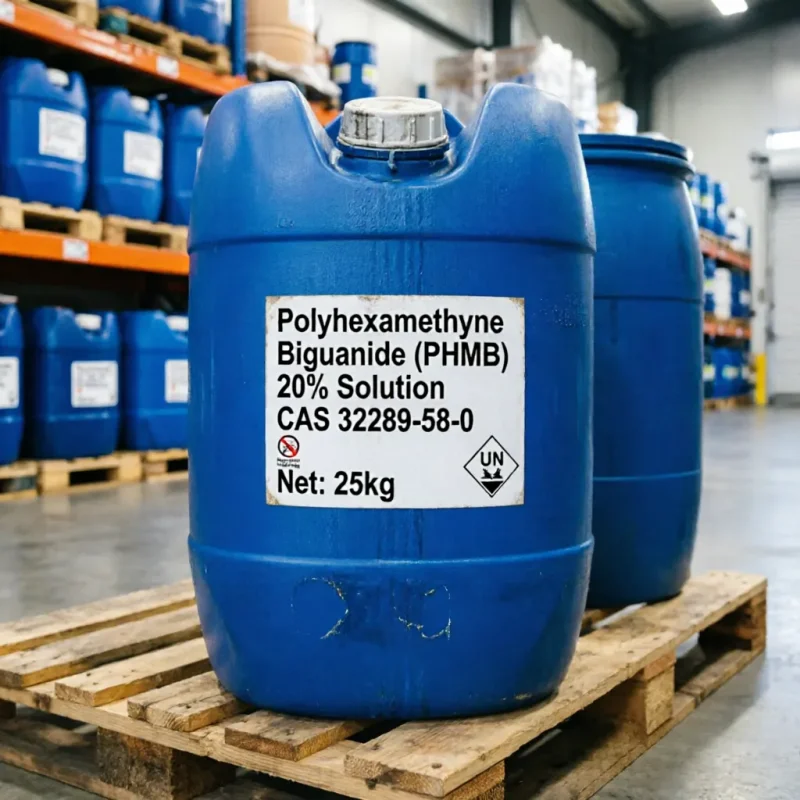
Polyhexamethylene Biguanide (PHMB) CAS 32289-58-0
Polyhexamethylene Biguanide (PHMB) is a broad-spectrum, cationic polymeric biocide supplied as a 20% aqueous solution. Its biguanide functional groups disrupt bacterial cell membranes without promoting microbial resistance, making it the premier active ingredient for wound care, contact lens solutions, and industrial water treatment. Each shipment includes COA, TDS, and SDS.
- CAS No: 32289-58-0
- Synonyms: Polyhexanide, Polihexanide, PHMB HCl, Poly(iminocarbonimidoyliminocarbonimidoyliminohexamethylene)
- EC Number: N/A (Polymer)
- Molecular Formula: (C8H17N5·HCl)n
- Molecular Weight: Approx. 2,500 – 3,500 g/mol (Average)
- Appearance: Colorless to pale yellow clear liquid
- Active Content: 20.0 ± 1.0% (w/w)
- pH (as supplied): 5.0 – 7.0
- Packaging: 200 kg (440 lb) HDPE drum; 1000 kg (2200 lb) IBC tote. Custom packaging available upon request.
- Main Applications: Wound irrigation, ophthalmic solutions, swimming pool/spa water sanitizers, antimicrobial wipes
Introduction to Polyhexamethylene Biguanide (PHMB)
Polyhexamethylene Biguanide (PHMB) is a cationic, polymeric antimicrobial agent featuring repeating hexamethylene biguanide units. It operates via electrostatic attraction to the negatively charged bacterial cell wall, disrupting membrane integrity and causing rapid cell death. Unlike oxidizing biocides (e.g., chlorine, hydrogen peroxide) or small-molecule antibiotics, PHMB exhibits virtually no acquired microbial resistance and maintains efficacy across a broad pH range.
The primary formulation advantage is its excellent safety profile on mammalian tissues combined with high bactericidal and fungicidal potency. Formulators value its non-volatility, lack of strong odor, and compatibility with most non-ionic and amphoteric surfactants. The critical handling risk is incompatibility with anionic surfactants (e.g., SLES, SLS) and high concentrations of multivalent ions, which can precipitate the polymer. Store IBC totes and drums in a shaded, temperature-controlled warehouse between 5 °C (41 °F) and 35 °C (95 °F) to prevent freezing or thermal degradation.
Key Features of PHMB
- Non-resistance mechanism. The physical membrane-disruption mode of action prevents bacteria and fungi from developing genetic resistance, ensuring long-term efficacy in chronic wound care and recurring water systems.
- High mammalian safety index. Exhibits minimal cytotoxicity to human fibroblasts and keratinocytes at working concentrations, making it the gold standard for no-sting wound irrigants and sensitive-eye contact lens multipurpose solutions.
- Broad-spectrum efficacy. Highly effective against Gram-positive and Gram-negative bacteria (including MRSA and Pseudomonas aeruginosa), yeasts, and molds at dosages as low as 10–50 ppm.
- Excellent residual activity. The cationic polymer binds to surfaces (e.g., skin, fabrics, pool walls), creating a substantive antimicrobial barrier that provides prolonged protection between applications.
Polyhexamethylene Biguanide Chemical & Physical Properties
| Property | Value |
|---|---|
| Molecular Formula | (C8H17N5·HCl)n |
| Average Molecular Weight | 2,500 – 3,500 g/mol |
| Active Content | 20.0 ± 1.0% (w/w) in water |
| Appearance | Colorless to pale yellow clear liquid |
| Odor | Odorless to faint characteristic amine odor |
| pH (as supplied) | 5.0 – 7.0 |
| Specific Gravity | 1.02 – 1.06 g/cm³ at 20 °C (68 °F) |
| Solubility | Fully miscible in water; soluble in lower alcohols (ethanol, propanol). |
| Freezing Point | Approx. -5 °C (23 °F) (20% solution) |
| Heavy Metals (as Pb) | ≤ 10 ppm |
Applications of Polyhexamethylene Biguanide
Wound care and dermatologicals: Formulated at 0.05% to 0.2% (500–2,000 ppm active) in wound irrigation solutions, burn gels, and antimicrobial dressings. It clears bioburden without the stinging or tissue-delayed healing associated with iodine or chlorhexidine.
Ophthalmic and contact lens solutions: Used at 1–3 ppm active as the primary disinfectant in multipurpose contact lens solutions. It effectively eradicates Acanthamoeba and Pseudomonas without causing corneal staining or ocular irritation.
Recreational water treatment: Dosed at 10–50 ppm in swimming pools and spas as a chlorine-free or chlorine-synergistic sanitizer. It prevents biofilm formation on pool walls and filtration lines without generating irritating chloramines or degrading under UV sunlight.
Antimicrobial wipes and surface disinfectants: Blended at 0.1% to 0.5% with non-ionic surfactants for hard-surface disinfection and personal care wipes. The cationic nature provides a residual “leave-on” sanitizing effect on treated surfaces.
Storage & Safety Precautions for PHMB
- Storage: Keep tightly sealed in original HDPE drums or IBC totes between 5 °C (41 °F) and 35 °C (95 °F). Do not allow the 20% solution to freeze, as thawing may cause phase separation that requires vigorous agitation to re-homogenize. Protect from direct sunlight to prevent slow oxidative degradation.
- Safety: The 20% concentrate is classified as a skin and eye irritant (GHS Category 2). Operators handling the bulk liquid must wear chemical splash goggles, face shields, and neoprene/nitrile gloves. In case of eye contact, flush immediately for 15 minutes and seek medical attention.
- Transport: PHMB 20% solution is generally classified as Non-DG for transport under IATA/IMDG/ADR, though specific environmental hazard classifications (Aquatic Chronic 2) may apply depending on the exact concentration and regional GHS interpretations. Ship in standard dry containers; avoid extreme heat.
- QC note: Verify active concentration via UV spectrophotometry or complexometric titration upon receipt. Check for clarity and absence of precipitation. A cloudy appearance or precipitate indicates freezing damage or contamination with anionic species; reject the lot if homogenization fails to restore clarity.
Polyhexamethylene Biguanide FAQ
Q: Can PHMB be mixed with anionic surfactants like SLES or soap bases?
A: No. PHMB is a strong cationic polymer. Mixing it with anionic surfactants (e.g., SLES, SLS, carboxylates) will cause immediate cross-neutralization and precipitation, destroying both the antimicrobial activity and the foaming/cleaning properties. Use non-ionic (e.g., APGs, Tween) or amphoteric surfactants.
Q: How does PHMB compare to Chlorhexidine Gluconate (CHG) for wound care?
A: PHMB is significantly less cytotoxic to human tissue and does not cause the stinging sensation associated with CHG. It also lacks the risk of anaphylaxis and does not stain skin or fabrics, making it the preferred choice for chronic wound management and burn care.
Q: The liquid arrived with a white precipitate at the bottom of the drum. Is it ruined?
A: This is usually caused by freezing during transit. Warm the drum to room temperature (20–25 °C / 68–77 °F) and agitate vigorously. If the precipitate fully redissolves and the liquid returns to a clear state, the product is fully functional. If it remains cloudy, reject the lot.
Related products
Manufacturer & Exporter Since 2006
Get Tailored Chemical Raw Material Solutions — Reply Within 1 Hour
Factory-direct pricing, stable high-purity supply and complete compliance documentation for your industrial formulations.
- 1000+Products
- 200+QC Protocols
- 7–15Days Delivery
- Factory-Direct Pricing
- COA / TDS / SDS Included
- Free Samples for Testing
- 40+ Export Countries
Request a Free Quote
Our engineers reply within 1 hour during GMT+8 business hours.
Please include in your inquiry:
- Product name or CAS number
- Required quantity
- Destination country or port
- Preferred packaging