
Triclosan (CAS 3380-34-5) Antimicrobial Agent
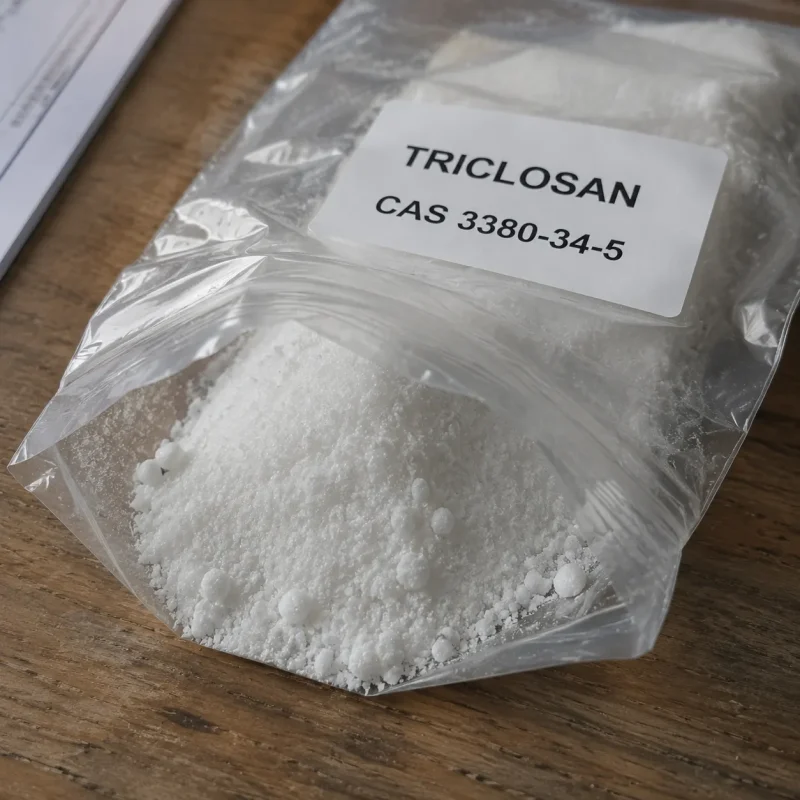
Triclosan is a broad-spectrum bisphenol antimicrobial agent supplied as a white to off-white crystalline powder. By inhibiting enoyl-acyl carrier protein reductase, it delivers exceptional efficacy against Gram-positive bacteria, odor-causing microbes, and fungi. Core industrial uses include antimicrobial plastic masterbatches, treated textiles, and institutional healthcare disinfectants. Each shipment includes COA, TDS, and SDS.
- CAS No: 3380-34-5
- Synonyms: 5-chloro-2-(2,4-dichlorophenoxy)phenol, Irgasan DP 300, TCS
- EC Number: 222-182-2
- Molecular Formula: C12H7Cl3O2
- Molecular Weight: 289.54 g/mol
- Appearance: White to off-white crystalline powder
- Purity (HPLC): ≥ 99.0%
- Melting Point: 55–58 °C (131–136 °F)
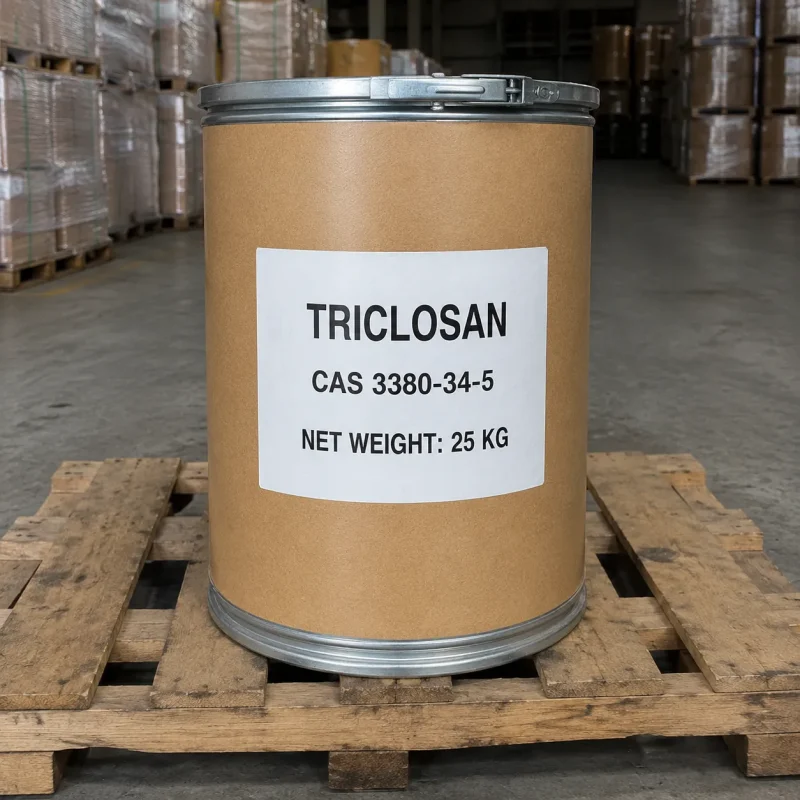
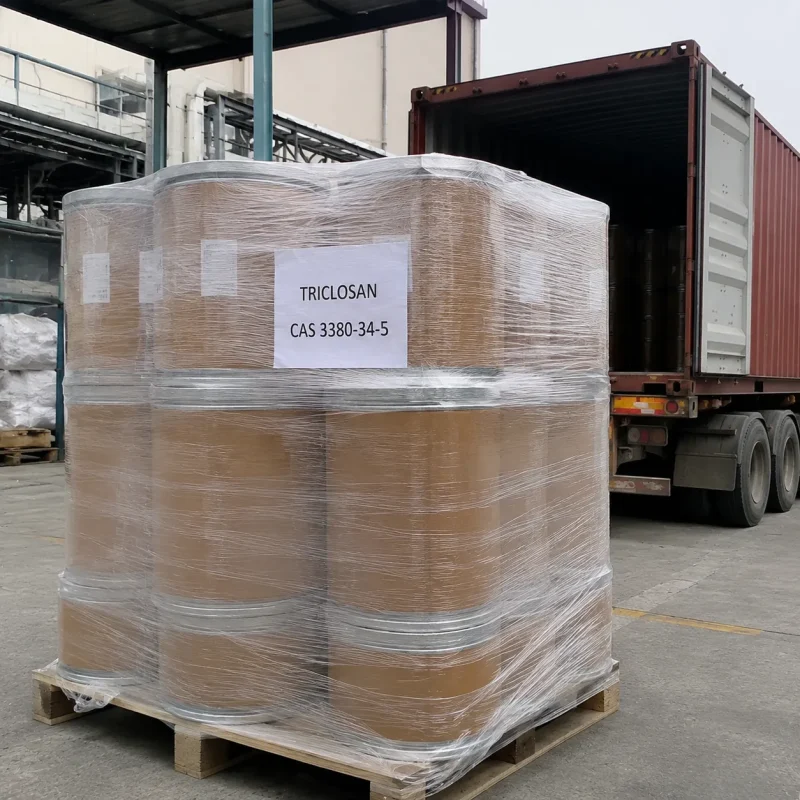
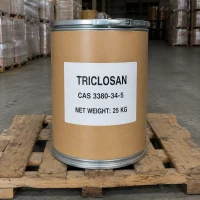
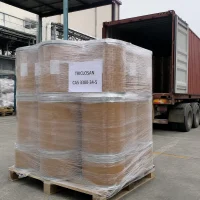
- Packaging: 25 kg (55 lb) fiber drum with PE liner; 25 kg (55 lb) woven PP bag with PE liner. Custom packaging available upon request.
- Main Applications: Polymer antimicrobial additives, odor-control textiles, institutional hard-surface disinfectants
Introduction to Triclosan
Triclosan is a chlorinated bisphenol ether widely utilized for its potent, targeted antimicrobial properties. While its use in over-the-counter consumer wash-off cosmetics has been restricted in regions like the US and EU, it remains a critical, high-value industrial additive for imparting long-lasting biocidal protection to synthetic polymers, textiles, and institutional cleaning formulations. It functions by penetrating the bacterial cell wall and specifically inhibiting the enoyl-acyl carrier protein reductase enzyme, halting fatty acid synthesis and causing cell death.
The primary processing advantage for material engineers is its excellent thermal stability and low water solubility. It can withstand standard polyolefin extrusion temperatures without degrading, and its hydrophobic nature ensures it does not easily leach out of plastics or fabrics during washing or outdoor exposure. The critical handling risk is its environmental toxicity; it is highly toxic to aquatic life. Formulators and compounders must ensure strict containment during dispersion and adhere to local environmental regulations regarding wastewater discharge.
Key Features of Triclosan
- High thermal stability for melt processing. Remains chemically stable at temperatures up to 200 °C (392 °F), making it ideal for incorporation into PE, PP, PVC, and PU masterbatches during high-heat injection molding and extrusion.
- Superior leach resistance. Extremely low solubility in water ensures the antimicrobial active remains locked within the polymer matrix or textile fiber, providing durable protection against microbial colonization in humid or wet environments.
- Targeted odor control. Highly effective against Corynebacterium and Staphylococcus species, the primary bacteria responsible for breaking down sweat into malodorous compounds in sportswear and footwear.
- Broad polymer compatibility. Disperses uniformly in hydrophobic matrices without acting as a plasticizer or negatively impacting the tensile strength and impact resistance of the host resin.
Triclosan Chemical & Physical Properties
| Property | Value |
|---|---|
| Molecular Formula | C12H7Cl3O2 |
| Molecular Weight | 289.54 g/mol |
| Thermal Behaviour | Melting point 55–58 °C (131–136 °F). Stable up to 200 °C (392 °F) for short durations. Decomposes above 250 °C (482 °F). |
| Density | Approx. 1.55 g/cm³ (96.8 lb/ft³) |
| Solubility | Soluble in ethanol, ether, and alkaline aqueous solutions; slightly soluble in water (approx. 10 mg/L at 20 °C / 68 °F). |
| pH (Saturated aqueous) | 5.0 – 7.0 |
| Heavy Metals (as Pb) | ≤ 10 ppm |
| Ash Content | ≤ 0.1% |
Applications of Triclosan
Antimicrobial plastics and masterbatches: Dosed at 0.5–2.0% in PE, PP, and PVC compounds. Used to manufacture medical device housings, antibacterial cutting boards, appliance components, and sanitary ware where surface hygiene and prevention of biofilm formation are critical.
Treated textiles and footwear: Incorporated at 0.2–1.0% (on weight of fiber) into synthetic sportswear, socks, and shoe linings. Prevents the proliferation of odor-causing bacteria, maintaining garment freshness over multiple wash cycles without degrading the fabric.
Institutional and healthcare disinfectants: Formulated into hard-surface cleaners and sanitizers for hospitals, commercial kitchens, and public facilities. Provides residual antimicrobial activity on treated surfaces between standard cleaning intervals.
Storage & Safety Precautions for Triclosan
- Storage: Keep tightly sealed in original fiber drums in a cool, dry, and dark warehouse below 25 °C (77 °F). Prolonged exposure to direct UV light or strong oxidizing agents can cause slight yellowing and a gradual loss of biocidal efficacy.
- Safety: Harmful if swallowed and causes serious eye irritation. Warning: Very toxic to aquatic life with long-lasting effects (H410). Mandatory PPE includes N95 dust masks, nitrile gloves, and safety goggles during powder weighing and masterbatch compounding to prevent inhalation and environmental release.
- Transport: Generally classified as Non-DG for standard air/sea freight, but frequently regulated as a Marine Pollutant under IMDG codes due to its aquatic toxicity. Ensure packaging is robust and leak-proof to prevent environmental contamination during transit.
- QC note: Verify purity (≥ 99.0%) and melting point (55–58 °C / 131–136 °F) via HPLC and DSC upon receipt. A distinct yellow or brownish tint indicates thermal or photo-oxidative degradation; reject such lots for high-clarity plastic applications.
Triclosan FAQ
Q: How does Triclosan differ from Triclocarban?
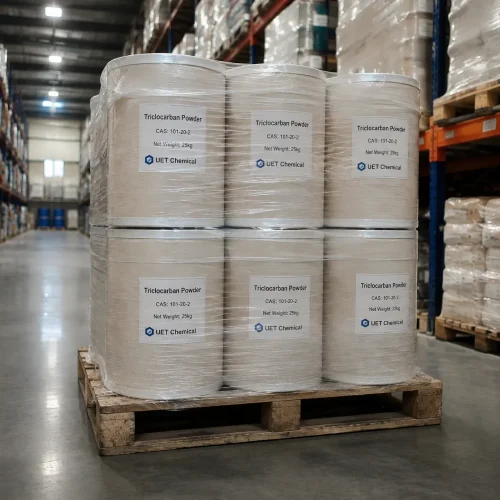
A: Triclosan is a bisphenol ether, highly effective against Gram-positive bacteria and fungi, and is preferred for liquid formulations, plastics, and textiles. Triclocarban is a carbanilide, historically used in bar soaps, but is less thermally stable and less compatible with synthetic polymers.
Q: Is Triclosan still legal to use in consumer products?
A: Regulatory status varies. The US FDA and EU have banned it in over-the-counter consumer wash-off antiseptic products (like everyday hand soaps). However, it remains fully legal and widely used in industrial applications, plastics, textiles, institutional healthcare cleaners, and certain leave-on medical devices.
Q: Will Triclosan degrade during plastic injection molding?
A: No. Triclosan is thermally stable up to 200 °C (392 °F). It easily survives standard extrusion and injection molding cycles for PE, PP, and PVC. For high-temperature engineering plastics (like PC or Nylon processed above 250 °C / 482 °F), alternative high-heat biocides like silver-ion zeolites are recommended.
Related products
Manufacturer & Exporter Since 2006
Get Tailored Chemical Raw Material Solutions — Reply Within 1 Hour
Factory-direct pricing, stable high-purity supply and complete compliance documentation for your industrial formulations.
- 1000+Products
- 200+QC Protocols
- 7–15Days Delivery
- Factory-Direct Pricing
- COA / TDS / SDS Included
- Free Samples for Testing
- 40+ Export Countries
Request a Free Quote
Our engineers reply within 1 hour during GMT+8 business hours.
Please include in your inquiry:
- Product name or CAS number
- Required quantity
- Destination country or port
- Preferred packaging