
Diethyl Sulfate CAS 64-67-5
Diethyl Sulfate (DES) is a highly efficient ethylating agent that addresses low reaction yields, poor regioselectivity and excessive byproduct formation in complex organic synthesis. It is widely used for API intermediates, crop protection chemicals and quaternary ammonium surfactants in pharmaceutical and agrochemical manufacturing. UETChem supplies DES with strict controls over moisture, free acid and isomeric impurities, ensuring maximum alkyl transfer efficiency and exceptional batch-to-batch consistency. Each shipment includes COA, TDS, SDS.
- CAS No: 64-67-5
- Synonyms: DES; Sulfuric acid diethyl ester; Ethyl sulfate
- EINECS: 200-589-6
- Molecular Formula: C₄H₁₀O₄S
- Molecular Weight: 154.18 g/mol
- Appearance: Colorless transparent liquid
- Purity (GC): 99.0% min
- Moisture: 0.05% max
- Flash Point (Closed Cup): 104 °C
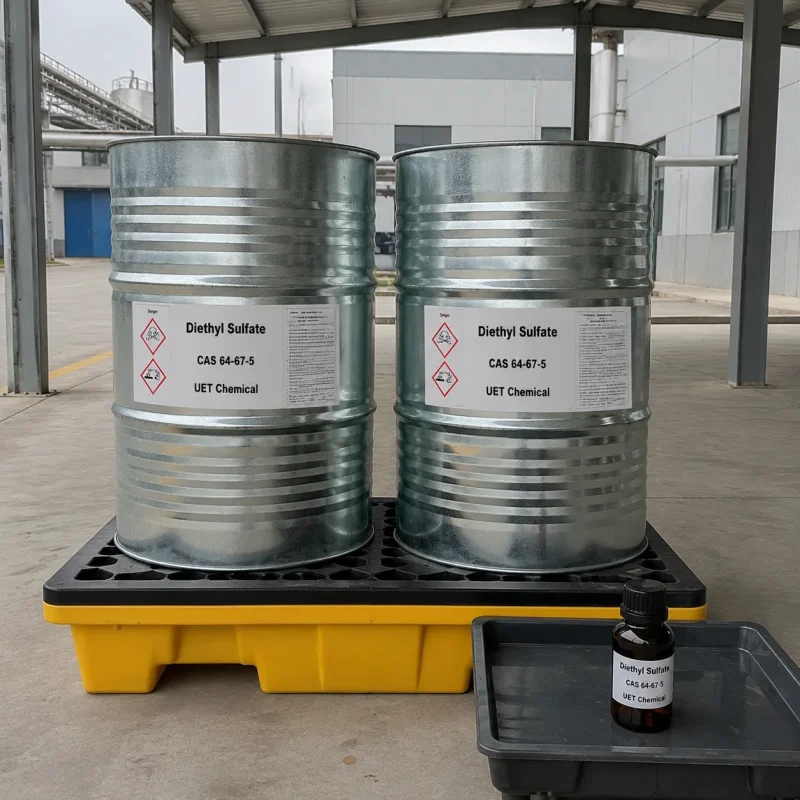
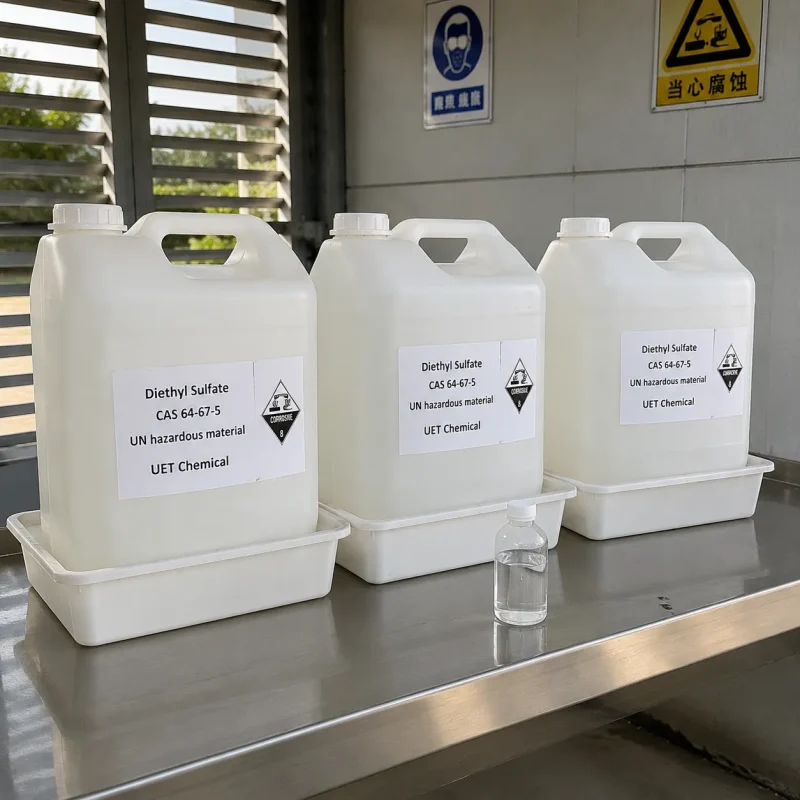
- Packaging: 200 kg HDPE drum, 1000 kg IBC. Custom packaging available upon request.
- Main Applications: Pharmaceutical intermediates, agrochemical synthesis, dye manufacturing, quaternary ammonium salts
Introduction to Diethyl Sulfate
Diethyl Sulfate is an organosulfur compound consisting of two ethyl groups attached to a central sulfate moiety. Its molecular architecture features highly polarized sulfur-oxygen bonds, rendering the ethyl groups extremely susceptible to nucleophilic attack. At room temperature, the material appears as a colorless, transparent liquid with a faint characteristic peppermint-like odor. It remains practically insoluble in water but mixes completely with ethanol, diethyl ether and most polar organic solvents.
As a strong alkylating reagent, it readily transfers ethyl groups to a wide range of nucleophiles under mild reaction conditions. The ethyl sulfate anion serves as an excellent leaving group, driving alkylation reactions forward with minimal reversible side reactions. Its liquid state at ambient temperatures allows for precise metering and continuous dosing in automated chemical reactor systems.
Diethyl Sulfate Chemical & Physical Properties
| Property | Value |
|---|---|
| Molecular Formula | C₄H₁₀O₄S |
| Molecular Weight | 154.18 g/mol |
| Appearance | Colorless transparent liquid |
| Boiling Point | 208 °C (with decomposition) |
| Density (20 °C) | 1.18 g/cm³ |
| Flash Point (Closed Cup) | 104 °C |
| Purity (GC) | 99.0% min |
| Moisture | 0.05% max |
Applications of Diethyl Sulfate
Pharmaceutical intermediate synthesis: Utilized extensively to ethylate active pharmaceutical ingredients and their precursors. The reagent selectively targets nitrogen, oxygen or sulfur atoms within complex heterocyclic scaffolds, enabling the construction of specialized drug molecules with precise structural modifications.
Agrochemical and dye manufacturing: Serves as a core building block for synthesizing crop protection agents and specialty dyes. The ethylation step significantly alters the lipophilicity and biological activity of target molecules, enhancing their efficacy and environmental fate profiles.
Quaternary ammonium salts: Reacts with tertiary amines to produce quaternary ammonium compounds. These resulting cationic surfactants are widely deployed in fabric softeners, biocides and phase-transfer catalysts due to their excellent surface-active properties.
Storage & Safety Precautions for Diethyl Sulfate
- Store in tightly sealed, moisture-proof HDPE or fluoropolymer-lined drums below 25 °C. The compound slowly hydrolyzes in the presence of water, generating corrosive sulfuric acid and ethanol, which degrades alkylating efficiency over time.
- The liquid is highly toxic, a known carcinogen and a severe alkylating agent that causes deep tissue burns and systemic poisoning upon skin contact. Wear a full-face supplied-air respirator, heavy-duty chemical suits and double-layered butyl rubber gloves during all transfer operations.
- Maintain strict temperature control using external cooling jackets during ethylation reactions. The alkylation process is highly exothermic; uncontrolled heat generation accelerates thermal decomposition and increases the risk of toxic vapor release.
Diethyl Sulfate FAQ
Q: How does Diethyl Sulfate function as an alkylating agent?
A: It acts as a powerful ethylating agent in organic synthesis, readily transferring ethyl groups to nucleophiles like amines, phenols and thiols. This high reactivity ensures excellent yields in manufacturing pharmaceutical intermediates and specialty dyes.
Q: Why is Diethyl Sulfate preferred over other ethylating agents?
A: It offers superior ethyl transfer efficiency and milder reaction conditions compared to harsher alkyl halides. It minimizes unwanted side reactions and provides high regioselectivity, making it an ideal reagent for synthesizing complex quaternary ammonium salts.
Q: What safety measures are required when handling Diethyl Sulfate?
A: It is highly toxic, carcinogenic and a severe alkylating hazard. Operators must handle it in closed, ventilated systems wearing full-face respirators and heavy-duty chemical suits. Immediate decontamination protocols are mandatory for any skin or eye contact.
Related products
Manufacturer & Exporter Since 2006
Get Tailored Chemical Raw Material Solutions — Reply Within 1 Hour
Factory-direct pricing, stable high-purity supply and complete compliance documentation for your industrial formulations.
- 1000+Products
- 200+QC Protocols
- 7–15Days Delivery
- Factory-Direct Pricing
- COA / TDS / SDS Included
- Free Samples for Testing
- 40+ Export Countries
Request a Free Quote
Our engineers reply within 1 hour during GMT+8 business hours.
Please include in your inquiry:
- Product name or CAS number
- Required quantity
- Destination country or port
- Preferred packaging