
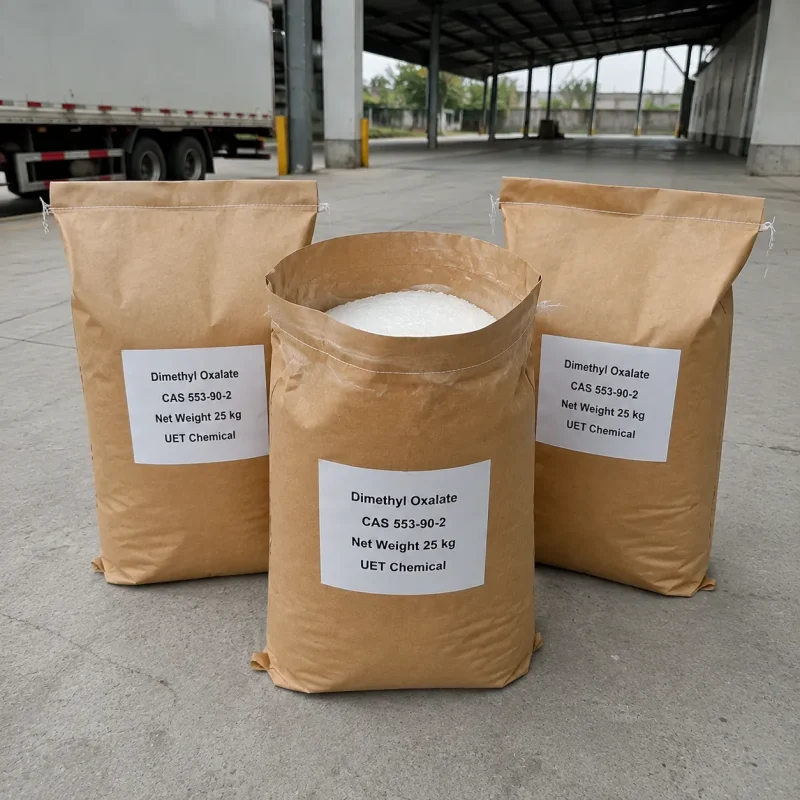
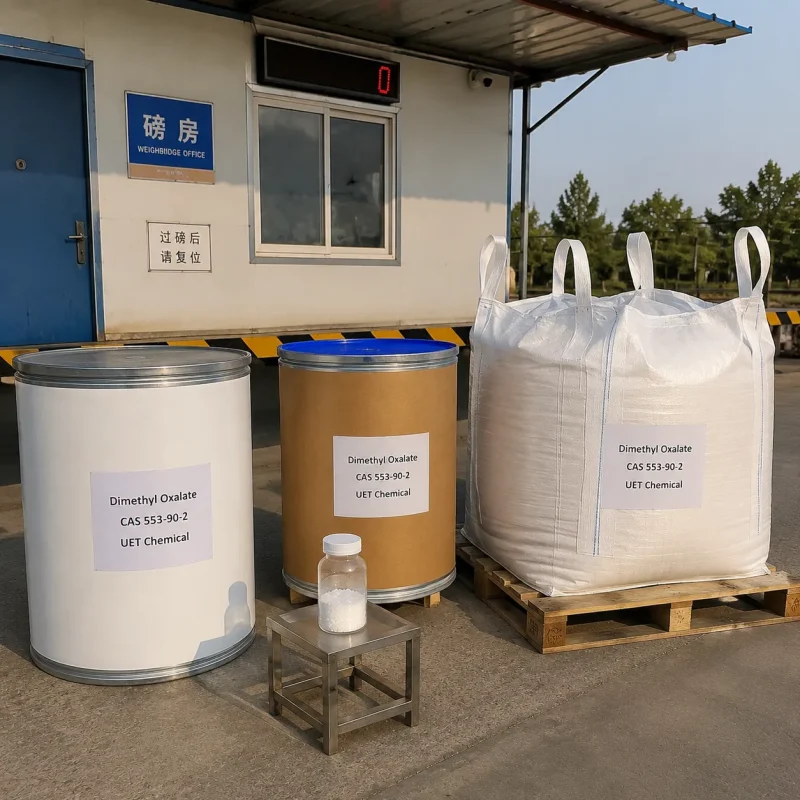
Dimethyl Oxalate CAS 553-90-2
Dimethyl Oxalate (DMO) is a highly versatile C1 chemical intermediate that addresses high production costs, toxic byproduct generation and low yield challenges in coal-to-chemical and pharmaceutical manufacturing. It serves as a pivotal feedstock for coal-based ethylene glycol synthesis, pharmaceutical building blocks and specialty solvent formulations. UETChem supplies DMO with strict controls over moisture, free acid and crystallization consistency, ensuring maximum hydrogenation efficiency and predictable reaction kinetics. Each shipment includes COA, TDS, SDS.
- CAS No: 553-90-2
- Synonyms: DMO; Oxalic acid dimethyl ester; Methyl oxalate
- EINECS: 209-036-3
- Molecular Formula: C₄H₆O₄
- Molecular Weight: 118.09 g/mol
- Appearance: White crystalline solid / colorless liquid (when heated)
- Purity (GC): 99.5% min
- Moisture: 0.05% max
- Acidity: 0.01% max
- Packaging: 200 kg HDPE drum, 1000 kg heated IBC. Custom packaging available upon request.
- Main Applications: Coal-to-ethylene glycol (CTEG), pharmaceutical intermediates, fine chemical synthesis, industrial solvents
Introduction to Dimethyl Oxalate
Dimethyl Oxalate is an aliphatic diester consisting of two methyl groups bonded to an oxalate core. Its molecular structure provides two highly reactive ester carbonyl sites, making it an effective acylating and methylating agent. At room temperature, the material appears as a white crystalline solid; above its melting point, it transitions into a clear, colorless liquid. It dissolves readily in most organic solvents including alcohols, ethers and aromatic hydrocarbons, while exhibiting limited solubility in cold water.
The compound features high thermal stability, maintaining structural integrity during high-temperature catalytic hydrogenation processes without premature decomposition. Its distinct phase transition behavior enables purification via crystallization and convenient liquid handling when trace-heated, supporting both batch and continuous industrial processes.
Dimethyl Oxalate Chemical & Physical Properties
| Property | Value |
|---|---|
| Molecular Formula | C₄H₆O₄ |
| Molecular Weight | 118.09 g/mol |
| Appearance | White crystalline solid / colorless liquid |
| Melting Point | 54 °C |
| Boiling Point | 163 °C |
| Density (20 °C, liquid) | 1.14 g/cm³ |
| Flash Point (Closed Cup) | 75 °C |
| Purity (GC) | 99.5% min |
Applications of Dimethyl Oxalate
Coal-to-Ethylene Glycol (CTEG) process: Acts as the core intermediate in modern coal chemical engineering. It undergoes catalytic hydrogenation over copper-based catalysts to yield high-purity ethylene glycol and methanol. This non-petroleum pathway provides a highly efficient, cost-effective route to polyester-grade glycols.
Pharmaceutical and agrochemical synthesis: Functions as a key building block for constructing heterocyclic rings and complex active pharmaceutical ingredients. It is used to perform Claisen condensations and synthesize pyrazine, pyrimidine and thiazole derivatives for drug and crop protection chemistry.
Solvent and plasticizer intermediates: Utilized as a high-boiling solvent in specialized coating formulations and as a precursor for synthesizing various oxamide-based plasticizers and stabilizers for polymer matrices.
Storage & Safety Precautions for Dimethyl Oxalate
- Store in a climate-controlled warehouse. Below 54 °C the material remains solid. Facilities handling the liquid form must use trace-heated, insulated piping and storage tanks to prevent line blockages during winter operations.
- Keep drums tightly sealed. Prolonged exposure to atmospheric humidity causes slow hydrolysis, generating methanol and oxalic acid, which increases acidity and degrades the material for sensitive catalytic applications.
- Wear chemical splash goggles, nitrile gloves and dust masks during solid transfer or molten liquid decanting. The liquid and dust are mild irritants to eyes, skin and the respiratory tract. Ensure adequate ventilation to prevent vapor accumulation in enclosed spaces.
- When melting solid drums for reactor charging, apply gentle warm water baths or low-pressure steam jackets. Avoid localized high-temperature heating coils, which can cause thermal degradation and darkening of the molten batch.
Dimethyl Oxalate FAQ
Q: How is Dimethyl Oxalate utilized in ethylene glycol production?
A: It acts as the core intermediate in the coal-to-ethylene glycol process. It undergoes catalytic hydrogenation over copper-based catalysts to yield high-purity ethylene glycol and methanol, providing a cost-effective alternative to petroleum-based routes.
Q: Why does Dimethyl Oxalate solidify during winter transit?
A: It has a melting point of approximately 54 °C. Below this temperature, it forms a white crystalline solid. To restore the liquid state for reactor charging, gently heat storage drums using warm water baths or low-pressure steam jackets.
Q: What safety precautions are necessary when handling Dimethyl Oxalate?
A: It is a combustible solid/liquid and a mild irritant to skin, eyes and the respiratory tract. Wear chemical splash goggles, nitrile gloves and dust masks during transfer. Ensure adequate ventilation to prevent vapor accumulation in enclosed spaces.
Related products
Manufacturer & Exporter Since 2006
Get Tailored Chemical Raw Material Solutions — Reply Within 1 Hour
Factory-direct pricing, stable high-purity supply and complete compliance documentation for your industrial formulations.
- 1000+Products
- 200+QC Protocols
- 7–15Days Delivery
- Factory-Direct Pricing
- COA / TDS / SDS Included
- Free Samples for Testing
- 40+ Export Countries
Request a Free Quote
Our engineers reply within 1 hour during GMT+8 business hours.
Please include in your inquiry:
- Product name or CAS number
- Required quantity
- Destination country or port
- Preferred packaging