
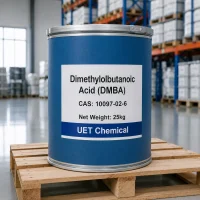
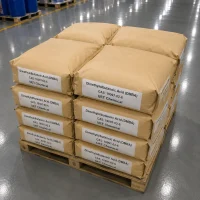
Dimethylolbutanoic Acid (DMBA) CAS 10097-02-6
Dimethylolbutanoic Acid (DMBA) is a trifunctional aliphatic carboxylic acid containing two primary hydroxyl groups and one carboxyl group, solving the poor water resistance and external surfactant migration challenges in waterborne polymer systems. Polyurethane and coating manufacturers rely on it as an internal emulsifier for waterborne polyurethane dispersions (PUD), UV-curable resins, and powder coatings. UETChem supplies this product with strict control over hydroxyl value, acid value, and low moisture content, ensuring predictable NCO reactions and stable emulsion particle sizes without side reactions. Each shipment includes COA, TDS, SDS.
- CAS No: 10097-02-6
- Synonyms: DMBA; 2,2-Bis(hydroxymethyl)butyric acid; 2,2-Dimethylolbutyric acid
- EINECS: 233-216-0
- Molecular Formula: C6H12O4
- Molecular Weight: 148.16 g/mol
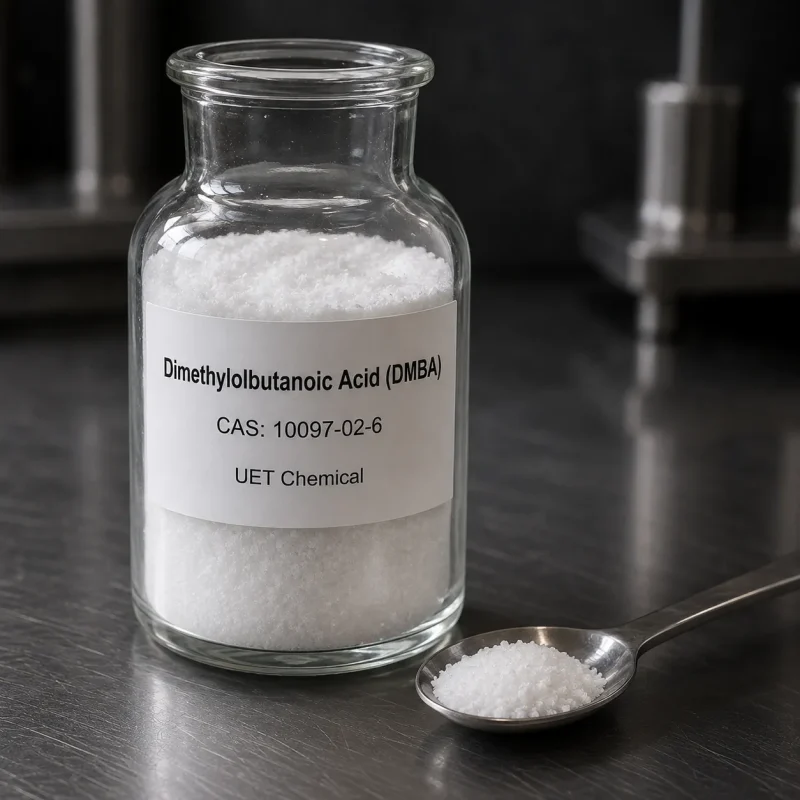
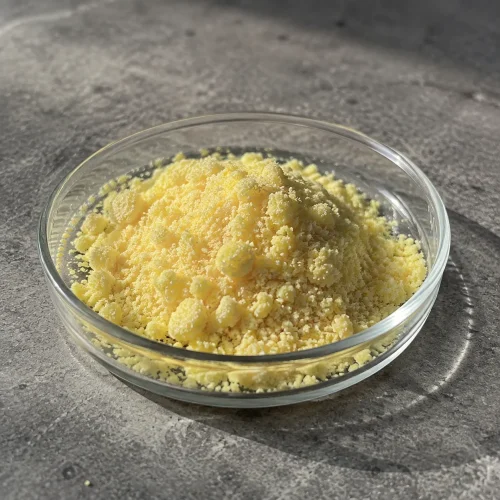
- Appearance: White crystalline powder
- Acid Value: 370 – 385 mg KOH/g
- Hydroxyl Value: 740 – 770 mg KOH/g
- Moisture: 0.1% max
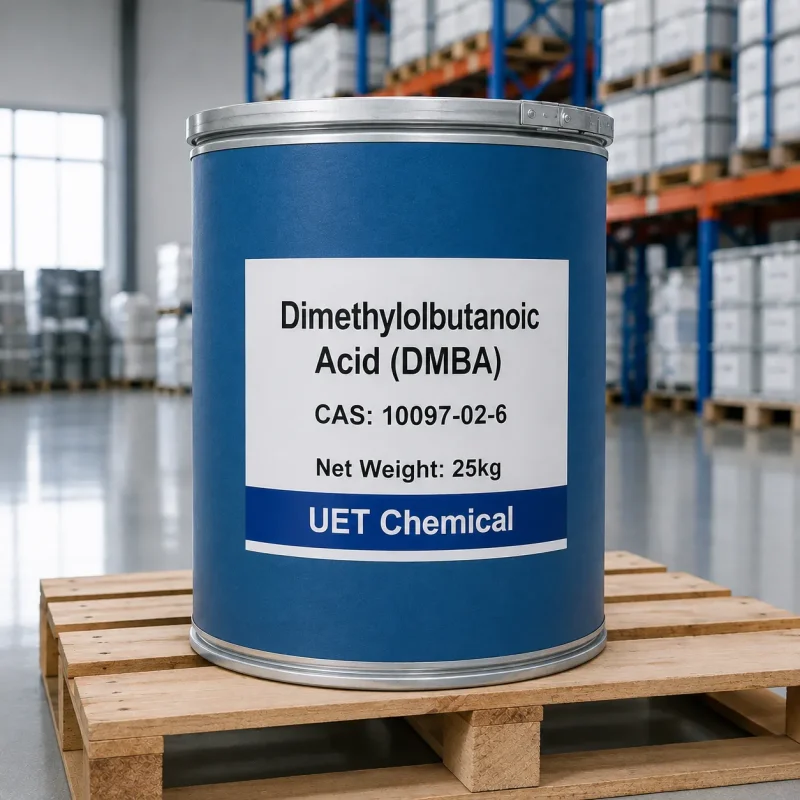
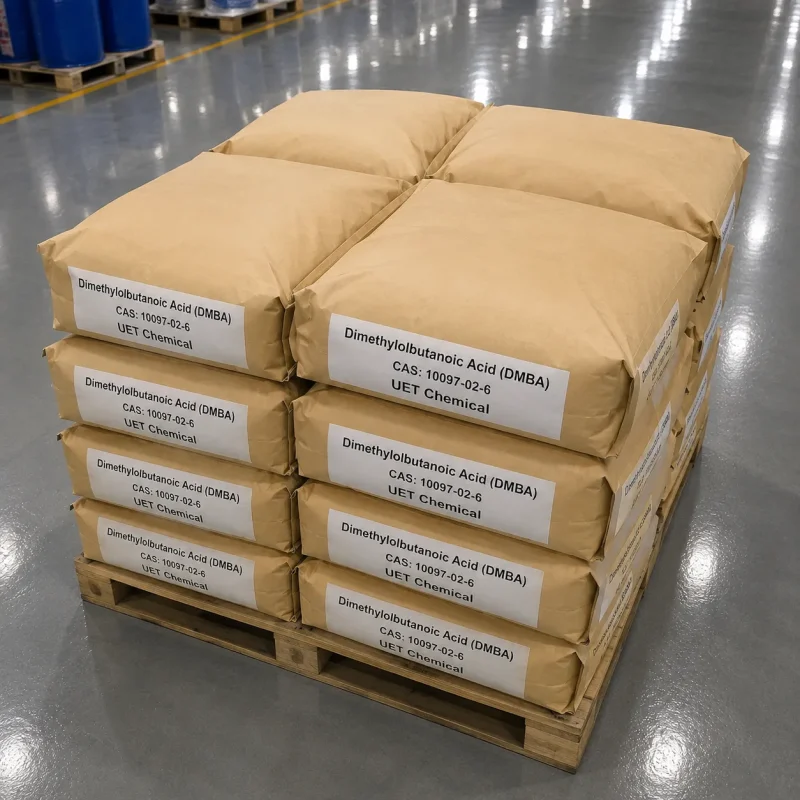
- Packaging: 25 kg (55 lb) fiber drum, 200 kg (441 lb) drum. Custom packaging available upon request.
- Main Applications: Waterborne polyurethane dispersions, UV-curable oligomers, powder coating resins, alkyd resins
Introduction to Dimethylolbutanoic Acid
Dimethylolbutanoic Acid is an aliphatic organic compound featuring a butanoic acid backbone substituted with two hydroxymethyl groups at the alpha carbon position. The molecular architecture provides three distinct reactive sites: two primary hydroxyl groups and one carboxylic acid group. The steric hindrance around the carboxyl group prevents it from reacting with isocyanates under standard polyaddition conditions, allowing the hydroxyl groups to participate exclusively in chain extension.
The compound presents as a white crystalline powder that dissolves readily in polar organic solvents like N-methyl-2-pyrrolidone (NMP) and dimethylformamide (DMF), as well as in aqueous alkaline solutions. Industrial polymerization facilities incorporate this trifunctional monomer into the polyol mixture during the prepolymer synthesis stage. Following chain extension, the pendant carboxylic acid groups undergo neutralization with tertiary amines, converting the hydrophobic polyurethane backbone into a hydrophilic, water-dispersible macromolecule.
Key Features of DMBA
- Trifunctional structure: The two hydroxyl groups react with diisocyanates to build the polymer backbone, while the carboxyl group remains intact for subsequent neutralization.
- Steric protection: The ethyl group adjacent to the carboxyl function provides steric hindrance, preventing side reactions with isocyanates during the prepolymer formation step.
- High solubility: Dissolves efficiently in polar aprotic solvents, ensuring homogeneous distribution within the polyol blend before reactor charging.
DMBA Chemical & Physical Properties
| Property | Value |
|---|---|
| Molecular Formula | C6H12O4 |
| Molecular Weight | 148.16 g/mol |
| Appearance | White crystalline powder |
| Melting Point | 108 – 112 °C (226 – 234 °F) |
| Acid Value | 370 – 385 mg KOH/g |
| Hydroxyl Value | 740 – 770 mg KOH/g |
| Solubility | Soluble in water (alkaline), NMP, DMF, DMSO |
Applications of DMBA
Waterborne polyurethane dispersions (PUD): Reacted with aliphatic diisocyanates and polyether or polyester polyols. Chemists often blend the polyol stream with linear diols like 1,6-Hexanediol (HDO) to adjust the flexibility and hydrophobicity of the soft segments. The pendant carboxyl groups are later neutralized with triethylamine to disperse the prepolymer in water.
UV-curable oligomers: Incorporated into polyester acrylates or epoxy acrylates. Formulators react the hydroxyl groups with acrylic acid or cross-reference Glycidyl Methacrylate (GMA) to introduce unsaturated double bonds for rapid free-radical curing under UV light.
Powder coating resins: Used as a branching agent in the synthesis of hydroxyl-functional polyesters. The trifunctionality increases the crosslink density and improves the chemical resistance of the final thermoset coating.
Storage & Safety Precautions for DMBA
- Moisture control: Store drums in a dry, climate-controlled warehouse below 30 °C (86 °F). The powder is moderately hygroscopic. Moisture ingress reacts with isocyanates during PUD synthesis, generating CO2 gas and causing reactor pressure spikes. Facilities operate Calcium Chloride Anhydrous in warehouse dehumidifiers to maintain low ambient moisture.
- Handling and PPE: The fine powder can cause mild respiratory and eye irritation. Wear N95 dust masks, safety goggles, and nitrile gloves during weighing and reactor charging operations.
- Field note: When dissolving DMBA in the polyol blend, heat the mixture to 80 °C (176 °F) under vacuum before adding the diisocyanate. This ensures complete dissolution of the crystalline powder and removes trace moisture, preventing unwanted urea formation and CO2 generation.
DMBA FAQ
Q: How does DMBA act as an internal emulsifier in PUD?
A: DMBA incorporates carboxyl groups into the polyurethane backbone via its hydroxyl groups. During dispersion, tertiary amines neutralize these carboxyl groups, forming hydrophilic salts that allow the polymer to self-disperse in water without external surfactants.
Q: Does the carboxyl group in DMBA react with isocyanates?
A: The carboxyl group in DMBA exhibits extremely low reactivity toward isocyanates due to steric hindrance from the adjacent ethyl group. This allows the two hydroxyl groups to react exclusively, preserving the acid value for the subsequent neutralization and dispersion steps.
Q: How should DMBA be stored to prevent PUD synthesis issues?
A: DMBA absorbs ambient moisture, which reacts with isocyanates to generate CO2 gas during PUD synthesis, causing reactor foaming. Store the powder in tightly sealed drums in a dry warehouse. Always melt and vacuum-degas the polyol-DMBA blend before adding diisocyanates.
Related products
Manufacturer & Exporter Since 2006
Get Tailored Chemical Raw Material Solutions — Reply Within 1 Hour
Factory-direct pricing, stable high-purity supply and complete compliance documentation for your industrial formulations.
- 1000+Products
- 200+QC Protocols
- 7–15Days Delivery
- Factory-Direct Pricing
- COA / TDS / SDS Included
- Free Samples for Testing
- 40+ Export Countries
Request a Free Quote
Our engineers reply within 1 hour during GMT+8 business hours.
Please include in your inquiry:
- Product name or CAS number
- Required quantity
- Destination country or port
- Preferred packaging