
Tetraethylene Pentamine CAS 112-57-2
Tetraethylene Pentamine (TEPA) is a high-functionality aliphatic polyamine that solves slow cure speeds, poor chemical resistance, and emulsion instability challenges in heavy-duty formulations. Coating and petroleum manufacturers rely on it for fast-curing epoxy systems, crude oil demulsifiers, and asphalt additives. UETChem supplies this product with strict control over primary/secondary amine ratios and low moisture content, ensuring predictable pot life and maximum crosslink density. Each shipment includes COA, TDS, SDS.
- CAS No: 112-57-2
- Synonyms: TEPA; 1,11-Diamino-4,8-diazaundecane; Tetraethylenepentamine
- EINECS: 203-985-7
- Molecular Formula: C8H23N5
- Molecular Weight: 189.30 g/mol (189.30 lb/lbmol)
- Appearance: Yellow to reddish-brown viscous liquid
- Amine Value: 1450 – 1500 mg KOH/g
- Density: 0.95 g/cm³ (7.92 lb/gal) at 20 °C
- Moisture: 0.1% max
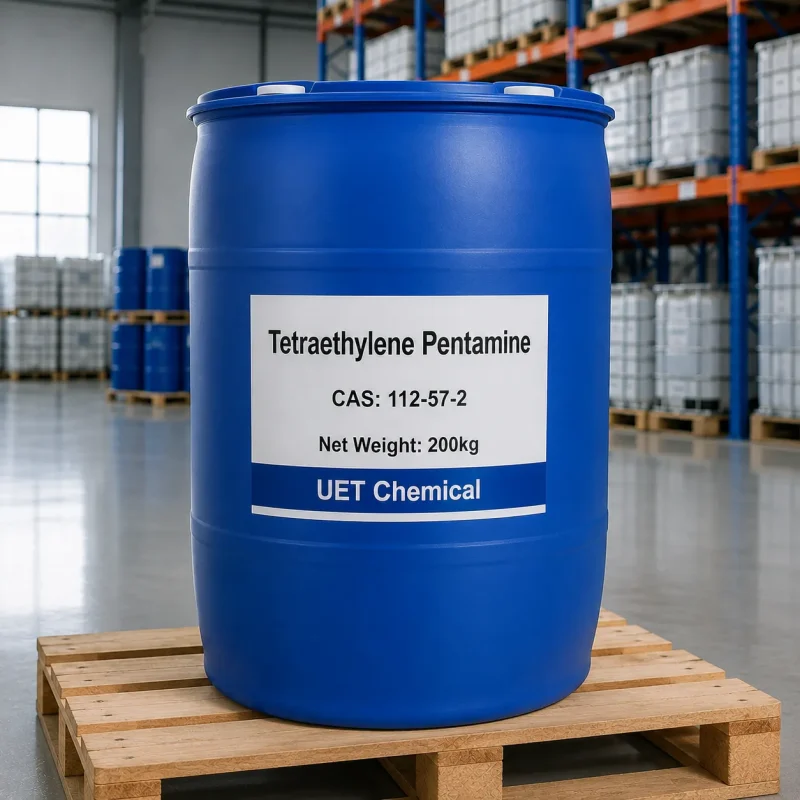
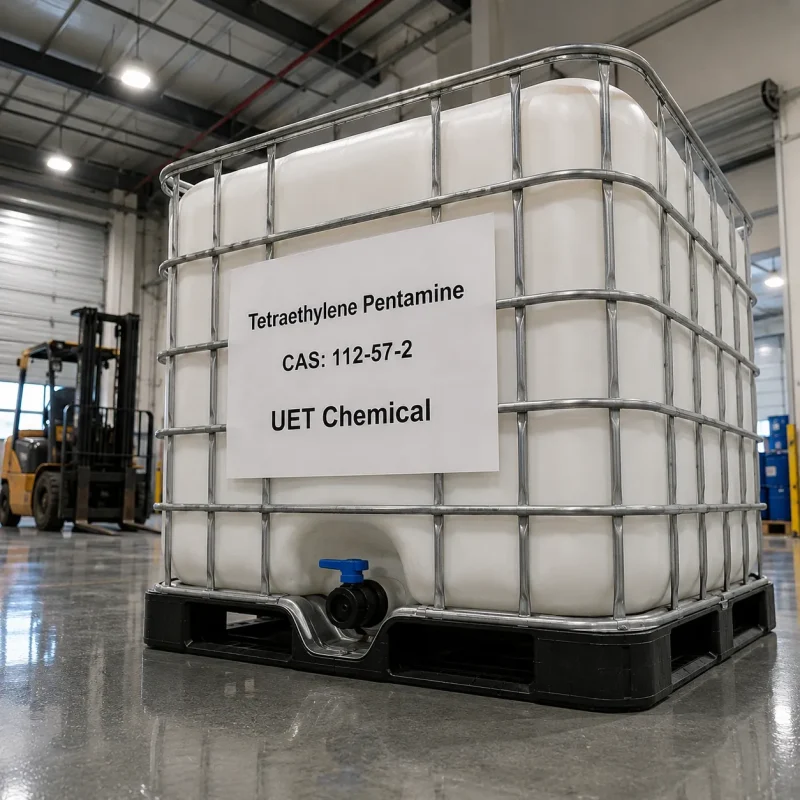
- Packaging: 200 kg (441 lb) HDPE drum, 1000 kg (2205 lb) IBC. Custom packaging available upon request.
- Main Applications: Epoxy curing agents, crude oil demulsifiers, fuel additives, asphalt emulsifiers
Introduction to Tetraethylene Pentamine
Tetraethylene Pentamine (TEPA) is an aliphatic polyamine consisting of four ethylene units and five amine groups (two primary and three secondary). The molecular architecture provides multiple active hydrogen sites for nucleophilic attack on electrophilic functional groups like epoxides or acid anhydrides. The material exists as a yellow to reddish-brown viscous liquid with a strong, characteristic ammonia-like odor at room temperature. It absorbs carbon dioxide rapidly from the atmosphere, forming carbamates.
Key Features of TEPA
- High amine functionality: Provides five active hydrogens per molecule, creating a densely crosslinked three-dimensional polymer network.
- Multiple amine types: Contains both primary and secondary amines, facilitating rapid ring-opening addition reactions at ambient temperatures.
- Hygroscopic nature: Readily absorbs moisture and CO2 from the air, requiring strict environmental control during storage and handling.
TEPA Chemical & Physical Properties
| Property | Value |
|---|---|
| Molecular Formula | C8H23N5 |
| Molecular Weight | 189.30 g/mol (189.30 lb/lbmol) |
| Appearance | Yellow to reddish-brown viscous liquid |
| Amine Value | 1450 – 1500 mg KOH/g |
| Density | 0.95 g/cm³ (7.92 lb/gal) at 20 °C |
| Flash Point | > 150 °C (302 °F) closed cup |
| Viscosity | ~1000 mPa·s at 25 °C (77 °F) |
Applications of TEPA
Epoxy resin curing agents: Reacts rapidly with liquid epoxies like Bisphenol A Epoxy Resin to form rigid, chemical-resistant thermoset matrices for industrial flooring and marine coatings. Formulators sometimes modify TEPA with salicylic acid or phenol to reduce viscosity and prevent surface blushing in high-humidity environments.
Petroleum and fuel additives: Utilized as a demulsifier to break water-in-oil emulsions in crude oil extraction. The polyamine chain disrupts the interfacial film surrounding water droplets, allowing them to coalesce and separate from the hydrocarbon phase. In lubricating oils, it acts as a dispersant to keep soot and sludge suspended.
Asphalt emulsifiers and modifiers: Blended with fatty acids to produce cationic surfactants for asphalt emulsions, improving adhesion to aggregate surfaces in road paving operations.
Storage & Safety Precautions for TEPA
- CO2 and moisture control: Store in tightly sealed, opaque HDPE drums under a nitrogen blanket. Exposure to air causes the liquid to absorb CO2 and turn cloudy or solidify on the surface. Facilities run Calcium Chloride Anhydrous in warehouse dehumidifiers to maintain low ambient humidity.
- Handling and PPE: The liquid is highly alkaline and corrosive to skin, eyes, and respiratory tissues. Wear chemical splash goggles, a face shield, and butyl rubber gloves during drum decanting.
- Field note: When blending TEPA into an epoxy system, weigh the hardener quickly and seal the drum immediately. Prolonged exposure to the open atmosphere alters the amine value and ruins the stoichiometric mix ratio.
TEPA FAQ
Q: How does Tetraethylene Pentamine (TEPA) cure epoxy resins?
A: TEPA contains five active amine hydrogens that attack the oxirane rings of epoxy resins, triggering a rapid exothermic crosslinking reaction. This room-temperature curing process forms a highly dense, rigid thermoset network with excellent chemical and solvent resistance.
Q: Why does Tetraethylene Pentamine (TEPA) absorb carbon dioxide?
A: TEPA is a strong aliphatic polyamine that reacts readily with atmospheric CO2 to form carbamate salts. This reaction causes surface crusting and cloudiness. To prevent degradation, store TEPA in tightly sealed drums under a nitrogen blanket in a dry, climate-controlled warehouse.
Q: Is Tetraethylene Pentamine (TEPA) used in crude oil processing?
A: Yes, TEPA acts as a powerful demulsifier in petroleum extraction. Its polyamine backbone disrupts the rigid interfacial films surrounding water droplets in crude oil, forcing the water to coalesce and separate from the hydrocarbon phase, improving refining efficiency.
Related products
Manufacturer & Exporter Since 2006
Get Tailored Chemical Raw Material Solutions — Reply Within 1 Hour
Factory-direct pricing, stable high-purity supply and complete compliance documentation for your industrial formulations.
- 1000+Products
- 200+QC Protocols
- 7–15Days Delivery
- Factory-Direct Pricing
- COA / TDS / SDS Included
- Free Samples for Testing
- 40+ Export Countries
Request a Free Quote
Our engineers reply within 1 hour during GMT+8 business hours.
Please include in your inquiry:
- Product name or CAS number
- Required quantity
- Destination country or port
- Preferred packaging