
Chlorhexidine Gluconate 20% CAS 18472-51-0 | CHG
Chlorhexidine Gluconate (CHG) 20% is a cationic bisbiguanide antiseptic concentrate supplied as colorless to pale yellow clear liquid. The positively charged molecule binds irreversibly to negatively charged bacterial cell walls, providing both immediate kill and up to 6 hours of residual protection on skin and mucosa. Core uses include surgical scrubs, oral care, wound cleansing, and veterinary disinfection. Each shipment includes COA, TDS, and SDS.
- CAS No: 18472-51-0
- Synonyms: Chlorhexidine digluconate solution, CHG 20%, Hibitane
- EC Number: 242-354-0
- Molecular Formula: C34H54Cl2N10O14
- Molecular Weight: 897.76 g/mol
- Appearance: Colorless to pale yellow clear liquid
- Active Content: 20.0 ± 0.5% (w/w)
- pH (as supplied): 5.5 – 7.0
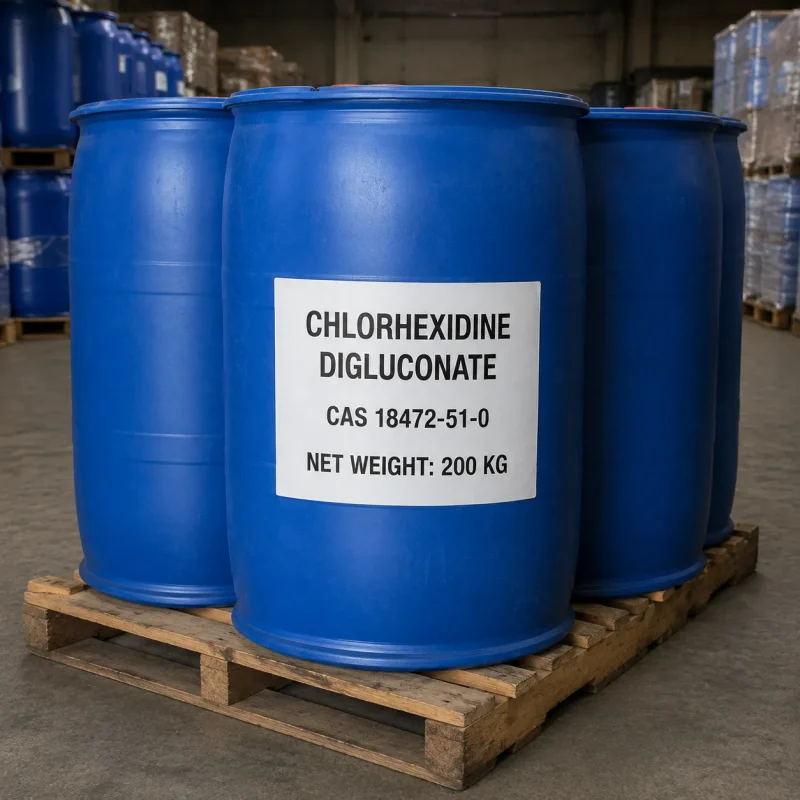
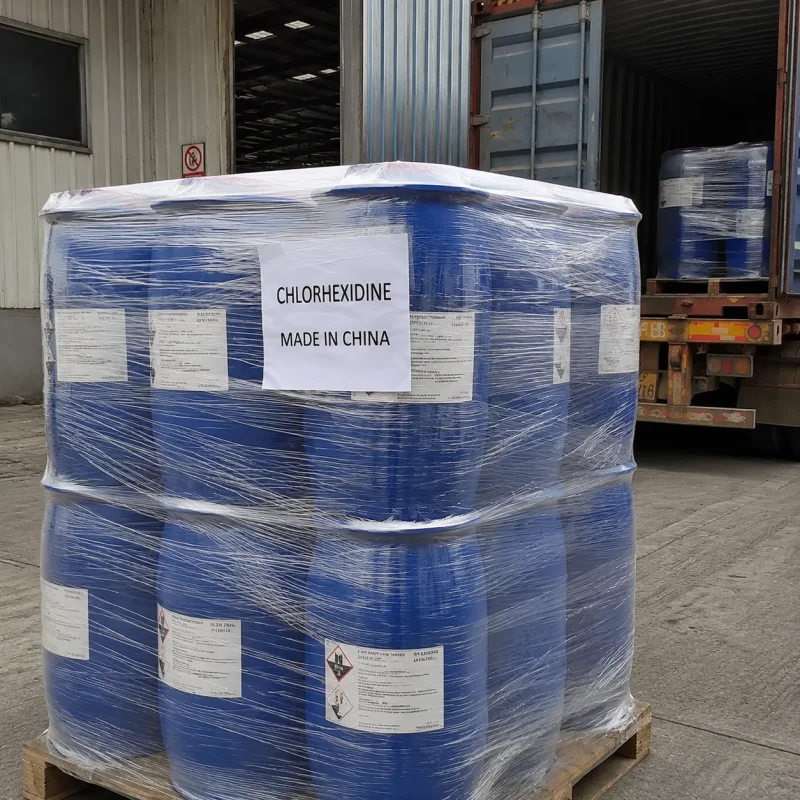
- Packaging: 25 kg (55 lb) HDPE drum; 200 kg (440 lb) HDPE drum; 1000 kg (2200 lb) IBC tote. Custom packaging available upon request.
- Main Applications: Surgical hand scrubs, pre-operative skin prep, mouthwash, veterinary teat dips
Introduction to Chlorhexidine Gluconate 20%
Chlorhexidine Gluconate (CHG) is a cationic bisbiguanide where two chlorhexidine molecules are paired with two gluconate counter-ions to achieve full water solubility. In aqueous solution, the positively charged chlorhexidine cation adsorbs electrostatically onto negatively charged bacterial cell walls, disrupting membrane integrity, causing cytoplasmic leakage, and ultimately precipitating cellular contents. At low concentrations (0.05–0.2%) it is bacteriostatic; at higher concentrations (0.5–4%) it is rapidly bactericidal and fungicidal.
The primary formulation advantage is its exceptional substantivity. The cationic residue binds to stratum corneum keratin and mucosal glycoproteins, maintaining antimicrobial activity for 4–6 hours after application, far exceeding alcohol-based rubs which evaporate instantly. The critical storage risk is cold-induced crystallization. Below 10 °C (50 °F), the 20% solution may become cloudy or precipitate crystalline solids. Store drums in a climate-controlled warehouse between 15 °C (59 °F) and 25 °C (77 °F). If crystallization occurs, warm gently to 30–40 °C (86–104 °F) and agitate until fully clear.
Key Features of Chlorhexidine Gluconate 20%
- Prolonged residual activity. Cationic binding to skin proteins provides persistent antimicrobial protection for 4–6 hours post-application, critical for pre-operative skin prep and surgical hand rubs where sustained efficacy prevents surgical site infections.
- Broad-spectrum fast kill. Highly effective against Gram-positive and Gram-negative bacteria (including MRSA and Pseudomonas aeruginosa), yeasts, and enveloped viruses. Achieves >5 log₁₀ reduction within 30 seconds at 2% use concentration.
- Non-stinging wound compatibility. Unlike iodine or hydrogen peroxide, CHG at 0.05–0.5% does not cause stinging or tissue damage, making it the standard for chronic wound irrigation and burn care.
- Alcohol synergy. Fully compatible with 60–70% ethanol or isopropanol in surgical hand rub formulations. The alcohol provides immediate kill while CHG provides the residual “tail” of protection.
Chlorhexidine Gluconate Chemical & Physical Properties
| Property | Value |
|---|---|
| Molecular Formula | C34H54Cl2N10O14 |
| Molecular Weight | 897.76 g/mol |
| Active Content | 20.0 ± 0.5% (w/w) in water |
| Appearance | Colorless to pale yellow clear liquid |
| Odor | Odorless to faint sweet amine odor |
| pH (as supplied) | 5.5 – 7.0 |
| Specific Gravity | 1.06 – 1.08 g/cm³ at 20 °C (68 °F) |
| Solubility | Fully miscible in water and lower alcohols (ethanol, isopropanol). |
| Freezing Point | Approx. -5 °C (23 °F) (crystallization onset) |
| Heavy Metals (as Pb) | ≤ 10 ppm |
Applications of Chlorhexidine Gluconate 20%
Surgical hand scrubs and skin preps: Diluted to 2–4% with non-ionic surfactants and emollients for pre-operative hand washing. For patient skin prep, formulated at 0.5–2% in 70% isopropanol. The combination achieves immediate disinfection and prevents bacterial recolonization during long surgeries.
Oral care and mouthwash: Diluted to 0.12–0.2% in alcohol-free mouthwash formulations. Binds to oral mucosa and tooth enamel, reducing plaque formation and gingivitis for 8–12 hours after rinsing. Does not disrupt normal oral flora balance at therapeutic doses.
Wound cleansing and burn care: Used at 0.05–0.5% in wound irrigation solutions and antimicrobial wound gels. Effectively reduces bioburden in chronic ulcers and burns without the cytotoxicity associated with povidone-iodine.
Veterinary and livestock hygiene: Formulated at 0.5–2% for teat dipping in dairy cattle, umbilical cord disinfection in newborns, and general wound sprays. Provides broad-spectrum protection without stinging, improving animal compliance.
Storage & Safety Precautions for Chlorhexidine Gluconate 20%
- Storage: Keep tightly sealed in original HDPE drums or IBC totes at 15–25 °C (59–77 °F). Do not freeze. Below 10 °C (50 °F), the solution may crystallize. If crystals form, warm the container in a water bath at 30–40 °C (86–104 °F) and shake vigorously. Do not use open flame or steam jets.
- Safety: The 20% concentrate is classified as a skin and eye irritant (GHS Category 2). Operators must wear chemical splash goggles, face shields, and nitrile gloves. In case of eye contact, flush immediately for 15 minutes and seek medical attention.
- Transport: Chlorhexidine Gluconate 20% is often classified as Class 8 Corrosive (UN 3265) under IATA/IMDG/ADR depending on regional interpretation. Verify the latest SDS before booking. Ship in standard dry containers; avoid extreme cold transit routes.
- QC note: Verify active concentration via HPLC or potentiometric titration upon receipt. Inspect for clarity. Cloudiness or crystals indicate cold exposure during transit; if the product does not return to a clear state after warming to 40 °C (104 °F), reject the lot.
Chlorhexidine Gluconate FAQ
Q: What is the difference between Chlorhexidine Gluconate and Chlorhexidine Digluconate?
A: They are the exact same chemical compound (CAS 18472-51-0). “Digluconate” is the precise chemical name indicating two gluconate ions per chlorhexidine molecule. “Gluconate” is the common commercial and pharmacopoeial name. Both refer to the 20% aqueous concentrate.
Q: The liquid arrived cloudy with white crystals. Is it ruined?
A: No. This is reversible cold crystallization. Warm the drum or IBC in a controlled water bath at 30–40 °C (86–104 °F) and agitate. Once fully dissolved and clear, the product retains full potency. Never use open flames or direct steam injection.
Q: Can I mix CHG with anionic surfactants like SLES or soap bases?
A: No. CHG is a strong cationic polymer. Mixing with anionic surfactants (SLES, SLS, carboxylates) causes immediate cross-neutralization and precipitation, destroying antimicrobial activity. Use non-ionic (e.g., APGs, Tween) or amphoteric surfactants for cleansing formulations.
Related products
Manufacturer & Exporter Since 2006
Get Tailored Chemical Raw Material Solutions — Reply Within 1 Hour
Factory-direct pricing, stable high-purity supply and complete compliance documentation for your industrial formulations.
- 1000+Products
- 200+QC Protocols
- 7–15Days Delivery
- Factory-Direct Pricing
- COA / TDS / SDS Included
- Free Samples for Testing
- 40+ Export Countries
Request a Free Quote
Our engineers reply within 1 hour during GMT+8 business hours.
Please include in your inquiry:
- Product name or CAS number
- Required quantity
- Destination country or port
- Preferred packaging