
Sodium Perborate (Sodium Peroxyborate) | CAS 7632-04-4
Sodium Perborate is a white crystalline powder featuring a cyclic diperoxodiborate ring. It acts as a solid hydrogen peroxide source to oxidize stains and kill microbes in high-temperature detergents. Each lot includes COA, TDS, SDS.
- CAS No: 7632-04-4
- Synonyms: Sodium perborate anhydrous; Sodium peroxyborate; PBS
- EINECS: 231-574-2
- Molecular Formula: NaBO3 (anhydrous basis) / Na2[B2(O2)2(OH)4]
- Molecular Weight: 81.80 g/mol (anhydrous basis)
- Appearance: White free-flowing crystalline powder
- Purity: Active Oxygen (AO) ≥ 15.5%
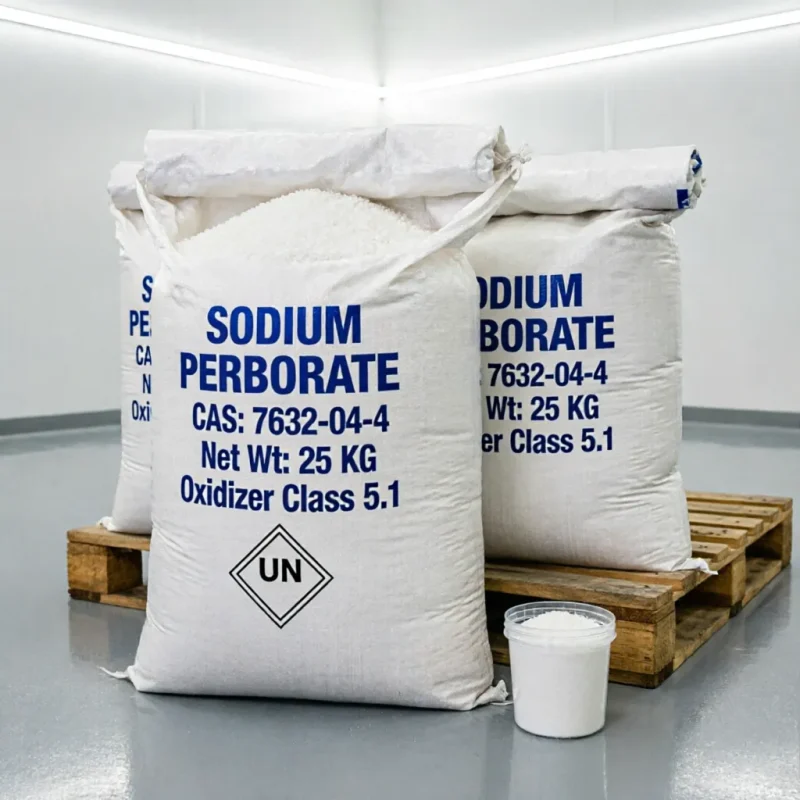
- Packaging: 25 kg / 55 lb woven bag with PE liner; Custom packaging available upon request.
- Main Applications: Laundry bleach activator; dental prosthesis cleaner; industrial textile bleaching
- Solubility: ~45 g/L in water at 20°C / 68°F
- pH: 10.0 – 10.5 (1% aqueous solution)
- Thermal Decomposition: Decomposes above 130°C / 266°F
Introduction to Sodium Perborate
Sodium Perborate (CAS 7632-04-4) is a white crystalline powder featuring a cyclic diperoxodiborate ring structure. It acts as a solid source of hydrogen peroxide, releasing active oxygen in water to oxidize stubborn stains and kill microbes. Formulators heavily rely on it for high-temperature laundry detergents and effervescent dental prosthesis cleaners.
Compared to sodium percarbonate (SPC), sodium perborate maintains better structural stability in high-humidity environments and releases oxygen more steadily above 60°C / 140°F. The main formulation pitfall is heavy metal sensitivity; trace copper or iron catalyzes rapid decomposition, causing drum swelling. Production lines must exclusively use plastic or stainless steel equipment. QC labs should titrate active oxygen iodometrically, as surface moisture drifts between batches and lowers effective AO content.
Key Features of Sodium Perborate
- Cyclic diperoxodiborate ring: The B-O-O-B structure hydrolyzes in water to yield hydrogen peroxide and borate buffer, maintaining alkaline pH during bleaching.
- High-temperature oxygen release: Decomposition accelerates significantly above 60°C / 140°F, making it ideal for heavy-duty industrial laundering where SPC decomposes too early.
- Borate buffering effect: Hydrolysis produces sodium metaborate, which naturally buffers the wash liquor to pH 9-10, optimizing the bleaching efficiency of the released peroxide.
- Enzyme compatibility: Solid sodium perborate shows lower reactivity with protease and amylase enzymes in dry powder detergents compared to liquid peroxide systems, extending shelf life.
Sodium Perborate Chemical & Physical Properties
| Property | Value |
|---|---|
| Molecular Formula | NaBO3 (anhydrous basis) / Na2[B2(O2)2(OH)4] |
| Molecular Weight | 81.80 g/mol (anhydrous basis) |
| Thermal Decomposition | Decomposes above 130°C / 266°F, releasing oxygen; no boiling point |
| Density | Bulk density 0.80-0.95 g/cm³ / 50-59 lb/ft³ |
| Combustibility | Non-flammable oxidizer; flash point not applicable |
| Solubility | ~45 g/L in water at 20°C / 68°F; dissolves faster at higher temperatures |
| Active Oxygen | ≥ 15.5% (anhydrous equivalent) |
| pH | 10.0 – 10.5 (1% aqueous solution at 20°C / 68°F) |
Applications of Sodium Perborate
High-temperature laundry detergents: Releases hydrogen peroxide to oxidize organic stains like wine and tea. Formulators use 10-20% by weight in powder detergents, often adding TAED (tetraacetylethylenediamine) to activate bleaching at lower temperatures (40°C / 104°F).
Dental prosthesis cleaners: Reacts with water to generate oxygen bubbles that mechanically lift plaque and chemically oxidize organic debris from dentures. Effervescent tablets contain 15-30% sodium perborate mixed with citric acid and sodium bicarbonate.
Industrial textile bleaching: Provides a controlled release of active oxygen for bleaching cotton and wool without the severe fiber damage caused by liquid hydrogen peroxide. Use 2-5 g/L in the bleaching bath at 80-90°C / 176-194°F.
Agricultural seed treatment: Oxidizes fungal spores on seed surfaces before planting. Soak seeds in a 0.5-1.0% solution for 15-30 minutes, then rinse thoroughly to prevent root phytotoxicity from residual boron.
Storage & Safety Precautions for Sodium Perborate
Storage: Keep bags sealed below 30°C / 86°F in a dry, well-ventilated area. Store away from reducing agents, organic solvents, and heavy metal salts. Trace copper or iron dust catalyzes rapid oxygen release, leading to bag rupture. QC must check active oxygen titration upon arrival, as high warehouse humidity lowers the effective AO content over time.
Safety & Spill: Sodium perborate is an oxidizer (GHS Category 2) and causes serious eye damage. Wear safety goggles, nitrile gloves, and a dust mask. Sweep spills with a plastic shovel; never use metal tools or mix with combustible sweepings. Flush minor residue with copious water.
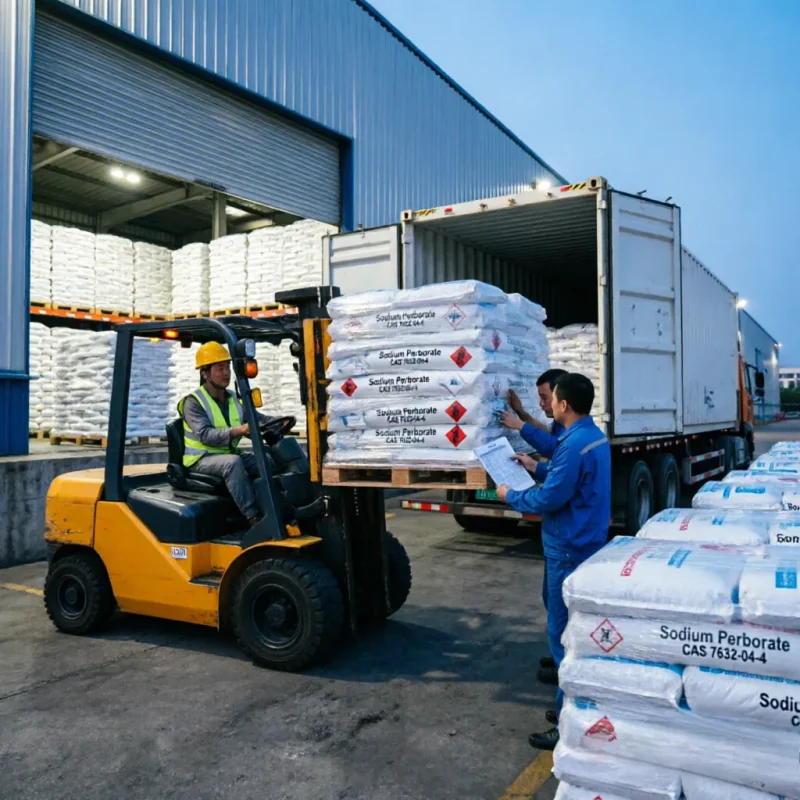
Transport: Shipped as UN 1479, Class 5.1 Oxidizer, Packing Group II for sea and air freight. Ensure containers are completely free of rust or metal debris before loading to prevent catalytic decomposition during transit.
Sodium Perborate FAQ
Q: Does Sodium Perborate CAS 7632-04-4 require an activator for cold-water laundry washing?
A: Yes. Sodium perborate (CAS 7632-04-4) dissolves and releases active oxygen extremely slowly at temperatures below 40°C / 104°F. Formulators must incorporate a bleach activator such as TAED or NOBS into the powder matrix. These activators react with the released peroxide to generate peracetic acid or peroxycarboxylic acid in situ, enabling effective stain removal at 20-30°C / 68-86°F. Without an activator, the oxidizing power remains locked within the borate complex during cold wash cycles. This drastically reduces low-temperature cleaning performance and fails to meet the energy-saving standards of modern cold-water washing machines.
Q: Why did my sodium perborate bags swell and burst during ocean freight?
A: Bag swelling and rupture indicate rapid catalytic decomposition releasing large volumes of oxygen gas. This typically occurs when trace heavy metals like copper, iron, or manganese contaminate the powder during packaging or ocean transit. Rusty container walls, unsealed floorboards, or brass fittings easily introduce these potent catalysts. Always inspect containers for zero rust before loading and strictly use plastic shovels for handling. Upon arrival, QC must immediately titrate the active oxygen content. A significant drop compared to the factory COA confirms severe decomposition occurred during transit, meaning the entire batch might face scrapping risks and require freight claims.
Q: How does sodium perborate compare to sodium percarbonate in enzyme-containing detergents?
A: Sodium percarbonate (SPC) releases hydrogen peroxide rapidly upon contact with trace moisture, which easily degrades encapsulated protease and amylase enzymes within the powder matrix. Sodium perborate dissolves much slower and maintains a more stable solid crystal structure, offering better compatibility with washing enzymes during dry storage and effectively extending shelf life. However, SPC decomposes into sodium carbonate and contains no boron, making its wastewater discharge more environmentally friendly. Consequently, many regional eco-friendly formulations now prefer SPC over sodium perborate. Buyers should select the appropriate oxidizer based on local environmental regulations regarding boron discharge limits in municipal water systems.
Related products
Manufacturer & Exporter Since 2006
Get Tailored Chemical Raw Material Solutions — Reply Within 1 Hour
Factory-direct pricing, stable high-purity supply and complete compliance documentation for your industrial formulations.
- 1000+Products
- 200+QC Protocols
- 7–15Days Delivery
- Factory-Direct Pricing
- COA / TDS / SDS Included
- Free Samples for Testing
- 40+ Export Countries
Request a Free Quote
Our engineers reply within 1 hour during GMT+8 business hours.
Please include in your inquiry:
- Product name or CAS number
- Required quantity
- Destination country or port
- Preferred packaging