
Tetrakis(hydroxymethyl)phosphonium Sulfate (THPS) CAS 55566-30-8
Tetrakis(hydroxymethyl)phosphonium Sulfate (CAS 55566-30-8, EINECS 259-709-0, [P(CH2OH)4]2SO4, MW 406.28), commonly abbreviated as THPS, is a non-oxidizing organophosphorus biocide supplied as an 80% aqueous solution. UET Chemical has produced this sulfate-free-chloride grade since 2006, delivering consistent active content and low heavy-metal residues for cooling tower, oilfield, and pulp mill water treatment programs. Our THPS maintains a minimum bactericidal concentration below 50 ppm against sulfate-reducing bacteria, reducing biofilm regrowth cycles in recirculating systems.
- CAS: 55566-30-8
- Synonyms: THPS, THPS sulfate, Tetrakis(hydroxymethyl)phosphonium sulfate, Phosphonium biocide
- EINECS: 259-709-0
- Molecular Formula: C8H24O12P2S
- Molecular Weight: 406.28 g/mol
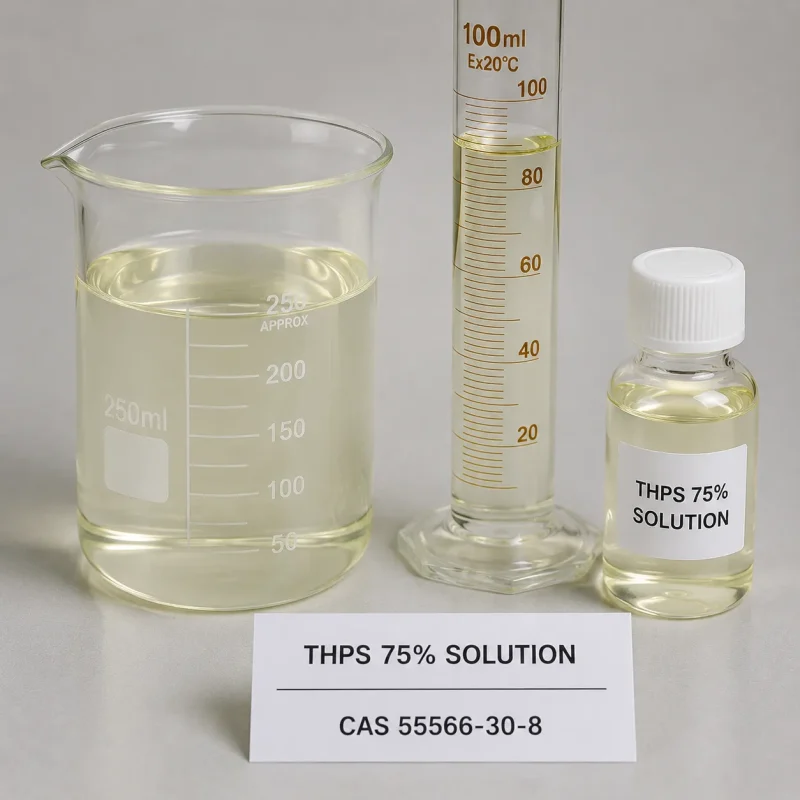
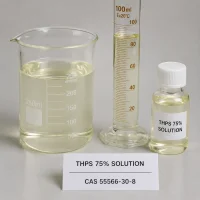
- Appearance: Colorless to pale yellow transparent liquid
- Active Content: 80% ± 1%
- Grade: Industrial Biocide
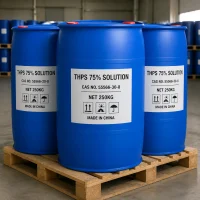
- 25kg: HDPE drums with UN-rated closure
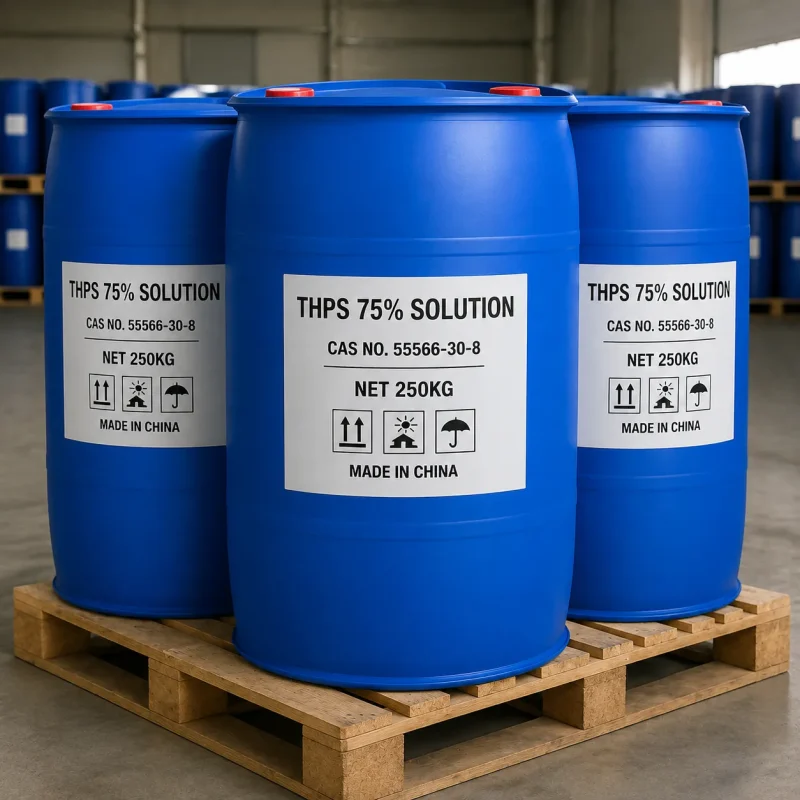
- 200kg: HDPE drums with tamper-evident seals
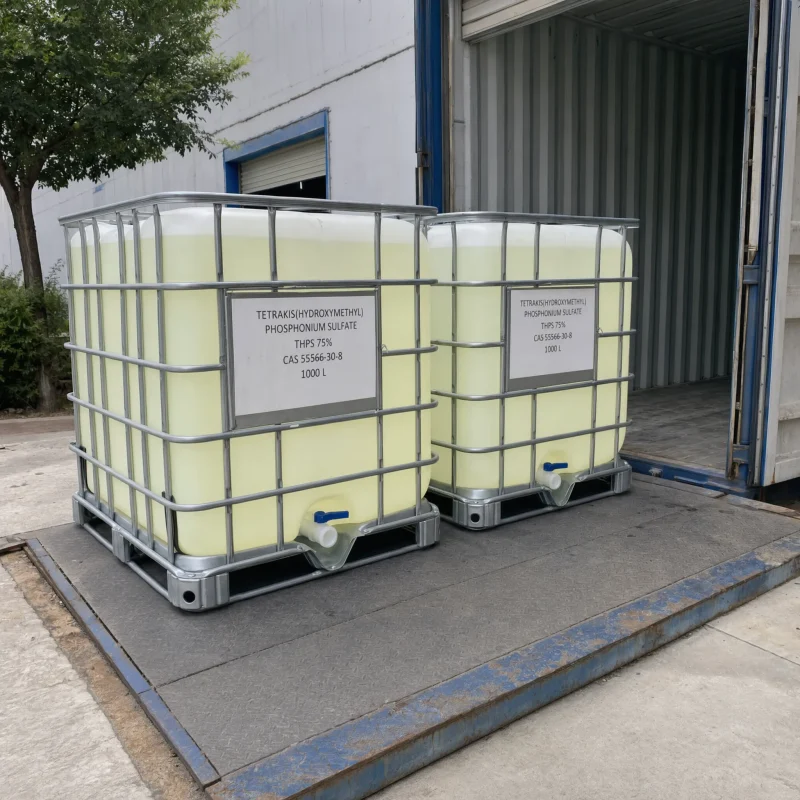
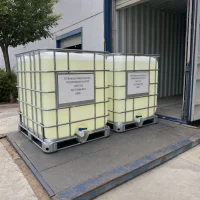
- 1000kg: IBC tote tanks with steel cage
- Custom packaging, palletizing, and OEM labeling available upon request.
THPS Overview & Chemical Identity
Tetrakis(hydroxymethyl)phosphonium Sulfate is a quaternary phosphonium salt biocide that disrupts microbial cell membrane integrity without relying on oxidative chemistry.
Unlike glutaraldehyde or isothiazolinones, THPS carries four hydroxymethyl groups that provide high water solubility and low volatility at operating temperatures up to 60 °C. The sulfate counter-ion avoids chloride-induced stress corrosion cracking in stainless steel heat exchangers, a critical advantage in closed-loop cooling systems. Its cationic nature allows electrostatic adsorption onto negatively charged biofilm matrices, penetrating extracellular polymeric substances that shield embedded bacteria from contact-kill agents.
Chemical & Physical Properties
| Property | Value |
|---|---|
| HS Code | 2931.90 |
| Density at 20 °C | 1.34 – 1.38 g/cm³ |
| pH (10% solution) | 4.0 – 6.0 |
| Freezing Point | -10 °C |
| Decomposition Temperature | > 200 °C |
| Solubility in Water | Miscible |
| Vapor Pressure | < 0.01 hPa at 20 °C |
| Compatibility | Incompatible with anionic surfactants and strong oxidizers |
Technical Specifications & COA Parameters
| Item | Specification | Test Method |
|---|---|---|
| Active Content (THPS) | 80.0% ± 1.0% | Potentiometric Titration |
| pH Value | 4.0 – 6.0 | ISO 4316 |
| Density at 20 °C | 1.34 – 1.38 g/cm³ | ISO 1675 |
| Formaldehyde | ≤ 1.0% | HPLC |
| Heavy Metals (as Pb) | ≤ 10 ppm | ICP-OES |
| Arsenic (As) | ≤ 2 ppm | ICP-OES |
| Color (APHA) | ≤ 50 | ISO 6271 |
Active content below 78% indicates thermal degradation of the phosphonium cation, which raises the minimum bactericidal concentration against sulfate-reducing bacteria and triggers biofilm regrowth within 48 hours of dosing. Our reactor discharge is held at pH 4.5 – 5.5 during concentration to suppress formaldehyde release, and every batch undergoes nitrogen-sparged storage before drum filling.
Key Performance Benefits in Formulations
- Biofilm penetration at low ppm: Cationic charge density enables THPS to breach extracellular polymeric substance layers at 50 – 150 ppm, reaching sessile cells that planktonic-only biocides miss.
- No chloride contribution: The sulfate counter-ion keeps chloride loading at < 50 ppm in the finished product, eliminating pitting risk on 316L stainless steel tube bundles.
- Rapid biodegradation: Phosphonium backbone hydrolyzes to phosphate and formaldehyde-derived fragments with a 28-day OECD 301B biodegradation rate above 60%, easing discharge permit compliance.
- Synergy with oxidizers: Can be dosed 4 – 6 hours apart from sodium hypochlorite programs, providing knockdown and residual kill without chemical neutralization when staggered correctly.
- Wide pH operating window: Maintains bactericidal efficacy between pH 5.0 and 9.5, suitable for alkaline cooling towers running at pH 8.5 without pH adjustment.
Industrial Applications & Dosage Guidelines
Industrial Cooling Water: Dose at 100 – 300 ppm active THPS as a slug feed once or twice weekly. For systems with high organic load, combine with a biodispersant to detach mature biofilm before biocide contact. Compatible with phosphonate and polymer-based scale inhibitors when dosed at separate injection points.
Oilfield Injection Water: Inject at 50 – 200 ppm continuous or batch treatment to control sulfate-reducing bacteria and prevent biogenic H2S generation. Pairs with glutaraldehyde in alternating weekly schedules to delay microbial resistance.
Pulp & Paper Mill: Add 0.05 – 0.2 kg per ton of furnish in the stock preparation stage to suppress slime-forming bacteria on wires and felts. Avoid simultaneous addition with anionic retention aids to prevent precipitation.
Leather Preservation: Apply at 0.1 – 0.3% on hide weight during soak and pickle stages to inhibit putrefaction without affecting chrome tanning uptake.
Available Grades & Selection Guide
| Parameter | Standard 80% | High-Purity 80% | Diluted 50% |
|---|---|---|---|
| Active Content | 80% ± 1% | 80% ± 0.5% | 50% ± 1% |
| Formaldehyde | ≤ 1.0% | ≤ 0.5% | ≤ 0.8% |
| Color (APHA) | ≤ 50 | ≤ 30 | ≤ 40 |
| Primary Use | Cooling towers, oilfield | Paper mills, closed loops | Small-scale dosing systems |
Specify your system pH range and whether the dosing point is upstream or downstream of anionic polymer injection. We will match the grade and recommend a compatible biodispersant if needed.
Logistics, Storage & Handling Safety
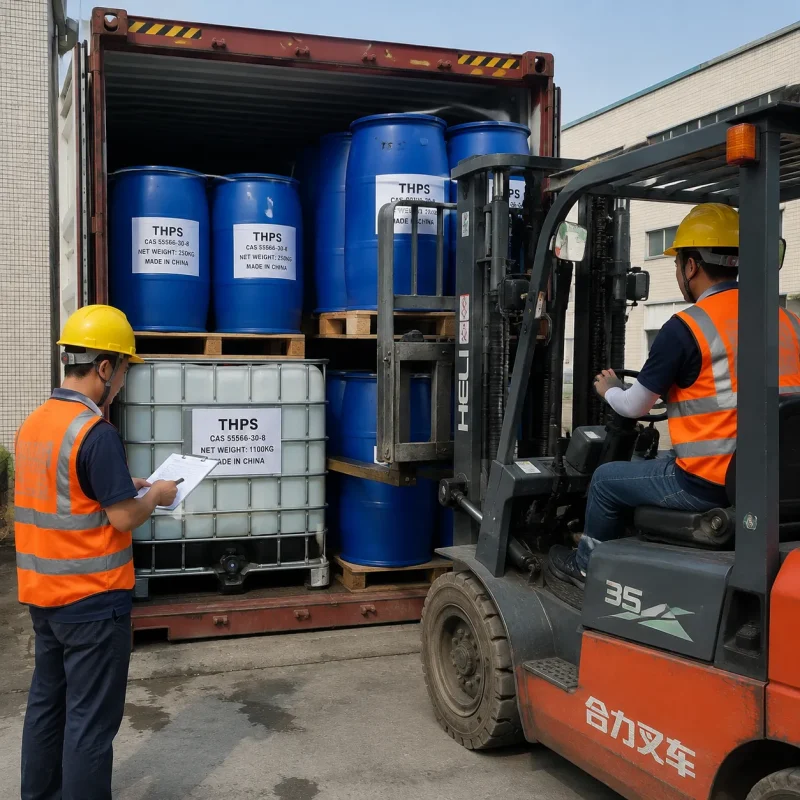
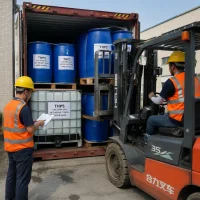
Standard export formats are 25 kg and 200 kg HDPE drums, or 1000 kg IBC tote tanks with galvanized steel cage. A 20’FCL loads 20 MT in 25 kg drums without pallets, or 16 MT with pallets. IBC tanks load at 20 MT per 20’FCL. Store between 5 °C and 40 °C in sealed original containers away from strong oxidizers, caustics, and anionic surfactants. THPS is classified as UN 3266, Class 8, Packing Group III for transport. In winter shipments to North America or Northern Europe, we load drums in the container mid-section away from door panels and add 2 kg silica gel desiccant per drum stack to prevent condensation from pooling on drum lids during 35-day transoceanic transit. Review the current SDS before handling: PPE, incompatibilities, emergency measures. Wear chemical-resistant nitrile gloves and splash goggles during drum opening and pump transfer.
Quality Assurance & Compliance Documentation
Every shipment includes a batch-specific Certificate of Analysis, Technical Data Sheet, and Safety Data Sheet per GHS Rev.9. Additional documents available on request:
- REACH: Registration status for EU market access
- EPA: FIFRA registration support data for US water treatment claims
- Biocidal efficacy: EN 1276 and EN 1650 test reports against Pseudomonas aeruginosa, Staphylococcus aureus, and Candida albicans
- Heavy metals: ICP-OES full panel report per batch
THPS FAQ
Q: Can THPS CAS 55566-30-8 be dosed simultaneously with sodium hypochlorite in the same injection line?
A: No. Simultaneous injection causes rapid oxidation of the phosphonium cation, destroying biocidal activity within minutes. Stagger dosing by a minimum of 4 – 6 hours, or use separate injection quills with check valves to prevent backflow mixing.
Q: Why does my THPS solution form white crystals after winter storage?
A: Crystallization occurs when drum temperature drops below 5 °C, causing the sulfate salt to precipitate. This is reversible. Warm the drum to 20 – 30 °C with a water bath or drum heater and agitate gently until fully re-dissolved. Active content is unaffected.
Q: What happens if THPS contacts an anionic polyacrylamide flocculant in the same system?
A: The cationic phosphonium ion forms an insoluble complex with anionic polymers, creating a gelatinous precipitate that fouls filters and heat exchanger tubes. Maintain at least 2 hours of hydraulic residence time between THPS slug feed and anionic polymer dosing, or install a static mixer at separate pipe runs.
Q: How do you pack samples for overseas courier shipment?
A: We ship 200 ml samples in HDPE bottles with induction-sealed caps, packed inside UN-rated absorbent boxes. Each sample includes the batch COA and TDS. Courier transit from our Qingdao warehouse to major EU and US hubs takes 5 – 8 business days.
Q: What is the shelf life, and do you provide stability data?
A: Shelf life is 24 months from production date in sealed HDPE containers stored below 40 °C. We retain accelerated stability samples at 54 °C for 14 days per OECD guidelines and can share the degradation curve report with your QA team on request.
Related products
Manufacturer & Exporter Since 2006
Get Tailored Chemical Raw Material Solutions — Reply Within 1 Hour
Factory-direct pricing, stable high-purity supply and complete compliance documentation for your industrial formulations.
- 1000+Products
- 200+QC Protocols
- 7–15Days Delivery
- Factory-Direct Pricing
- COA / TDS / SDS Included
- Free Samples for Testing
- 40+ Export Countries
Request a Free Quote
Our engineers reply within 1 hour during GMT+8 business hours.
Please include in your inquiry:
- Product name or CAS number
- Required quantity
- Destination country or port
- Preferred packaging