
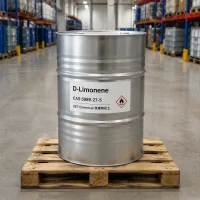
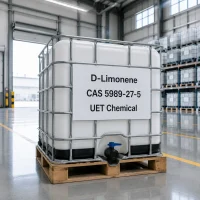
D-Limonene CAS 5989-27-5
D-Limonene is a natural cyclic monoterpene solvent that solves high toxicity, pungent odors, and poor biodegradability challenges associated with traditional petrochemical solvents. Industrial cleaning and agrochemical manufacturers rely on it for eco-friendly degreasers, natural fragrances, and agricultural spray adjuvants. UETChem supplies this product with strict control over peroxides, moisture, and optical rotation, ensuring exceptional dissolving power, a fresh citrus aroma, and long-term formulation stability. Each shipment includes COA, TDS, SDS.
- CAS No: 5989-27-5
- Synonyms: d-Limonene; (+)-Limonene; Citrene
- EINECS: 227-813-5
- Molecular Formula: C10H16
- Molecular Weight: 136.24 g/mol (136.24 lb/lbmol)
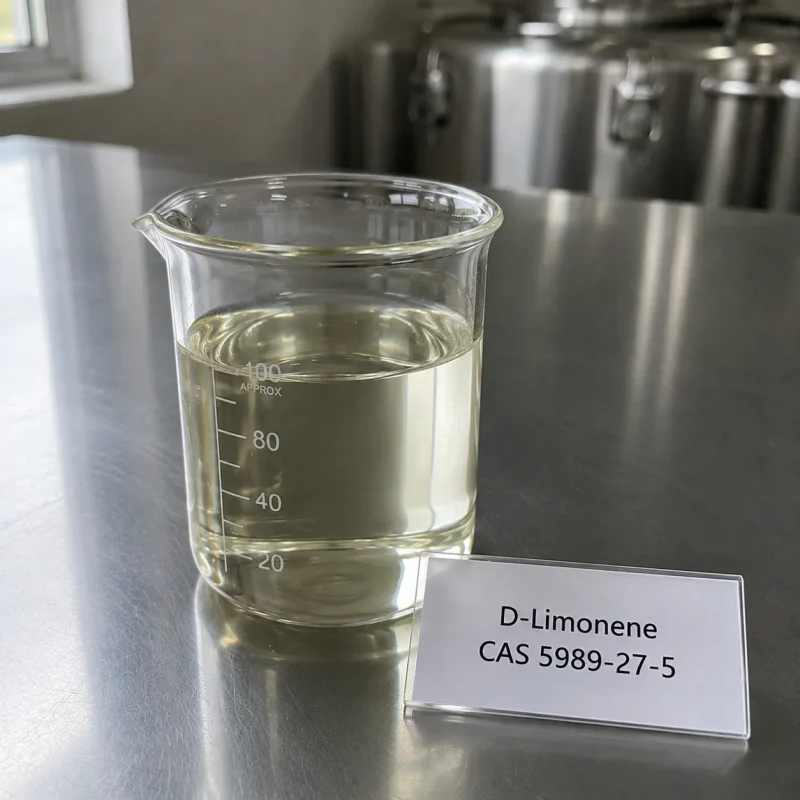
- Appearance: Colorless to pale yellow transparent liquid
- Purity: 95.0% min (GC)
- Optical Rotation: +96° to +104°
- Flash Point: 48 °C (118 °F) closed cup
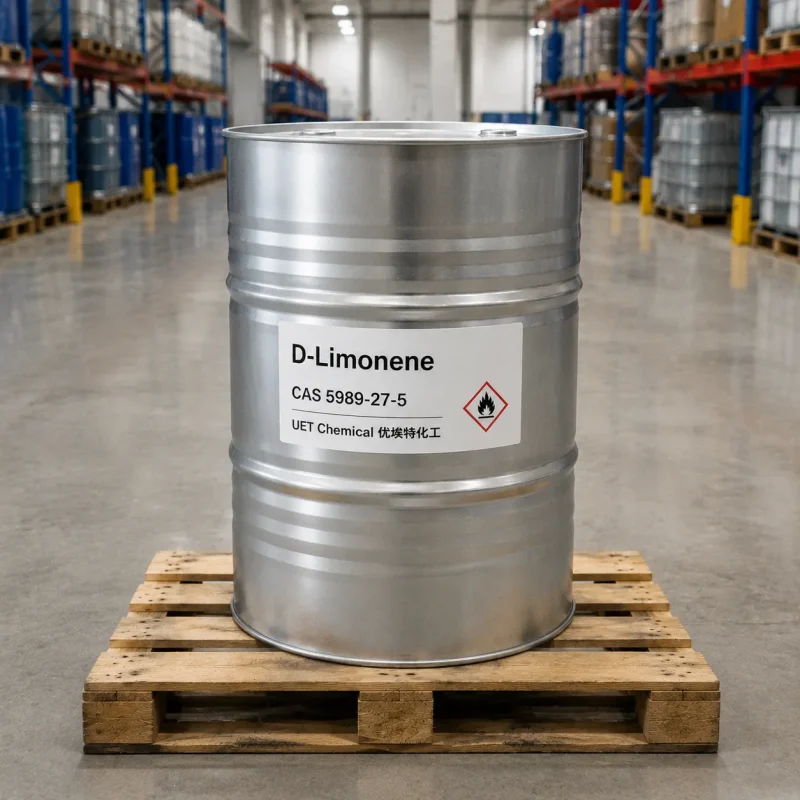
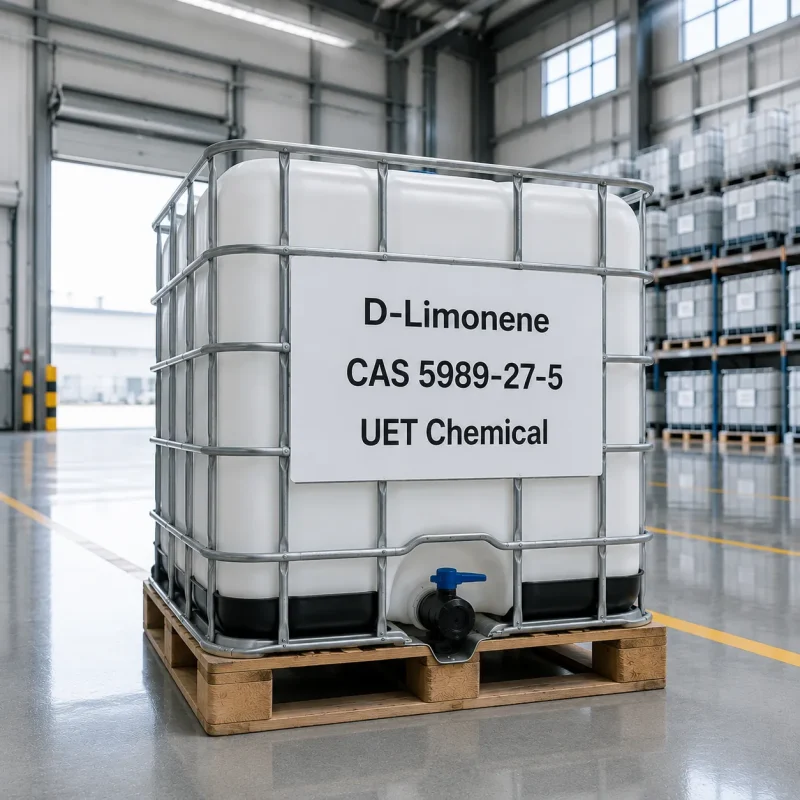
- Packaging: 170 kg (375 lb) HDPE drum, 1000 kg (2205 lb) IBC. Custom packaging available upon request.
- Main Applications: Industrial degreasers, adhesive removers, fragrance ingredients, agricultural adjuvants, cosmetic solvents
Introduction to D-Limonene
D-Limonene is a naturally occurring cyclic monoterpene extracted from the peel of citrus fruits like oranges and lemons. The molecular structure contains a six-membered ring and a terminal double bond, imparting excellent non-polar solvency. At room temperature, the compound presents as a colorless to pale yellow transparent liquid with a strong, fresh citrus aroma. It remains insoluble in water but mixes completely with most organic solvents, oils, and waxes. Industrial cleaning and cosmetic facilities consume this botanical extract to replace toxic petrochemical solvents in degreasing and fragrance applications.
Key Features of D-Limonene
- Cyclic monoterpene structure: The non-polar hydrocarbon backbone effortlessly dissolves resins, asphalt, and heavy grease deposits.
- Natural botanical origin: Extracted via cold-pressing or steam distillation, aligning with green chemistry principles and ensuring rapid environmental biodegradation.
- Moderate volatility: Evaporates cleanly from surfaces without leaving oily streaks or toxic residues.
D-Limonene Chemical & Physical Properties
| Property | Value |
|---|---|
| Molecular Formula | C10H16 |
| Molecular Weight | 136.24 g/mol (136.24 lb/lbmol) |
| Appearance | Colorless to pale yellow transparent liquid |
| Boiling Point | 176 °C (349 °F) |
| Density | 0.84 g/cm³ (7.01 lb/gal) at 20 °C |
| Flash Point | 48 °C (118 °F) closed cup |
| Optical Rotation | +96° to +104° |
Applications of D-Limonene
Industrial degreasers and adhesive removers: Formulated as the primary solvent in eco-friendly heavy-duty cleaners. The liquid rapidly penetrates and lifts cured adhesives, tar, and machining oils from metal substrates. Chemists frequently emulsify the terpene with mild nonionic surfactants like Decyl Glucoside to create water-rinsable cleaning emulsions that safely wash away dissolved soils.
Fragrances and cosmetic formulations: Incorporated into perfumes, soaps, and lotions to provide a bright, uplifting citrus top note. The natural solvent also enhances the skin penetration of active botanical extracts. Formulators adjust the pH of these aqueous cosmetic blends using mild acidulants like Citric Acid to maintain product stability and prevent microbial growth.
Agricultural adjuvants and botanical insecticides: Acts as a natural spray adjuvant that dissolves the waxy cuticle of soft-bodied pests, improving the uptake of active ingredients. The terpene also reduces the surface tension of the spray droplets, ensuring uniform coverage on waxy crop leaves. Manufacturers often blend it with gentle foaming agents like Sodium Lauroyl Sarcosinate to optimize the physical properties of the final agricultural spray mixture.
Storage & Safety Precautions for D-Limonene
- Oxidation and peroxide control: Store in tightly sealed, opaque HDPE or fluorinated drums in a cool, dark warehouse. Exposure to air and UV light triggers autoxidation, forming hydroperoxides and carvone. This degradation ruins the fresh citrus scent and drastically increases the risk of allergic contact dermatitis.
- Flammability: The liquid is combustible with a flash point of 48 °C (118 °F). Keep away from ignition sources and use explosion-proof equipment during bulk transfer.
- Handling and PPE: Prolonged skin contact can cause sensitization. Wear chemical splash goggles and nitrile gloves during drum decanting.
- Field note: When manufacturing water-based citrus cleaners, pre-mix the D-Limonene with the surfactant before adding water. Dumping water directly into the pure terpene causes severe phase separation and requires excessive high-shear milling to stabilize the emulsion.
D-Limonene FAQ
Q: How does D-Limonene function as an industrial degreaser?
A: D-Limonene acts as a powerful non-polar solvent that easily dissolves heavy grease, tar, and adhesive residues. Its cyclic monoterpene structure breaks down stubborn soils on metal surfaces. Formulators blend it with surfactants to create water-rinsable, eco-friendly cleaning emulsions.
Q: Why does D-Limonene oxidize during storage?
A: D-Limonene contains reactive double bonds that slowly oxidize when exposed to air and UV light, forming peroxides and carvone. This degradation alters the fresh citrus odor and increases skin sensitization risks. Store the liquid in tightly sealed, opaque drums under a nitrogen blanket.
Q: Is D-Limonene safe for use in agricultural sprays?
A: Yes, D-Limonene is widely used as a natural botanical insecticide and spray adjuvant. It dissolves the waxy cuticle of soft-bodied insects and improves the spreading of active ingredients on crop leaves. Its rapid biodegradability ensures no toxic residue remains in the soil or water.
Related products
Manufacturer & Exporter Since 2006
Get Tailored Chemical Raw Material Solutions — Reply Within 1 Hour
Factory-direct pricing, stable high-purity supply and complete compliance documentation for your industrial formulations.
- 1000+Products
- 200+QC Protocols
- 7–15Days Delivery
- Factory-Direct Pricing
- COA / TDS / SDS Included
- Free Samples for Testing
- 40+ Export Countries
Request a Free Quote
Our engineers reply within 1 hour during GMT+8 business hours.
Please include in your inquiry:
- Product name or CAS number
- Required quantity
- Destination country or port
- Preferred packaging