
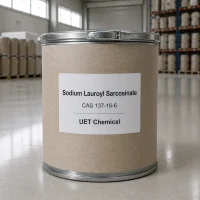
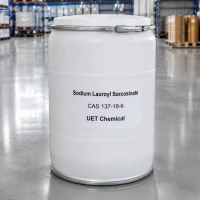
Sodium Lauroyl Sarcosinate CAS 137-16-6
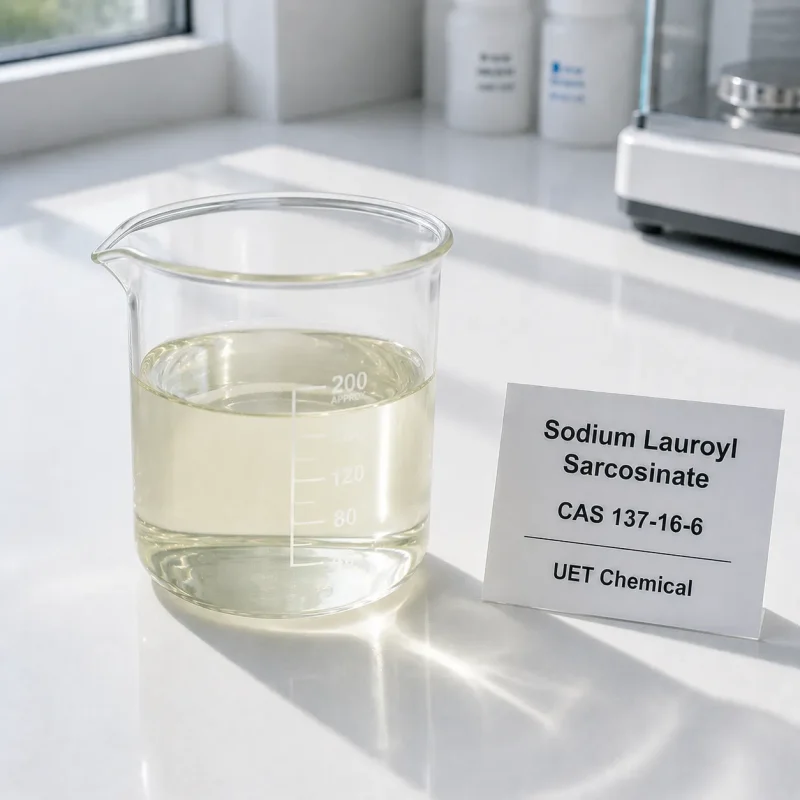
Sodium Lauroyl Sarcosinate (SLSarc) is an amino acid-based anionic surfactant built on a sarcosine head and a lauroyl tail, supplied as a 30% active clear liquid or >95% white powder. It generates dense, creamy foam and remains stable in hard water, making it a staple in sulfate-free shampoos, facial cleansers, and toothpaste. UETChem also supplies this product with tight control over free amine and pH drift to ensure formulation stability. Each shipment includes COA, TDS, SDS.
- CAS No: 137-16-6
- Synonyms: SLSarc; Sodium N-lauroylsarcosinate; Sarkosyl L
- EINECS: 205-281-5
- Molecular Formula: C15H28NNaO3
- Molecular Weight: 293.38 g/mol (293.38 lb/lbmol)
- Appearance: Clear to slightly hazy liquid (30% solution)
- Active Matter: 29.0-31.0%
- pH (10% aqueous): 7.5-8.5
- Sodium Chloride: 1.0% max
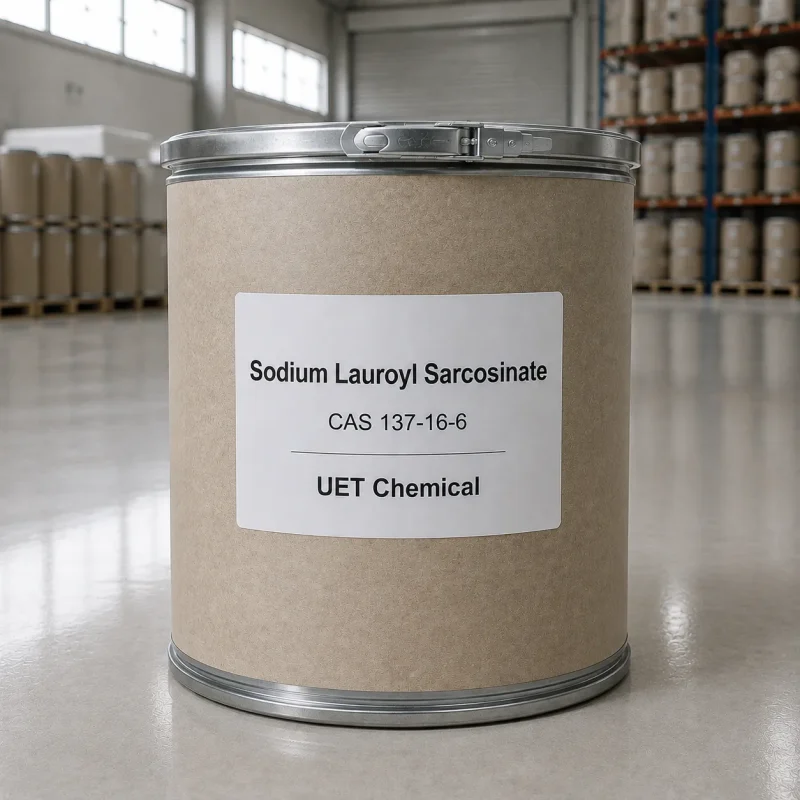
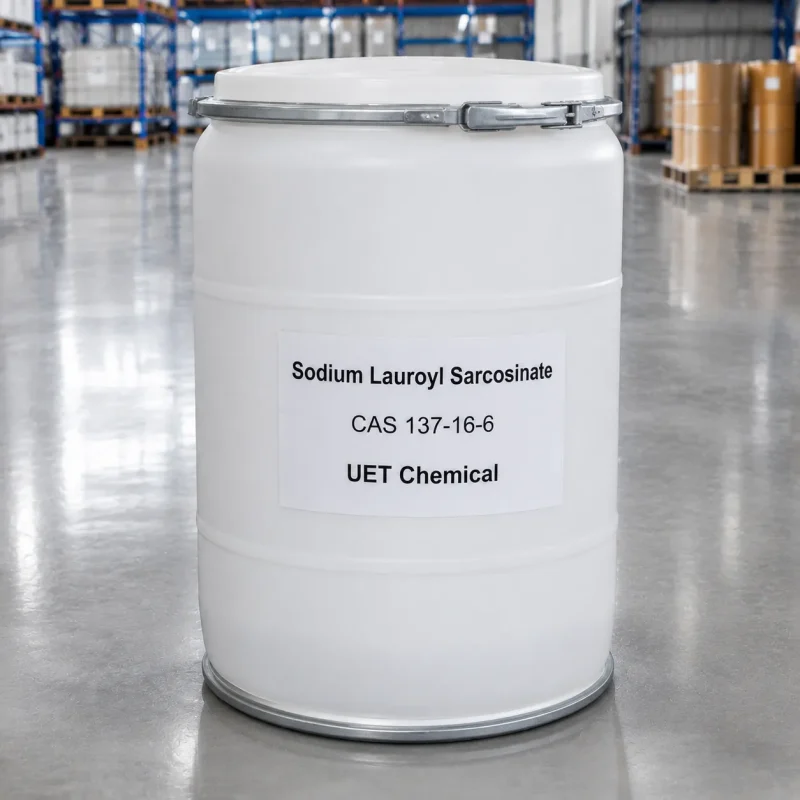
- Packaging: 200 kg (441 lb) drum, 1000 kg (2205 lb) IBC. Custom packaging available upon request.
- Main Applications: Sulfate-free personal care, toothpaste foaming agent, mild industrial cleaners
Introduction to SLSarc
SLSarc is an N-acyl amino acid salt featuring a hydrophobic lauroyl tail and a hydrophilic sarcosine head group. Formulators use it to build sulfate-free personal care products and mild industrial cleaners because it creates stable foam without stripping skin lipids.
The primary formulation advantage is tolerance to hard water and moderate acidity. Unlike traditional soap bases, it does not form scum with calcium ions. The main handling risk is temperature and pH shock: if the liquid drops below 10 °C (50 °F), it crystallizes into a solid block, and if formulation pH falls below 5.5, the free lauroyl sarcosinic acid precipitates out as white flakes. Always melt frozen drums slowly and check pH before blending.
Key Features of SLSarc
- Amino acid backbone: The peptide-like amide bond resists hydrolysis in mildly acidic environments, keeping facial cleansers clear down to pH 5.5.
- Hard water tolerance: The sarcosine head group weakly chelates calcium and magnesium, preventing the formation of insoluble metal soaps during rinsing.
- Synergistic foaming: Blending with betaines or Decyl Glucoside boosts foam volume and viscosity without adding ethoxylated sulfates.
- Low irritation profile: TEER (Trans-Epithelial Electrical Resistance) tests show minimal disruption to skin barrier lipids compared to traditional sulfates.
- QC checkpoints: Active matter by HPLC, pH by ASTM E70, and free amine by titration help detect hydrolysis or neutralization before dispatch.
SLSarc Chemical & Physical Properties
| Property | Value |
|---|---|
| Molecular Formula | C15H28NNaO3 |
| Molecular Weight | 293.38 g/mol (293.38 lb/lbmol) |
| Active Matter | 29.0–31.0% (Liquid grade) |
| pH (10% aqueous) | 7.5–8.5 |
| Viscosity | 50–150 mPa·s (cP) at 25 °C (77 °F) |
| Freezing Point | ~10 °C (50 °F) for 30% solution |
| Solubility | Completely soluble in water; soluble in ethanol |
| Sodium Chloride | 1.0% max |
Applications of SLSarc
Sulfate-free hair and body wash: Acts as the primary or secondary surfactant at 5–15% active matter. The lauroyl chain provides soil removal, while the sarcosine group ensures mild rinsing without leaving a tight skin feel. Formulators often add Cocamide MIPA to thicken the system.
Toothpaste foaming agent: Replaces SLS (Sodium Lauryl Sulfate) at 1–3% concentration. It generates foam without interfering with fluoride ions or causing oral mucosa peeling in sensitive users.
Mild industrial degreaser: Used at 2–8% in water-based parts cleaners. Formulators often add Sodium Tetraborate Decahydrate as a pH buffer to maintain the alkaline reserve needed for saponifying machining oils.
Storage & Safety Precautions for SLSarc
- Temperature and freezing: Store liquid grades between 15–35 °C (59–95 °F). Below 10 °C (50 °F), the 30% solution crystallizes into a hard mass. Thaw frozen drums using a low-temperature band heater or warm room; never use direct high heat, which scorches the amino acid and turns the batch yellow.
- pH stability: Keep the bulk pH between 7.5 and 8.5. Microbial growth can consume the preservative and drop the pH, triggering precipitation of free lauroyl sarcosinic acid.
- Handling and PPE: The liquid is mildly irritating to eyes. Wear splash goggles and gloves when pumping from IBCs. For spills, flush with water; the high foaming action requires anti-foam agents during cleanup.
- Field note: When QC testing viscosity, ensure the sample is fully homogenized and at exactly 25 °C (77 °F). SLSarc viscosity is highly temperature-dependent, and cold samples will falsely read high on the viscometer.
SLSarc FAQ
Q: Why does Sodium Lauroyl Sarcosinate turn cloudy in my shampoo?
A: Cloudiness occurs if the formulation pH drops below 5.5. The sodium salt converts to free lauroyl sarcosinic acid, which is insoluble in water and precipitates as white flakes. Check your citric acid dosage and buffer the system to keep SLSarc stable above pH 6.0.
Q: How do I thaw a frozen drum of SLSarc (CAS 137-16-6)?
A: Move the drum to a warm room at 30 °C (86 °F) or use a low-wattage drum heater. Do not exceed 60 °C (140 °F). Localized high heat degrades the sarcosine bond, causing yellowing and a burnt odor. Stir the SLSarc well after melting before pumping.
Q: Can SLSarc replace SLES in bubble baths?
A: It can replace SLES, but foam flash is lower. To match SLES performance, formulators blend SLSarc at 10% with 5% cocamidopropyl betaine. This combination builds dense, long-lasting foam while eliminating sulfate irritation commonly associated with traditional SLES systems.
Related products
Manufacturer & Exporter Since 2006
Get Tailored Chemical Raw Material Solutions — Reply Within 1 Hour
Factory-direct pricing, stable high-purity supply and complete compliance documentation for your industrial formulations.
- 1000+Products
- 200+QC Protocols
- 7–15Days Delivery
- Factory-Direct Pricing
- COA / TDS / SDS Included
- Free Samples for Testing
- 40+ Export Countries
Request a Free Quote
Our engineers reply within 1 hour during GMT+8 business hours.
Please include in your inquiry:
- Product name or CAS number
- Required quantity
- Destination country or port
- Preferred packaging