
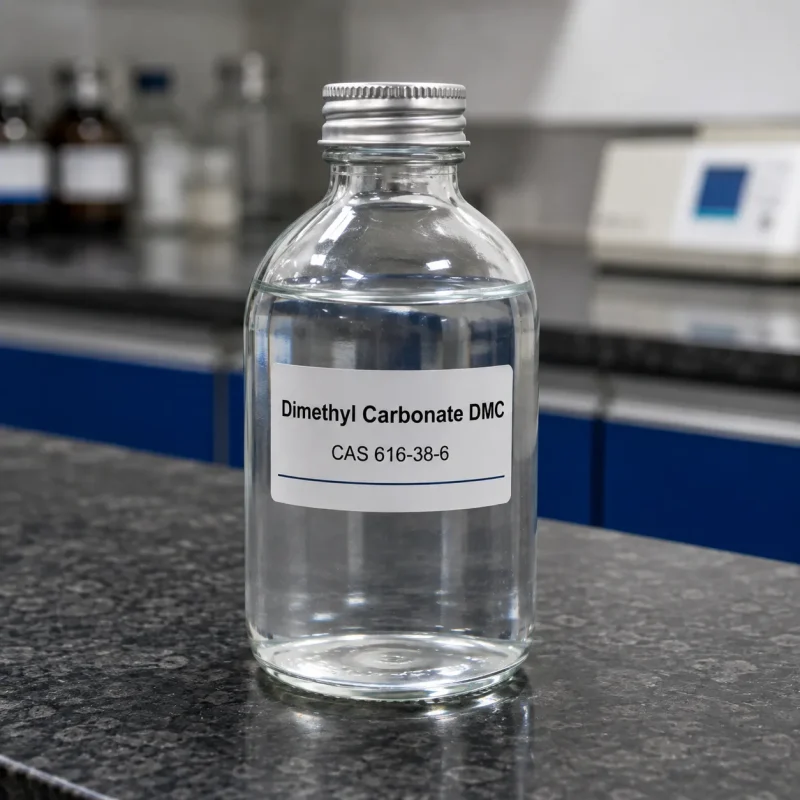
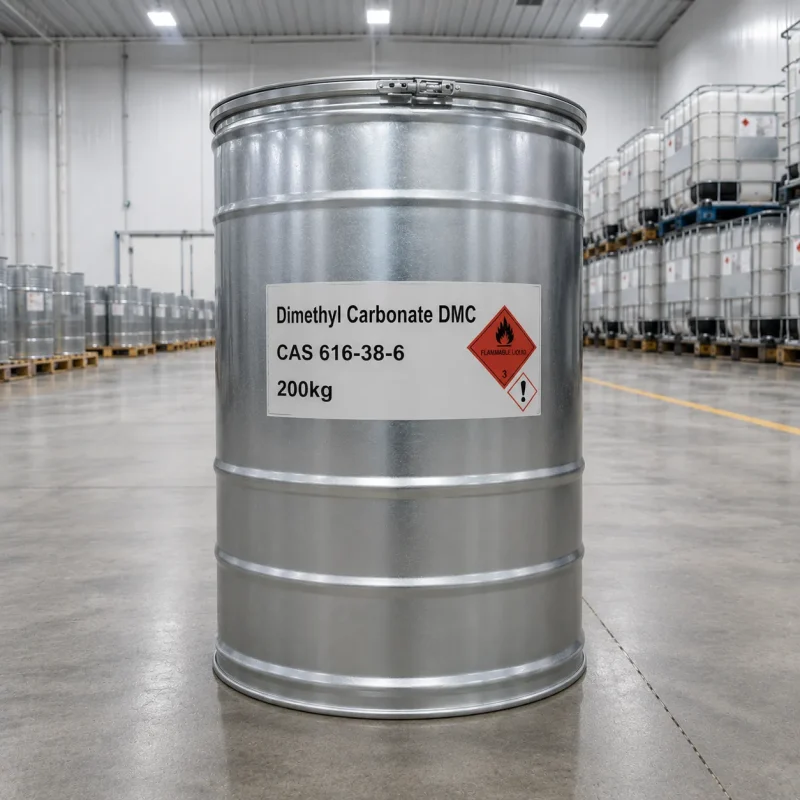
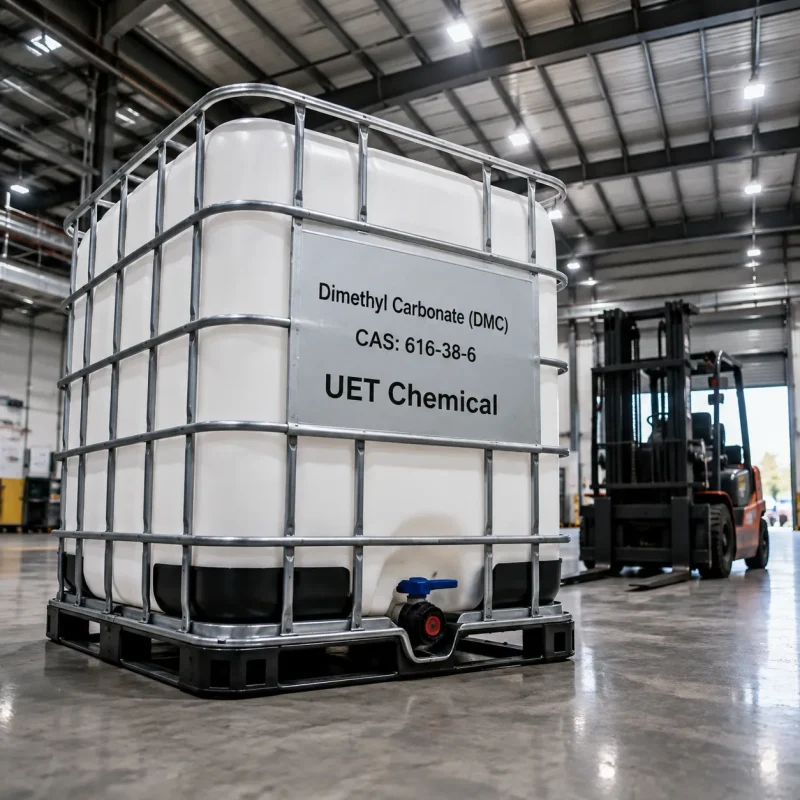
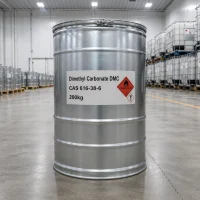
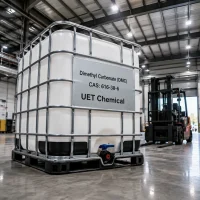
Dimethyl Carbonate (DMC) CAS 616-38-6
Dimethyl Carbonate (DMC) is a versatile green carbonate ester that solves high VOC emissions, toxic solvent exposure, and electrolyte viscosity challenges in modern chemical formulations. Battery and coating manufacturers rely on it for lithium-ion battery electrolytes, non-phosgene polycarbonate synthesis, and eco-friendly paint solvents. UETChem supplies this product with strict control over moisture and purity, ensuring exceptional electrochemical stability and high reaction yields. Each shipment includes COA, TDS, SDS.
- CAS No: 616-38-6
- Synonyms: DMC; Carbonic acid dimethyl ester; Methyl carbonate
- EINECS: 210-478-4
- Molecular Formula: C3H6O3
- Molecular Weight: 90.08 g/mol
- Appearance: Colorless transparent liquid
- Purity: 99.9% min (Battery Grade) / 99.0% min (Industrial)
- Moisture: 20 ppm max (Battery Grade)
- Flash Point: 17 °C (63 °F)
- Packaging: 160 kg (353 lb) steel drum, ISO Tank. Custom packaging available upon request.
- Main Applications: Lithium battery electrolytes, polycarbonate synthesis, pharmaceutical methylation, industrial solvents
Introduction to Dimethyl Carbonate
Dimethyl Carbonate is an organic carbonate ester characterized by a central carbonyl group bonded to two methoxy groups. The molecular structure imparts unique solvent properties, combining a high dielectric constant with low viscosity. At room temperature, the compound exists as a colorless, highly flammable liquid with a faint, pleasant odor. It exhibits excellent solubility for a wide range of polar and non-polar substances while remaining partially miscible with water.
The material functions as a highly reactive methylating and carbonylating agent in organic synthesis, offering a non-toxic alternative to traditional hazardous reagents like phosgene and methyl halides. Industrial facilities utilize this intermediate to engineer advanced polymer matrices and formulate high-performance electrochemical cells.
Key Features of DMC
- High dielectric constant: Facilitates the dissociation of lithium salts, ensuring high ionic conductivity in battery electrolyte systems.
- Low viscosity: Enhances ion mobility and reduces internal resistance within electrochemical cells.
- Green reactivity: Acts as an environmentally benign methylating agent, producing only methanol or carbon dioxide as byproducts.
DMC Chemical & Physical Properties
| Property | Value |
|---|---|
| Molecular Formula | C3H6O3 |
| Molecular Weight | 90.08 g/mol |
| Appearance | Colorless transparent liquid |
| Boiling Point | 90 °C (194 °F) |
| Melting Point | 4.6 °C (40 °F) |
| Density | 1.07 g/cm³ (8.92 lb/gal) at 20 °C |
| Flash Point | 17 °C (63 °F) closed cup |
Applications of Dimethyl Carbonate
Lithium-ion battery electrolytes: Blended with cyclic carbonates like Ethylene Carbonate to formulate liquid electrolytes. The DMC provides the necessary low viscosity and high dielectric environment for optimal lithium-ion transport between the cathode and anode.
Non-phosgene polycarbonate synthesis: Reacts with bisphenol-A via melt transesterification to produce high-molecular-weight polycarbonate resins. This green pathway completely eliminates the handling of highly toxic phosgene gas.
Eco-friendly coating solvents: Replaces toxic aromatic hydrocarbons in industrial paints and adhesives. Formulators incorporate it into solvent blends to reduce VOC emissions and improve the evaporation profile, often substituting traditional solvents like Para-Xylene (PX) to meet stringent environmental regulations.
Pharmaceutical and agrochemical intermediates: Serves as a safe methylating and carbonylating reagent for synthesizing active pharmaceutical ingredients (APIs) and crop protection chemicals.
Storage & Safety Precautions for DMC
- Flammability and static control: Store in tightly sealed, grounded steel drums or explosion-proof cabinets. DMC is highly flammable with a low flash point. Ensure all transfer lines and pumps are properly grounded to prevent static discharge.
- Moisture exclusion: Battery-grade DMC requires extreme dryness. Prolonged exposure to ambient humidity degrades the chemical and ruins electrochemical performance. Keep containers sealed under a dry nitrogen blanket when not in use.
- Handling and PPE: Wear chemical splash goggles and nitrile gloves. The vapor can cause mild respiratory and eye irritation in unventilated spaces. Use local exhaust ventilation during drum decanting.
- Field note: When blending electrolyte salts into DMC, maintain the mixing temperature below 30 °C (86 °F). Excessive heat accelerates the decomposition of lithium salts and degrades the solvent matrix.
DMC FAQ
Q: Why is Dimethyl Carbonate (DMC) essential for lithium battery electrolytes?
A: Dimethyl Carbonate (DMC) provides a low-viscosity, high-dielectric environment that dissolves lithium salts and facilitates rapid ion transport. Blending DMC with cyclic carbonates ensures optimal electrochemical stability, high conductivity, and excellent low-temperature performance in lithium-ion cells.
Q: How does Dimethyl Carbonate (DMC) act as a green solvent in coatings?
A: Dimethyl Carbonate (DMC) replaces toxic aromatic solvents like toluene and xylene in industrial paints. It evaporates cleanly, reduces VOC emissions, and improves film leveling. Formulators value DMC for its mild odor, excellent resin solvency, and compliance with strict environmental regulations.
Q: What causes Dimethyl Carbonate (DMC) to degrade during storage?
A: Dimethyl Carbonate (DMC) slowly hydrolyzes when exposed to atmospheric moisture, forming methanol and carbon dioxide. Battery-grade DMC must be stored in tightly sealed, nitrogen-blanked containers to maintain ultra-low moisture levels and preserve its critical electrochemical performance.
Related products
Manufacturer & Exporter Since 2006
Get Tailored Chemical Raw Material Solutions — Reply Within 1 Hour
Factory-direct pricing, stable high-purity supply and complete compliance documentation for your industrial formulations.
- 1000+Products
- 200+QC Protocols
- 7–15Days Delivery
- Factory-Direct Pricing
- COA / TDS / SDS Included
- Free Samples for Testing
- 40+ Export Countries
Request a Free Quote
Our engineers reply within 1 hour during GMT+8 business hours.
Please include in your inquiry:
- Product name or CAS number
- Required quantity
- Destination country or port
- Preferred packaging