
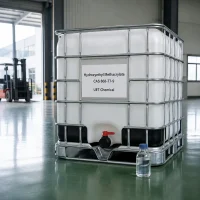
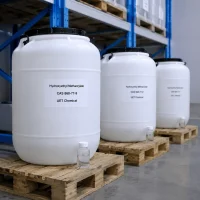
Hydroxyethyl Methacrylate CAS 868-77-9
Hydroxyethyl Methacrylate (HEMA) is a bifunctional methacrylate monomer containing both a polymerizable vinyl group and a reactive hydroxyl group, solving poor adhesion, crosslink density, and moisture management challenges in UV-curable and dental formulations. Coating, dental, and polymer manufacturers rely on it for UV-curable coatings, dental bonding agents, contact lens polymers, and reactive diluents. UETChem supplies this product with strict control over methacrylic acid content, inhibitor levels, and moisture, ensuring predictable polymerization kinetics and crystal-clear optical grades. Each shipment includes COA, TDS, SDS.
- CAS No: 868-77-9
- Synonyms: HEMA; 2-Hydroxyethyl methacrylate; Ethylene glycol monomethacrylate
- EINECS: 212-805-6
- Molecular Formula: C6H10O3
- Molecular Weight: 130.14 g/mol
- Appearance: Colorless to pale yellow transparent liquid
- Purity: 99.0% min (GC)
- Methacrylic Acid: 0.1% max
- Inhibitor (MEHQ): 100 – 200 ppm
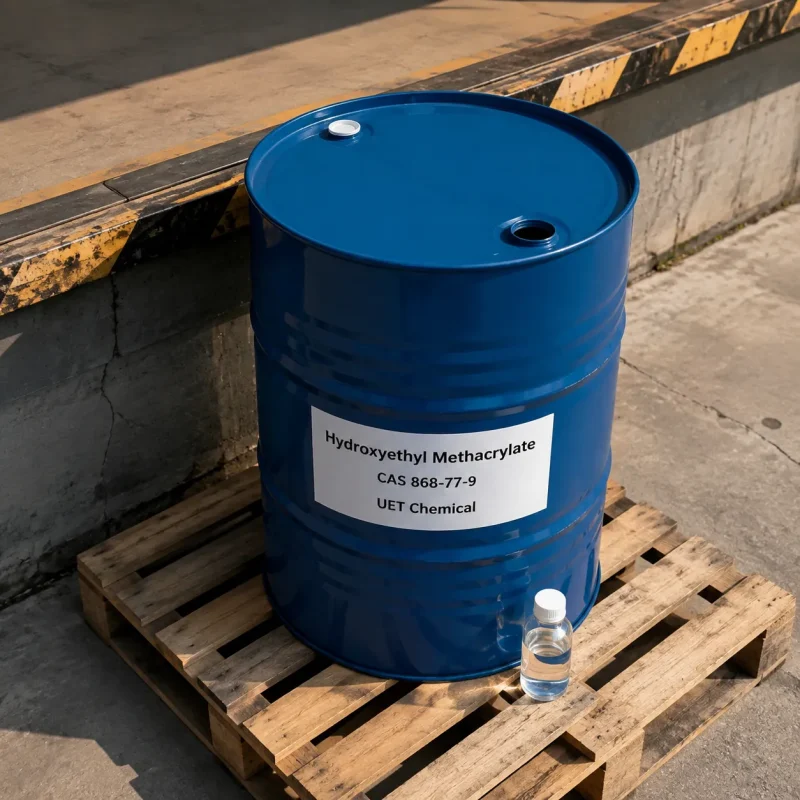
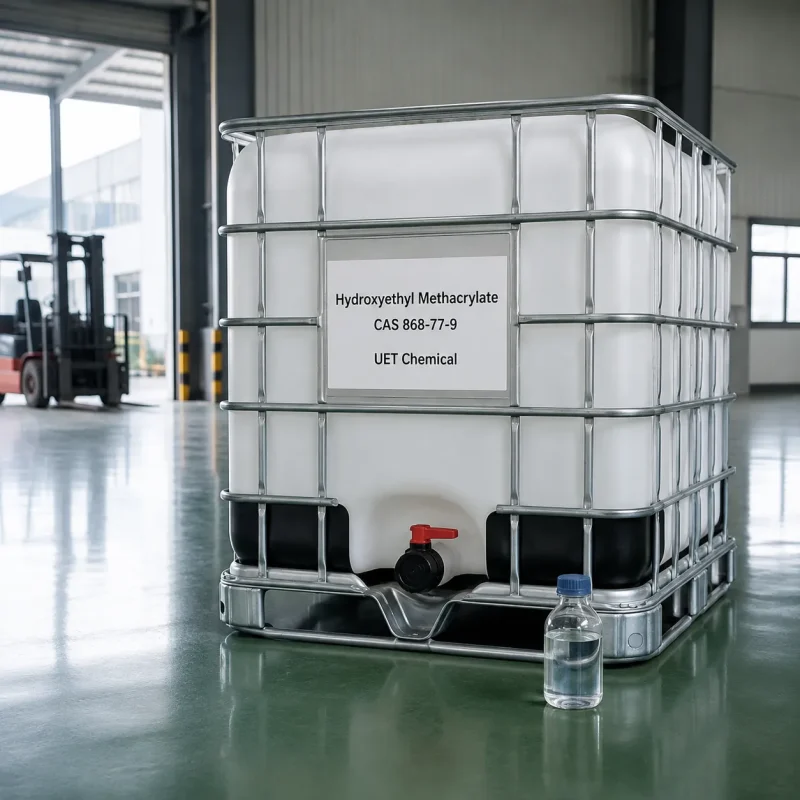
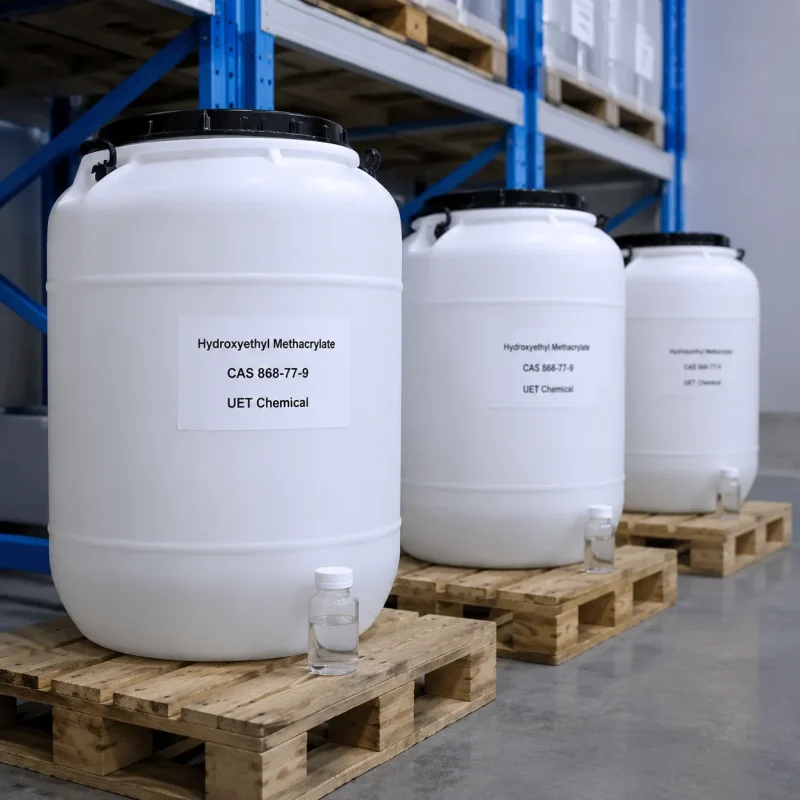
- Packaging: 200 kg (441 lb) HDPE drum, 1000 kg (2205 lb) IBC. Custom packaging available upon request.
- Main Applications: UV-curable coatings, dental adhesives, contact lenses, reactive diluents, polymer crosslinkers
Introduction to Hydroxyethyl Methacrylate
Hydroxyethyl Methacrylate is a bifunctional methacrylate monomer featuring a polymerizable carbon-carbon double bond and a terminal hydroxyl group separated by a two-carbon ethylene spacer. The molecular architecture provides two distinct reactive sites: the vinyl group undergoes free-radical chain-growth polymerization, while the hydroxyl group participates in condensation, esterification, and urethane-forming reactions. At room temperature, the compound exists as a colorless to pale yellow viscous liquid with a mild, characteristic ester odor.
Industrial polymerization facilities consume this monomer to introduce pendant hydroxyl functionality into acrylic and methacrylic polymer backbones. The material mixes completely with most organic solvents, reactive diluents, and oligomers, remaining partially miscible with water. It is stabilized with 100-200 ppm of monomethyl ether hydroquinone (MEHQ) to prevent premature thermal polymerization during storage and transit.
Key Features of HEMA
- Bifunctional reactivity: The methacrylate double bond enables radical polymerization while the hydroxyl group provides sites for post-polymerization crosslinking with isocyanates and anhydrides.
- Hydrophilic character: The terminal hydroxyl group imparts water absorption and biocompatibility, making the polymer suitable for contact lenses and wound dressings.
- Low viscosity: Functions as a reactive diluent, reducing formulation viscosity without adding non-reactive solvents that contribute to VOC emissions.
HEMA Chemical & Physical Properties
| Property | Value |
|---|---|
| Molecular Formula | C6H10O3 |
| Molecular Weight | 130.14 g/mol |
| Appearance | Colorless to pale yellow transparent liquid |
| Boiling Point | 95 °C (203 °F) at 10 mmHg |
| Density | 1.07 g/cm³ (8.92 lb/gal) at 20 °C |
| Flash Point | 105 °C (221 °F) closed cup |
| Viscosity | 12 – 16 mPa·s at 25 °C |
Applications of Hydroxyethyl Methacrylate
UV-curable coatings and inks: Dosed at 5-30% as a reactive diluent in acrylate-based formulations. The monomer reduces viscosity while contributing hydroxyl functionality for subsequent crosslinking. Formulators frequently blend it with multifunctional crosslinkers like Trimethylolpropane Triacrylate (TMPTA) to build dense, scratch-resistant networks for industrial flooring and overprint varnishes.
Dental adhesives and restorative composites: Incorporated at 20-60% in dental bonding agents and composite resin matrices. The hydroxyl group promotes adhesion to dentin collagen while the methacrylate group copolymerizes with bis-GMA resins. Dental chemists often combine HEMA with functional monomers like Glycidyl Methacrylate (GMA) to enhance the mechanical strength and wear resistance of cured restorations.
Contact lens and biomedical polymers: Polymerized with crosslinkers to form poly(HEMA) hydrogels. The resulting material absorbs 38-45% water by weight, providing oxygen permeability and comfort for extended-wear soft contact lenses and wound-contact dressings.
Polymer modification: Copolymerized with Glacial Acrylic Acid (GAA) to introduce pendant hydroxyl groups into acrylic resin backbones, enabling subsequent crosslinking with melamine or isocyanate hardeners in two-component automotive clear coats.
Storage & Safety Precautions for HEMA
- Temperature and inhibitor control: Store in tightly sealed HDPE drums below 30 °C (86 °F). The MEHQ inhibitor requires dissolved oxygen to function. Never blanket storage tanks with pure nitrogen, as oxygen depletion deactivates the inhibitor and allows spontaneous exothermic polymerization.
- Polymerization hazard: In the event of uncontrolled polymerization, the reaction generates rapid heat and volumetric expansion. Inject a radical inhibitor kill shot immediately and apply external water cooling. Do not open the container, as oxygen ingress can accelerate the reaction in concentrated monomer.
- Handling and PPE: HEMA is a skin sensitizer and moderate eye irritant. Wear nitrile gloves, chemical splash goggles, and an organic vapor respirator during drum decanting. Wash skin contact immediately; repeated exposure causes allergic contact dermatitis.
- Field note: When formulating UV-curable systems, verify the MEHQ level on the COA before batching. Inhibitor depletion below 50 ppm drastically shortens the pot life and can cause premature gelation inside the mixing vessel during summer production runs.
HEMA FAQ
Q: How does Hydroxyethyl Methacrylate (HEMA) function in UV-curable coatings?
A: HEMA acts as a reactive diluent that reduces formulation viscosity without adding VOC solvents. The methacrylate double bond copolymerizes under UV radiation, while the hydroxyl group enables post-cure crosslinking with isocyanates, enhancing hardness and chemical resistance.
Q: Why is Hydroxyethyl Methacrylate (HEMA) used in dental adhesives?
A: HEMA penetrates demineralized dentin collagen and copolymerizes with bis-GMA resins upon light curing. The hydroxyl group forms hydrogen bonds with collagen fibers, creating a stable hybrid layer that ensures long-term adhesion of dental restorations to tooth structures.
Q: What causes Hydroxyethyl Methacrylate (HEMA) to polymerize in storage?
A: HEMA polymerizes spontaneously when the MEHQ inhibitor depletes due to heat exposure or oxygen exclusion. Store drums tightly sealed below 30 °C with adequate air headspace. Never blanket tanks with nitrogen, as the inhibitor requires dissolved oxygen to scavenge free radicals.
Related products
Manufacturer & Exporter Since 2006
Get Tailored Chemical Raw Material Solutions — Reply Within 1 Hour
Factory-direct pricing, stable high-purity supply and complete compliance documentation for your industrial formulations.
- 1000+Products
- 200+QC Protocols
- 7–15Days Delivery
- Factory-Direct Pricing
- COA / TDS / SDS Included
- Free Samples for Testing
- 40+ Export Countries
Request a Free Quote
Our engineers reply within 1 hour during GMT+8 business hours.
Please include in your inquiry:
- Product name or CAS number
- Required quantity
- Destination country or port
- Preferred packaging