
n-Decyl Alcohol CAS 112-30-1
n-Decyl Alcohol is a straight-chain primary fatty alcohol containing ten carbon atoms, solving hydrophobic-lipophilic balance and fragrance formulation challenges in fine chemicals. Surfactant and perfume manufacturers rely on it for alkyl polyglucosides (APG), synthetic fragrances, and high-performance plasticizers. UETChem supplies this product with strict distillation control and nitrogen blanketing, ensuring a pure, sweet floral odor and zero oxidation byproducts. Each shipment includes COA, TDS, SDS.
- CAS No: 112-30-1
- Synonyms: 1-Decanol; Decyl alcohol; Capric alcohol
- EINECS: 203-956-9
- Molecular Formula: C10H22O
- Molecular Weight: 158.28 g/mol (158.28 lb/lbmol)
- Appearance: Colorless to pale yellow liquid
- Purity: 99.0% min (GC)
- Water Content: 0.1% max
- Acid Value: 0.1 mg KOH/g max
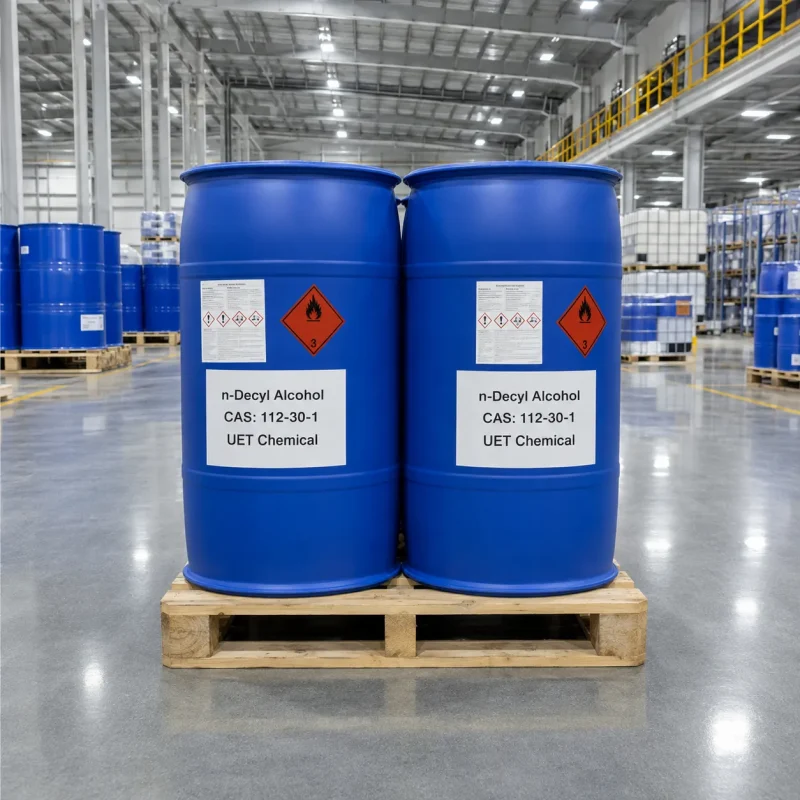
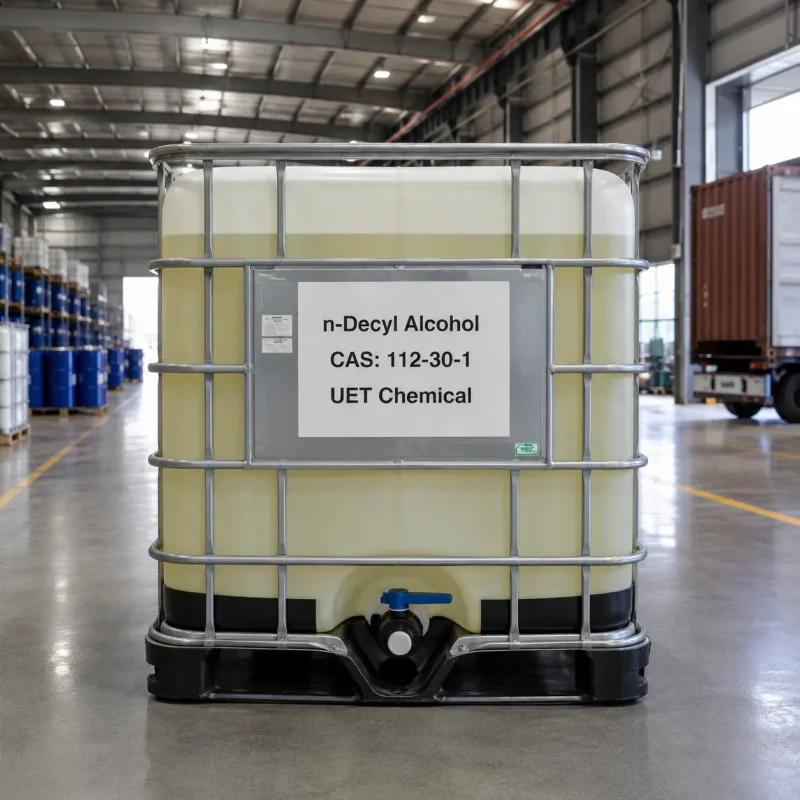
- Packaging: 190 kg (419 lb) HDPE drum, 1000 kg (2205 lb) IBC. Custom packaging available upon request.
- Main Applications: Surfactant synthesis, fine fragrances, plasticizer intermediates, industrial defoamers
Introduction to n-Decyl Alcohol
n-Decyl Alcohol, also known as 1-decanol, is a straight-chain primary fatty alcohol containing ten carbon atoms. The molecular structure consists of a hydrophobic decyl tail and a hydrophilic hydroxyl head group. This amphiphilic architecture allows the molecule to act as a crucial building block in organic synthesis and a functional ingredient in fine chemicals.
Chemical plants utilize this C10 alcohol to manufacture nonionic surfactants, plasticizers, and synthetic fragrances. The material exists as a colorless to pale yellow liquid with a distinct sweet, floral, and citrus-like odor at room temperature. It remains insoluble in water but mixes completely with most organic solvents, oils, and waxes.
Key Features of 1-Decanol
- Straight C10 chain: Provides an optimal hydrophobic-lipophilic balance for synthesizing mild, low-foaming nonionic surfactants.
- Primary hydroxyl group: Exhibits high reactivity in esterification and etherification reactions with organic acids and epoxides.
- Natural sweet aroma: Contributes a clean, citrus-floral note to fine fragrance formulations without harsh chemical undertones.
- Low water solubility: Functions effectively as a co-solvent and defoamer in aqueous industrial processes.
n-Decyl Alcohol Chemical & Physical Properties
| Property | Value |
|---|---|
| Molecular Formula | C10H22O |
| Molecular Weight | 158.28 g/mol (158.28 lb/lbmol) |
| Appearance | Colorless to pale yellow liquid |
| Boiling Point | 231 °C (448 °F) |
| Melting Point | 6 – 7 °C (43 – 45 °F) |
| Density | 0.83 g/cm³ (6.92 lb/gal) at 20 °C (68 °F) |
| Flash Point | 106 °C (223 °F) closed cup |
| Solubility | Insoluble in water; miscible with organic solvents |
Applications of n-Decyl Alcohol
Surfactant synthesis: Reacts with glucose under acidic catalysis to produce Decyl Glucoside, a mild, biodegradable nonionic surfactant used in personal care and household cleaners. The alcohol also undergoes ethoxylation to create industrial wetting agents.
Fragrances and flavors: Blended into perfumes to provide a fresh, sweet, and citrus-floral character. Perfumers often combine it with synthetic musks like Cashmeran to build complex, long-lasting woody and floral accords in fine cosmetics and air fresheners.
Plasticizers and lubricants: Esterified with phthalic or trimellitic anhydrides to manufacture high-performance plasticizers for PVC. In metalworking fluids, it acts as a boundary lubricant and a component in synthetic ester base oils.
Storage & Safety Precautions for n-Decyl Alcohol
- Temperature management: Store drums in a heated or insulated warehouse above 15 °C (59 °F). The liquid solidifies below 7 °C (45 °F). Thaw frozen drums slowly using warm air circulation; never apply direct steam or open flames, which can cause localized thermal degradation.
- Moisture and oxidation control: Keep containers tightly sealed and preferably blanketed with nitrogen. Exposure to air oxidizes the primary alcohol into decanal and decanoic acid, destroying the delicate floral odor. Facilities often run Calcium Chloride Anhydrous in warehouse dehumidifiers to maintain dry ambient conditions and protect bulk inventory.
- Handling and PPE: The liquid is a mild skin and eye irritant. Wear splash goggles and nitrile gloves during decanting. Clean spills immediately with absorbent pads; the oily residue creates a severe slip hazard on concrete floors.
- Field note: When transferring solid 1-Decanol, ensure the entire drum is uniformly melted. Pumping from a partially thawed drum can draw solid crystals into the lines, clogging filters and damaging pump seals.
n-Decyl Alcohol FAQ
Q: Why does n-Decyl Alcohol solidify in cold weather?
A: n-Decyl Alcohol has a melting point around 6 °C (43 °F). Below this temperature, the C10 straight chains pack tightly into a solid mass. To restore the liquid state, gently warm the drums to 20 °C (68 °F) using warm air or a low-temperature band heater. Avoid localized high heat.
Q: How is n-Decyl Alcohol used to make surfactants?
A: Formulators react n-Decyl Alcohol with glucose under acidic catalysis to produce Decyl Glucoside, a mild nonionic surfactant. It can also be ethoxylated to create alcohol ethoxylates. The high purity of the alcohol ensures consistent cloud points and excellent foaming properties.
Q: What causes off-odors in n-Decyl Alcohol (CAS 112-30-1)?
A: Exposure to air and light oxidizes the hydroxyl group, forming decanal and decanoic acid, which introduce harsh, fatty off-odors. Store n-Decyl Alcohol in tightly sealed, opaque HDPE drums under a nitrogen blanket to preserve its natural, sweet floral scent for fragrance applications.
Related products
Manufacturer & Exporter Since 2006
Get Tailored Chemical Raw Material Solutions — Reply Within 1 Hour
Factory-direct pricing, stable high-purity supply and complete compliance documentation for your industrial formulations.
- 1000+Products
- 200+QC Protocols
- 7–15Days Delivery
- Factory-Direct Pricing
- COA / TDS / SDS Included
- Free Samples for Testing
- 40+ Export Countries
Request a Free Quote
Our engineers reply within 1 hour during GMT+8 business hours.
Please include in your inquiry:
- Product name or CAS number
- Required quantity
- Destination country or port
- Preferred packaging