
Chloromethyl Pivalate CAS 18997-19-8
Chloromethyl Pivalate is a highly reactive alkylating agent that solves poor oral bioavailability and low intestinal absorption challenges in active pharmaceutical ingredient (API) development. Pharmaceutical manufacturers rely on it for pivoxil prodrug synthesis, beta-lactam antibiotic modification, and advanced drug delivery systems. UETChem supplies this product with strict control over moisture, free acid, and chloride impurities, ensuring maximum coupling yields and predictable in-vivo hydrolysis. Each shipment includes COA, TDS, SDS.
- CAS No: 18997-19-8
- Synonyms: CMP; Pivaloyloxymethyl chloride; Chloromethyl trimethylacetate
- EINECS: N/A
- Molecular Formula: C6H11ClO2
- Molecular Weight: 150.60 g/mol
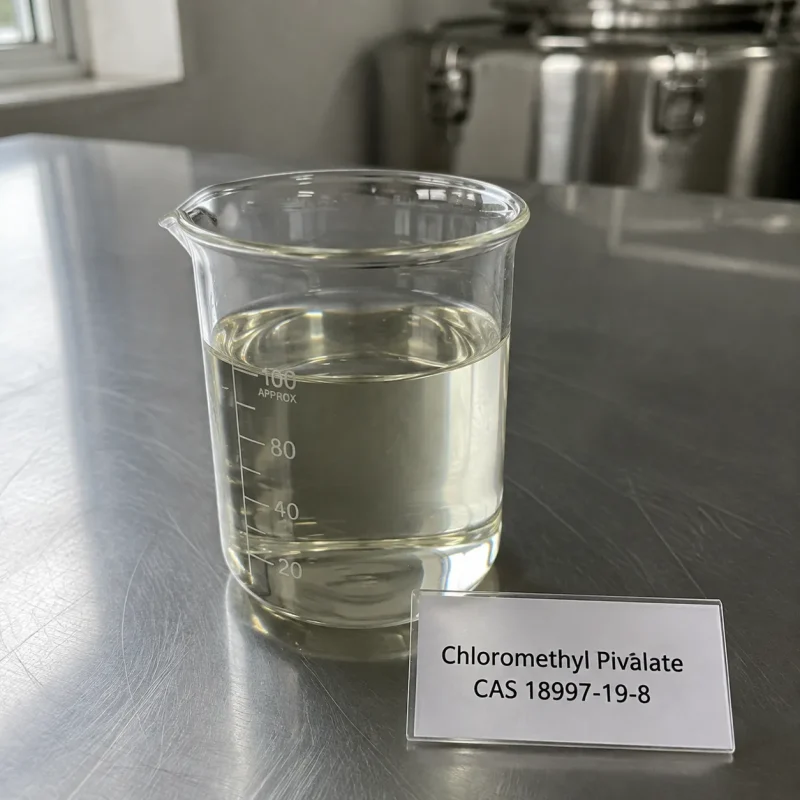
- Appearance: Colorless to pale yellow transparent liquid
- Purity: 99.0% min (GC)
- Moisture: 0.05% max
- Acidity: 0.1% max
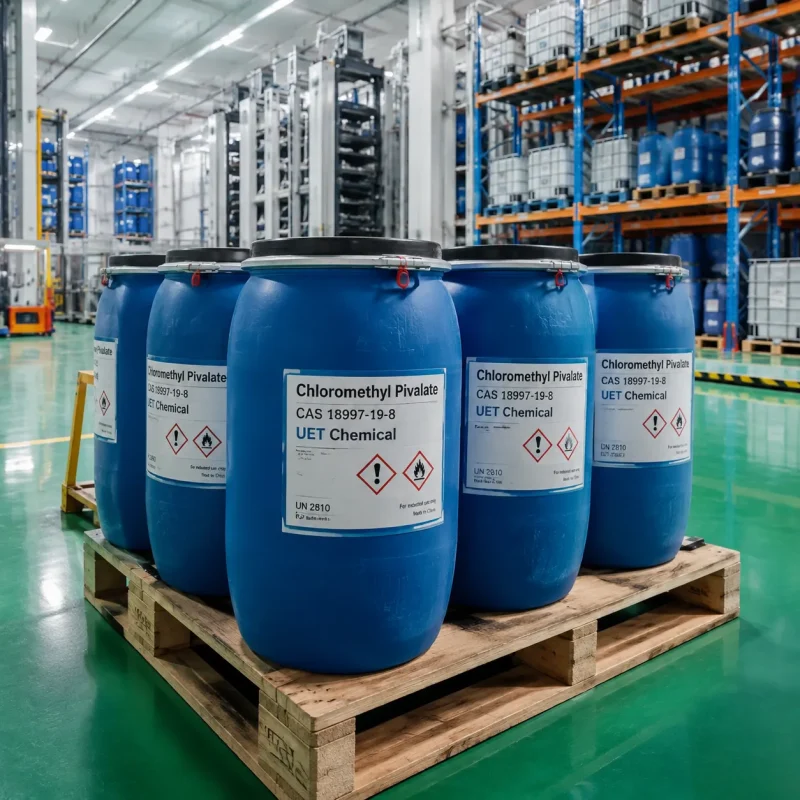
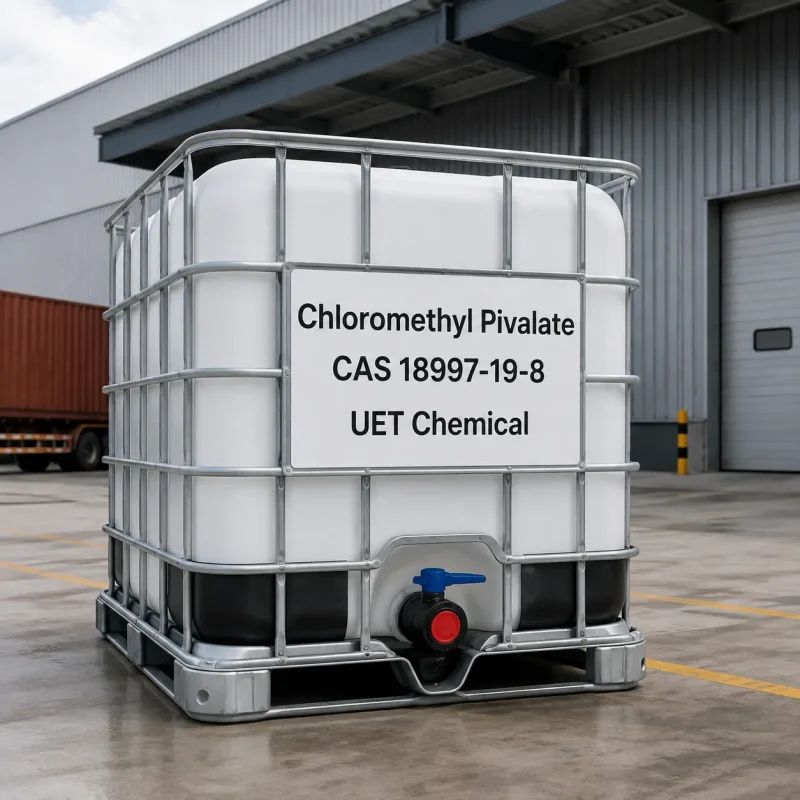
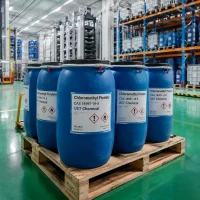
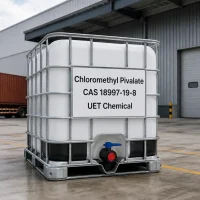
- Packaging: 25 kg (55 lb) fluorinated HDPE drum, 200 kg (441 lb) steel drum. Custom packaging available upon request.
- Main Applications: Prodrug synthesis, beta-lactam antibiotics, cephalosporin intermediates, pharmaceutical alkylating agents
Introduction to Chloromethyl Pivalate
Chloromethyl Pivalate is an electrophilic alkylating agent featuring a chloromethyl group attached to the oxygen atom of a pivalate ester. The bulky tert-butyl group provides significant steric hindrance, protecting the ester bond from premature cleavage during synthetic processing. At room temperature, the compound presents as a colorless to pale yellow liquid with a sharp, pungent odor. Industrial pharmaceutical facilities consume this intermediate to modify the physicochemical properties of polar drug molecules, specifically masking carboxylic acid or tetrazole functional groups.
Key Features of Chloromethyl Pivalate
- High electrophilic reactivity: The terminal chlorine atom readily undergoes nucleophilic substitution with carboxylate salts or nitrogen heterocycles.
- Lipophilic pivalate moiety: The bulky trimethylacetyl group masks polar functionalities, dramatically increasing the lipid solubility of the target molecule.
- In-vivo enzymatic cleavage: Once absorbed into the systemic circulation, endogenous esterases rapidly hydrolyze the pivoxil group, releasing the active parent drug and pivalic acid.
Chloromethyl Pivalate Chemical & Physical Properties
| Property | Value |
|---|---|
| Molecular Formula | C6H11ClO2 |
| Molecular Weight | 150.60 g/mol |
| Appearance | Colorless to pale yellow transparent liquid |
| Boiling Point | ~135 °C (275 °F) at 20 mmHg |
| Density | 1.05 g/cm³ (8.76 lb/gal) at 20 °C |
| Flash Point | > 65 °C (149 °F) closed cup |
Applications of Chloromethyl Pivalate
Pivoxil prodrug synthesis: Reacts with sodium or potassium salts of active pharmaceutical ingredients to form pivoxil esters. This structural modification converts highly polar, poorly absorbed antibiotics into lipophilic prodrugs. The resulting compounds exhibit significantly enhanced permeability across the gastrointestinal tract lining.
Beta-lactam antibiotic modification: Utilized extensively in the manufacturing of oral cephalosporins and penicillins. The alkylating agent caps the C-4 carboxylate group of the beta-lactam nucleus. Upon oral administration and subsequent enzymatic hydrolysis in the blood, the active antibacterial agent is regenerated to treat systemic infections.
Advanced drug delivery systems: Employed to synthesize specialized prodrugs for targeted tissue delivery. The steric bulk of the pivalate group prevents non-specific binding and metabolic degradation in the upper digestive tract, ensuring the intact molecule reaches the optimal absorption sites.
Storage & Safety Precautions for Chloromethyl Pivalate
- Moisture and hydrolysis control: Store in tightly sealed, fluorinated HDPE or glass-lined drums under a dry nitrogen blanket. The chloromethyl bond is highly susceptible to hydrolysis. Exposure to ambient humidity generates hydrochloric acid, rapidly degrading the batch and corroding the container.
- Handling and PPE: The liquid is a severe lachrymator, skin corrosive, and respiratory irritant. Wear a full-face respirator with organic vapor/acid gas cartridges, heavy-duty butyl rubber gloves, and an impermeable chemical suit during transfer operations.
- Field note: When executing the alkylation reaction, maintain the reactor temperature strictly below 40 °C (104 °F). Excessive thermal energy accelerates the decomposition of the intermediate, triggering the release of toxic gases and lowering the final API coupling yield.
Chloromethyl Pivalate FAQ
Q: How does Chloromethyl Pivalate improve drug bioavailability?
A: Chloromethyl Pivalate acts as an alkylating agent to attach a pivoxil group to active pharmaceutical ingredients. This increases the drug’s lipophilicity, significantly enhancing intestinal absorption. Once in the bloodstream, esterases cleave the group to release the active drug.
Q: Why is Chloromethyl Pivalate sensitive to moisture during storage?
A: Chloromethyl Pivalate contains a highly reactive chloromethyl group that rapidly hydrolyzes when exposed to ambient moisture, forming hydrochloric acid and pivalic acid. Manufacturers must store CMP in tightly sealed, dry conditions to preserve its alkylating efficiency and purity.
Q: What safety equipment is required when handling Chloromethyl Pivalate?
A: Chloromethyl Pivalate is a corrosive liquid and a severe lachrymator that causes eye and skin burns. Operators must wear full-face respirators, heavy-duty nitrile gloves, and chemical-resistant aprons during drum decanting to prevent severe inhalation hazards and direct tissue contact.
Related products
Manufacturer & Exporter Since 2006
Get Tailored Chemical Raw Material Solutions — Reply Within 1 Hour
Factory-direct pricing, stable high-purity supply and complete compliance documentation for your industrial formulations.
- 1000+Products
- 200+QC Protocols
- 7–15Days Delivery
- Factory-Direct Pricing
- COA / TDS / SDS Included
- Free Samples for Testing
- 40+ Export Countries
Request a Free Quote
Our engineers reply within 1 hour during GMT+8 business hours.
Please include in your inquiry:
- Product name or CAS number
- Required quantity
- Destination country or port
- Preferred packaging