
Methanesulfonic Acid CAS 75-75-2
Methanesulfonic Acid (MSA) is a strong organic sulfonic acid that solves severe equipment corrosion, unwanted side reactions, and rough metal deposition challenges associated with traditional inorganic acids. Electronic plating and fine chemical manufacturers rely on it for tin/tin-alloy electroplating, pharmaceutical catalyst applications, and industrial metal cleaning. UETChem supplies this product with strict control over moisture, color, and chloride impurities, ensuring exceptional catalytic activity and mirror-finish electroplated layers. Each shipment includes COA, TDS, SDS.
- CAS No: 75-75-2
- Synonyms: MSA; Methylsulfonic acid; Methanesulphonic acid
- EINECS: 200-898-6
- Molecular Formula: CH4O3S
- Molecular Weight: 96.11 g/mol (96.11 lb/lbmol)
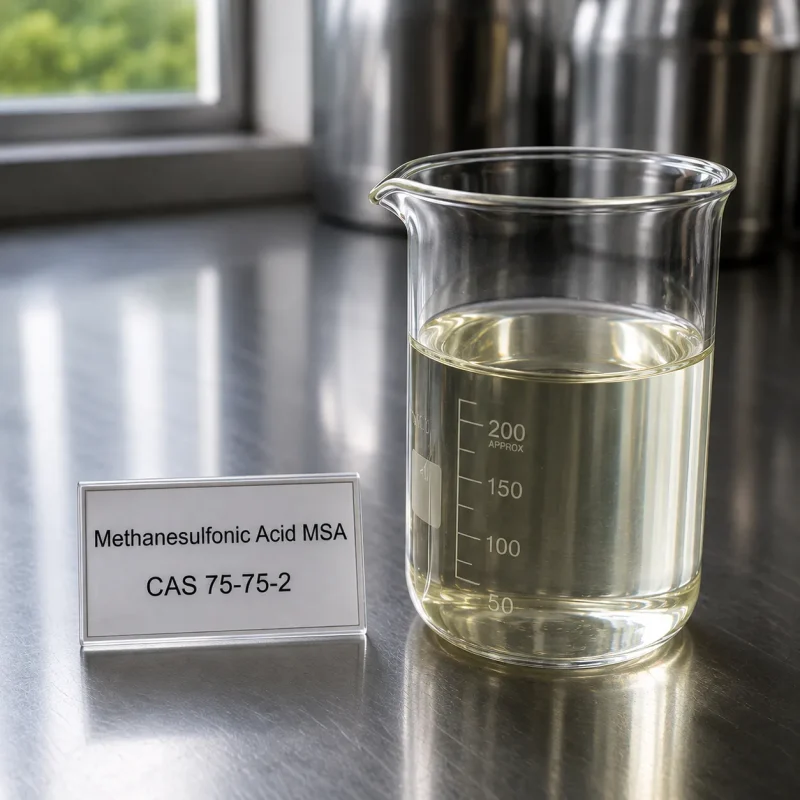
- Appearance: Colorless to pale yellow transparent liquid
- Assay: 70.0% min (Aqueous) / 99.0% min (Glacial)
- Chloride (Cl): 10 ppm max
- Sulfate (SO4): 50 ppm max
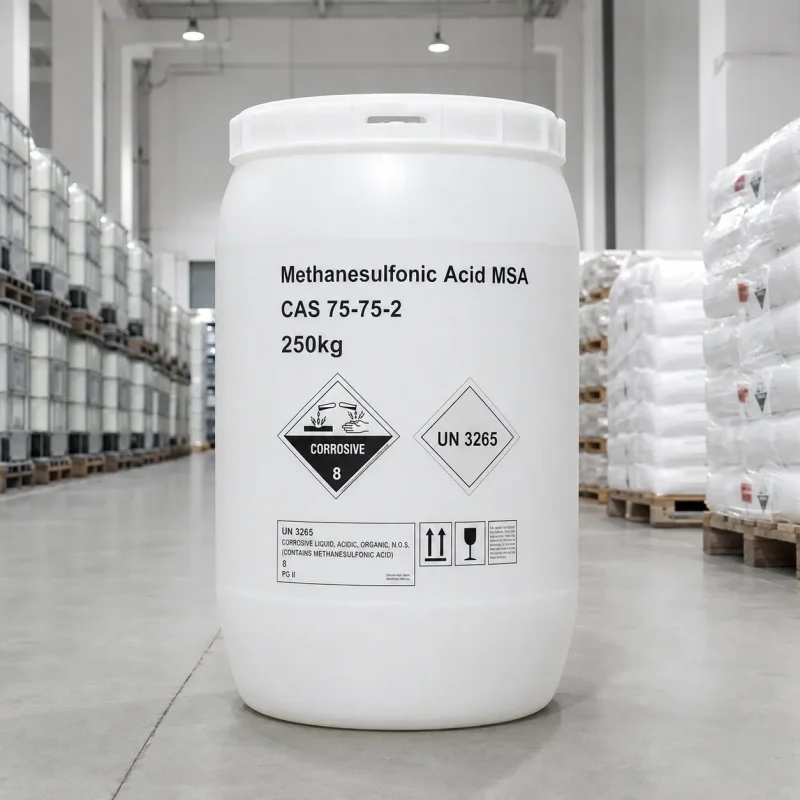
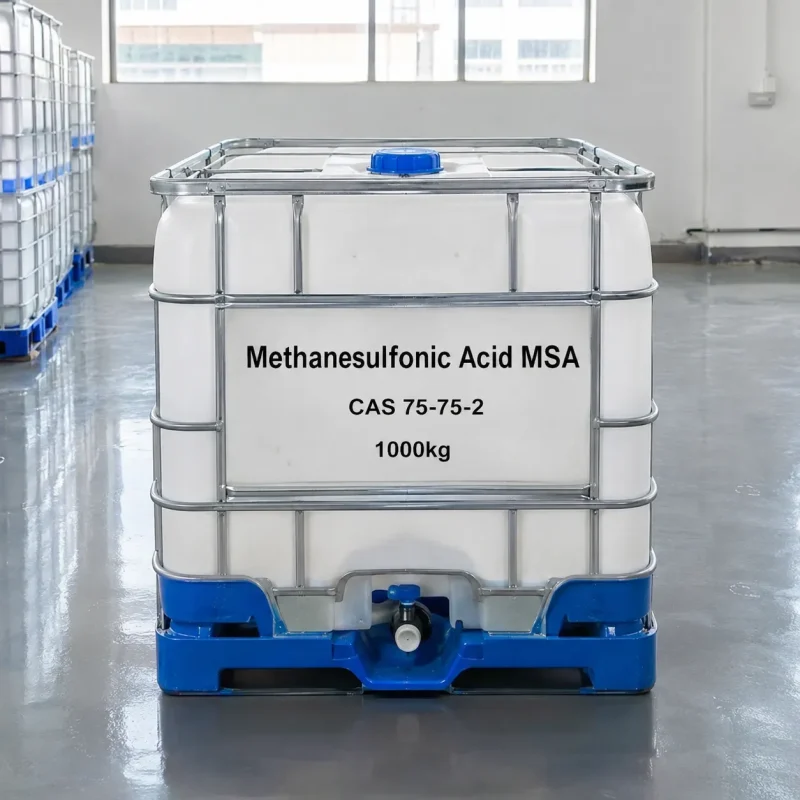
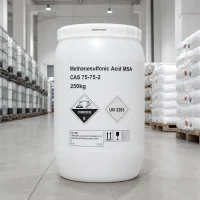
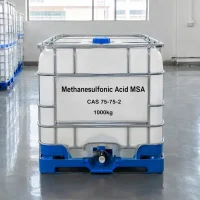
- Packaging: 250 kg (551 lb) HDPE drum, 1000 kg (2205 lb) IBC. Custom packaging available upon request.
- Main Applications: Electronic electroplating, pharmaceutical synthesis, industrial cleaners, esterification catalysts
Introduction to Methanesulfonic Acid
Methanesulfonic Acid is a strong organic acid consisting of a methyl group directly attached to a sulfonic acid functional group. This specific molecular architecture provides acidity comparable to sulfuric acid while retaining the solubility characteristics of organic compounds. At room temperature, the material presents as a colorless to pale yellow transparent liquid that is completely miscible with water, alcohols, and ethers. The compound exhibits exceptional thermal stability and negligible vapor pressure, making it highly effective in high-temperature reaction environments.
Key Features of MSA
- Strong non-oxidizing acidity: Fully dissociates in aqueous solutions to provide high proton concentration without triggering unwanted oxidative degradation of sensitive organic substrates.
- Low volatility: Remains completely stable in the liquid phase at elevated temperatures, preventing the formation of corrosive acid fumes in the workplace environment.
- Wide electrochemical window: Supports high current densities in electroplating baths without undergoing parasitic decomposition reactions at the electrodes.
MSA Chemical & Physical Properties
| Property | Value |
|---|---|
| Molecular Formula | CH4O3S |
| Molecular Weight | 96.11 g/mol (96.11 lb/lbmol) |
| Appearance | Colorless to pale yellow transparent liquid |
| Density | 1.35 g/cm³ (70% solution) / 1.48 g/cm³ (99% glacial) |
| Boiling Point | > 200 °C (392 °F) with decomposition |
| Melting Point | 20 °C (68 °F) for 99% grade |
| Solubility | Completely miscible with water and most organic solvents |
Applications of Methanesulfonic Acid
Electronic and metal electroplating: Utilized as the primary electrolyte in lead-free tin and tin-alloy plating baths. The acid provides high electrical conductivity and promotes the uniform deposition of metal ions. This results in dense, smooth, and pore-free solderable coatings essential for printed circuit boards and semiconductor packaging.
Pharmaceutical and agrochemical synthesis: Functions as a highly efficient catalyst for esterification, alkylation, and condensation reactions. The non-oxidizing nature of the acid prevents the degradation of sensitive active pharmaceutical ingredients (APIs), ensuring high reaction yields and minimal purification effort.
Industrial cleaning and surface treatment: Blended into specialized formulations to remove heavy metal oxides, rust, and scale from precision machinery. The lack of volatile fumes ensures safe operation in enclosed spaces while providing rapid dissolution of mineral deposits without attacking the base metal substrate.
Storage & Safety Precautions for MSA
- Corrosivity and material compatibility: Store in tightly sealed HDPE drums, glass containers, or PTFE-lined tanks. The concentrated acid is highly corrosive and rapidly degrades standard carbon steel, copper, and aluminum. Never use unlined metallic fittings for transfer lines.
- Handling and PPE: The liquid causes severe chemical burns and permanent eye damage upon contact. Wear heavy-duty acid-resistant gloves, a full-face shield, and a rubber apron during drum decanting and reactor charging operations.
- Field note: When preparing diluted solutions, always add the concentrated MSA slowly into a large volume of cold water while stirring continuously. Dumping water directly into the concentrated acid generates violent exothermic heat, causing the mixture to boil instantly and splash corrosive liquid.
MSA FAQ
Q: Why is Methanesulfonic Acid (MSA) preferred in electronic electroplating?
A: Methanesulfonic Acid (MSA) provides high electrical conductivity and a wide electrochemical window. This promotes the uniform deposition of tin and tin-alloy coatings without generating harmful acid fumes. The resulting electroplated layers are dense, smooth, and completely free of pores, meeting strict semiconductor standards.
Q: How does Methanesulfonic Acid (MSA) function as a chemical catalyst?
A: Methanesulfonic Acid (MSA) acts as a strong, non-oxidizing acid catalyst in esterification and alkylation reactions. Its high thermal stability and low volatility prevent unwanted side products and toxic fumes at elevated temperatures, ensuring high yields in pharmaceutical and agrochemical manufacturing processes.
Q: What safety measures are required when handling Methanesulfonic Acid (MSA)?
A: Methanesulfonic Acid (MSA) is highly corrosive and causes severe burns on contact. Operators must wear acid-resistant gloves, face shields, and rubber aprons. Always add the acid slowly into water while stirring; never pour water into concentrated MSA to prevent violent exothermic boiling and dangerous acid splashing.
Related products
Manufacturer & Exporter Since 2006
Get Tailored Chemical Raw Material Solutions — Reply Within 1 Hour
Factory-direct pricing, stable high-purity supply and complete compliance documentation for your industrial formulations.
- 1000+Products
- 200+QC Protocols
- 7–15Days Delivery
- Factory-Direct Pricing
- COA / TDS / SDS Included
- Free Samples for Testing
- 40+ Export Countries
Request a Free Quote
Our engineers reply within 1 hour during GMT+8 business hours.
Please include in your inquiry:
- Product name or CAS number
- Required quantity
- Destination country or port
- Preferred packaging