
N-Acryloylmorpholine (ACMO) CAS 5117-12-4
N-Acryloylmorpholine (ACMO) is a functional acrylamide monomer bearing a morpholine ring structure, combining high double-bond reactivity with excellent hydrophilicity. It is widely used in UV curable resins, water treatment flocculants, paper processing aids and oilfield functional polymers, effectively regulating system viscosity, boosting curing speed and improving water resistance and adhesion of finished products. UETChem supplies high-purity ACMO with precisely controlled inhibitor content to ensure controllable polymerization and consistent batch performance. Each shipment includes COA, TDS, SDS.
- CAS No: 5117-12-4
- Synonyms: ACMO; 4-Acryloylmorpholine; N-Acryloyl morpholine; 1-(Morpholin-4-yl)prop-2-en-1-one
- EINECS: 225-851-3
- Molecular Formula: C₇H₁₁NO₂
- Molecular Weight: 141.17 g/mol
- Appearance: Colorless to pale yellow transparent liquid
- Purity: 99.0% min
- Inhibitor (MEHQ): 100 – 200 ppm
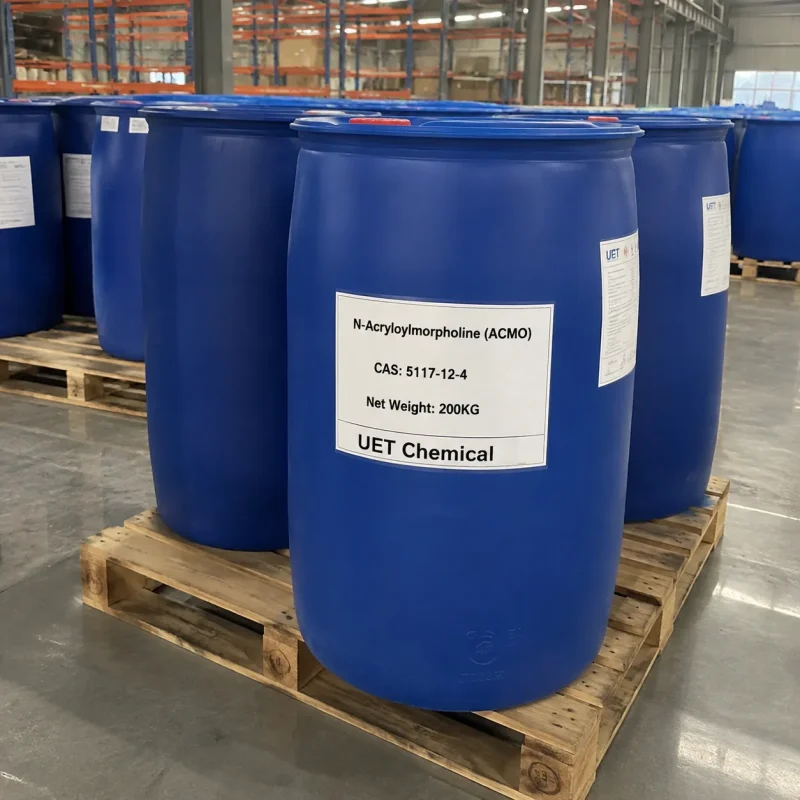
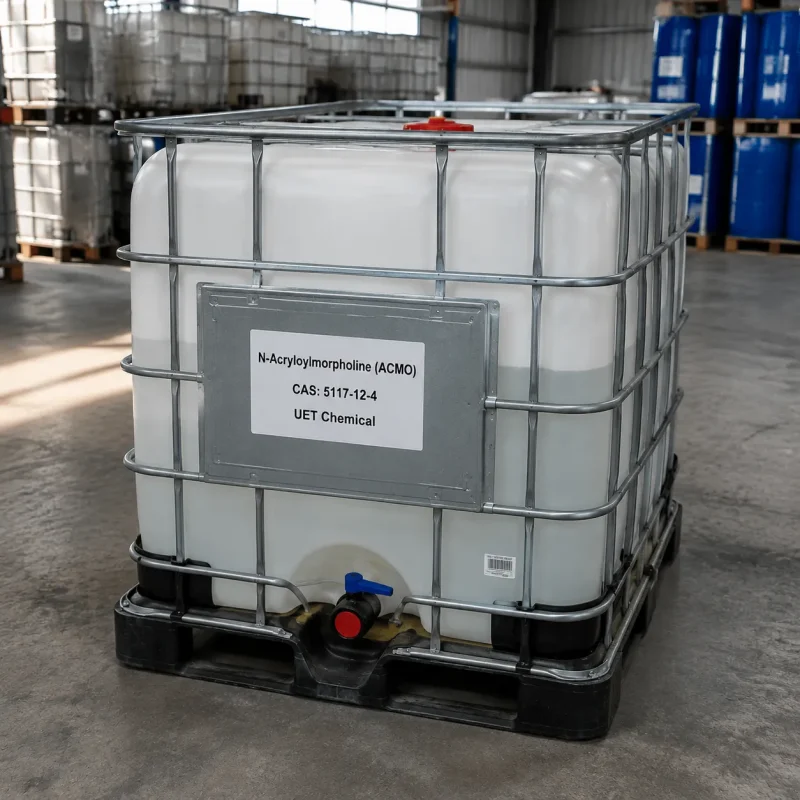
- Packaging: 200 kg HDPE drum, 1000 kg IBC. Custom packaging available upon request.
- Main Applications: UV curable resins, water treatment flocculants, paper chemicals, oilfield polymer additives
Introduction to ACMO
N-Acryloylmorpholine is a polar functional acrylamide monomer with a morpholine heterocycle attached to an acryloyl group. The morpholine ring imparts strong hydrophilicity and hydrogen bonding capability, while the terminal double bond supports free radical polymerization with acrylics, vinyl monomers and crosslinkers. It appears as a colorless to pale yellow transparent liquid at room temperature, fully miscible with water and most common organic solvents.
Industrial production follows controlled acylation processes with final distillation purification. The material is typically stabilized with MEHQ to prevent premature polymerization during storage and transport. Its balanced polarity and reactivity make it a versatile building block for water-based and solvent-based polymer systems.
ACMO Chemical & Physical Properties
| Property | Value |
|---|---|
| Molecular Formula | C₇H₁₁NO₂ |
| Molecular Weight | 141.17 g/mol |
| Boiling Point (1.33 kPa) | 136 °C |
| Density (20 °C) | 1.060 – 1.070 g/cm³ |
| Flash Point (Closed Cup) | ≥ 125 °C |
| Refractive Index (nD20) | 1.482 – 1.486 |
| Purity | 99.0% min |
| MEHQ Inhibitor | 100 – 200 ppm |
Applications of ACMO
UV curable coatings and inks: Serves as a reactive diluent and functional co-monomer in UV/EB curing formulations. It reduces system viscosity, enhances curing speed and improves adhesion, flexibility and water resistance of cured films for printing inks, wood coatings and electronic adhesives.
Water treatment flocculants: Used to synthesize cationic polyacrylamide flocculants and sludge dewatering agents. The morpholine group provides strong hydrophilicity and adsorption capacity, improving flocculation efficiency and solid-liquid separation in municipal and industrial wastewater treatment.
Paper processing chemicals: Incorporated into dry strength resins and retention aids. It enhances fiber bonding and filler retention, improving paper strength, formation efficiency and production yield in papermaking processes.
Oilfield functional polymers: Builds temperature-resistant and salt-tolerant thickening polymers for drilling fluids and enhanced oil recovery. It improves polymer rheological stability under harsh downhole conditions of high temperature and high salinity.
Storage & Safety Precautions for ACMO
- Store in tightly sealed containers in a cool, dry, well-ventilated warehouse away from direct sunlight, heat sources and open flame. The MEHQ inhibitor prevents premature polymerization; high temperature and UV exposure may trigger self-polymerization.
- Wear chemical splash goggles, nitrile gloves and chemical-resistant clothing during bulk transfer. The material is irritating to eyes, skin and respiratory tract. Avoid direct contact and vapor inhalation; work in ventilated areas.
- Keep separated from strong oxidizers, strong acids, bases and free radical initiators. Do not mix with polymerization catalysts during storage. Inspect containers regularly for signs of gelation or viscosity increase.
ACMO FAQ
Q: What role does ACMO play in UV curing systems?
A: It acts as a reactive diluent and functional monomer, lowering formulation viscosity, accelerating curing speed, and imparting improved flexibility, adhesion and water resistance to cured films.
Q: What storage conditions are required for ACMO?
A: Store sealed in a cool, dark place away from heat, sunlight and initiators. It is stabilized with MEHQ; avoid high temperature and UV exposure to prevent premature polymerization.
Q: What polymer systems is ACMO commonly used in?
A: It is used in UV curable resins, water treatment flocculants, paper strength aids and oilfield thickening polymers, providing hydrophilic modification and reactive crosslinking functionality.
Related products
Manufacturer & Exporter Since 2006
Get Tailored Chemical Raw Material Solutions — Reply Within 1 Hour
Factory-direct pricing, stable high-purity supply and complete compliance documentation for your industrial formulations.
- 1000+Products
- 200+QC Protocols
- 7–15Days Delivery
- Factory-Direct Pricing
- COA / TDS / SDS Included
- Free Samples for Testing
- 40+ Export Countries
Request a Free Quote
Our engineers reply within 1 hour during GMT+8 business hours.
Please include in your inquiry:
- Product name or CAS number
- Required quantity
- Destination country or port
- Preferred packaging