
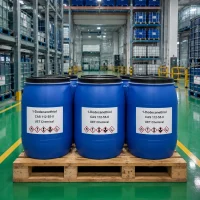
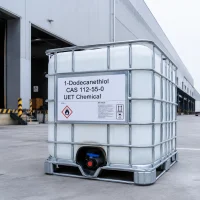
1-Dodecanethiol CAS 112-55-0
1-Dodecanethiol is a high-efficiency aliphatic mercaptan chain transfer agent that solves broad molecular weight distribution, localized gelation, and batch-to-batch viscosity fluctuations in free-radical polymerization. Synthetic rubber and acrylic resin manufacturers rely on this product for SBR emulsion polymerization, ABS resin production, and specialty surfactant synthesis. UETChem supplies this material with strict control over free mercaptan content, moisture, and isomeric impurities, ensuring exceptional chain transfer constants and maximum batch stability. Each shipment includes COA, TDS, SDS.
- CAS No: 112-55-0
- Synonyms: Lauryl mercaptan; Dodecyl mercaptan; n-Dodecanethiol
- EINECS: 203-983-6
- Molecular Formula: C12H26S
- Molecular Weight: 202.40 g/mol
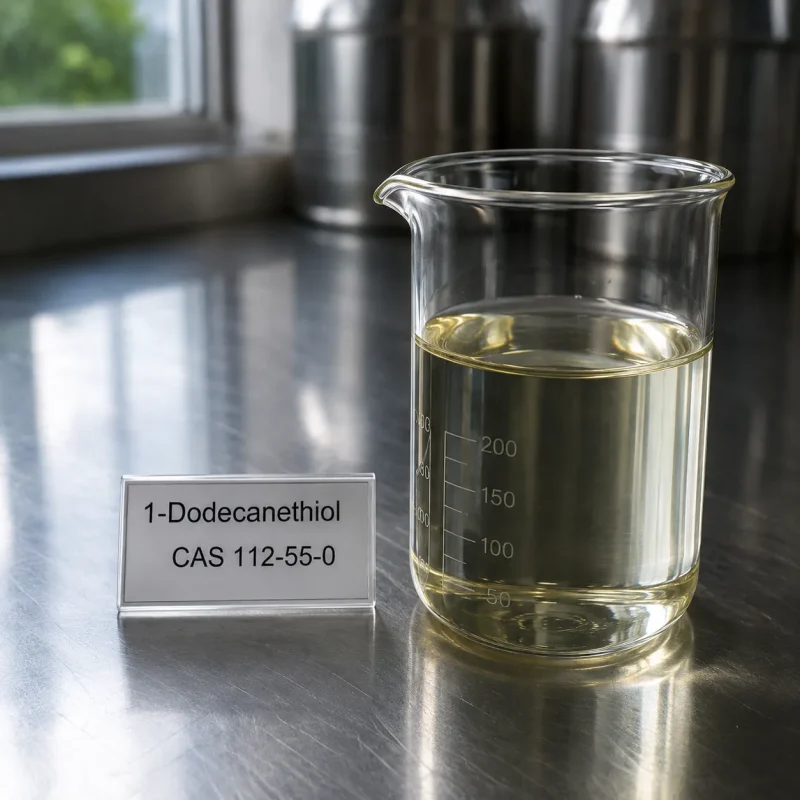
- Appearance: Colorless to pale yellow transparent liquid
- Purity: 98.0% min (GC)
- Moisture: 0.05% max
- Flash Point: > 110 °C (> 230 °F)
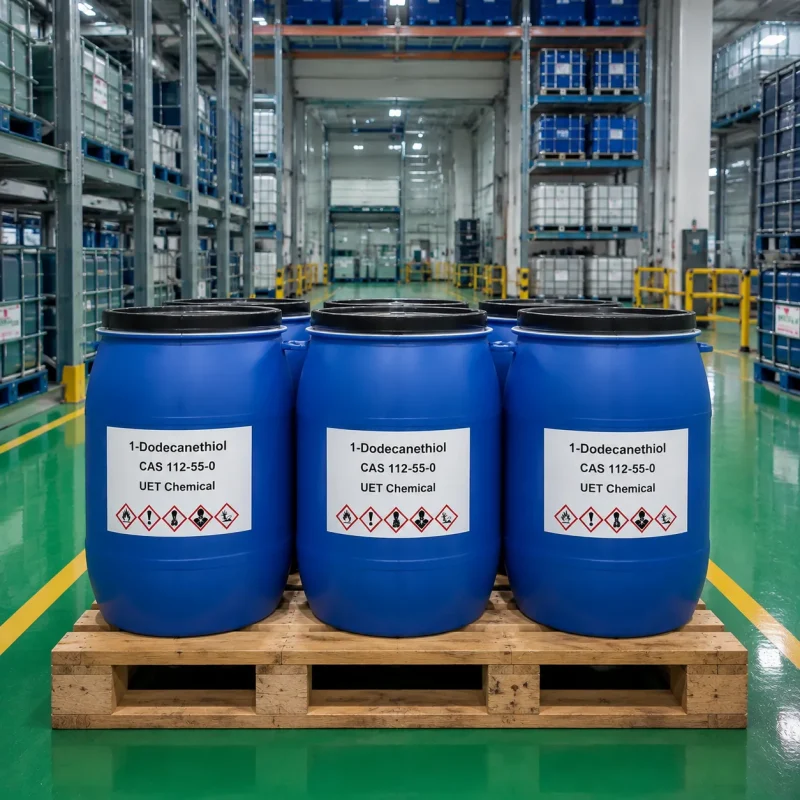
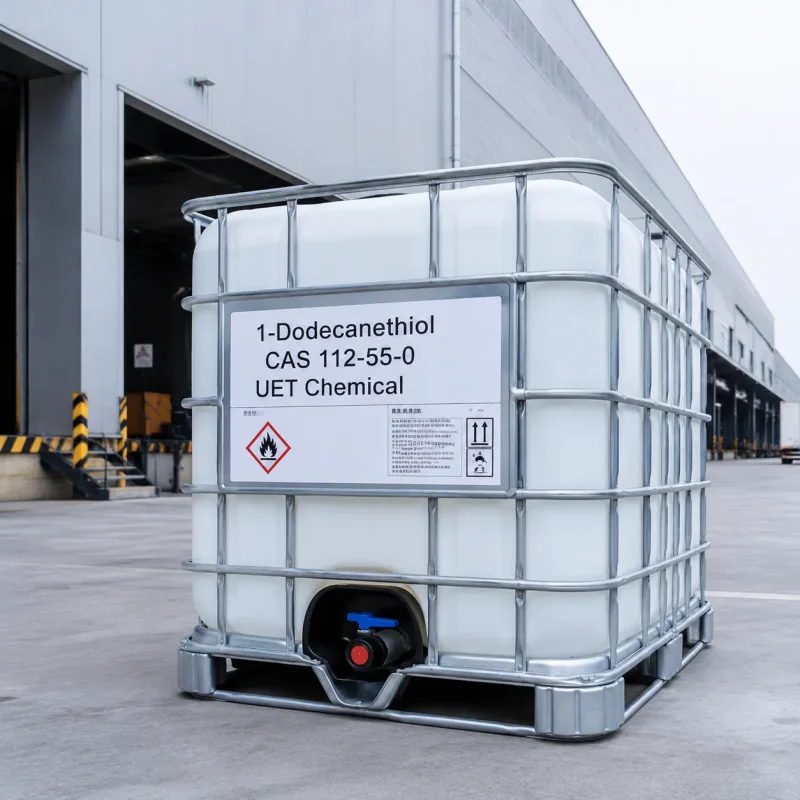
- Packaging: 150 kg (331 lb) steel drum, IBC. Custom packaging available upon request.
- Main Applications: Polymer molecular weight regulators, synthetic rubber emulsion polymerization, ABS resins, specialty chemical intermediates
Introduction to 1-Dodecanethiol
1-Dodecanethiol is a straight-chain aliphatic mercaptan featuring a twelve-carbon alkyl chain and a terminal sulfhydryl group. The carbon chain provides moderate hydrophobicity and excellent compatibility with monomers, while the sulfhydryl group imparts extremely high free-radical reactivity. At room temperature, the compound exists as a colorless to pale yellow transparent liquid with an intensely pungent, characteristic mercaptan odor. Industrial polymerization facilities consume this intermediate to control macromolecular chain growth and prevent excessive crosslinking of polymer networks.
Key Features of 1-Dodecanethiol
- High chain transfer constant: The hydrogen atom on the sulfhydryl group is easily abstracted by growing polymer radicals, rapidly terminating chain growth and initiating new active centers.
- Excellent monomer compatibility: The long carbon chain structure ensures complete dissolution in non-polar or weakly polar monomers such as styrene, acrylates, and butadiene.
- Low residual activity: Residual thiol groups after polymerization exert minimal impact on the thermal stability and optical clarity of the final polymer.
1-Dodecanethiol Chemical & Physical Properties
| Property | Value |
|---|---|
| Molecular Formula | C12H26S |
| Molecular Weight | 202.40 g/mol |
| Appearance | Colorless to pale yellow transparent liquid |
| Boiling Point | 266 – 269 °C (511 – 516 °F) |
| Density | 0.84 – 0.85 g/cm³ at 20 °C |
| Flash Point | > 110 °C (> 230 °F) closed cup |
Applications of 1-Dodecanethiol
Synthetic rubber and resin polymerization: Acts as a core molecular weight regulator in the emulsion polymerization of styrene-butadiene rubber (SBR) and nitrile-butadiene rubber (NBR). It precisely controls polymer chain length, reduces Mooney viscosity, and improves subsequent compounding and extrusion processing performance. In bulk or suspension polymerization of acrylates and ABS resins, it prevents the formation of high-molecular-weight branched structures and eliminates gel particles.
Specialty chemical synthesis: Participates as an alkylating agent in the synthesis of pesticides, pharmaceutical intermediates, and specialty surfactants. It undergoes nucleophilic substitution reactions with ethylene oxide or alkyl halides to construct sulfur-containing functional molecules.
Storage & Safety Precautions for 1-Dodecanethiol
- Odor and toxicity control: Store in tightly sealed steel drums or containers with PTFE linings. The extremely low olfactory threshold means trace leaks will trigger intense environmental malodor. Facilities must equip the area with continuous mercaptan gas detectors and activated carbon exhaust scrubbers.
- Handling and PPE: The liquid is absorbed through the skin, and vapors are highly irritating to the respiratory tract and eyes. Wear full-face respirators, heavy-duty nitrile gloves, and chemical-resistant suits during drum decanting.
- Field note: When dosing this liquid into the reactor, use a closed metering pump equipped with a mass flow meter. Open pouring causes severe malodor pollution and leads to acute operator poisoning.
1-Dodecanethiol FAQ
Q: How does 1-Dodecanethiol act as a chain transfer agent in polymerization?
A: 1-Dodecanethiol transfers a hydrogen atom from its sulfhydryl group to a growing polymer radical, terminating the chain. This generates a new thiyl radical that initiates a new polymer chain. This mechanism precisely controls the molecular weight and prevents gelation in emulsion polymerizations like SBR and acrylic resins.
Q: Why does 1-Dodecanethiol have such a strong and unpleasant odor?
A: 1-Dodecanethiol contains a highly volatile sulfhydryl (-SH) group, which human olfactory receptors detect at extremely low concentrations. This intense, skunk-like odor is a natural characteristic of aliphatic thiols. Facilities must use closed transfer systems and carbon scrubbers to manage fugitive emissions safely.
Q: Is 1-Dodecanethiol safe to handle in industrial manufacturing?
A: 1-Dodecanethiol is toxic if inhaled or absorbed through the skin and acts as a severe irritant. Operators must wear full-face respirators, impermeable suits, and heavy-duty nitrile gloves during drum decanting. Facilities require continuous gas monitors to ensure worker safety in enclosed processing areas.
Related products
Manufacturer & Exporter Since 2006
Get Tailored Chemical Raw Material Solutions — Reply Within 1 Hour
Factory-direct pricing, stable high-purity supply and complete compliance documentation for your industrial formulations.
- 1000+Products
- 200+QC Protocols
- 7–15Days Delivery
- Factory-Direct Pricing
- COA / TDS / SDS Included
- Free Samples for Testing
- 40+ Export Countries
Request a Free Quote
Our engineers reply within 1 hour during GMT+8 business hours.
Please include in your inquiry:
- Product name or CAS number
- Required quantity
- Destination country or port
- Preferred packaging