
Triisopropanolamine (TIPA) CAS 122-20-3
Triisopropanolamine (TIPA) is a tertiary alkanolamine supplied as a colorless to pale yellow viscous liquid that solidifies below 30 °C. Its sterically hindered structure and three hydroxyl groups make it a high-performance additive for cement grinding aids, polyurethane foam catalysts and metalworking fluid formulations. UETChem supplies high-purity industrial-grade TIPA with consistent hydroxyl and amine values for reliable process performance. Each shipment includes COA, TDS, SDS.
- CAS No: 122-20-3
- Synonyms: TIPA; 2,2′,2”-Nitrilotriisopropanol
- EC Number: 204-530-5
- Molecular Formula: C₉H₂₁NO₃
- Molecular Weight: 191.27 g/mol
- Appearance: Colorless to pale yellow viscous liquid (solid below 30 °C)
- Purity: ≥ 99.0% (Industrial Grade)
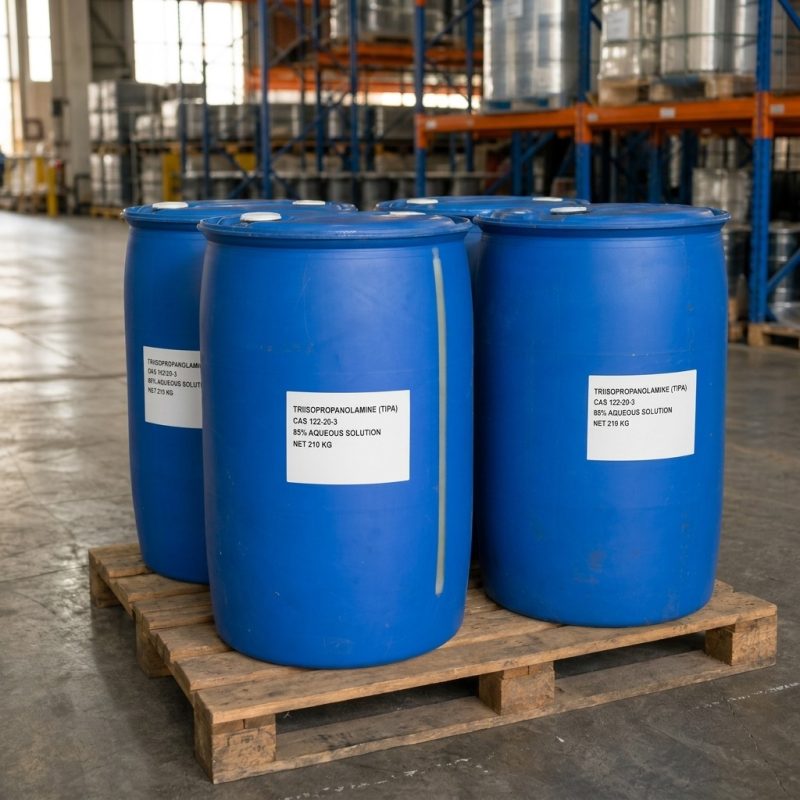
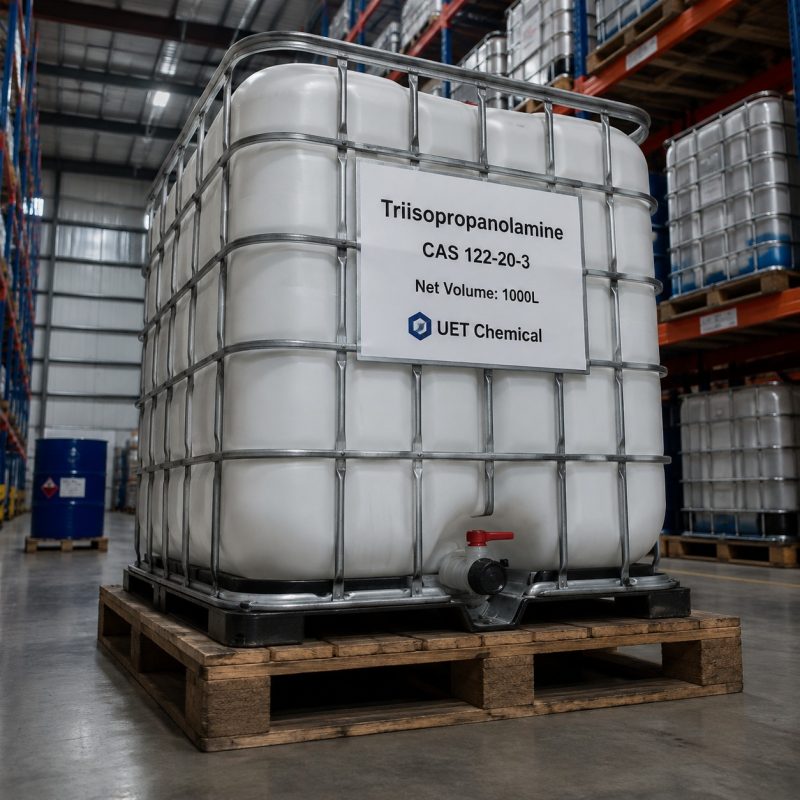
- Packaging: 210 kg HDPE drum; 1000 kg IBC tote. Custom packaging available.
- Main Applications: Cement grinding aids, polyurethane foam catalysts, metalworking fluids, textile & agricultural auxiliaries
Introduction to Triisopropanolamine
Triisopropanolamine (TIPA) is a tertiary amine with three isopropanol groups bonded to a central nitrogen atom. It is widely used in construction chemicals as an advanced cement grinding aid and strength enhancer. Unlike triethanolamine which mainly boosts early-age strength, TIPA significantly improves 28-day compressive strength of concrete by optimizing silicate phase hydration. It also serves as a balanced catalyst and intermediate in polyurethane foam and industrial surfactant production.
It features low volatility and mild alkalinity, delivering good formulation stability without the strong odors common with lower molecular weight amines. Its melting point around 30 °C means it solidifies at cooler temperatures. Drums should be stored in temperature-controlled facilities; if solidified, gentle warming will remelt the product without degradation. Direct flame or localized high heat will cause thermal damage and discoloration.
Triisopropanolamine Chemical & Physical Properties
| Property | Value |
|---|---|
| Molecular Formula | C₉H₂₁NO₃ |
| Molecular Weight | 191.27 g/mol |
| Melting Point | 30 – 34 °C |
| Boiling Point (12 mmHg) | ~ 195 °C |
| Density (20 °C) | Approx. 1.00 g/cm³ |
| Water Solubility | Fully miscible |
| pH (1% Aqueous Solution) | 10.0 – 11.5 |
| Hydroxyl Value | 860 – 900 mg KOH/g |
| Water Content | ≤ 0.20% |
Applications of Triisopropanolamine
Cement & concrete additives
Used as a cement grinding aid and strength enhancer. It reduces particle agglomeration during milling to improve mill throughput, and optimizes silicate hydration in concrete to boost long-term compressive strength.
Polyurethane foam production
Acts as a mild blow catalyst for flexible and rigid PU foams. It balances gas generation and polymerization reactions to produce uniform cell structure and prevent foam collapse.
Metalworking fluids
Neutralized with fatty acids to form water-soluble soaps. These soaps function as emulsifiers and multi-metal corrosion inhibitors in semi-synthetic and synthetic cutting fluids.
Textile & agricultural auxiliaries
Serves as a building block for fabric softener esterquats, and as a pH stabilizer and adhesion promoter in pesticide formulations.
Storage & Safety Precautions for Triisopropanolamine
- Keep tightly sealed in a dry, well-ventilated warehouse. Maintain storage temperatures above 30 °C if continuous liquid pumping is required. If solidified, warm gently in a heated room or with low-pressure steam tracing. Never apply direct flame or localized high heat.
- Causes skin irritation and serious eye damage. Wear chemical splash goggles, impermeable gloves and long sleeves during handling. Flush eyes immediately with water for at least 15 minutes and seek medical attention if contact occurs.
- Non-DG for standard transport. Protect shipments from freezing during winter transit to avoid solidification.
- Verify hydroxyl value and amine value upon receipt. Hazy appearance or elevated water content indicates moisture ingress through compromised seals.
Triisopropanolamine FAQ
Q: How does TIPA differ from TEA in cement applications?
A: TEA mainly accelerates early 1–3 day strength by interacting with calcium aluminates. TIPA targets silicate phases and delivers much stronger improvements in 28-day compressive strength. Many modern grinding aids blend both for balanced performance.
Q: My TIPA drum arrived solid. Is the product damaged?
A: No. TIPA naturally solidifies below 30 °C. Warm the drum gently to 40–50 °C until it fully remelts. Avoid localized overheating, which can cause thermal degradation and discoloration.
Q: Can TIPA directly replace TEA in metalworking fluids?
A: Not always as a 1:1 swap. TIPA forms bulkier, more hydrophobic soaps with fatty acids, giving better corrosion protection and emulsion stability, but the acid-to-amine neutralization ratio may need adjustment.
Related products
Manufacturer & Exporter Since 2006
Get Tailored Chemical Raw Material Solutions — Reply Within 1 Hour
Factory-direct pricing, stable high-purity supply and complete compliance documentation for your industrial formulations.
- 1000+Products
- 200+QC Protocols
- 7–15Days Delivery
- Factory-Direct Pricing
- COA / TDS / SDS Included
- Free Samples for Testing
- 40+ Export Countries
Request a Free Quote
Our engineers reply within 1 hour during GMT+8 business hours.
Please include in your inquiry:
- Product name or CAS number
- Required quantity
- Destination country or port
- Preferred packaging