
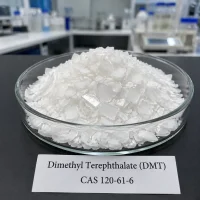
Dimethyl Terephthalate (DMT) CAS 120-61-6
Dimethyl Terephthalate (CAS 120-61-6, EINECS 204-411-8, C10H10O4, MW 194.18), also known as DMT or 1,4-benzenedicarboxylic acid dimethyl ester, is a highly crystalline aromatic diester serving as a foundational monomer for polyester synthesis. Sourced directly from UET Chemical’s production facilities since 2006, this material provides the rigid para-phenylene structure essential for manufacturing high-tensile PET resins and specialty polyurethane elastomers. Our DMT guarantees precise esterification kinetics and low impurity profiles, minimizing gel formation during high-temperature polycondensation processes.
- CAS: 120-61-6
- Synonyms: DMT, 1,4-benzenedicarboxylic acid dimethyl ester, Dimethyl p-phthalate
- EINECS: 204-411-8
- Molecular Formula: C10H10O4
- Molecular Weight: 194.18 g/mol
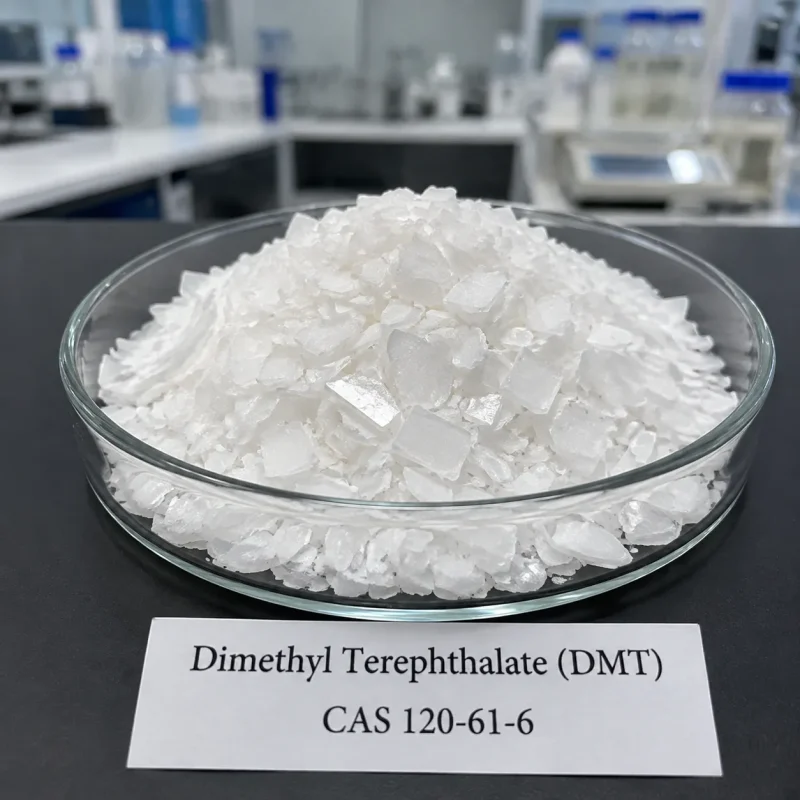
- Appearance: White crystalline flakes or powder
- Purity: ≥99.5%
- Grade: Polymerization / Industrial
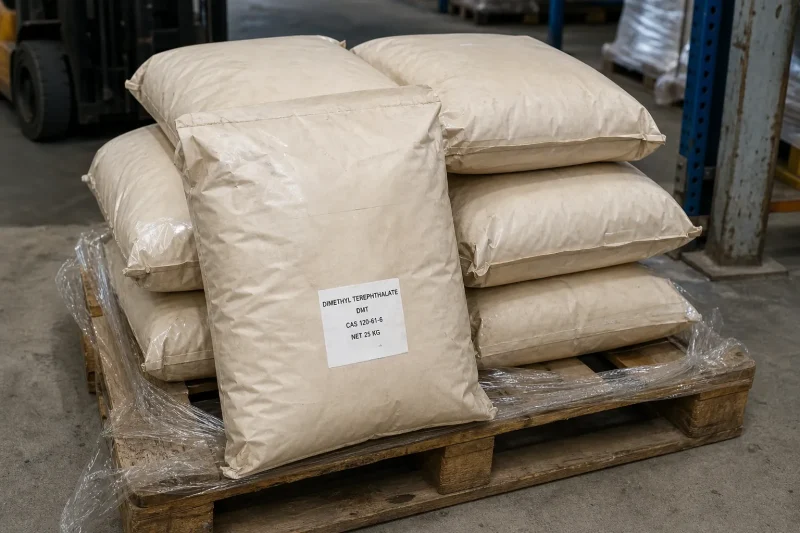
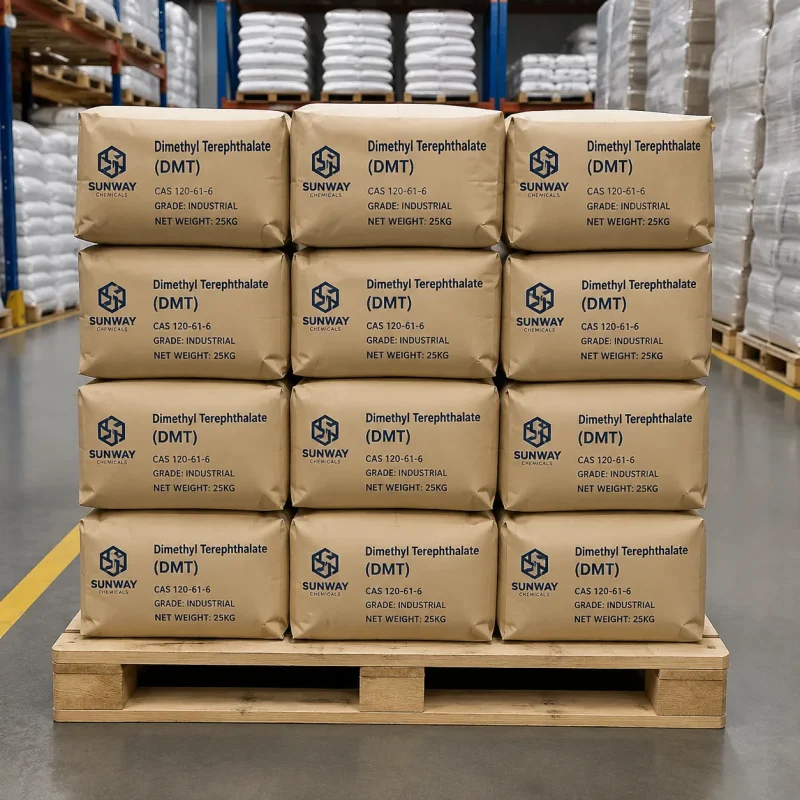
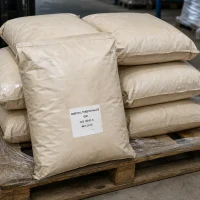
- 25kg: Multi-wall paper bags with PE inner liner
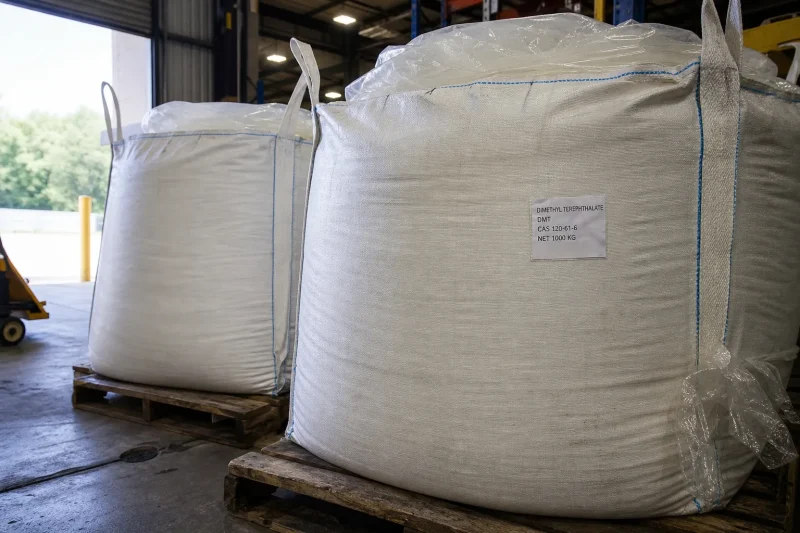
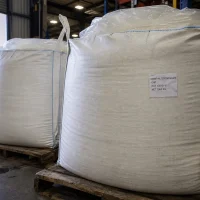
- 1000kg: FIBC (jumbo bags) with moisture barrier
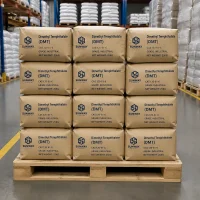
- Custom packaging, palletizing, and OEM labeling available upon request.
Dimethyl Terephthalate Overview & Chemical Identity
Dimethyl Terephthalate is a solid aromatic ester synthesized via the esterification of purified terephthalic acid with methanol or through the oxidation and esterification of p-xylene. It acts as a primary building block that introduces linear, rigid para-oriented phenyl rings into polymer backbones, fundamentally dictating the thermal and mechanical ceiling of the resulting macromolecules.
In industrial polymerization, DMT undergoes transesterification with diols like ethylene glycol or 1,4-butanediol. Compared to direct esterification using raw acids, the DMT route offers superior purification advantages through intermediate vacuum distillation, yielding polymers with exceptional optical clarity and electrical insulation properties required for demanding engineering applications.
Chemical & Physical Properties
| Property | Value |
|---|---|
| HS Code | 2917.39 |
| Melting Point | 140 – 142 °C |
| Boiling Point | 288 °C |
| Density | 1.20 g/cm³ at 20 °C |
| Flash Point | > 150 °C (closed cup) |
| Solubility in Water | Insoluble |
| Solubility in Solvents | Soluble in hot methanol, toluene, and chloroform |
| Vapor Pressure | < 0.1 hPa at 20 °C |
Technical Specifications & COA Parameters
| Item | Specification | Test Method |
|---|---|---|
| Assay (GC) | ≥ 99.5% | Gas Chromatography (ASTM D7179) |
| Acid Value | ≤ 0.3 mg KOH/g | Titration (ASTM D1980) |
| Moisture Content | ≤ 0.05% | Karl Fischer (ASTM E1064) |
| Color (APHA) | ≤ 15 | Platinum-Cobalt Scale (ASTM D1209) |
| Melting Point | 140.0 – 142.0 °C | Capillary Tube / DSC |
| Iron (Fe) | ≤ 1.0 ppm | ICP-OES |
| 4-Carboxybenzaldehyde (4-CBA) | ≤ 10 ppm | HPLC |
Elevated iron content acts as a severe catalyst for thermal degradation, causing yellowing and intrinsic viscosity drops in the final PET melt; our production lines utilize specialized 316L stainless steel contact surfaces to strictly maintain iron levels below 1.0 ppm.
Key Performance Benefits in Formulations
- High tensile modulus: The linear para-phenylene structure maximizes chain packing efficiency, delivering superior rigidity and load-bearing capacity in engineered plastics and synthetic fibers.
- Exceptional thermal stability: High melting point and crystallinity allow the cured polymers to maintain dimensional stability at continuous operating temperatures exceeding 150 °C.
- Superior dielectric strength: Low polar impurity profiles yield resins with excellent electrical insulation characteristics, critical for enameled wire coatings and electronic encapsulants.
- Controlled transesterification: Predictable reaction kinetics with glycols prevent localized overheating in the reactor, ensuring a narrow molecular weight distribution and consistent melt flow indices.
Industrial Applications & Dosage Guidelines
Polyethylene Terephthalate (PET) Resins: React with ethylene glycol at a molar ratio of 1:1.8 to 1:2.2 for the production of bottle-grade and fiber-grade PET. The DMT route is preferred for ultra-clear packaging grades requiring minimal acetaldehyde generation.
Polyurethane Elastomers: Incorporate into polyester polyol synthesis at 20 – 40% molar substitution to enhance the hardness, abrasion resistance, and chemical resilience of TPU compounds used in automotive and footwear applications.
Specialty Coatings & Insulating Varnishes: Use as a primary dibasic acid component in polyesterimide or polyamide-imide wire enamels at 30 – 50% by weight of total resin solids to achieve Class H thermal ratings.
Hot Melt Adhesives: Blend at 10 – 25% by weight into copolyester hot melt formulations to increase the crystallization rate and improve heat resistance of the bonded assembly. Often formulated alongside adipic acid to balance flexibility.
Available Grades & Selection Guide
| Parameter | Fiber Grade | Film/Bottle Grade | Electronic Grade |
|---|---|---|---|
| Assay (GC) | ≥ 99.5% | ≥ 99.8% | ≥ 99.9% |
| Color (APHA) | ≤ 20 | ≤ 10 | ≤ 5 |
| Iron (Fe) | ≤ 2.0 ppm | ≤ 1.0 ppm | ≤ 0.5 ppm |
| 4-CBA Content | ≤ 20 ppm | ≤ 10 ppm | ≤ 5 ppm |
| Primary Use | Textile fibers, strapping | Packaging films, bottles | Wire enamels, capacitors |
Select the precise grade aligned with your optical clarity and thermal degradation thresholds, and request a targeted COA for your specific polymerization route.
Logistics, Storage & Handling Safety
Standard export packaging includes 25kg multi-wall paper bags with PE liners or 1000kg FIBC jumbo bags equipped with moisture barriers. A 20’FCL loads 20 MT in 25kg bags without pallets, or 16 MT when shrink-wrapped on pallets. Storage must be maintained in a cool, dry warehouse strictly isolated from strong oxidizers and alkaline materials. Dimethyl Terephthalate is classified as Non-DG for sea, air, and road freight. During ocean transit, we mandate the use of high-absorption silica gel desiccant poles inside the container to prevent container rain from compromising the paper bags and introducing moisture into the monomer. Review the current SDS before handling: PPE, incompatibilities, emergency measures. Operators must wear N95-rated respirators during bag slitting to avoid inhalation of fine crystalline dust.
Quality Assurance & Compliance Documentation
Every batch ships with a comprehensive Certificate of Analysis (COA), Technical Data Sheet (TDS), and Safety Data Sheet (SDS) compliant with GHS Rev.9 standards. For customers manufacturing indirect food-contact packaging, we provide specific migration modeling data and heavy metal declarations to support FDA and EFSA regulatory submissions.
Technical & Supply Chain FAQ
Q: How does Dimethyl Terephthalate CAS 120-61-6 compare to Purified Terephthalic Acid (PTA) for PET production?
A: PTA is cheaper and used for standard commodity PET via direct esterification. DMT is more expensive but allows for intermediate vacuum distillation, removing trace impurities that cause yellowing. DMT is strictly preferred for high-clarity optical films, medical-grade packaging, and specialty polyurethanes.
Q: What is the maximum acceptable moisture content for DMT before charging the reactor?
A: Moisture must be strictly below 0.05%. Excess water hydrolyzes the ester bonds during the melting phase, generating free terephthalic acid which disrupts the stoichiometric balance and stalls the transesterification catalyst.
Q: Can DMT be substituted with Dimethyl Isophthalate (DMI) to improve impact resistance?
A: Yes, substituting 10 – 20% of DMT with DMI introduces meta-oriented kinks into the polymer chain. This reduces crystallinity and increases elongation at break, but it will proportionally lower the heat deflection temperature of the final part.
Q: How do you handle sample dispatch for reactor trials?
A: We ship 500g to 1kg free samples within 48 hours via international express. Each sample is vacuum-sealed in aluminum foil bags to guarantee the moisture content remains at factory-release levels upon arrival at your lab.
Q: What is the standard lead time for bulk container orders?
A: Standard lead time is 7 – 15 days from proforma invoice confirmation for in-stock fiber and film grades. Custom milling or specific particle size distributions require an additional 5 days for production scheduling.
Related products
Manufacturer & Exporter Since 2006
Get Tailored Chemical Raw Material Solutions — Reply Within 1 Hour
Factory-direct pricing, stable high-purity supply and complete compliance documentation for your industrial formulations.
- 1000+Products
- 200+QC Protocols
- 7–15Days Delivery
- Factory-Direct Pricing
- COA / TDS / SDS Included
- Free Samples for Testing
- 40+ Export Countries
Request a Free Quote
Our engineers reply within 1 hour during GMT+8 business hours.
Please include in your inquiry:
- Product name or CAS number
- Required quantity
- Destination country or port
- Preferred packaging