
Chlorphenesin CAS 104-29-0
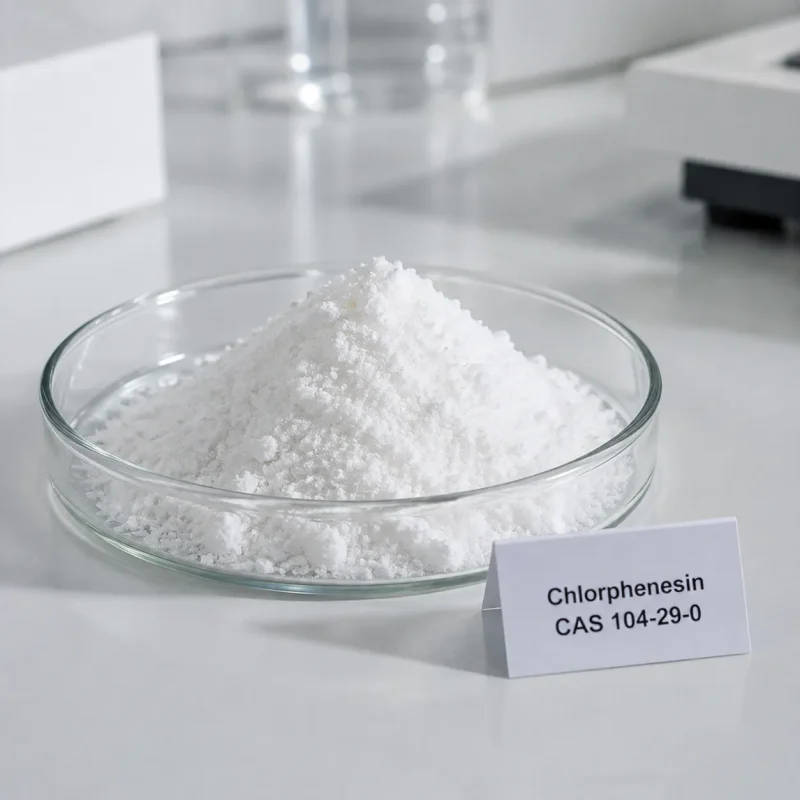
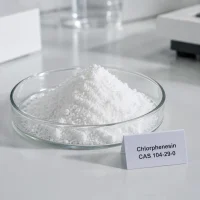
Chlorphenesin is a chlorinated aryl glycerol ether—3-(4-chlorophenoxy)propane-1,2-diol—combining a 4-chlorophenoxy ring with a propane-1,2-diol chain. White crystalline powder, ≥99.0% purity. Functions as a broad-spectrum antimicrobial preservative in cosmetics and wet wipes (EU Annex V, max 0.3%) and as a pharmaceutical intermediate for muscle-relaxant APIs. The diol ether structure stays stable from pH 3 to 10 and survives hot-phase emulsification. Each shipment includes COA, TDS, and SDS.
- CAS No.: 104-29-0
- Synonyms: 3-(4-Chlorophenoxy)propane-1,2-diol; 3-(p-Chlorophenoxy)-1,2-propanediol; Chlorphenesin
- EINECS: 203-193-1
- Molecular Formula: C₉H₁₁ClO₃
- Molecular Weight: 202.64 g/mol
- Appearance: White to off-white crystalline powder
- Assay (HPLC): ≥99.0%
- Melting Point: 77–81 °C
- 4-Chlorophenol (GC): ≤20 ppm
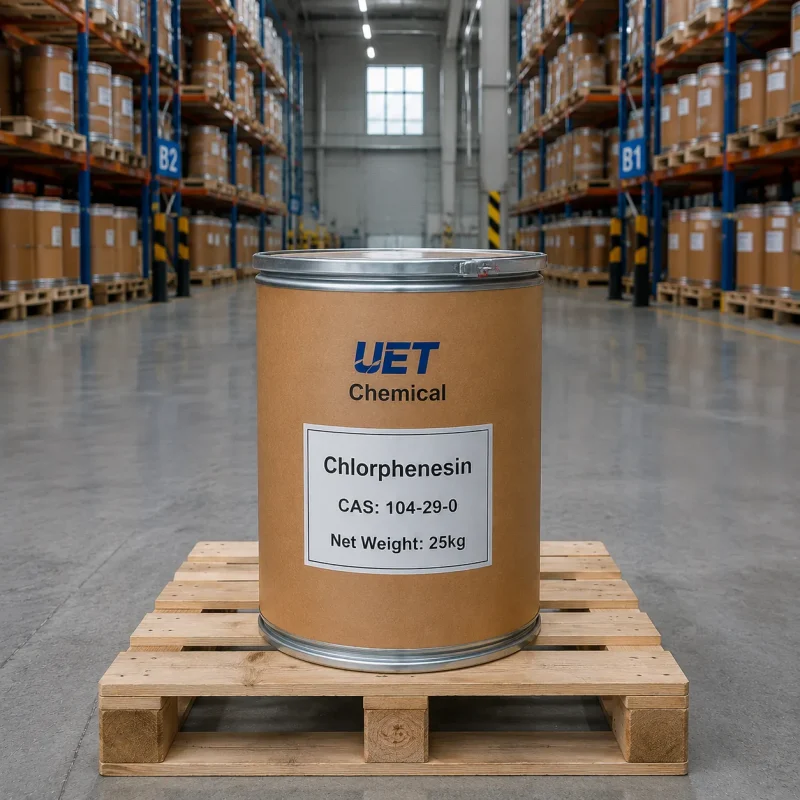
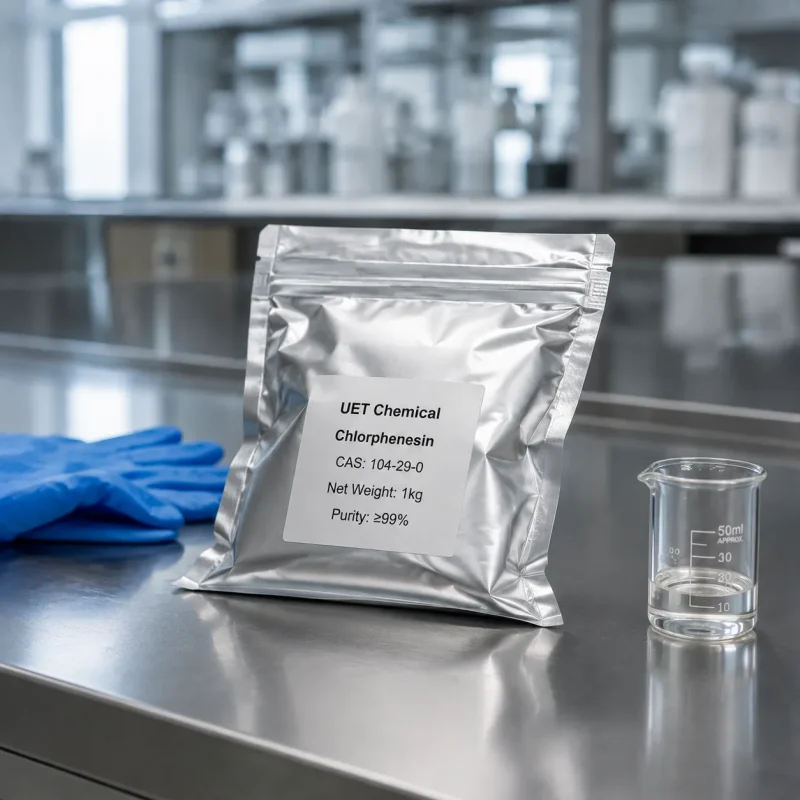
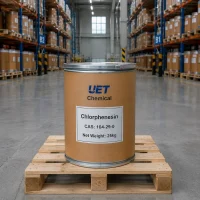
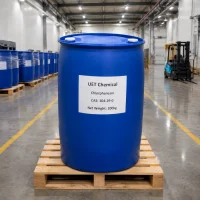
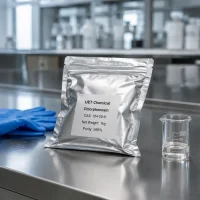
- Packaging: 1 kg aluminium foil bag / 25 kg fibre drum. Custom packaging available upon request.
- Main Applications: Cosmetic preservative; wet wipe liquors; pharmaceutical intermediate
Introduction to Chlorphenesin
Chlorphenesin is a white to off-white crystalline powder, a chlorinated aryl glycerol ether in which a 4-chlorophenoxy ring links to a propane-1,2-diol chain through an ether bond. The molecule dissolves at roughly 20 g/L in water at 20 °C and freely in glycols. Formulators use it as a broad-spectrum preservative in emulsions, shampoos, and wet-wipe liquors; synthesis labs use it as the starting ether for chlorphenesin carbamate production.
The 4-chloro substituent drives activity against bacteria and moulds at 0.1–0.3%, while the diol chain keeps the molecule water-compatible enough for aqueous wipe fluids without co-solvents. One practical caution: water solubility caps near 2% at room temperature, so charging dry powder straight into a cold water phase leaves undissolved needles that recrystallise later in the finished product; pre-dissolve in propylene glycol or the warm water phase (60–70 °C) instead.
Key Features of Chlorphenesin
- Dual-target antimicrobial structure. The lipophilic 4-chlorophenoxy ring inserts into microbial membranes while the hydrophilic diol anchors in the aqueous phase, disrupting membrane integrity of bacteria and moulds at 0.1–0.3%.
- EU Annex V listed, 0.3% cap. An approved preservative for leave-on and rinse-off cosmetics within the 0.3% limit, so EU-bound formulations need no additional registration work.
- pH 3–10 stability. The aryl ether bond resists hydrolysis across the full cosmetic pH range and survives 80 °C hot-phase emulsification without assay loss.
- Glycol-compatible solubility. Freely soluble in propylene glycol, glycerol, and ethanol; ~20 g/L in water—enough to keep toners and wipe liquors clear at use levels.
- Low odour, low colour. At 0.3% the powder adds no perceptible odour shift and does not yellow in mildly alkaline systems, unlike several aromatic alcohol preservatives.
Chlorphenesin Chemical & Physical Properties
| Property | Value |
|---|---|
| Molecular Formula | C₉H₁₁ClO₃ |
| Molecular Weight | 202.64 g/mol |
| Appearance | White to off-white crystalline powder |
| Melting Point | 77–81 °C |
| Assay (HPLC) | ≥99.0% |
| Solubility in Water | ~20 g/L (20 °C); freely soluble in ethanol, propylene glycol, glycerol |
| pH Stability Range | 3–10 |
| Loss on Drying | ≤0.5% |
| Residue on Ignition | ≤0.1% |
| 4-Chlorophenol (GC) | ≤20 ppm |
Applications of Chlorphenesin
Leave-on and rinse-off cosmetics: Dosed at 0.1–0.3%. Membrane-disrupting action controls bacteria and moulds in creams, lotions, and shampoos. Stability from pH 3 to 10 lets it fit both acid toners and alkaline systems. Formulators typically pair it with organic acids or aromatic alcohols to complete yeast coverage.
Wet wipes and aqueous toners: Used at 0.1–0.3%, dissolved in the water phase at 60–70 °C. The ~20 g/L water solubility keeps wipe liquors clear at use levels without co-solvents, and the low odour profile suits fragrance-free SKUs.
Pharmaceutical intermediate: Serves as the ether backbone for chlorphenesin carbamate (a muscle relaxant) via carbamoylation of the primary hydroxyl, and as a building block in ether-type API synthesis. This route typically demands ≥99% assay with 4-chlorophenol ≤20 ppm.
Deodorants and intimate-care products: Formulated at 0.2–0.3%. Controls odour-causing bacteria on skin-contact substrates; the mild irritation profile suits sensitive-area formulations buffered at pH 5–6.
Storage & Safety Precautions for Chlorphenesin
Storage conditions. Store in sealed foil bags or PE-lined fibre drums at 5–30 °C, in a dry warehouse. The powder is chemically stable for 24–36 months; slight caking above 70% RH is physical and reverses on milling. Keep away from strong oxidisers and strong mineral acids, which can cleave the ether bond over prolonged contact.
Safety and PPE. GHS: Eye Irrit. 2 (H319). Wear an N95 dust mask, chemical-splash goggles, and nitrile gloves during bag emptying to avoid eye irritation and dust inhalation. Spills are non-toxic; sweep up dry, then wash the floor with water.
Transport classification. Non-DG. Not regulated under IMDG, IATA, or ADR. Ship as standard general cargo. Ensure container liners are intact to prevent moisture ingress during ocean freight.
Practitioner note: For incoming QC, run melting point (77–81 °C) and HPLC assay, then check residual 4-chlorophenol by GC or HPLC. Batches synthesised from 4-chlorophenol and epichlorohydrin can carry trace phenol; above 20 ppm it shows up as an off-odour in fragrance-free formulations. Melting point may drift within the 77–81 °C window between lots without affecting antimicrobial performance.
Chlorphenesin FAQ
Q: What is the maximum dose of Chlorphenesin (CAS 104-29-0) in an EU cosmetic formula?
A: 0.3%, per EU Cosmetics Regulation Annex V. Most formulas run 0.2–0.3% for bacteria and mould control. Because yeast coverage is moderate, pair it with an organic acid or aromatic alcohol booster in high-water systems. Stay at or below the cap for leave-on, rinse-off, and child-care products alike.
Q: Why do white needles appear in my toner after adding Chlorphenesin?
A: The powder was charged dry into a cold water phase. Water solubility caps near 2% at 20 °C, and local oversaturation recrystallises as needles. Re-heat the batch to 60–70 °C with agitation to re-dissolve. Next run, pre-dissolve the powder in propylene glycol or add it to the warm water phase before cooling.
Q: Does Chlorphenesin survive hot-phase emulsification at 80 °C?
A: Yes. The aryl ether bond is hydrolytically stable from pH 3 to 10, so two hours at 80 °C causes no measurable assay loss. Add it to the water phase before emulsification to guarantee even distribution. Avoid holding alkaline batches (pH >10) at high temperature for extended periods.
Related products
Manufacturer & Exporter Since 2006
Get Tailored Chemical Raw Material Solutions — Reply Within 1 Hour
Factory-direct pricing, stable high-purity supply and complete compliance documentation for your industrial formulations.
- 1000+Products
- 200+QC Protocols
- 7–15Days Delivery
- Factory-Direct Pricing
- COA / TDS / SDS Included
- Free Samples for Testing
- 40+ Export Countries
Request a Free Quote
Our engineers reply within 1 hour during GMT+8 business hours.
Please include in your inquiry:
- Product name or CAS number
- Required quantity
- Destination country or port
- Preferred packaging