
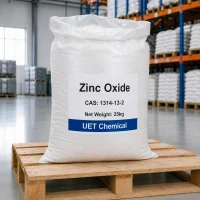
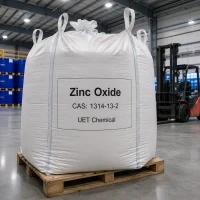
Zinc Oxide CAS 1314-13-2
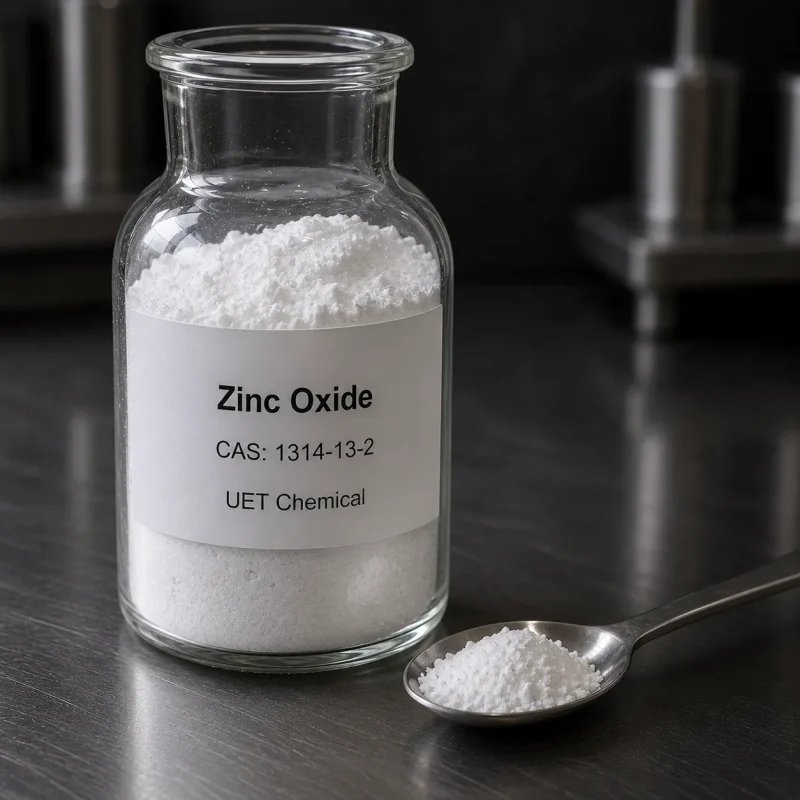
Zinc Oxide (ZnO) is an amphoteric inorganic compound that solves slow vulcanization rates, glaze surface defects, and UV degradation challenges in industrial and cosmetic formulations. Rubber, ceramic, and personal care manufacturers rely on it for tire compounding, ceramic fluxes, and broad-spectrum sunscreens. UETChem supplies this product with strict control over particle size distribution and heavy metal impurities, ensuring rapid dispersion and consistent optical properties. Each shipment includes COA, TDS, SDS.
- CAS No: 1314-13-2
- Synonyms: ZnO; Zinc white; Flowers of zinc
- EINECS: 215-222-5
- Molecular Formula: ZnO
- Molecular Weight: 81.38 g/mol
- Appearance: White to pale yellow fine powder
- Purity (ZnO): 99.7% min
- Lead (Pb): 0.005% max
- Cadmium (Cd): 0.001% max
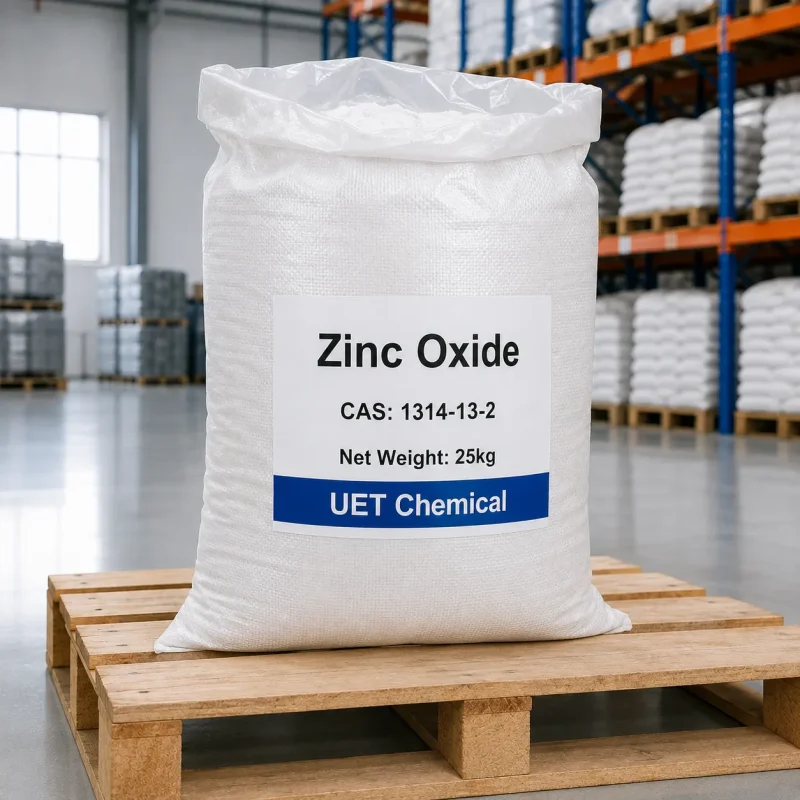
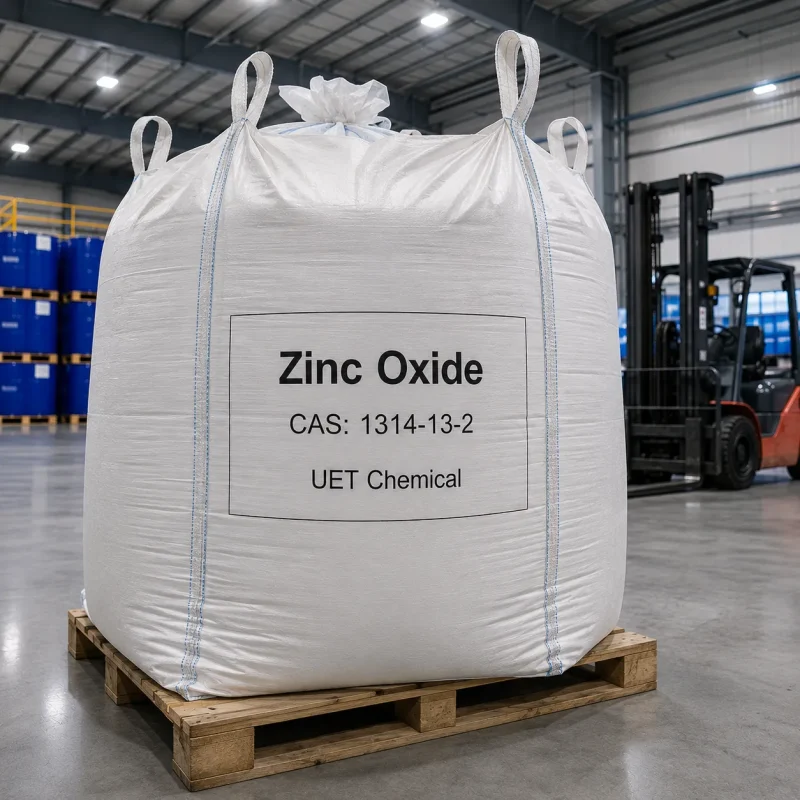
- Packaging: 25 kg (55 lb) kraft bag, 1000 kg (2205 lb) jumbo bag. Custom packaging available upon request.
- Main Applications: Rubber vulcanization, ceramic glazes, sunscreens, anti-corrosion paints, animal feed additives
Introduction to Zinc Oxide
Zinc Oxide is an amphoteric inorganic compound featuring a hexagonal wurtzite crystal structure. The material presents as a white, odorless powder that turns yellow when heated and reverts to white upon cooling. In chemical reactions, it dissolves in strong acids to form zinc salts and reacts with strong alkalis to form zincates. The compound exhibits semiconductor properties with a wide bandgap, allowing it to absorb high-energy ultraviolet radiation while transmitting visible light.
Industrial processing facilities consume this white pigment to modify the crosslinking density of elastomers, lower the melting point of silicate matrices, and block UV radiation in topical formulations. The powder remains chemically stable in neutral aqueous environments and resists thermal degradation at standard processing temperatures.
Key Features of ZnO
- Wurtzite crystal lattice: The specific atomic arrangement provides excellent thermal conductivity and broad-spectrum UV absorption capabilities.
- Amphoteric reactivity: Reacts with both fatty acids and alkaline silicates, enabling integration into diverse organic and inorganic matrices.
- High refractive index: Scatters visible light effectively, providing opacity and brightness in coatings and ceramic bodies.
Zinc Oxide Chemical & Physical Properties
| Property | Value |
|---|---|
| Molecular Formula | ZnO |
| Molecular Weight | 81.38 g/mol |
| Appearance | White to pale yellow fine powder |
| Density | 5.60 g/cm³ (46.7 lb/gal) |
| Melting Point | 1975 °C (3587 °F) |
| Refractive Index | 2.00 |
| Solubility | Insoluble in water; soluble in acids and alkalis |
Applications of Zinc Oxide
Rubber vulcanization and compounding: Dosed at 3-5 phr in natural and synthetic rubber compounds. The powder reacts with Stearic Acid during the mixing phase to form a soluble zinc soap complex. This complex activates the sulfur and accelerators, significantly speeding up the crosslinking reaction and improving the tensile strength and thermal conductivity of the cured tire tread or conveyor belt.
Ceramic glazes and frits: Added at 5-15% to silicate mixtures to act as a powerful flux. The compound lowers the melting temperature of the glaze and promotes the growth of macro-crystals during the cooling cycle. Potters and tile manufacturers often blend it with Anatase Titanium Dioxide to create opaque, glossy surfaces and unique crystalline visual effects on the fired ceramic body.
Anti-corrosion and architectural coatings: Incorporated into epoxy and alkyd primers to protect steel substrates. The alkaline nature of the pigment passivates the metal surface, preventing anodic corrosion. Formulators also use it to improve the mildew resistance of exterior house paints.
Storage & Safety Precautions for ZnO
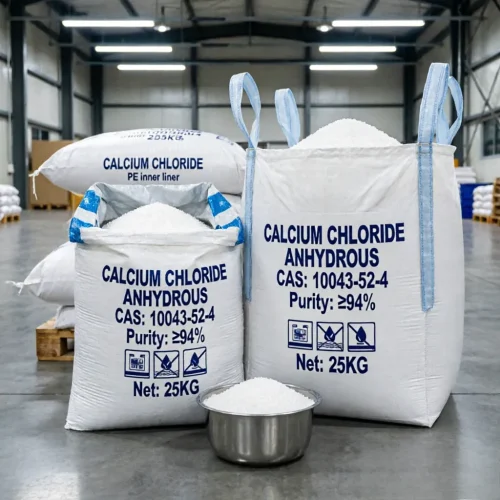
- Moisture and carbon dioxide control: Store pallets in a dry, ventilated warehouse below 35 °C (95 °F). Prolonged exposure to humid air and atmospheric CO2 causes the powder to slowly convert into basic zinc carbonate, reducing reactivity in rubber compounds. Facilities run Calcium Chloride Anhydrous in warehouse dehumidifiers to maintain low ambient humidity.
- Dust management: The fine powder poses a nuisance dust hazard and can cause metal fume fever if inhaled during high-temperature smelting operations. Use local exhaust ventilation and wear N95 respirators during bag slitting and dry blending.
- Field note: When dispersing ZnO into rubber batches, add the powder to the internal mixer immediately after the raw rubber has been masticated. Delaying the addition allows the polymer chains to re-entangle, trapping dry agglomerates and causing white specks on the surface of the extruded rubber profile.
Zinc Oxide FAQ
Q: How does Zinc Oxide accelerate rubber vulcanization?
A: Zinc Oxide reacts with fatty acids like stearic acid to form a zinc soap complex. This complex dissolves the sulfur and accelerators, speeding up the crosslinking reaction. It ensures uniform curing and improves the tensile strength and thermal conductivity of the final rubber product.
Q: Why is ZnO used in sunscreen formulations?
A: ZnO acts as a broad-spectrum physical UV filter. Its semiconductor bandgap absorbs and scatters both UVA and UVB radiation. Unlike chemical filters, it sits on the skin surface, offering immediate protection without causing irritation, making it ideal for sensitive skin and baby products.
Q: Does Zinc Oxide affect the color of ceramic glazes?
A: Zinc Oxide acts as a powerful flux in ceramic glazes, lowering the melting temperature and promoting crystal growth. It produces a glossy, smooth surface. In reduction firing, it remains white, but it can also interact with transition metals to develop unique crystalline visual effects.
Related products
Manufacturer & Exporter Since 2006
Get Tailored Chemical Raw Material Solutions — Reply Within 1 Hour
Factory-direct pricing, stable high-purity supply and complete compliance documentation for your industrial formulations.
- 1000+Products
- 200+QC Protocols
- 7–15Days Delivery
- Factory-Direct Pricing
- COA / TDS / SDS Included
- Free Samples for Testing
- 40+ Export Countries
Request a Free Quote
Our engineers reply within 1 hour during GMT+8 business hours.
Please include in your inquiry:
- Product name or CAS number
- Required quantity
- Destination country or port
- Preferred packaging