
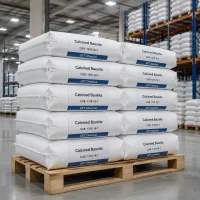
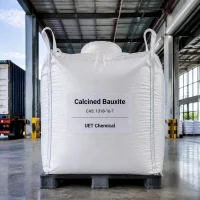
Calcined Bauxite CAS 1318-16-7
Calcined Bauxite is a high-alumina refractory aggregate produced by heating raw bauxite ore above 1500 °C (2732 °F). It solves structural spalling, abrasion, and thermal shock challenges in high-temperature and heavy-duty environments. Industrial manufacturers rely on it for refractory castables, anti-skid road surfacing, and abrasive blasting media. UETChem supplies this material with strict control over alumina purity and bulk density, ensuring low porosity and consistent grain sizing. Each shipment includes COA, TDS, SDS.
- CAS No: 1318-16-7
- Synonyms: Calcined Bauxite; Synthetic bauxite; High-alumina clinker; Rotary bauxite
- EINECS: 215-280-1
- Molecular Formula: Al2O3 (Major component)
- Molecular Weight: 101.96 g/mol (for Al2O3)
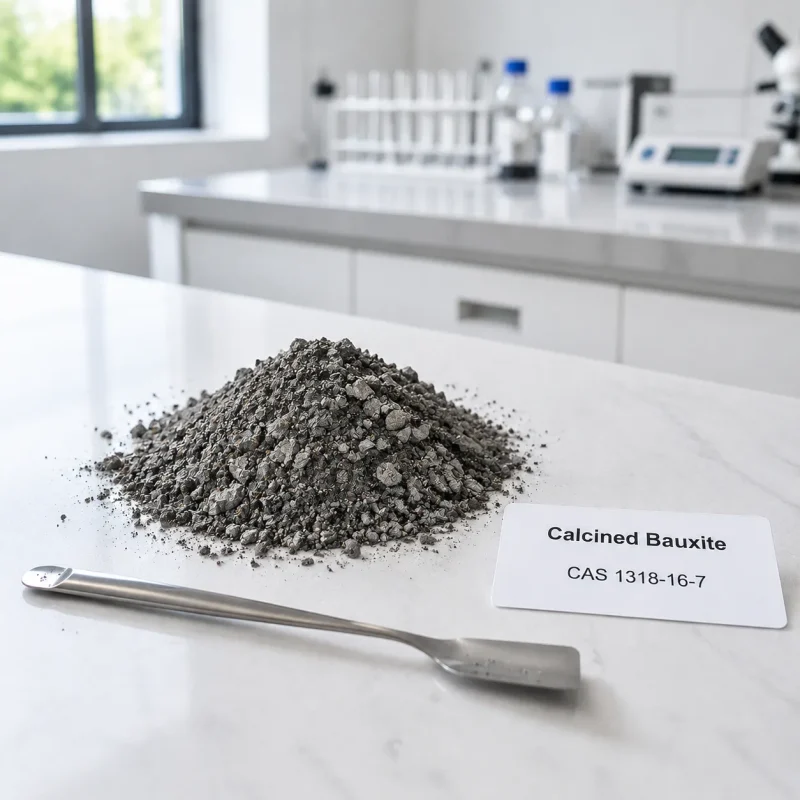
- Appearance: Brownish to grey granular sand or powder
- Al2O3 Content: 80.0 – 90.0%
- Bulk Density: 2.8 – 3.2 g/cm³
- Mohs Hardness: 8.0 – 9.0
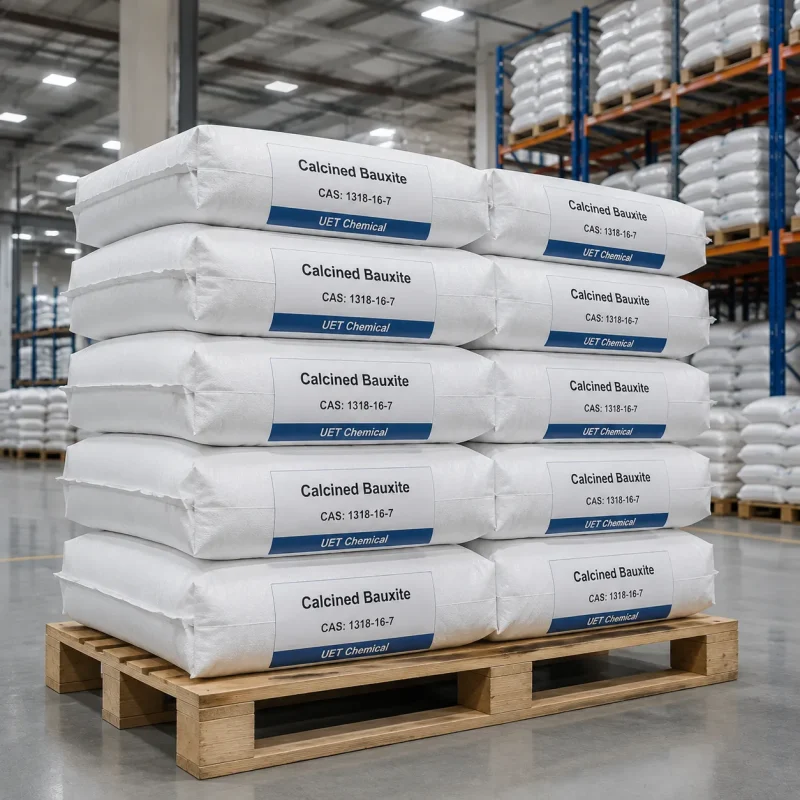
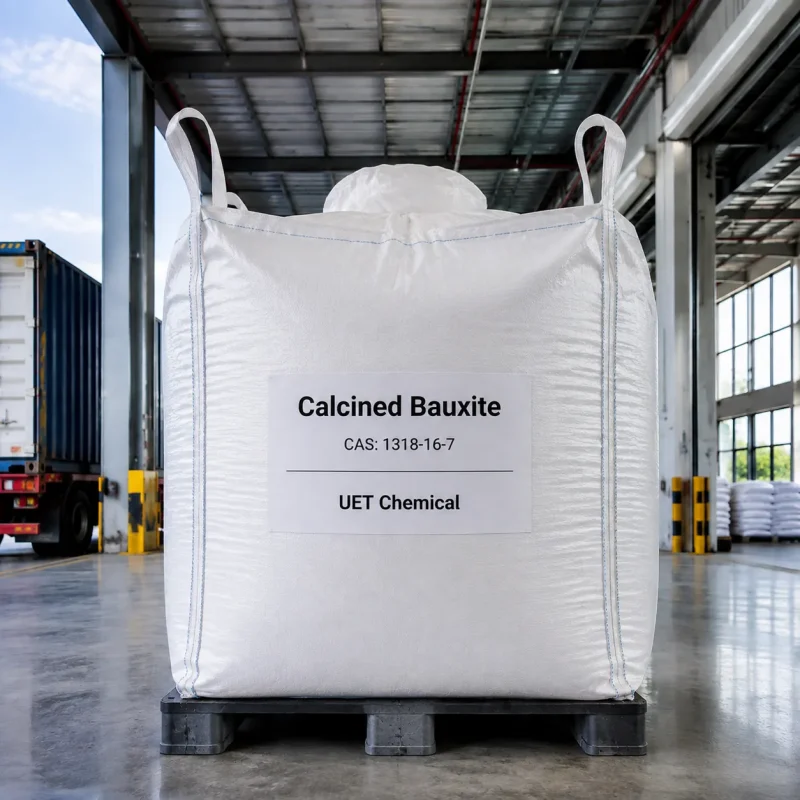
- Packaging: 25 kg (55 lb) bag, 1000 kg (2205 lb) jumbo bag. Custom packaging available upon request.
- Main Applications: Refractory castables, anti-skid road aggregates, abrasive blasting, foundry coatings
Introduction to Calcined Bauxite
Calcined Bauxite is an inorganic, non-metallic mineral aggregate composed primarily of corundum (alpha-alumina) and mullite phases. It is manufactured by calcining raw bauxite ore in rotary or shaft kilns at temperatures ranging from 1500 °C to 1700 °C (2732 °F to 3092 °F). This intense thermal treatment drives off crystalline water, eliminates organic impurities, and densifies the mineral structure.
The resulting material presents as a dense, brownish-grey granular solid with high refractoriness and chemical inertness. Foundries and road contractors consume this aggregate to build high-temperature furnace linings, wear-resistant floorings, and skid-resistant highway surfaces. The material remains insoluble in water and resists attack from most acidic and alkaline slags at elevated temperatures.
Key Features of Calcined Bauxite
- Corundum and mullite matrix: The crystalline phases provide extreme mechanical strength and resistance to mechanical abrasion.
- High refractoriness: Maintains structural stability without melting or softening at continuous operating temperatures up to 1750 °C (3182 °F).
- Low thermal expansion: Minimizes volumetric changes during rapid heating and cooling cycles, preventing cracking in refractory linings.
- High Mohs hardness: Ranks between 8.0 and 9.0, making it an effective cutting and cleaning medium for metal surface preparation.
Calcined Bauxite Chemical & Physical Properties
| Property | Value |
|---|---|
| Major Component | Al2O3 (Corundum / Mullite) |
| Al2O3 Content | 80.0 – 90.0% |
| Bulk Density | 2.8 – 3.2 g/cm³ |
| Mohs Hardness | 8.0 – 9.0 |
| Refractoriness | > 1750 °C (3182 °F) |
| Water Absorption | < 4.0% |
| Appearance | Brownish to grey granular sand |
Applications of Calcined Bauxite
Refractory castables and bricks: Serves as the primary structural aggregate in high-alumina refractory concretes used for steel ladles and cement kilns. Formulators mix the granular bauxite with calcium aluminate cement and fine powders. Adding trace amounts of Aluminium Sulfate can help adjust the setting time of specific castable formulations.
Anti-skid road surfacing: Broadcast onto epoxy or bitumen binders on highway curves, intersections, and airport runways. The sharp, angular grains provide high macro-texture and skid resistance. Contractors sometimes blend it with Barium Sulfate (Barite) to increase the overall density and wear life of the pavement coating.
Abrasive blasting media: Used in sandblasting operations to remove rust, mill scale, and old coatings from steel structures. The sharp edges cut aggressively without embedding into the base metal. For specialized ceramic glazes or refractory paints, engineers might incorporate Anatase Titanium Dioxide to modify the optical and thermal properties of the final coating.
Storage & Safety Precautions for Calcined Bauxite
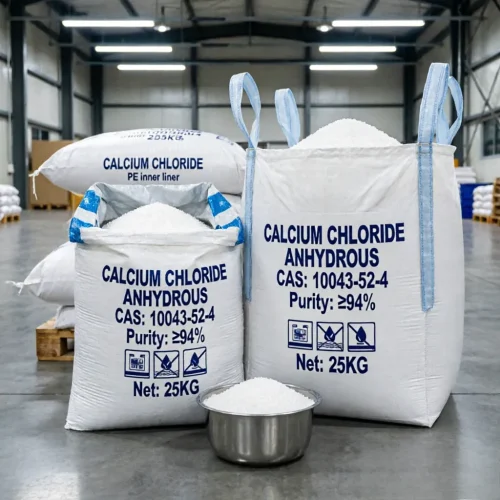
- Moisture and contamination: Store jumbo bags on pallets in a dry, covered warehouse. While the mineral itself does not degrade in water, excess surface moisture disrupts the water-to-cement ratio when batching refractory castables. Facilities often run Calcium Chloride Anhydrous in warehouse dehumidifiers to maintain low ambient humidity.
- Dust control: Handling fine powder fractions generates silica and alumina dust. Operate local exhaust ventilation systems and wear N95 or P100 respirators during bag slitting and dry mixing to prevent respiratory irritation.
- Field note: When batching refractory castables, pre-wet the coarse Calcined Bauxite aggregate slightly before adding the cement and fine flour. This prevents the porous aggregate from stealing water from the cement paste, ensuring proper hydration and strength development.
Calcined Bauxite FAQ
Q: How does Calcined Bauxite improve refractory castables?
A: Calcined Bauxite acts as a high-strength aggregate that resists thermal shock and slag penetration in steel ladles. Its corundum matrix maintains structural integrity above 1700 °C. Formulators grade the Calcined Bauxite particle size to maximize packing density and minimize porosity in the final cured lining.
Q: Why is Calcined Bauxite used for anti-skid roads?
A: Calcined Bauxite provides extreme surface friction and wear resistance on highway curves and runways. The sharp, angular grains lock into epoxy binders, creating a durable macro-texture. Road contractors select specific mesh sizes of Calcined Bauxite to balance skid resistance with tire noise reduction.
Q: Can Calcined Bauxite be reused as blasting media?
A: Yes, Calcined Bauxite is highly durable and can be recycled multiple times in closed-loop blasting cabinets. Its Mohs hardness of 8-9 prevents rapid breakdown during impact. Operators must regularly screen the spent Calcined Bauxite to remove fine dust and maintain optimal cutting efficiency.
Related products
Manufacturer & Exporter Since 2006
Get Tailored Chemical Raw Material Solutions — Reply Within 1 Hour
Factory-direct pricing, stable high-purity supply and complete compliance documentation for your industrial formulations.
- 1000+Products
- 200+QC Protocols
- 7–15Days Delivery
- Factory-Direct Pricing
- COA / TDS / SDS Included
- Free Samples for Testing
- 40+ Export Countries
Request a Free Quote
Our engineers reply within 1 hour during GMT+8 business hours.
Please include in your inquiry:
- Product name or CAS number
- Required quantity
- Destination country or port
- Preferred packaging