
Trimethylstearylammonium Chloride (1831) CAS 112-03-8
Trimethylstearylammonium Chloride (1831) is a long-chain quaternary ammonium cationic surfactant that solves severe static flyaway, poor wet-combing, and emulsion instability challenges in personal care and industrial formulations. Cosmetic and textile manufacturers rely on it for rinse-off hair conditioners, fabric softeners, and asphalt emulsifiers. UETChem supplies this product with strict control over free amine content, color, and active matter, ensuring superior antistatic performance and excellent formulation compatibility. Each shipment includes COA, TDS, SDS.
- CAS No: 112-03-8
- Synonyms: 1831; STAC; Stearyltrimethylammonium chloride; Octadecyltrimethylammonium chloride
- EINECS: 203-928-6
- Molecular Formula: C21H46ClN
- Molecular Weight: 348.05 g/mol
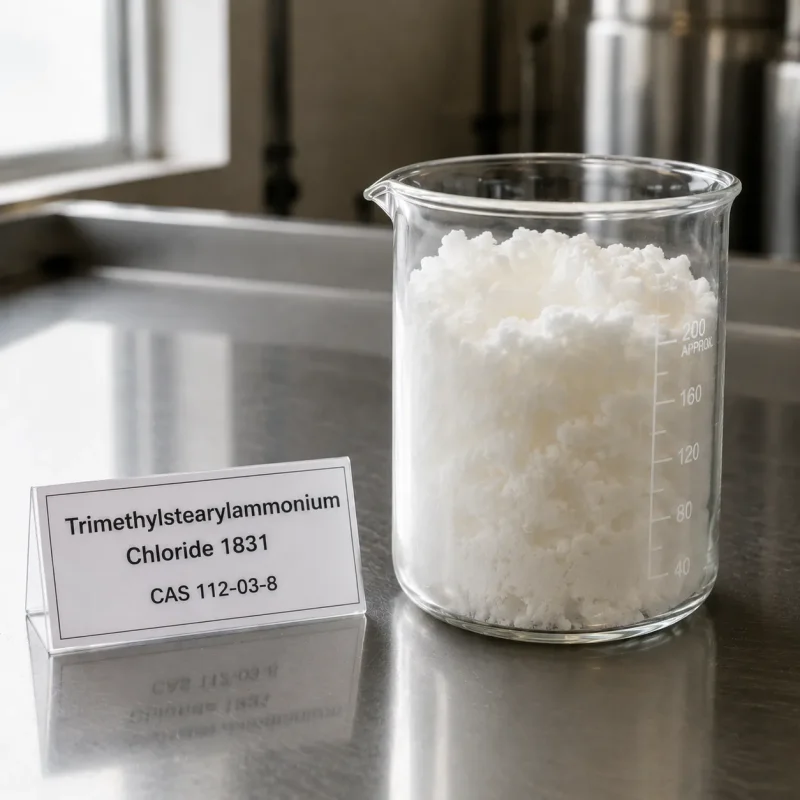
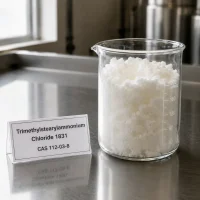
- Appearance: White to pale yellow paste or liquid (depending on concentration)
- Active Matter: 50% / 80% / 99% (Customizable)
- Free Amine: 1.0% max
- pH (10% aqueous): 6.0 – 8.0
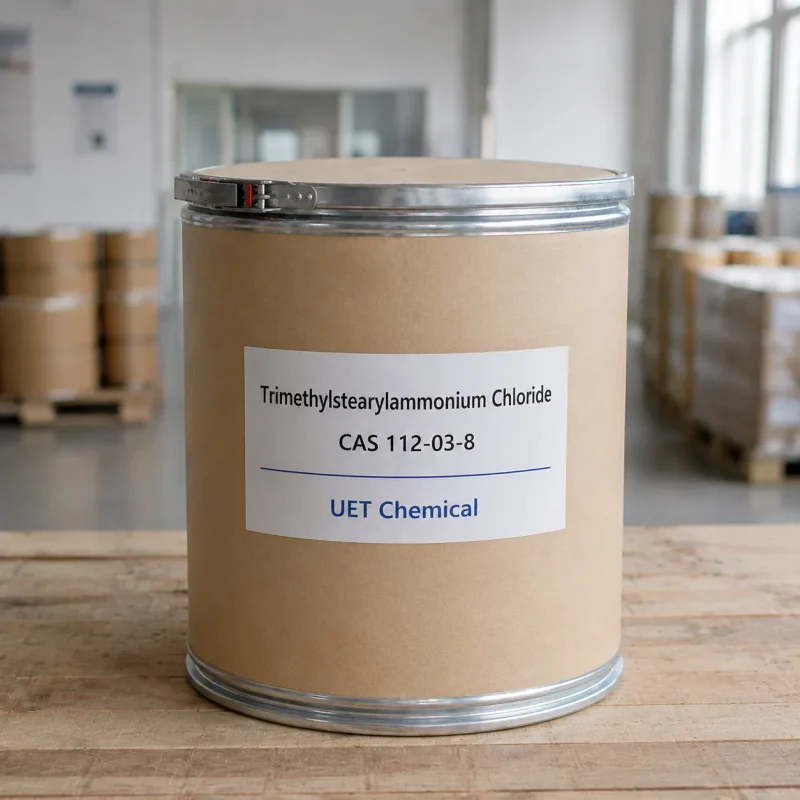
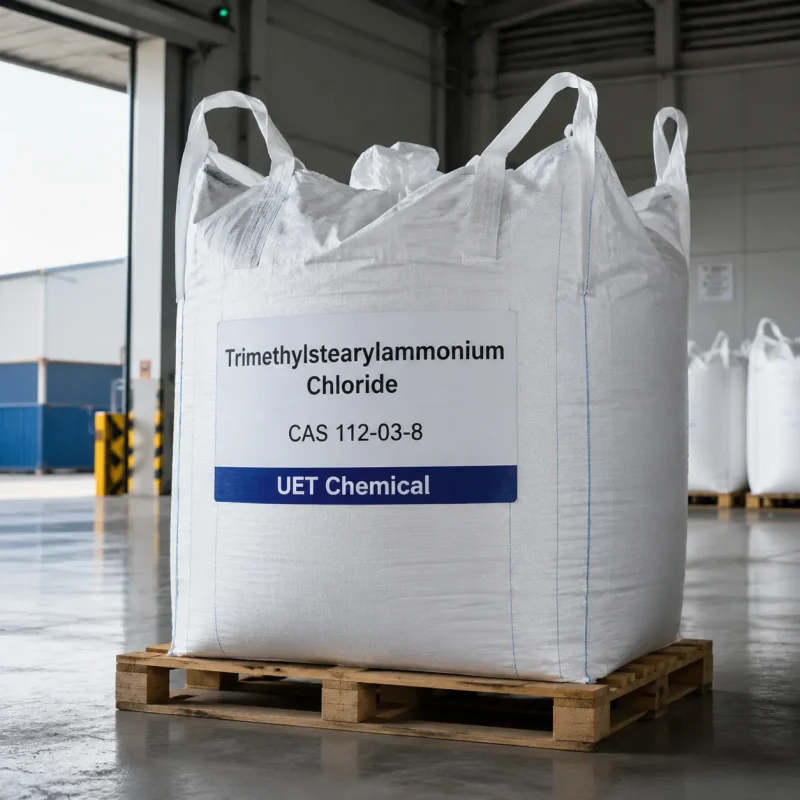
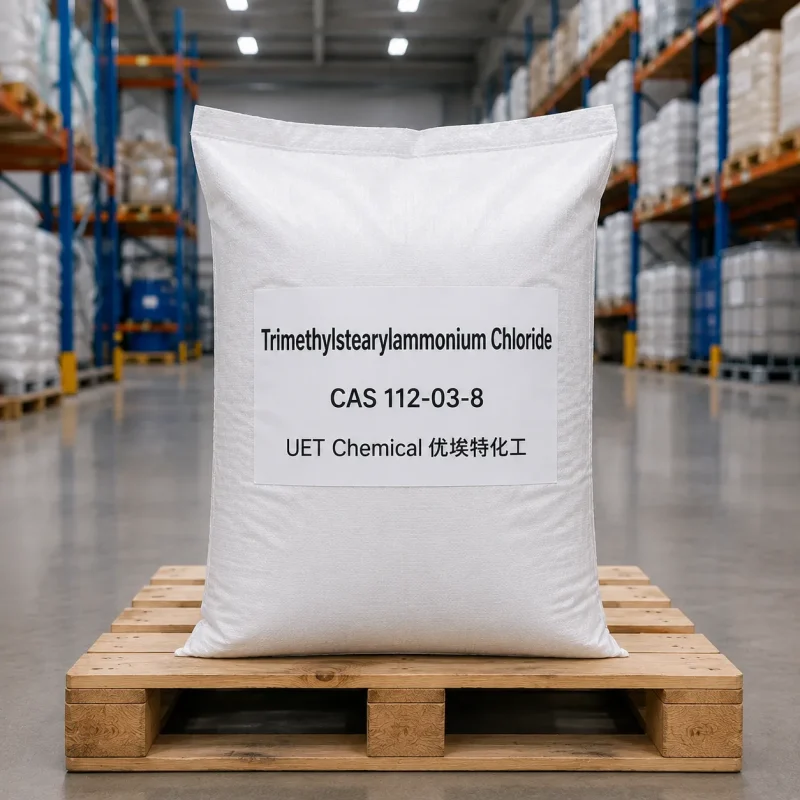
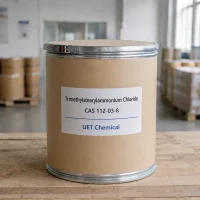
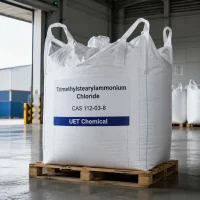
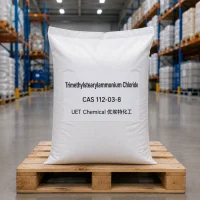
- Packaging: 50 kg (110 lb) HDPE drum, 200 kg (441 lb) steel drum. Custom packaging available upon request.
- Main Applications: Hair conditioners, fabric softeners, asphalt emulsifiers, industrial biocides, antistatic agents
Introduction to Trimethylstearylammonium Chloride
Trimethylstearylammonium Chloride is a quaternary ammonium compound featuring a long C18 stearyl hydrophobic tail and a positively charged trimethylammonium head group. This distinct amphiphilic architecture allows the molecule to anchor firmly onto negatively charged substrates while projecting the lipophilic chain outward. At room temperature, the material typically presents as a white to pale yellow waxy solid or viscous paste that disperses readily in warm water.
Industrial processing facilities consume this intermediate to neutralize electrostatic charges, modify surface friction, and stabilize oil-in-water emulsions. The compound maintains excellent chemical stability across a wide pH range and resists degradation in the presence of hard water ions, making it highly reliable for diverse commercial applications.
Key Features of 1831
- Strong cationic charge: The permanent positive charge drives rapid electrostatic adsorption onto negatively charged surfaces like hair cuticles, textile fibers, and mineral aggregates.
- Hydrophobic tail alignment: The C18 alkyl chain forms a dense, lubricating boundary layer that drastically reduces surface friction and imparts a soft, silky tactile feel.
- Hard water tolerance: The quaternary nitrogen structure prevents precipitation in the presence of calcium and magnesium ions, maintaining emulsion stability.
1831 Chemical & Physical Properties
| Property | Value |
|---|---|
| Molecular Formula | C21H46ClN |
| Molecular Weight | 348.05 g/mol |
| Appearance | White to pale yellow paste or liquid |
| Melting Point | ~45 °C (113 °F) for pure solid |
| Solubility | Dispersible in warm water; soluble in alcohols |
| pH (10% aqueous) | 6.0 – 8.0 |
| Flash Point | > 100 °C (212 °F) |
Applications of Trimethylstearylammonium Chloride
Hair conditioners and detanglers: Dosed at 1-5% in rinse-off and leave-in hair care formulations. The cationic head binds to damaged, anionic hair sites, while the stearyl tail smooths the cuticle layer. Formulators frequently blend it with deep-penetrating humectants like D-Panthenol to boost moisture retention and improve overall hair elasticity.
Textile and fabric softeners: Added to laundry rinse cycles to coat cotton and synthetic fibers. The surfactant neutralizes static electricity and reduces fiber-to-fiber friction, preventing garment cling and improving the drape of the fabric.
Asphalt emulsifiers: Functions as a cationic emulsifier in bitumen-in-water systems for road paving. The molecule lowers the interfacial tension between asphalt and water, ensuring uniform coating on wet aggregate surfaces. Plant operators adjust the emulsion pH using Citric Acid to control the break time and adhesion properties.
Storage & Safety Precautions for 1831
- Temperature management: Store in tightly sealed HDPE or steel drums between 15 °C and 35 °C (59 °F – 95 °F). High-purity grades solidify below 20 °C (68 °F). Gently warm the drums using band heaters or warm water baths before pumping to restore flowability.
- Incompatibility: Avoid mixing 1831 directly with high concentrations of anionic surfactants, as the opposite charges will cause immediate precipitation and deactivate both ingredients.
- Handling and PPE: The concentrated paste is a severe eye irritant and toxic to aquatic life. Wear chemical splash goggles, heavy-duty nitrile gloves, and an apron during decanting. Clean spills immediately to prevent severe slip hazards.
1831 FAQ
Q: How does Trimethylstearylammonium Chloride (1831) condition hair?
A: 1831 deposits onto negatively charged hair cuticles due to its cationic nature. This neutralizes static electricity, smooths the hair shaft, and drastically reduces friction, providing excellent detangling, softness, and manageable styling results.
Q: Why is 1831 used in fabric softeners and asphalt emulsions?
A: 1831 acts as a powerful cationic surfactant. In textiles, it coats fibers to reduce static and improve softness. In asphalt, it stabilizes bitumen-in-water emulsions by lowering interfacial tension, ensuring uniform coating on aggregate surfaces.
Q: Is Trimethylstearylammonium Chloride safe for rinse-off cosmetics?
A: Yes, 1831 is widely approved for rinse-off hair conditioners and skin care products. It provides exceptional detangling and softening benefits at low concentrations. Formulators balance it with mild co-surfactants to ensure high skin compatibility.
Related products
Manufacturer & Exporter Since 2006
Get Tailored Chemical Raw Material Solutions — Reply Within 1 Hour
Factory-direct pricing, stable high-purity supply and complete compliance documentation for your industrial formulations.
- 1000+Products
- 200+QC Protocols
- 7–15Days Delivery
- Factory-Direct Pricing
- COA / TDS / SDS Included
- Free Samples for Testing
- 40+ Export Countries
Request a Free Quote
Our engineers reply within 1 hour during GMT+8 business hours.
Please include in your inquiry:
- Product name or CAS number
- Required quantity
- Destination country or port
- Preferred packaging