
Para-Xylene (PX) CAS 106-42-3
Para-Xylene (PX) is an aromatic hydrocarbon that solves isomer separation and purity challenges in petrochemical processing and polymer synthesis. Plastic and coating manufacturers rely on it for PTA production, PET resin manufacturing, and industrial solvent blends. UETChem supplies this product with strict control over non-aromatic impurities, moisture, and isomer contamination, ensuring high oxidation yields and stable distillation profiles. Each shipment includes COA, TDS, SDS.
- CAS No: 106-42-3
- Synonyms: PX; p-Xylene; 1,4-Dimethylbenzene
- EINECS: 203-396-5
- Molecular Formula: C8H10
- Molecular Weight: 106.17 g/mol (106.17 lb/lbmol)
- Appearance: Colorless transparent liquid
- Purity: 99.5% min (GC)
- Non-aromatics: 0.1% max
- Moisture: 50 ppm max
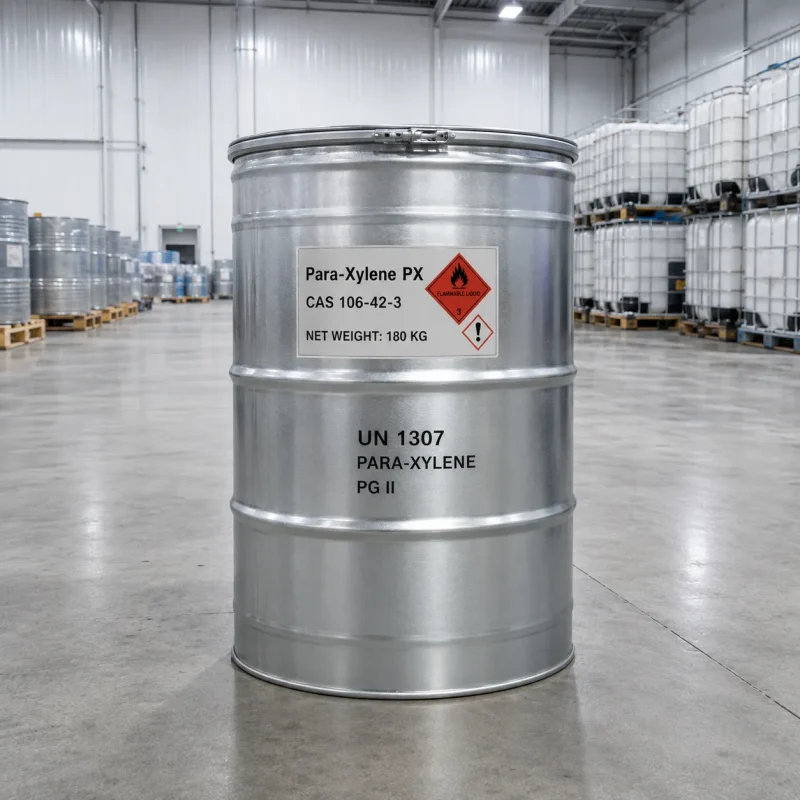
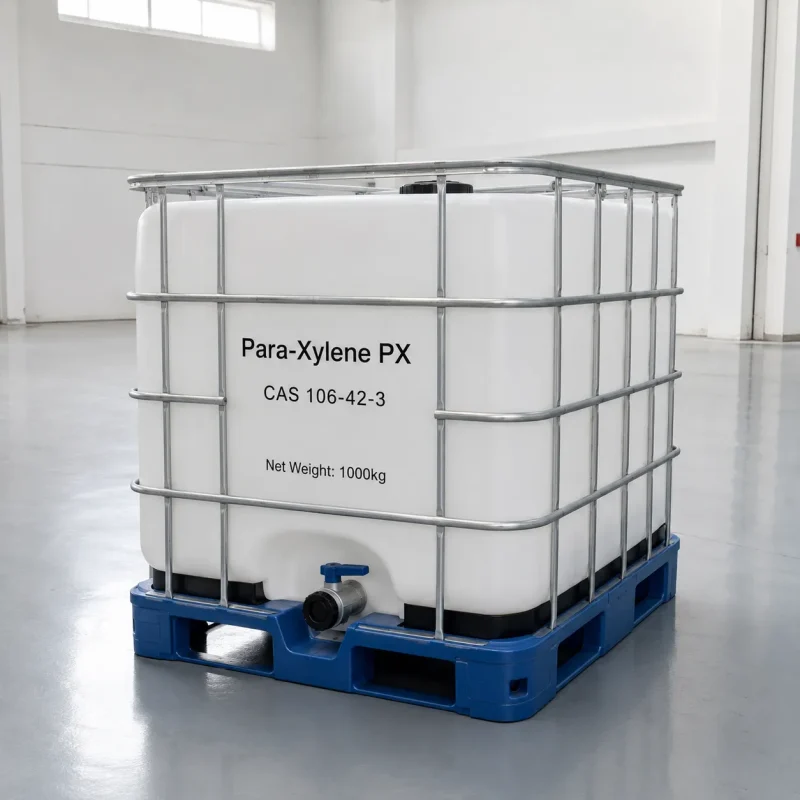
- Packaging: 160 kg (353 lb) steel drum, ISO Tank. Custom packaging available upon request.
- Main Applications: PTA/PET synthesis, alkyd paint solvents, chemical intermediates, printing inks
Introduction to Para-Xylene
Para-Xylene (PX) is an aromatic hydrocarbon consisting of a benzene ring substituted with two methyl groups at the para (1,4) positions. The molecular symmetry and specific substitution pattern determine the physical state as a colorless, flammable liquid with a characteristic sweet odor at room temperature. The compound remains insoluble in water but mixes completely with ethanol, diethyl ether, and other organic solvents. Industrial petrochemical facilities consume this isomer mainly as a foundational feedstock for oxidation reactions and as a specialized solvent in coating formulations.
Key Features of PX
- Para-substitution pattern: The 1,4-methyl arrangement enables linear polymer chain formation upon oxidation and subsequent polycondensation.
- High thermal stability: Maintains structural integrity during high-temperature catalytic oxidation processes.
- Excellent solvency power: Dissolves a wide range of non-polar resins, alkyds, and synthetic rubbers.
PX Chemical & Physical Properties
| Property | Value |
|---|---|
| Molecular Formula | C8H10 |
| Molecular Weight | 106.17 g/mol (106.17 lb/lbmol) |
| Appearance | Colorless transparent liquid |
| Boiling Point | 138.4 °C (281.1 °F) |
| Melting Point | 13.2 °C (55.8 °F) |
| Density | 0.86 g/cm³ (7.18 lb/gal) at 20 °C |
| Flash Point | 27 °C (81 °F) closed cup |
Applications of Para-Xylene
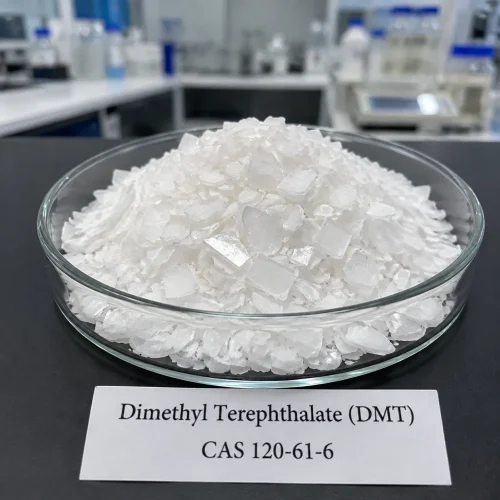
PTA and PET synthesis: Undergoes catalytic oxidation to produce purified terephthalic acid (PTA). The PTA is subsequently polycondensed to manufacture PET resins for beverage bottles and textile fibers. Alternatively, the material is oxidized and esterified to produce Dimethyl Terephthalate (DMT), serving as an intermediate for specialty polyesters.
Solvent for coatings and inks: Blended into alkyd and epoxy paint formulations to regulate evaporation rates. Formulators often mix the aromatic liquid with faster-evaporating solvents like Ethyl Acetate to create precise solvent release profiles for industrial finishes.
Chemical intermediates: Serves as a precursor for synthesizing various fine chemicals, including plasticizers and specialized aromatic compounds.
Storage & Safety Precautions for PX
- Flammability: Store in tightly sealed, grounded steel tanks or HDPE drums in a cool, well-ventilated warehouse below 30 °C (86 °F). PX is a highly flammable liquid (Flash point 27 °C). Keep away from heat, sparks, and open flames.
- Isomer separation: Prevent contamination with ortho- or meta-xylene isomers, as impurities disrupt the crystallization and oxidation processes downstream.
- Field note: When transferring PX in cold weather, monitor the ambient temperature. The liquid solidifies below 13.2 °C (55.8 °F). Trace heating or insulated piping prevents line blockages during winter pumping operations.
PX FAQ
Q: How is Para-Xylene (PX) utilized in polymer manufacturing?
A: Para-Xylene (PX) undergoes catalytic oxidation to produce purified terephthalic acid (PTA). This intermediate is polycondensed with ethylene glycol to manufacture PET resins for beverage bottles and textile fibers, relying on the linear structure provided by the para-substitution.
Q: Why does Para-Xylene (PX) freeze during winter transit?
A: Para-Xylene (PX) has a melting point of 13.2 °C (55.8 °F). Below this temperature, it forms solid crystals. To restore the liquid state, gently warm the storage tanks using low-pressure steam or insulated heating jackets, ensuring uniform melting without localized thermal degradation.
Q: Is Para-Xylene (PX) miscible with water?
A: Para-Xylene (PX) is practically insoluble in water but fully miscible with most organic solvents, alcohols, and ethers. Formulators utilize it as a hydrophobic solvent in alkyd paints and industrial coatings, keeping drums tightly sealed to prevent moisture contamination.
Related products
Manufacturer & Exporter Since 2006
Get Tailored Chemical Raw Material Solutions — Reply Within 1 Hour
Factory-direct pricing, stable high-purity supply and complete compliance documentation for your industrial formulations.
- 1000+Products
- 200+QC Protocols
- 7–15Days Delivery
- Factory-Direct Pricing
- COA / TDS / SDS Included
- Free Samples for Testing
- 40+ Export Countries
Request a Free Quote
Our engineers reply within 1 hour during GMT+8 business hours.
Please include in your inquiry:
- Product name or CAS number
- Required quantity
- Destination country or port
- Preferred packaging