
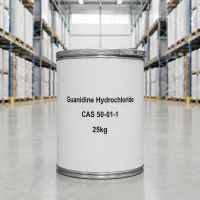
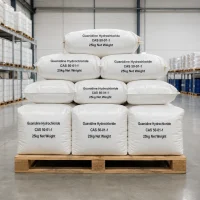
Guanidine Hydrochloride CAS 50-01-1
Guanidine Hydrochloride is a strong chaotropic salt that solves protein denaturation, nucleic acid extraction, and hair disulfide bond cleavage challenges in biotech and cosmetic labs. Researchers and formulators rely on it for DNA/RNA purification, hair relaxers, and pharmaceutical intermediates. UETChem supplies this product with strict heavy metal limits and low moisture content, ensuring complete protein unfolding and zero interference in sensitive molecular assays. Each shipment includes COA, TDS, SDS.
- CAS No: 50-01-1
- Synonyms: Guanidinium chloride; 2-Aminoformamidine hydrochloride
- EINECS: 200-002-3
- Molecular Formula: CH6ClN3
- Molecular Weight: 95.53 g/mol (95.53 lb/lbmol)
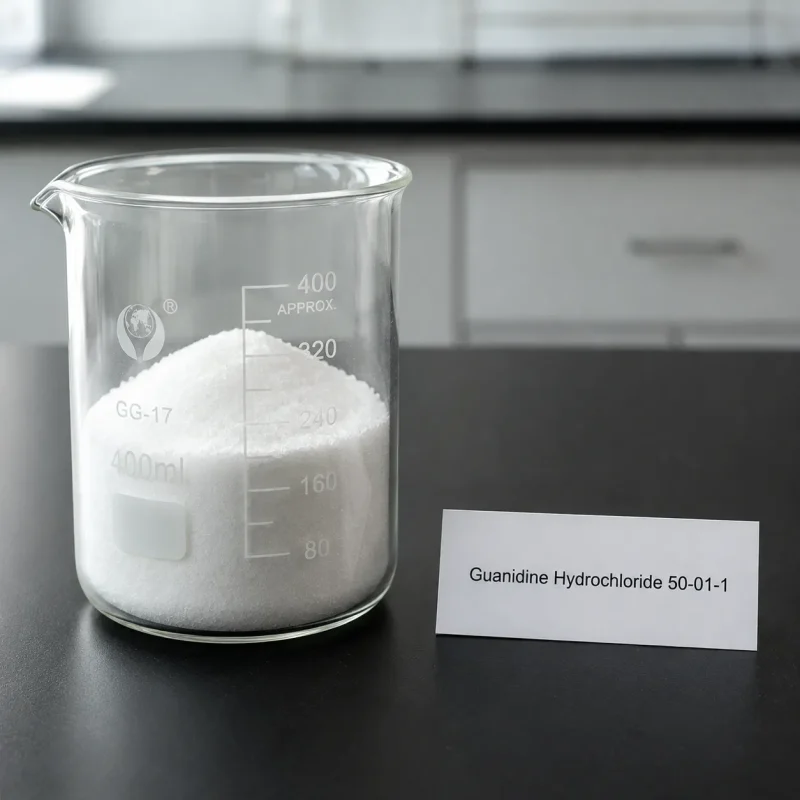
- Appearance: White crystalline powder
- Assay: 99.0% min
- pH (10% aqueous): 5.0 – 7.0
- Heavy Metals: 10 ppm max
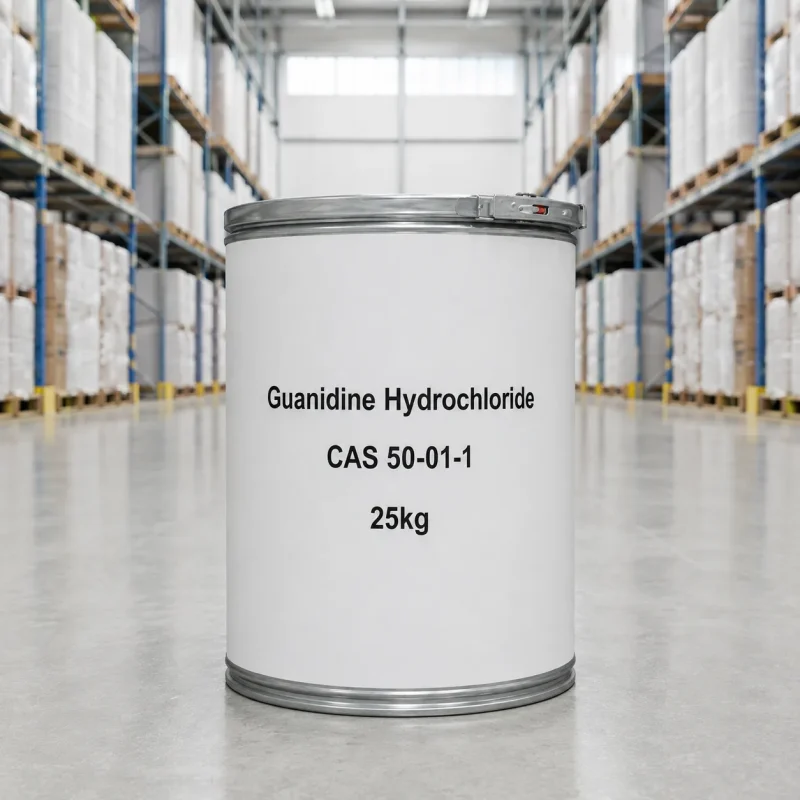
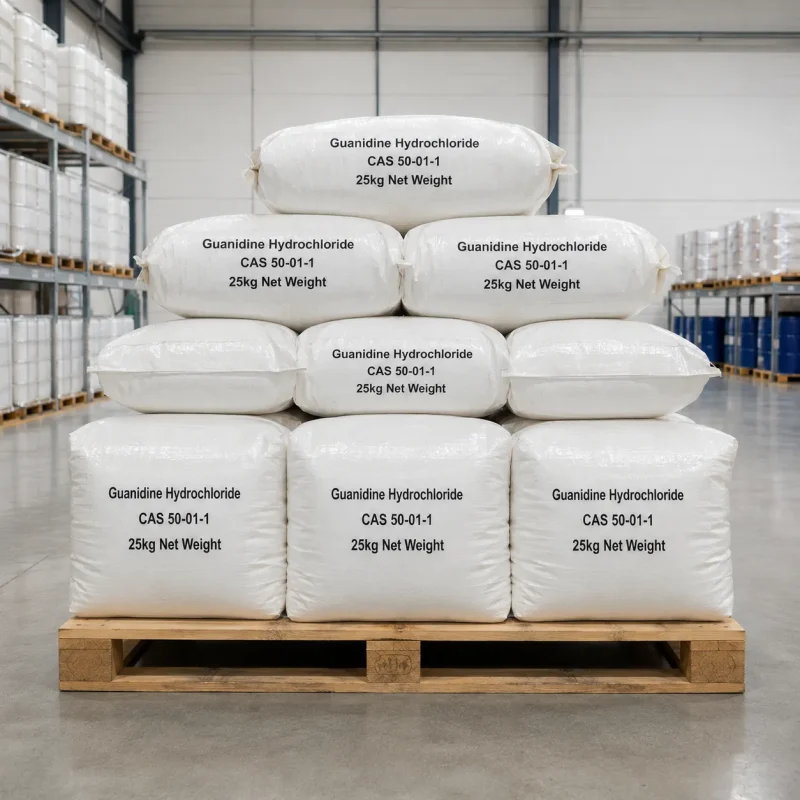
- Packaging: 25 kg (55 lb) drum, 200 kg (441 lb) drum. Custom packaging available upon request.
- Main Applications: DNA/RNA extraction buffers, hair relaxers, protein denaturants, pharmaceutical synthesis
Introduction to Guanidine Hydrochloride
Guanidine Hydrochloride is an organic salt consisting of a guanidinium cation paired with a chloride anion. The molecular structure features a central carbon atom double-bonded to a nitrogen atom and single-bonded to two amine groups. In aqueous environments, the compound dissociates completely, releasing guanidinium ions that interact strongly with peptide backbones and hydrophobic side chains.
Biochemical facilities utilize this material as a potent chaotropic agent to unfold proteins and isolate nucleic acids. The substance exists as a white, crystalline powder that dissolves rapidly in water, absorbing heat in an endothermic process. The solid remains stable in dry, sealed containers but absorbs atmospheric moisture rapidly when exposed to humid air, forming a saturated liquid solution.
Key Features of Guanidine Hydrochloride
- Chaotropic action: Disrupts the hydrogen bonding network of water, weakening hydrophobic interactions and forcing proteins to unfold into random coils.
- High aqueous solubility: Dissolves to form molar concentrations up to 8M, providing the extreme ionic strength required for complete cell lysis.
- Nuclease inhibition: Instantly denatures RNases and DNases upon cell rupture, protecting fragile RNA transcripts from degradation during extraction.
Guanidine Hydrochloride Chemical & Physical Properties
| Property | Value |
|---|---|
| Molecular Formula | CH6ClN3 |
| Molecular Weight | 95.53 g/mol (95.53 lb/lbmol) |
| Melting Point | 181 – 183 °C (358 – 361 °F) |
| Density | 1.35 g/cm³ (11.26 lb/gal) |
| pH (10% solution) | 5.0 – 7.0 |
| Solubility | Freely soluble in water; soluble in ethanol |
| Assay | 99.0% min |
Applications of Guanidine Hydrochloride
Nucleic acid extraction buffers: Dosed at 4-6 M concentrations in lysis buffers for silica-column purification. The chaotropic ions denature cellular proteins and promote the binding of DNA and RNA to the silica membrane. Formulators often adjust the buffer acidity using Citric Acid to optimize the binding affinity of the nucleic acids.
Hair relaxers and straighteners: Reacts with calcium hydroxide in no-lye relaxer creams to generate guanidine carbonate. This active alkaline species breaks the disulfide bonds in hair keratin, relaxing the curl pattern. Cosmetic chemists frequently blend the neutralized cream with Sodium Hyaluronate to restore moisture and prevent cuticle damage during the straightening process.
Pharmaceutical intermediates: Serves as a precursor for synthesizing sulfa drugs, folic acid antagonists, and specialized amino acid derivatives in organic synthesis pathways.
Storage & Safety Precautions for Guanidine Hydrochloride
- Moisture and caking control: Store drums tightly sealed in a dry warehouse below 25 °C (77 °F). The powder is extremely hygroscopic and will liquefy if exposed to ambient humidity. Facilities run Calcium Chloride Anhydrous in warehouse dehumidifiers to maintain low ambient moisture and prevent the powder from caking into solid blocks.
- Handling and PPE: The concentrated solutions are corrosive to skin and eyes. Wear chemical splash goggles, nitrile gloves, and a lab coat when preparing 6M stock solutions. Wash skin contact areas immediately with copious amounts of water.
- Field note: When dissolving the powder to make a 6M buffer, add the solid to the water slowly while stirring. The dissolution is endothermic and will cause the beaker to become very cold, which can slow down the dissolving process if the water volume is too small.
Guanidine Hydrochloride FAQ
Q: Why is Guanidine Hydrochloride used in DNA extraction?
A: Guanidine Hydrochloride acts as a strong chaotropic agent that disrupts hydrogen bonding and hydrophobic interactions in proteins. This denatures nucleases and releases DNA/RNA from cell lysates, allowing the nucleic acids to bind efficiently to silica columns during purification.
Q: How does Guanidine Hydrochloride work in hair relaxers?
A: In alkaline conditions, Guanidine Hydrochloride generates guanidine carbonate, which breaks the disulfide bonds in keratin. This relaxes the curl pattern of the hair without the severe scalp irritation caused by traditional sodium hydroxide lye relaxers, providing a smoother finish.
Q: Does Guanidine Hydrochloride absorb moisture from the air?
A: Yes, Guanidine Hydrochloride is highly hygroscopic. Exposure to humid air causes the powder to clump and form a liquid solution. Store it in tightly sealed drums below 25 °C. Facilities often use desiccants in the warehouse to maintain low humidity and prevent caking.
Related products
Manufacturer & Exporter Since 2006
Get Tailored Chemical Raw Material Solutions — Reply Within 1 Hour
Factory-direct pricing, stable high-purity supply and complete compliance documentation for your industrial formulations.
- 1000+Products
- 200+QC Protocols
- 7–15Days Delivery
- Factory-Direct Pricing
- COA / TDS / SDS Included
- Free Samples for Testing
- 40+ Export Countries
Request a Free Quote
Our engineers reply within 1 hour during GMT+8 business hours.
Please include in your inquiry:
- Product name or CAS number
- Required quantity
- Destination country or port
- Preferred packaging