
1,4-Cyclohexanedimethanol (CHDM) CAS 105-08-8
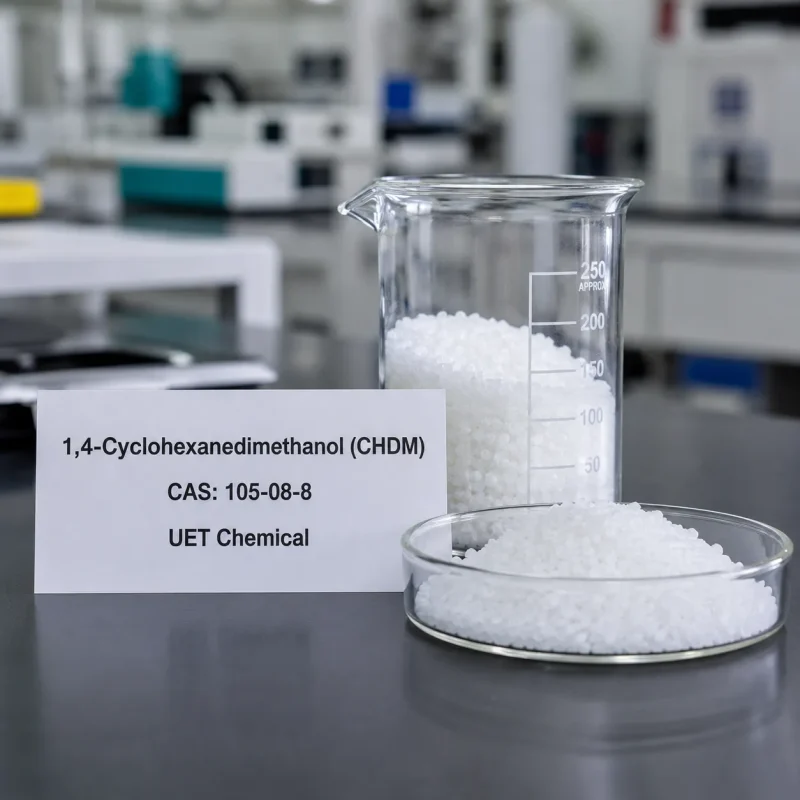
1,4-Cyclohexanedimethanol (CHDM) is a cycloaliphatic diol that solves brittleness, poor weatherability, and low transparency challenges in high-performance polymers. Resin and coating manufacturers rely on it for PETG copolyesters, aliphatic polyurethanes, and powder coatings. UETChem supplies this product with strict cis/trans isomer ratio control and low moisture content, ensuring consistent melting points and rapid reaction kinetics. Each shipment includes COA, TDS, SDS.
- CAS No: 105-08-8
- Synonyms: CHDM; 1,4-Bis(hydroxymethyl)cyclohexane; Cyclohexanedimethanol
- EINECS: 203-267-3
- Molecular Formula: C8H16O2
- Molecular Weight: 144.21 g/mol (144.21 lb/lbmol)
- Appearance: White waxy solid or clear liquid (when heated)
- Purity: 99.0% min (GC)
- Melting Point: 60 – 65 °C (140 – 149 °F)
- Water Content: 0.1% max
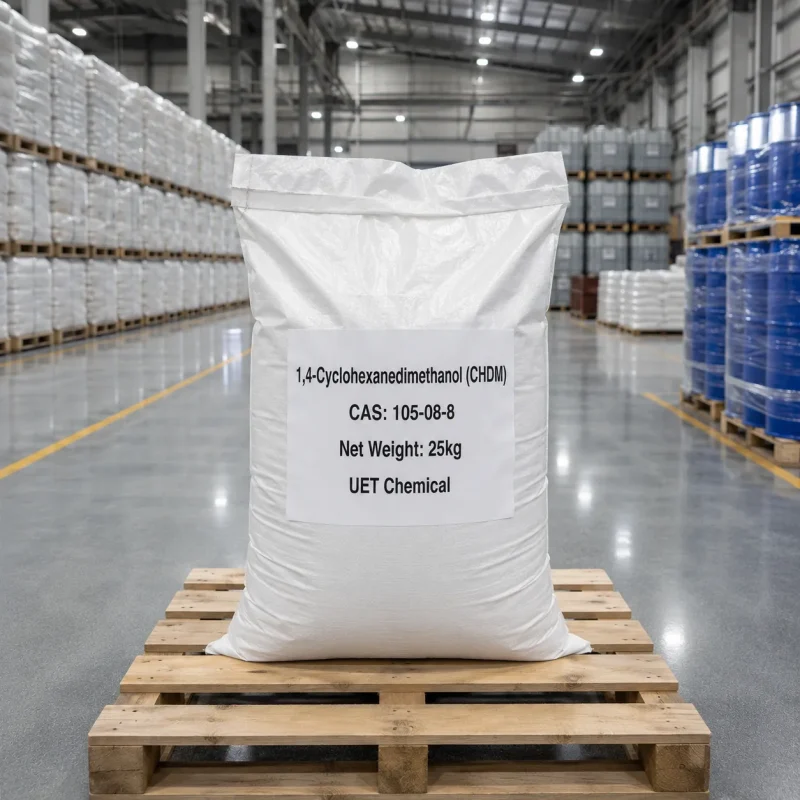
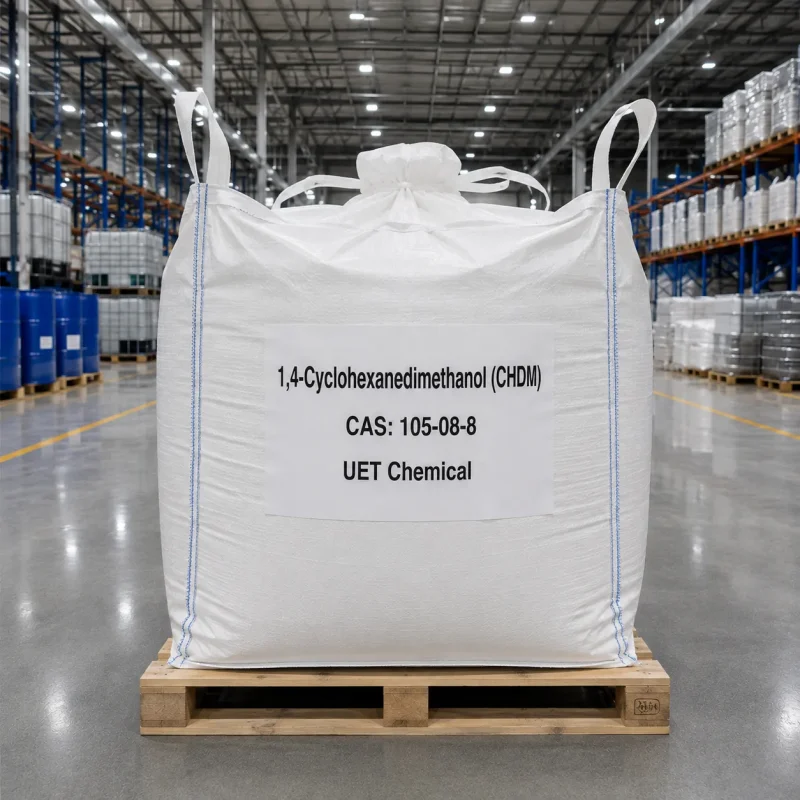
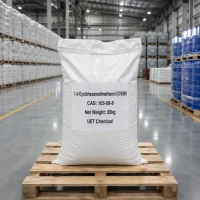
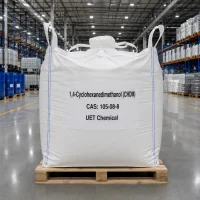
- Packaging: 200 kg (441 lb) HDPE drum, 1000 kg (2205 lb) IBC (heated). Custom packaging available upon request.
- Main Applications: PETG/PCT resins, polyurethane elastomers, powder coatings, specialty lubricants
Introduction to 1,4-Cyclohexanedimethanol
1,4-Cyclohexanedimethanol (CHDM) is a cycloaliphatic diol containing two primary hydroxyl groups attached to a cyclohexane ring. The commercial material exists as a mixture of cis and trans isomers, typically presenting as a white, waxy solid at room temperature. The hydroxyl groups participate in condensation and addition reactions, forming ester or urethane linkages. In polymer synthesis, the cyclohexane ring introduces structural rigidity and steric bulk into the macromolecular chain. The compound is highly soluble in water and polar organic solvents, and it melts at approximately 65 °C (149 °F).
Key Features of CHDM
- Cycloaliphatic structure: The saturated six-membered ring provides UV stability and prevents the yellowing associated with aromatic monomers.
- Primary hydroxyl groups: Deliver fast reaction rates with carboxylic acids and isocyanates during polycondensation and polyaddition processes.
- Isomer tunability: The ratio of cis to trans isomers dictates the crystallization behavior and melting point of the final polymer matrix.
- High water solubility: Facilitates easy cleanup of processing equipment and allows for the synthesis of water-dispersible polyester resins.
CHDM Chemical & Physical Properties
| Property | Value |
|---|---|
| Molecular Formula | C8H16O2 |
| Molecular Weight | 144.21 g/mol (144.21 lb/lbmol) |
| Melting Point | 60 – 65 °C (140 – 149 °F) |
| Boiling Point | 285 °C (545 °F) |
| Density | 1.04 g/cm³ (8.68 lb/gal) at 70 °C (melted) |
| Hydroxyl Value | 760 – 780 mg KOH/g |
| Water Content | 0.1% max |
Applications of CHDM
Copolyester resins (PETG/PCT): Copolymerizes with terephthalic acid and ethylene glycol to produce amorphous PETG. The bulky cyclohexane ring disrupts polymer chain packing, preventing crystallization and yielding transparent, impact-resistant sheets for packaging and 3D printing. Formulators often cross-reference 1,6-Hexanediol to further adjust the flexibility and glass transition temperature of the polyester backbone.
Aliphatic polyurethane coatings: Reacts with light-stable diisocyanates to manufacture weather-resistant clear coats for automotive and aerospace applications. Blending CHDM with Isophorone Diisocyanate (IPDI) creates a highly crosslinked network that resists UV degradation and chemical etching.
Powder coatings and adhesives: Incorporated into hydroxyl-functional polyester resins to improve flow, leveling, and mechanical toughness in architectural powder coatings.
Storage & Safety Precautions for CHDM
- Temperature management: Store drums in a heated warehouse between 20 °C and 35 °C (68 °F – 95 °F). CHDM solidifies below 60 °C. Thaw frozen drums using warm air circulation or low-temperature band heaters. Never use direct steam, which causes localized overheating and thermal degradation.
- Moisture control: Keep containers tightly sealed and blanketed with nitrogen. Moisture absorption triggers hydrolysis during high-temperature polycondensation, dropping the molecular weight of the final resin. Facilities often run Calcium Chloride Anhydrous in warehouse dehumidifiers to maintain dry ambient conditions.
- Handling and PPE: The melted liquid can cause thermal burns. Wear heat-resistant gloves and splash goggles when transferring molten CHDM from heated IBCs.
- Field note: When charging CHDM into a reactor, ensure the entire drum is uniformly melted. Pumping from a partially thawed drum draws waxy slush into the transfer lines, clogging filters and stalling the batch.
CHDM FAQ
Q: How does CHDM improve the clarity of polyester resins?
A: CHDM introduces a bulky cyclohexane ring into the polymer backbone, disrupting chain packing and preventing crystallization. This maintains an amorphous structure, allowing PETG and PCT copolyesters to achieve high optical transparency and glass-like clarity for packaging applications.
Q: What is the ideal storage temperature for 1,4-Cyclohexanedimethanol?
A: Store CHDM in a dry, heated warehouse between 20 °C and 35 °C. It is a waxy solid at room temperature and melts around 65 °C. Keep drums tightly sealed and use nitrogen blanketing to prevent moisture absorption, which can cause hydrolysis during high-temperature polycondensation reactions.
Q: Can CHDM be used in polyurethane coatings?
A: Yes, CHDM reacts with aliphatic diisocyanates like IPDI to produce light-stable, weather-resistant polyurethane coatings. The rigid cyclohexane ring provides excellent hardness and chemical resistance, while the primary hydroxyl groups ensure fast curing and strong adhesion to metal substrates.
Related products
Manufacturer & Exporter Since 2006
Get Tailored Chemical Raw Material Solutions — Reply Within 1 Hour
Factory-direct pricing, stable high-purity supply and complete compliance documentation for your industrial formulations.
- 1000+Products
- 200+QC Protocols
- 7–15Days Delivery
- Factory-Direct Pricing
- COA / TDS / SDS Included
- Free Samples for Testing
- 40+ Export Countries
Request a Free Quote
Our engineers reply within 1 hour during GMT+8 business hours.
Please include in your inquiry:
- Product name or CAS number
- Required quantity
- Destination country or port
- Preferred packaging