
Sodium Secondary Alkyl Sulfonate (SAS) CAS 97489-15-1
Sodium Secondary Alkyl Sulfonate (SAS) is an anionic surfactant that solves precipitation in high-electrolyte environments, hard water deactivation, and emulsion instability challenges. Industrial formulators rely on it for heavy-duty alkaline cleaners, emulsion polymerization, and agricultural spray adjuvants. UETChem supplies this product with strict control over free alkali, unsulfonated matter, and carbon chain distribution, ensuring outstanding water solubility, controlled foaming, and high interfacial activity. Each shipment includes COA, TDS, SDS.
- CAS No: 97489-15-1
- Synonyms: SAS; Secondary alkane sulfonate; Alkyl sulfonate sodium salt
- EINECS: 306-965-8
- Molecular Formula: C14-C17 alkyl sulfonate sodium salt (mixture)
- Appearance: Pale yellow transparent liquid (60% active) or white powder
- Active Matter: 60.0% min (liquid grade)
- pH (1% aqueous): 7.0 – 9.0
- Unsulfonated Matter: 2.0% max
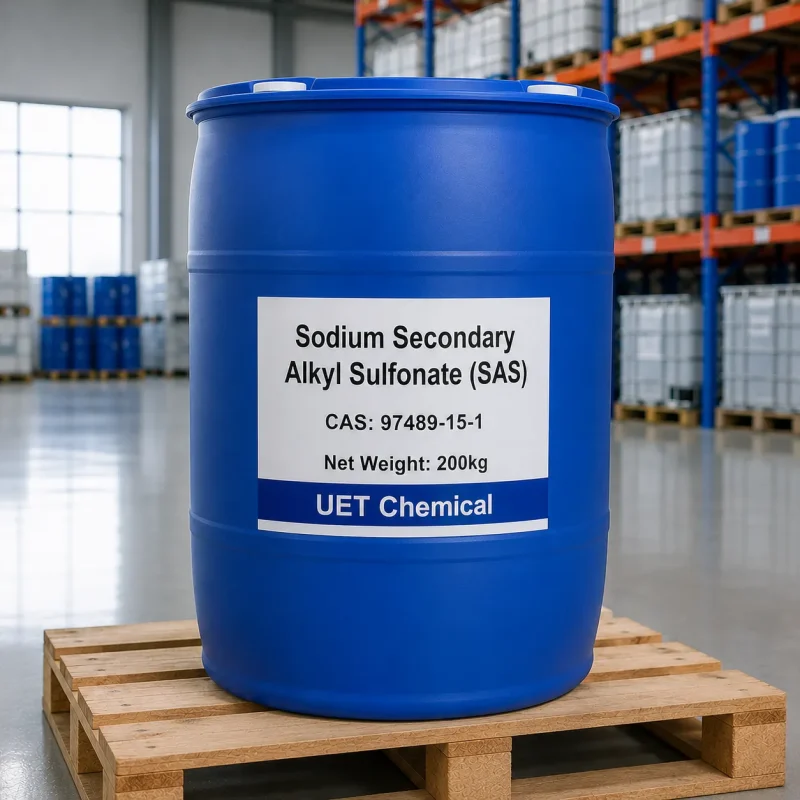
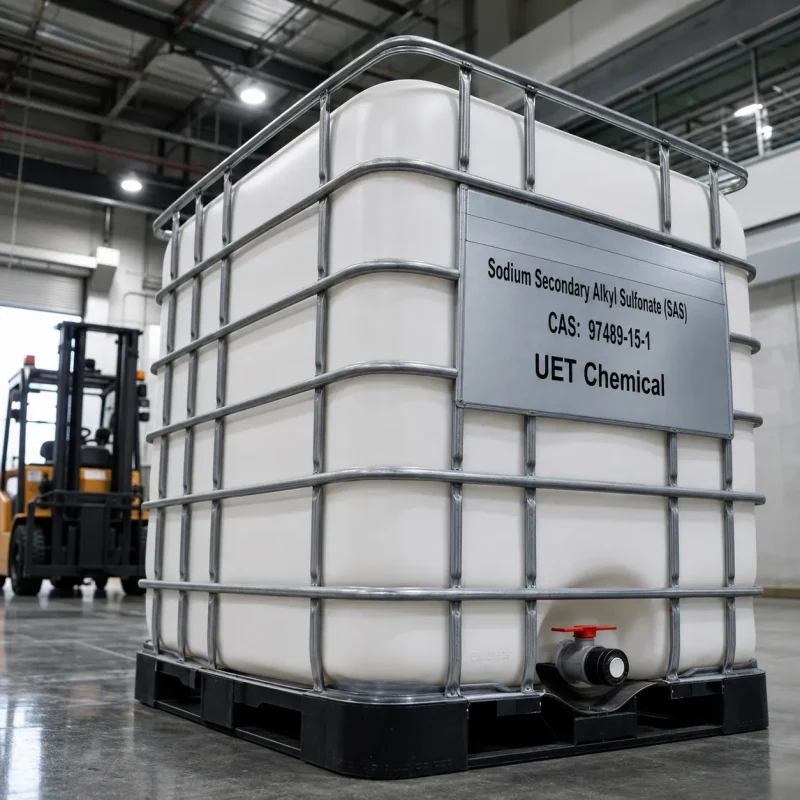
- Packaging: 200 kg (441 lb) HDPE drum, 1000 kg (2205 lb) IBC. Custom packaging available upon request.
- Main Applications: Industrial degreasers, emulsion polymerization, textile scouring, agrochemical wetting agents
Introduction to Sodium Secondary Alkyl Sulfonate
Sodium Secondary Alkyl Sulfonate is an anionic surfactant synthesized via the sulfoxidation or sulfochlorination of linear paraffins. The molecular structure consists of a hydrophobic alkyl chain where the sulfonate head group is attached to a secondary carbon atom rather than the terminal position. This specific architecture yields a material that remains highly soluble in water across a broad temperature range and resists phase separation in concentrated salt solutions.
The compound presents as a pale yellow viscous liquid or a free-flowing powder, depending on the active concentration. It exhibits excellent wetting, emulsifying, and dispersing properties. Chemical facilities utilize this surfactant to lower the surface tension of aqueous systems, allowing liquids to penetrate porous substrates and stabilize oil-in-water emulsions without requiring excessive mechanical shear.
Key Features of SAS
- Secondary sulfonate linkage: The attachment to a secondary carbon provides exceptional resistance to hydrolysis in extreme acidic or alkaline environments.
- Hard water tolerance: The sulfonate head group prevents the formation of insoluble calcium and magnesium salts, maintaining surface activity in untreated water.
- Electrolyte stability: Remains completely soluble and functional in high-salt formulations, preventing gelation or precipitation in concentrated liquid detergents.
SAS Chemical & Physical Properties
| Property | Value |
|---|---|
| Chemical Nature | Anionic (Secondary Alkyl Sulfonate) |
| Appearance | Pale yellow transparent liquid / White powder |
| Active Matter | 60.0% min (liquid) |
| pH (1% aqueous) | 7.0 – 9.0 |
| Unsulfonated Matter | 2.0% max |
| Solubility | Completely soluble in water |
| Free Alkali (as NaOH) | 0.1% max |
Applications of SAS
Industrial alkaline cleaners and degreasers: Dosed at 2-10% in heavy-duty metal cleaning formulations. The surfactant maintains stability in the presence of high concentrations of caustic soda and builders. Formulators frequently blend it with nonionic surfactants like Octylphenol Ethoxylate to synergistically lower the interfacial tension and accelerate the removal of stubborn machining oils.
Emulsion polymerization: Acts as a primary emulsifier in the synthesis of acrylic, vinyl acetate, and styrene-butadiene latexes. The steric bulk of the secondary alkyl chain provides robust colloidal stability to the polymer particles. In specific dispersion systems, it is paired with Dispersing Agent NNO to prevent agglomeration during the high-heat reaction phase.
Agrochemical and textile auxiliaries: Utilized as a wetting agent in pesticide tank mixes to ensure uniform coverage on waxy crop leaves. In textile processing, it assists in the rapid penetration of scouring baths into raw cotton fibers.
Storage & Safety Precautions for SAS
- Temperature management: Store liquid drums in a warehouse between 10 °C and 35 °C (50 °F – 95 °F). The 60% liquid grade may become highly viscous or stratify if exposed to freezing temperatures. Warm the drums gently using band heaters before pumping.
- Moisture control for powder grades: The powdered form is hygroscopic. Facilities run Calcium Chloride Anhydrous in warehouse dehumidifiers to maintain low ambient humidity and prevent the powder from caking into solid blocks.
- Handling and PPE: The concentrated liquid is a severe eye irritant. Wear chemical splash goggles and nitrile gloves during decanting. Clean spills immediately, as the surfactant creates an extreme slip hazard on concrete floors.
SAS FAQ
Q: How does Sodium Secondary Alkyl Sulfonate (SAS) perform in hard water?
A: SAS exhibits exceptional tolerance to hard water and multivalent metal ions. The sulfonate head group resists precipitation with calcium and magnesium, unlike traditional carboxylates. This ensures consistent wetting and emulsification in untreated industrial water supplies.
Q: Why is Sodium Secondary Alkyl Sulfonate used in alkaline cleaners?
A: The secondary alkyl chain and sulfonate bond grant SAS outstanding chemical stability in highly alkaline environments. It does not hydrolyze or degrade when exposed to caustic soda, making it a reliable primary surfactant for heavy-duty industrial metal degreasers.
Q: Does Sodium Secondary Alkyl Sulfonate (SAS) generate excessive foam?
A: SAS produces moderate to low foam compared to primary alkyl sulfates. This controlled foaming profile is highly desirable in industrial cleaning and emulsion polymerization, where excessive suds can cause overflow, reduce pump efficiency, and complicate wastewater treatment.
Related products
Manufacturer & Exporter Since 2006
Get Tailored Chemical Raw Material Solutions — Reply Within 1 Hour
Factory-direct pricing, stable high-purity supply and complete compliance documentation for your industrial formulations.
- 1000+Products
- 200+QC Protocols
- 7–15Days Delivery
- Factory-Direct Pricing
- COA / TDS / SDS Included
- Free Samples for Testing
- 40+ Export Countries
Request a Free Quote
Our engineers reply within 1 hour during GMT+8 business hours.
Please include in your inquiry:
- Product name or CAS number
- Required quantity
- Destination country or port
- Preferred packaging