
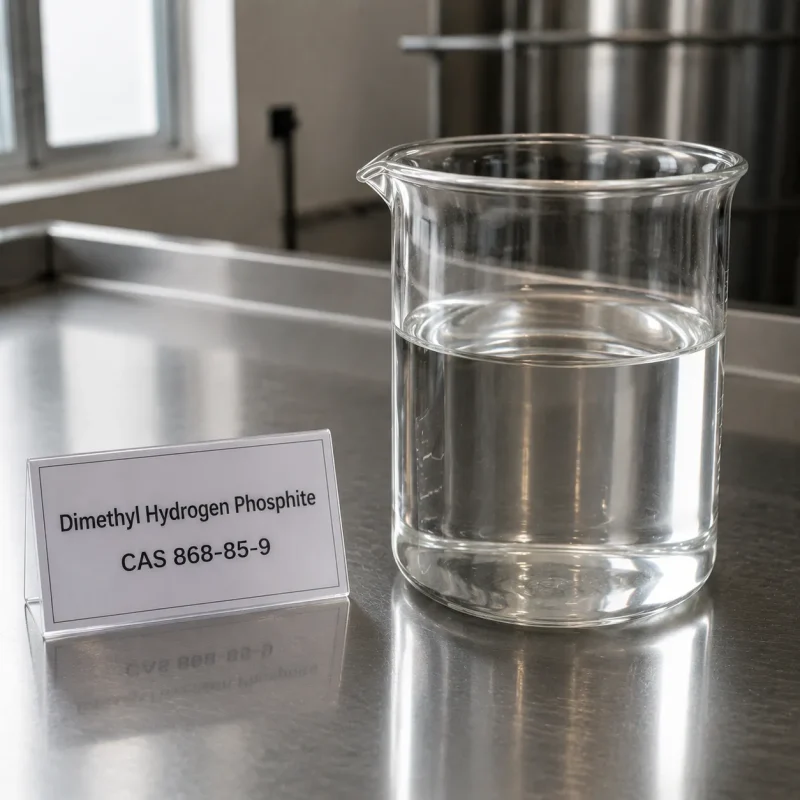
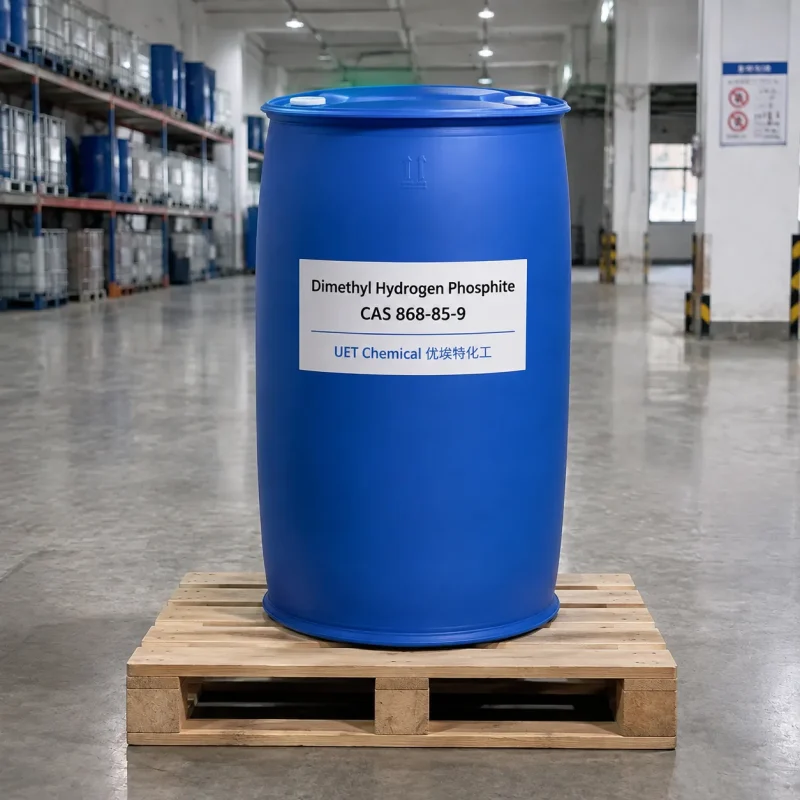
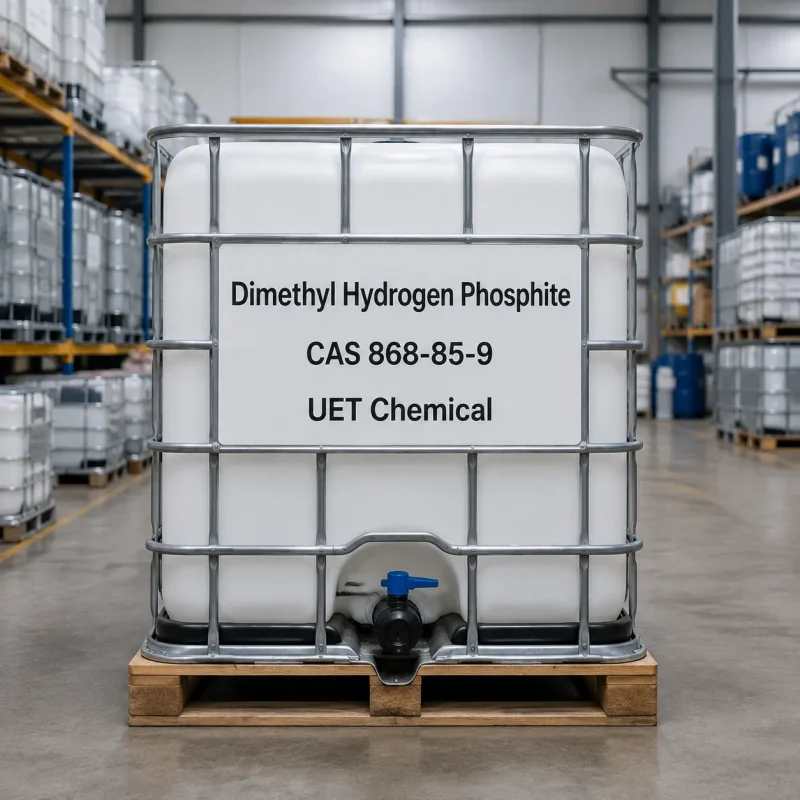
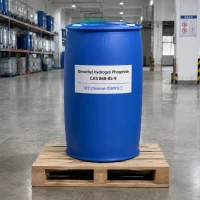
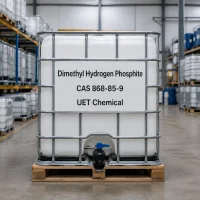
Dimethyl Hydrogen Phosphite CAS 868-85-9
Dimethyl Hydrogen Phosphite (DMHP) is a highly reactive organophosphorus intermediate that solves low condensation yields, toxic reagent exposure, and poor carbon-phosphorus bond formation challenges in agrochemical and specialty polymer manufacturing. Pesticide and flame retardant producers rely on it for glyphosate herbicide synthesis, phosphorus-based flame retardants, and pharmaceutical building blocks. UETChem supplies this product with strict control over moisture, acidity, and active P-H bond content, ensuring exceptional reaction kinetics and maximum batch-to-batch consistency. Each shipment includes COA, TDS, SDS.
- CAS No: 868-85-9
- Synonyms: DMHP; Dimethyl phosphite; Phosphorous acid dimethyl ester
- EINECS: 212-776-7
- Molecular Formula: C2H7O3P
- Molecular Weight: 110.05 g/mol (110.05 lb/lbmol)
- Appearance: Colorless transparent liquid
- Purity: 98.0% min (GC)
- Moisture: 0.05% max
- Acidity: 0.1% max (as H3PO3)
- Packaging: 200 kg (441 lb) HDPE drum, 1000 kg (2205 lb) IBC. Custom packaging available upon request.
- Main Applications: Glyphosate synthesis, flame retardants, pharmaceutical intermediates, organic phosphorus reagents
Introduction to Dimethyl Hydrogen Phosphite
Dimethyl Hydrogen Phosphite is an organophosphorus compound featuring a central trivalent phosphorus atom bonded to two methoxy groups and one active hydrogen atom. The molecular architecture provides a highly polarized P-H bond, making the hydrogen atom exceptionally nucleophilic and susceptible to insertion, addition, and condensation reactions. At room temperature, the material presents as a colorless, transparent liquid with a characteristic faint ester odor.
Industrial chemical plants consume this intermediate to construct stable carbon-phosphorus bonds in complex organic molecules. The compound remains completely miscible with water, alcohols, and most polar organic solvents. It actively participates in fundamental organic transformations such as the Pudovik, Arbuzov, and Kabachnik-Fields reactions, serving as an indispensable building block for agricultural and industrial applications.
Key Features of DMHP
- Active P-H bond: Readily undergoes addition to carbonyl groups and imines, facilitating the rapid construction of alpha-aminophosphonates and hydroxyphosphonates.
- High thermal stability: Maintains structural integrity during elevated temperature distillation and continuous reactor processing without premature decomposition.
- Excellent solvent compatibility: Mixes homogeneously with aqueous and organic reaction media, ensuring uniform mass transfer during multi-phase catalytic processes.
DMHP Chemical & Physical Properties
| Property | Value |
|---|---|
| Molecular Formula | C2H7O3P |
| Molecular Weight | 110.05 g/mol (110.05 lb/lbmol) |
| Appearance | Colorless transparent liquid |
| Boiling Point | 170 °C (338 °F) |
| Density | 1.16 g/cm³ (9.68 lb/gal) at 20 °C |
| Flash Point | 68 °C (154 °F) closed cup |
| Refractive Index | 1.400 – 1.405 at 20 °C |
Applications of Dimethyl Hydrogen Phosphite
Glyphosate herbicide synthesis: Reacts with glycine and formaldehyde in the industrial production of glyphosate. The active P-H bond condenses with the imine intermediate to form the crucial carbon-phosphorus bond. This specific pathway guarantees high atom economy and minimizes the generation of toxic byproducts in large-scale agrochemical manufacturing.
Phosphorus-based flame retardants: Utilized as a core precursor for synthesizing reactive and additive flame retardants. The phosphorus moiety promotes char formation during combustion, effectively shielding polymer matrices from heat and oxygen. Manufacturers incorporate these derivatives into polyurethanes, epoxies, and engineering plastics to meet stringent fire safety regulations.
Pharmaceutical and fine chemical intermediates: Functions as a vital reagent in the Pudovik and Kabachnik-Fields reactions. Chemists condense the liquid with aldehydes and amines to produce alpha-aminophosphonic acids, which serve as bioisosteres of amino acids in the design of novel enzyme inhibitors and antiviral agents.
Storage & Safety Precautions for DMHP
- Moisture and oxidation control: Store in tightly sealed HDPE drums or nitrogen-blanked stainless steel tanks below 30 °C (86 °F). The trivalent phosphorus center is highly susceptible to oxidation. Exposure to air or moisture gradually converts the active P-H species into inactive dimethyl phosphate, ruining the batch reactivity.
- Handling and PPE: The liquid is flammable and acts as a severe skin and eye irritant. Wear chemical splash goggles, heavy-duty nitrile gloves, and an organic vapor respirator during drum decanting and reactor charging.
- Field note: When executing the condensation reaction with formaldehyde, maintain strict temperature control. Excessive exothermic heat accelerates the formation of unwanted phosphonate dimers and degrades the final active pharmaceutical or agrochemical yield.
DMHP FAQ
Q: How does Dimethyl Hydrogen Phosphite (DMHP) function in glyphosate synthesis?
A: Dimethyl Hydrogen Phosphite (DMHP) undergoes a condensation reaction with glycine and formaldehyde in the glyphosate manufacturing process. The highly reactive P-H bond facilitates the formation of the crucial carbon-phosphorus bond, ensuring high yields of the active herbicide ingredient.
Q: Why is the P-H bond in Dimethyl Hydrogen Phosphite (DMHP) highly reactive?
A: The P-H bond in Dimethyl Hydrogen Phosphite (DMHP) is highly polarized due to the electronegativity difference between phosphorus and hydrogen. This polarization allows the hydrogen atom to readily participate in addition, insertion, and condensation reactions with various electrophiles.
Q: What safety measures are required when handling Dimethyl Hydrogen Phosphite (DMHP)?
A: Dimethyl Hydrogen Phosphite (DMHP) is a flammable liquid and a severe skin and eye irritant. Operators must wear chemical-resistant gloves, splash goggles, and organic vapor respirators. Store the chemical in tightly sealed, grounded containers away from oxidizing agents and heat sources.
Related products
Manufacturer & Exporter Since 2006
Get Tailored Chemical Raw Material Solutions — Reply Within 1 Hour
Factory-direct pricing, stable high-purity supply and complete compliance documentation for your industrial formulations.
- 1000+Products
- 200+QC Protocols
- 7–15Days Delivery
- Factory-Direct Pricing
- COA / TDS / SDS Included
- Free Samples for Testing
- 40+ Export Countries
Request a Free Quote
Our engineers reply within 1 hour during GMT+8 business hours.
Please include in your inquiry:
- Product name or CAS number
- Required quantity
- Destination country or port
- Preferred packaging