
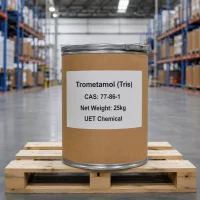
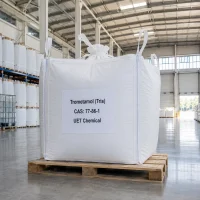
Trometamol (Tris) CAS 77-86-1
Trometamol (Tris) is a primary aliphatic amine that solves pH drift and protein denaturation challenges in biological and pharmaceutical systems. Biotech and cosmetic formulators rely on it for preparing electrophoresis buffers, stabilizing active pharmaceutical ingredients (APIs), and adjusting pH in skincare formulations. UETChem supplies this product with strict heavy metal limits and high assay purity, ensuring reproducible buffer capacity and zero interference in sensitive enzymatic assays. Each shipment includes COA, TDS, SDS.
- CAS No: 77-86-1
- Synonyms: Tris base; TRIS; 2-Amino-2-(hydroxymethyl)-1,3-propanediol; Tromethane
- EINECS: 201-064-4
- Molecular Formula: C4H11NO3
- Molecular Weight: 121.14 g/mol (121.14 lb/lbmol)
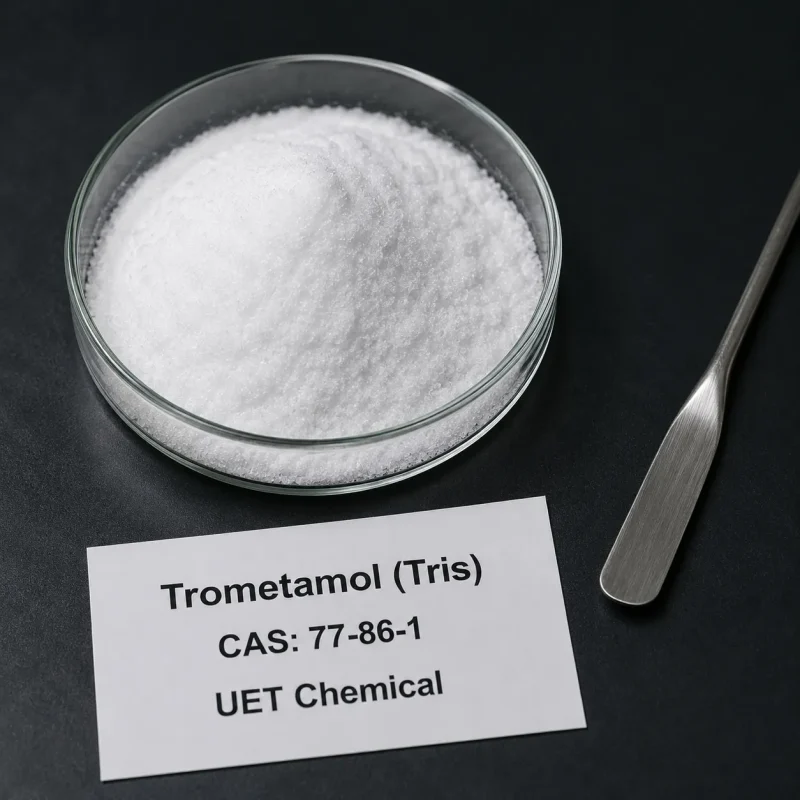
- Appearance: White crystalline powder
- Assay: 99.5% min
- pH (0.1M aqueous): 10.0 – 11.0
- Heavy Metals: 10 ppm max
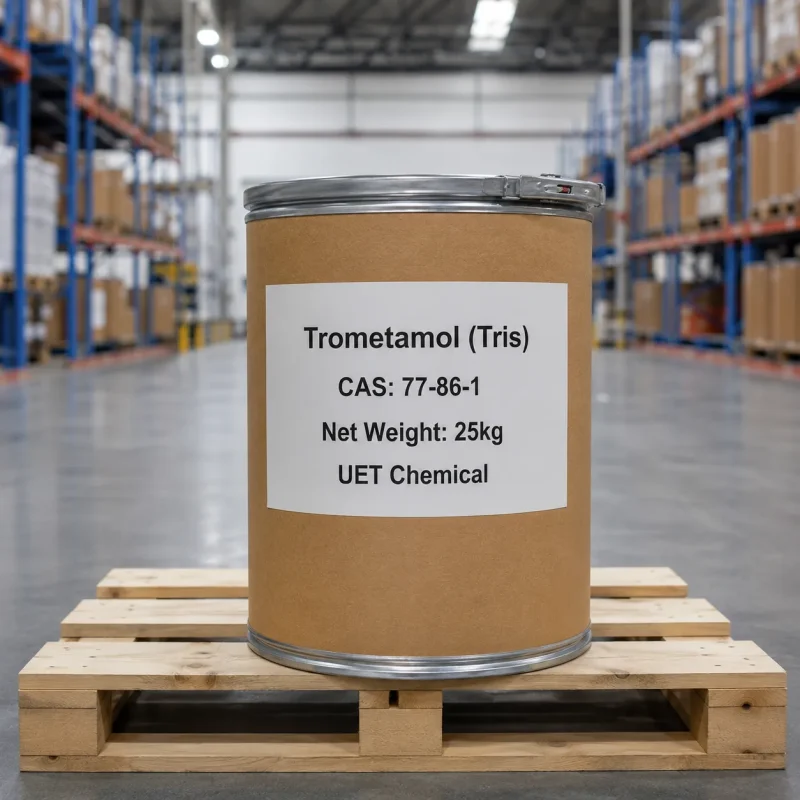
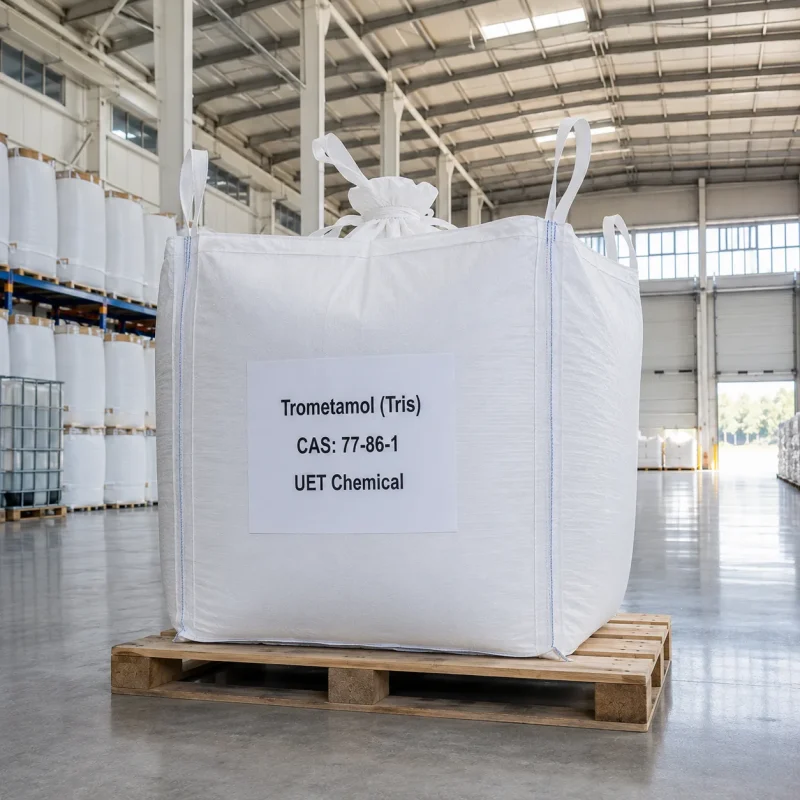
- Packaging: 25 kg (55 lb) drum, 200 kg (441 lb) drum. Custom packaging available upon request.
- Main Applications: Biological buffers, pharmaceutical intermediates, cosmetic pH adjusters, gas scrubbing
Introduction to Trometamol
Trometamol, commonly known as Tris base, is an organic compound with the formula (HOCH2)3CNH2. The molecule features a central carbon atom bonded to three hydroxymethyl groups and one primary amine group. In aqueous solutions, the amine group accepts a proton to form a conjugate acid, establishing a robust buffering system.
The compound exists as a white, crystalline powder with high water solubility. Biochemical laboratories utilize it to prepare standard buffers like Tris-EDTA (TE) and Tris-buffered saline (TBS) for DNA and protein manipulation. The material maintains its structural integrity in dry, sealed environments but absorbs atmospheric carbon dioxide when exposed to humid air, forming carbonate salts that alter the baseline pH.
Key Features of Trometamol
- Primary amine structure: The -NH2 group provides a pKa of 8.06 at 25 °C, making it highly effective for buffering in the slightly alkaline range (pH 7.0 to 9.0).
- High aqueous solubility: Dissolves rapidly in water, releasing heat in an exothermic process that requires temperature compensation during pH adjustment.
- Biological inertness: Does not complex with calcium or magnesium ions, preserving the activity of metal-dependent enzymes in biochemical assays.
Trometamol Chemical & Physical Properties
| Property | Value |
|---|---|
| Molecular Formula | C4H11NO3 |
| Molecular Weight | 121.14 g/mol (121.14 lb/lbmol) |
| Melting Point | 168 – 172 °C (334 – 342 °F) |
| Density | 1.35 g/cm³ (11.26 lb/gal) |
| pH (0.1M solution) | 10.0 – 11.0 |
| Solubility | Freely soluble in water; soluble in ethanol |
| Assay | 99.5% min |
Applications of Trometamol
Biological buffer systems: Dosed to prepare running buffers for gel electrophoresis and protein chromatography. Researchers often combine Tris base with weak acids like Citric Acid to create precise pH gradients for isoelectric focusing and protein separation.
Pharmaceutical and cosmetic pH adjustment: Neutralizes acidic active ingredients in topical creams and serums. Formulators incorporate it alongside hydrating agents like Sodium Hyaluronate and skin-soothing actives like Dexpanthenol to maintain a skin-compatible pH while stabilizing the emulsion matrix.
Industrial gas scrubbing: Absorbs acidic gases like hydrogen sulfide and carbon dioxide in natural gas processing and refinery operations, forming stable salts that can be regenerated.
Storage & Safety Precautions for Trometamol
- Moisture and CO2 control: Store drums tightly sealed in a dry warehouse. Trometamol powder absorbs moisture and atmospheric CO2, which lowers the pH of reconstituted solutions. Facilities run Calcium Chloride Anhydrous in warehouse dehumidifiers to maintain low ambient humidity and protect bulk powder inventory.
- Handling and PPE: The powder is alkaline and can cause severe eye irritation. Wear splash goggles and nitrile gloves when weighing and dissolving the material. Wash skin contact areas immediately with water.
- Field note: When preparing a 1M Tris stock solution, dissolve the powder in 80% of the final water volume, adjust the pH with hydrochloric acid, and then top up to the final volume. The pKa shifts significantly with temperature, so always adjust the pH at the exact temperature the buffer will be used.
Trometamol FAQ
Q: Why does my Trometamol buffer pH change when the temperature drops?
A: The pKa of Trometamol shifts by approximately -0.03 units per degree Celsius. A Tris buffer adjusted to pH 8.0 at 25 °C will rise to pH 8.6 at 5 °C. Always adjust the pH of your Trometamol solution at the exact temperature it will be used in the laboratory.
Q: How does Trometamol (Tris) interact with metal ions in assays?
A: Trometamol lacks chelating groups, meaning it does not bind to calcium, magnesium, or zinc ions. This makes Tris an ideal buffer for enzymatic assays that require free metal cofactors. For assays requiring metal chelation, formulators must add EDTA to the Trometamol buffer system.
Q: Can Trometamol be used in cosmetic formulations?
A: Yes, Trometamol acts as an alkaline pH adjuster and neutralizer in skincare products. It stabilizes acidic active ingredients and thickens carbomer-based gels. Cosmetic chemists frequently blend it with hydrating molecules to maintain a skin-friendly pH without causing irritation.
Related products
Manufacturer & Exporter Since 2006
Get Tailored Chemical Raw Material Solutions — Reply Within 1 Hour
Factory-direct pricing, stable high-purity supply and complete compliance documentation for your industrial formulations.
- 1000+Products
- 200+QC Protocols
- 7–15Days Delivery
- Factory-Direct Pricing
- COA / TDS / SDS Included
- Free Samples for Testing
- 40+ Export Countries
Request a Free Quote
Our engineers reply within 1 hour during GMT+8 business hours.
Please include in your inquiry:
- Product name or CAS number
- Required quantity
- Destination country or port
- Preferred packaging