
Nitrilotriacetic Acid (NTA) CAS 139-13-9
Nitrilotriacetic Acid (NTA) is a tetradentate chelating agent that solves hard water interference, metal-catalyzed degradation, and scale deposition challenges in industrial formulations. Detergent and water treatment manufacturers rely on it for heavy-duty laundry powders, boiler scale inhibitors, and electroplating baths. UETChem supplies this product with strict control over heavy metals, moisture, and purity, ensuring exceptional chelating capacity and long-term formulation stability. Each shipment includes COA, TDS, SDS.
- CAS No: 139-13-9
- Synonyms: NTA; 2,2′,2”-Nitrilotriacetic acid; Triglycolamic acid
- EINECS: 205-353-6
- Molecular Formula: C6H9NO6
- Molecular Weight: 191.14 g/mol
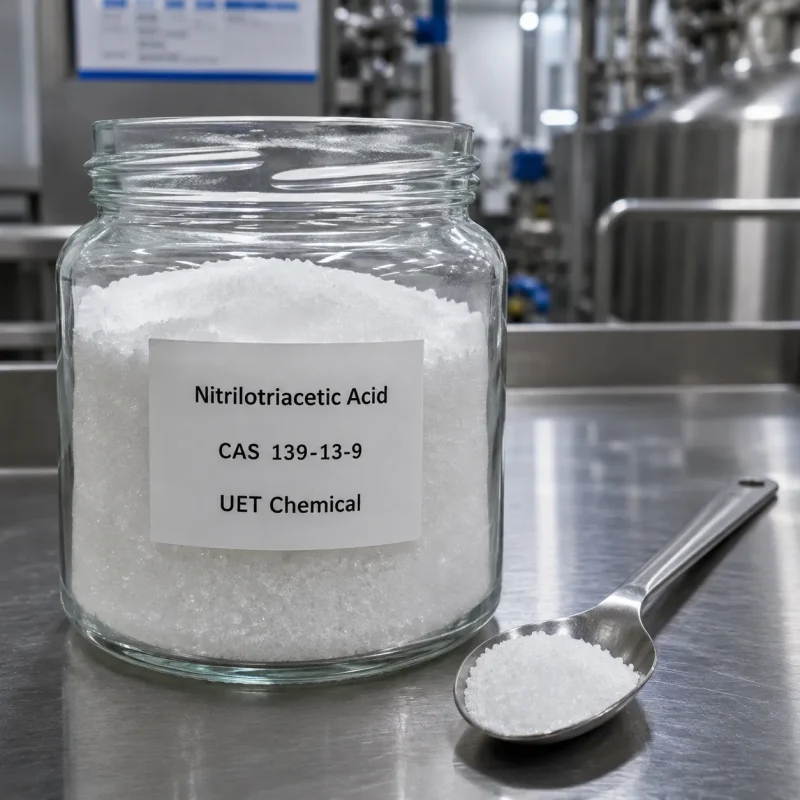
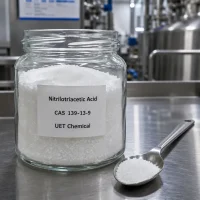
- Appearance: White crystalline powder
- Purity: 99.0% min
- Chelating Value: ≥ 240 mg CaCO3/g
- Moisture: 0.5% max
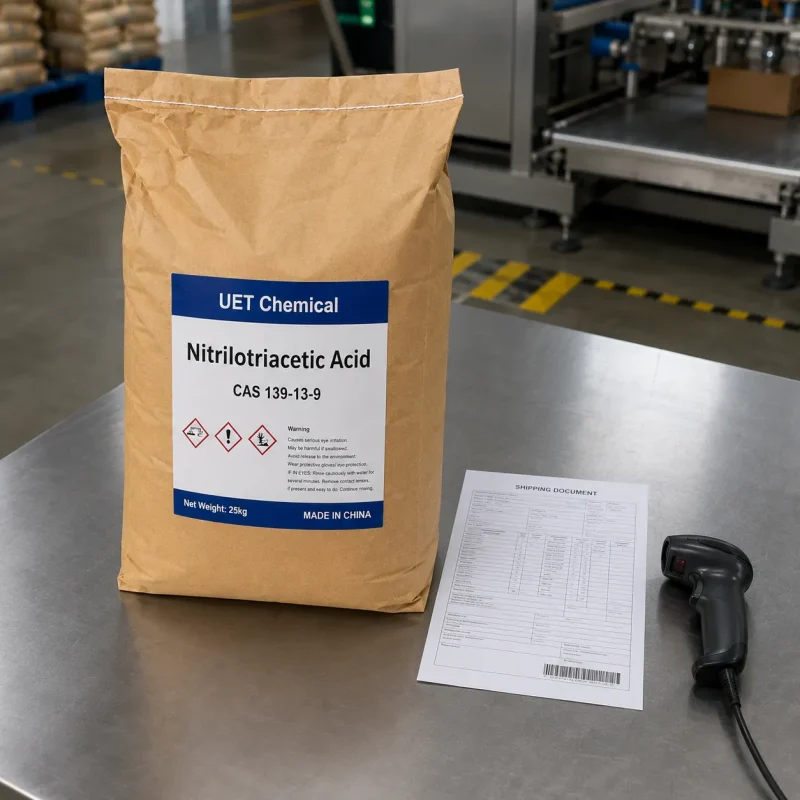
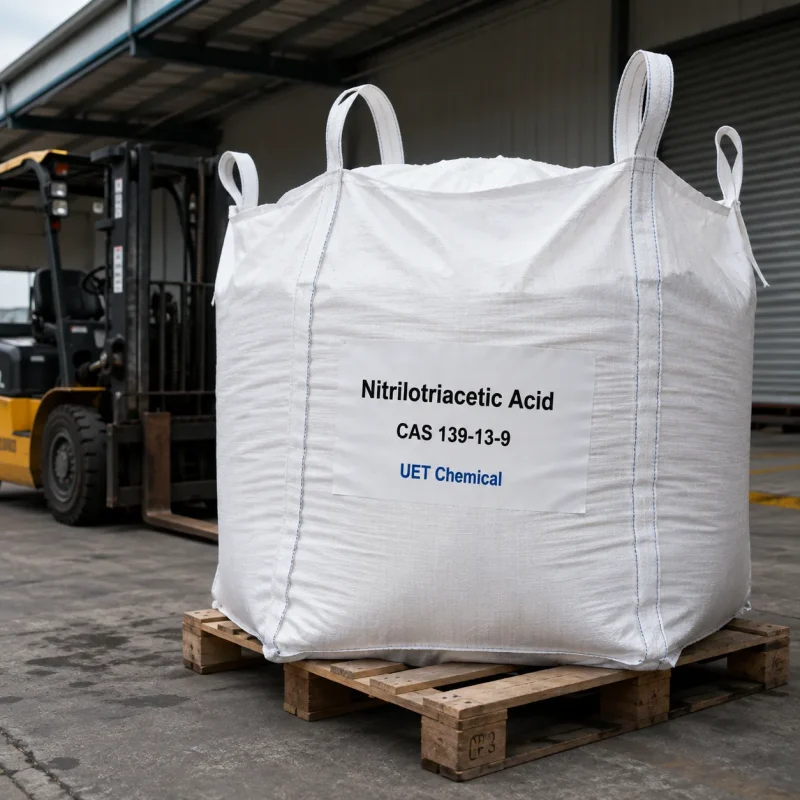
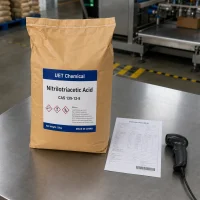
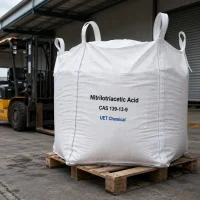
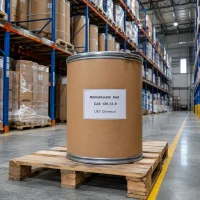
- Packaging: 25 kg (55 lb) kraft bag, 1000 kg (2205 lb) jumbo bag. Custom packaging available upon request.
- Main Applications: Detergent builders, water treatment scale inhibitors, electroplating complexants, pulp & paper bleaching stabilizers
Introduction to Nitrilotriacetic Acid
Nitrilotriacetic Acid is an aminopolycarboxylic acid consisting of a central tertiary nitrogen atom bonded to three acetic acid groups. The molecular architecture provides four coordination sites (one nitrogen and three carboxylate oxygens), allowing the molecule to wrap around transition metal ions and form highly stable, water-soluble chelate rings. At room temperature, the compound presents as a white, odorless crystalline powder that is sparingly soluble in cold water but dissolves readily in alkaline solutions and hot water.
Industrial processing facilities consume this intermediate to sequester hardness ions, prevent unwanted metal-catalyzed oxidation, and control scale formation in high-temperature systems. The powder maintains excellent chemical stability under standard storage conditions but actively participates in complexation reactions when exposed to multivalent cations in aqueous environments.
Key Features of NTA
- Tetradentate coordination: The central nitrogen and three carboxyl groups form robust, multi-point bonds with calcium, magnesium, and heavy metal ions.
- High alkaline stability: Maintains its chelating efficiency in high-pH environments, making it highly functional in heavy-duty alkaline cleaners.
- Rapid biodegradability: Breaks down efficiently in wastewater treatment plants, minimizing long-term environmental accumulation compared to traditional phosphates.
NTA Chemical & Physical Properties
| Property | Value |
|---|---|
| Molecular Formula | C6H9NO6 |
| Molecular Weight | 191.14 g/mol |
| Appearance | White crystalline powder |
| Melting Point | 246 °C (475 °F) with decomposition |
| Solubility | Slightly soluble in cold water; soluble in alkalis |
| pH (1% aqueous) | 2.0 – 3.0 |
| Chelating Value | ≥ 240 mg CaCO3/g |
Applications of NTA
Detergent builders and industrial cleaners: Dosed at 5-15% in heavy-duty laundry powders and liquid dishwashing formulations to sequester calcium and magnesium ions. The chelator prevents soil redeposition and boosts the efficacy of primary surfactants. Formulators frequently blend it with mild anionic surfactants like Sodium Lauroyl Sarcosinate to create high-performance, phosphate-free cleaning systems that remain active in extremely hard water.
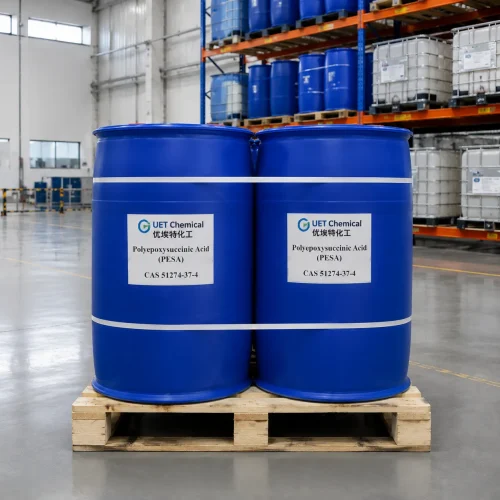
Water treatment and scale inhibition: Utilized in cooling towers and boiler systems to prevent the precipitation of calcium carbonate and calcium sulfate. Plant operators often combine NTA with synthetic threshold inhibitors like Polyepoxysuccinic Acid (PESA) and Sodium Polyacrylate to create comprehensive, multi-mechanism anti-scale programs for high-pressure industrial water circuits.
Electroplating and metal finishing: Acts as a complexing agent in alkaline zinc and copper plating baths. The molecule controls the release rate of metal ions, ensuring a smooth, dense, and adherent metallic coating on the substrate.
Pulp and paper bleaching: Added to hydrogen peroxide bleaching stages to sequester transition metals like iron and manganese. This prevents the catalytic decomposition of the peroxide, protecting the cellulose fibers from oxidative degradation.
Storage & Safety Precautions for NTA
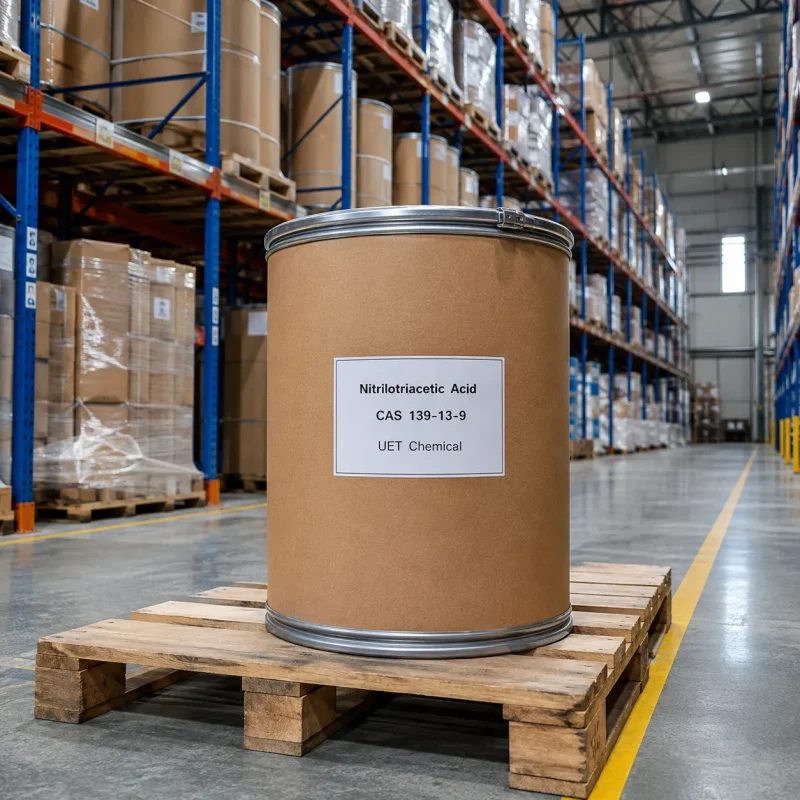
- Moisture control: Store in tightly sealed, moisture-proof kraft bags or fiber drums below 30 °C (86 °F). The powder is moderately hygroscopic; moisture ingress causes caking and reduces its flowability during automated batching operations.
- Handling and PPE: The fine dust is a mild respiratory and eye irritant. Wear N95 respirators, safety goggles, and nitrile gloves during dry blending and reactor charging.
- Field note: When formulating liquid detergents, pre-dissolve the NTA powder in warm water (50 °C / 122 °F) and neutralize it with sodium hydroxide before adding the surfactants. Adding the raw acid directly to a concentrated alkaline surfactant blend can cause localized precipitation and incomplete dissolution.
NTA FAQ
Q: How does Nitrilotriacetic Acid (NTA) function in laundry detergents?
A: NTA acts as a powerful builder by sequestering calcium and magnesium ions in hard water. This prevents the hardness ions from interfering with surfactants, allowing the detergent to lift soils efficiently. Formulators use NTA to replace phosphates in eco-friendly, high-performance cleaning products.
Q: Why is Nitrilotriacetic Acid (NTA) used in boiler water treatment?
A: NTA chelates dissolved calcium and magnesium, preventing them from precipitating as hard scale on heat exchange surfaces. When blended with polymers like PESA, it provides a dual-action threshold effect that keeps boiler systems clean, improves thermal efficiency, and reduces energy consumption.
Q: Does Nitrilotriacetic Acid (NTA) degrade in the environment?
A: Yes, NTA exhibits rapid primary and ultimate biodegradation in aerobic wastewater treatment systems. Microorganisms easily break down the aminopolycarboxylic structure, making it a preferred, environmentally responsible alternative to persistent chelators like EDTA in municipal and industrial applications.
Related products
Manufacturer & Exporter Since 2006
Get Tailored Chemical Raw Material Solutions — Reply Within 1 Hour
Factory-direct pricing, stable high-purity supply and complete compliance documentation for your industrial formulations.
- 1000+Products
- 200+QC Protocols
- 7–15Days Delivery
- Factory-Direct Pricing
- COA / TDS / SDS Included
- Free Samples for Testing
- 40+ Export Countries
Request a Free Quote
Our engineers reply within 1 hour during GMT+8 business hours.
Please include in your inquiry:
- Product name or CAS number
- Required quantity
- Destination country or port
- Preferred packaging