
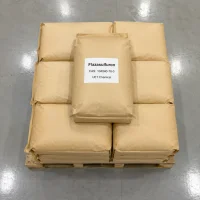
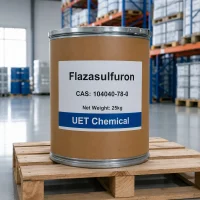
Flazasulfuron CAS 104040-78-0
Flazasulfuron is a sulfonylurea herbicide that solves persistent broadleaf and sedge weed challenges in warm-season turfgrasses and orchards. Turf managers and agricultural formulators rely on it for selective weed control in golf courses, citrus groves, and non-crop areas. UETChem supplies this active ingredient with strict control over impurities and particle size, ensuring high biological activity and stable formulation performance. Each shipment includes COA, TDS, SDS.
- CAS No: 104040-78-0
- Synonyms: Flazasulfuron; 1-(4,6-dimethoxypyrimidin-2-yl)-3-(3-trifluoromethyl-2-pyridyl)sulfonylurea
- EINECS: N/A (Pesticide)
- Molecular Formula: C13H12F3N5O5S
- Molecular Weight: 407.33 g/mol
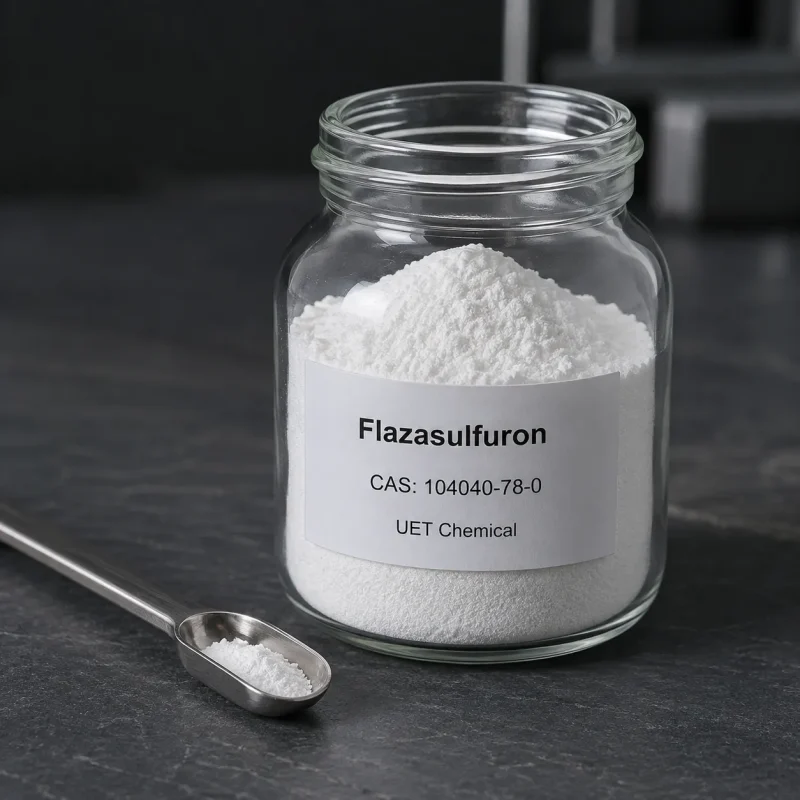
- Appearance: White to pale yellow crystalline powder
- Purity: 95.0% min (HPLC)
- Moisture: 0.5% max
- pH (1% aqueous suspension): 5.0 – 7.0
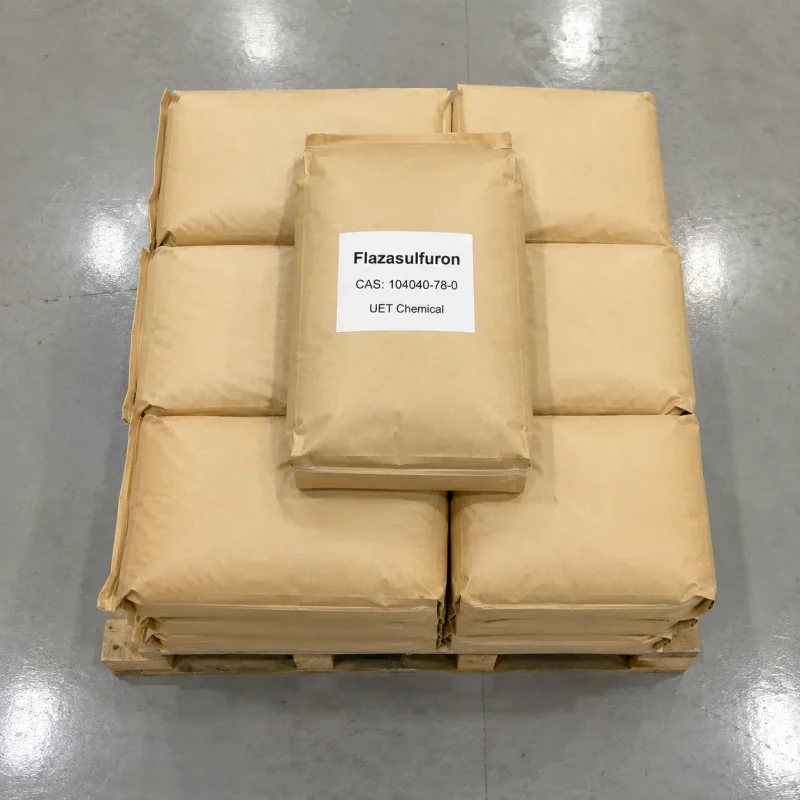
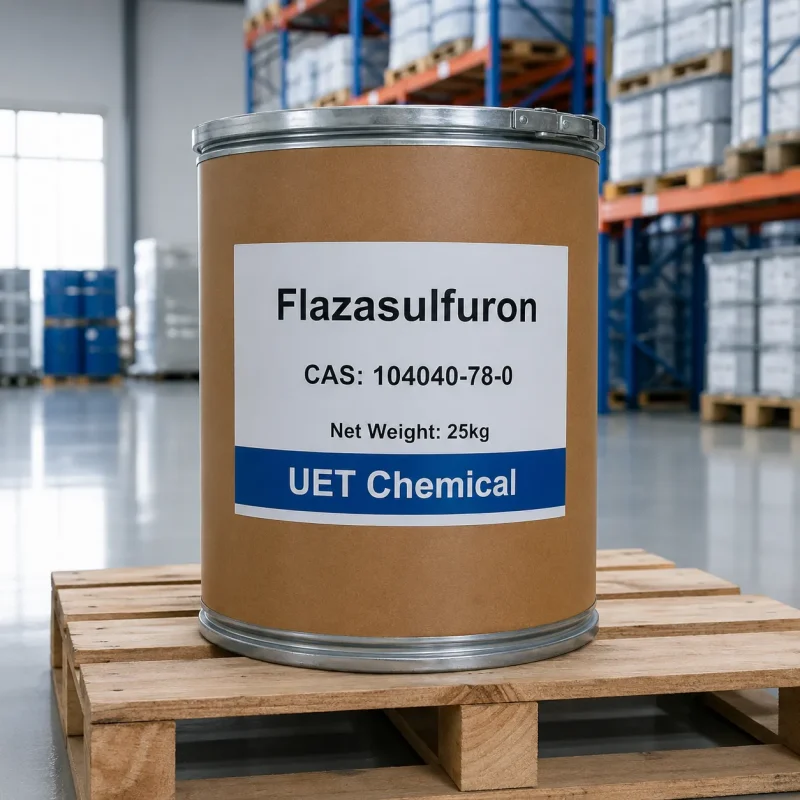
- Packaging: 25 kg (55 lb) fiber drum, 200 kg (441 lb) steel drum. Custom packaging available upon request.
- Main Applications: Warm-season turfgrass herbicides, orchard weed control, non-crop area vegetation management
Introduction to Flazasulfuron
Flazasulfuron belongs to the sulfonylurea class of herbicides. The molecular structure features a pyrimidine ring linked to a sulfonylurea bridge. This specific architecture allows the molecule to bind tightly to the acetolactate synthase (ALS) enzyme in susceptible plants. By blocking the ALS enzyme, the compound halts the biosynthesis of essential branched-chain amino acids like valine, leucine, and isoleucine. The disruption causes rapid growth cessation and eventual plant death.
The material exists as a white to pale yellow crystalline powder. It exhibits low solubility in pure water but dissolves readily in alkaline aqueous solutions and specific polar organic solvents. Agrochemical facilities utilize this technical grade material to manufacture water-dispersible granules (WG) and wettable powders (WP) for targeted weed management.
Key Features of Flazasulfuron
- ALS inhibition: Binds to the target enzyme site, starving the weed of essential amino acids and inducing rapid chlorosis and necrosis.
- High turf safety: Metabolized rapidly by warm-season grasses, preventing phytotoxicity while eliminating susceptible broadleaf and sedge species.
- Systemic translocation: Absorbed through both foliage and root systems, moving via the phloem and xylem to reach meristematic tissues and underground tubers.
- Low application rate: Achieves excellent weed control at extremely low active ingredient dosages, reducing environmental loading.
Flazasulfuron Chemical & Physical Properties
| Property | Value |
|---|---|
| Molecular Formula | C13H12F3N5O5S |
| Molecular Weight | 407.33 g/mol |
| Appearance | White to pale yellow crystalline powder |
| Melting Point | 175 – 178 °C (347 – 352 °F) with decomposition |
| Solubility in Water | ~14 mg/L at pH 7; highly soluble in alkaline water |
| Vapor Pressure | Negligible |
| Stability | Stable in neutral/alkaline media; hydrolyzes rapidly in acid |
Applications of Flazasulfuron
Warm-season turfgrass management: Applied at 25-75 g a.i./ha on Zoysia and Bermuda grass to control purple nutsedge, kyllinga, and broadleaf weeds. Formulators milling the active ingredient into water-dispersible granules often blend it with Dispersing Agent NNO to maximize suspension rates and prevent nozzle clogging during field application.
Orchard and vineyard weed control: Used as a directed spray in citrus and grape vineyards. To improve the adhesion and spreading of the spray droplets on waxy weed leaves, chemists incorporate surfactants like Sodium Lauryl Sulfosuccinate into the tank mix or the final formulation.
Formulation stabilization: Sulfonylurea compounds are highly sensitive to acidic hydrolysis. Manufacturers add buffering agents during the milling process. While alkaline buffers are preferred, trace amounts of Citric Acid might be used in specific multi-active microemulsion systems to control localized pH gradients and stabilize the active molecule.
Storage & Safety Precautions for Flazasulfuron
- Moisture and hydrolysis control: Store technical drums in a cool, dry warehouse below 25 °C (77 °F). Flazasulfuron undergoes rapid chemical breakdown when exposed to high humidity and acidic conditions. Facilities operate Calcium Chloride Anhydrous in warehouse dehumidification systems to maintain low ambient moisture and protect bulk inventory.
- Handling and PPE: The fine powder poses an inhalation hazard and can cause mild skin sensitization. Wear N95 respirators, chemical splash goggles, and nitrile gloves during weighing and milling operations.
- Field note: When preparing a WP or WG formulation, maintain the milling temperature below 40 °C (104 °F). Excessive friction heat generated by the bead mill accelerates the thermal degradation of the sulfonylurea bridge, reducing the biological efficacy of the final herbicide product.
Flazasulfuron FAQ
Q: How does Flazasulfuron control weeds in turfgrass?
A: Flazasulfuron inhibits the ALS enzyme, blocking branched-chain amino acid synthesis in susceptible weeds. It is absorbed through leaves and roots, translocating throughout the plant. This systemic action effectively kills tough broadleaf weeds and sedges in warm-season turfgrasses.
Q: Is Flazasulfuron safe for Zoysia and Bermuda grass?
A: Yes, Flazasulfuron exhibits high selectivity and safety for warm-season turfgrasses like Zoysia and Bermuda. It targets broadleaf weeds and sedges without damaging the turf. Formulators often add specific adjuvants to enhance weed control while maintaining excellent crop safety.
Q: How should Flazasulfuron be stored to maintain efficacy?
A: Flazasulfuron degrades rapidly in acidic or highly humid environments. Store the technical material in tightly sealed, opaque drums in a cool, dry warehouse. Formulators must buffer the final pesticide formulation to a slightly alkaline pH to prevent hydrolysis during shelf life.
Related products
Manufacturer & Exporter Since 2006
Get Tailored Chemical Raw Material Solutions — Reply Within 1 Hour
Factory-direct pricing, stable high-purity supply and complete compliance documentation for your industrial formulations.
- 1000+Products
- 200+QC Protocols
- 7–15Days Delivery
- Factory-Direct Pricing
- COA / TDS / SDS Included
- Free Samples for Testing
- 40+ Export Countries
Request a Free Quote
Our engineers reply within 1 hour during GMT+8 business hours.
Please include in your inquiry:
- Product name or CAS number
- Required quantity
- Destination country or port
- Preferred packaging