
N-Butyldiethanolamine CAS 102-79-4
N-Butyldiethanolamine (BDEA) is a tertiary alkanolamine featuring a butyl group and two hydroxyethyl chains, solving selective acid gas absorption and emulsion stabilization challenges in industrial scrubbers and metalworking fluids. Gas processing and chemical manufacturers rely on it for H2S removal, polyurethane catalysis, and surfactant synthesis. UETChem supplies this product with strict control over color and water content, ensuring high amine value and zero precipitation in aqueous blends. Each shipment includes COA, TDS, SDS.
- CAS No: 102-79-4
- Synonyms: BDEA; 2,2′-(butylazanediyl)diethanol; N-Butyldiethanolamine
- EINECS: 203-054-5
- Molecular Formula: C8H19NO2
- Molecular Weight: 161.24 g/mol (161.24 lb/lbmol)
- Appearance: Colorless to pale yellow clear liquid
- Purity: 99.0% min (GC)
- Water Content: 0.5% max
- Amine Value: 340-355 mg KOH/g
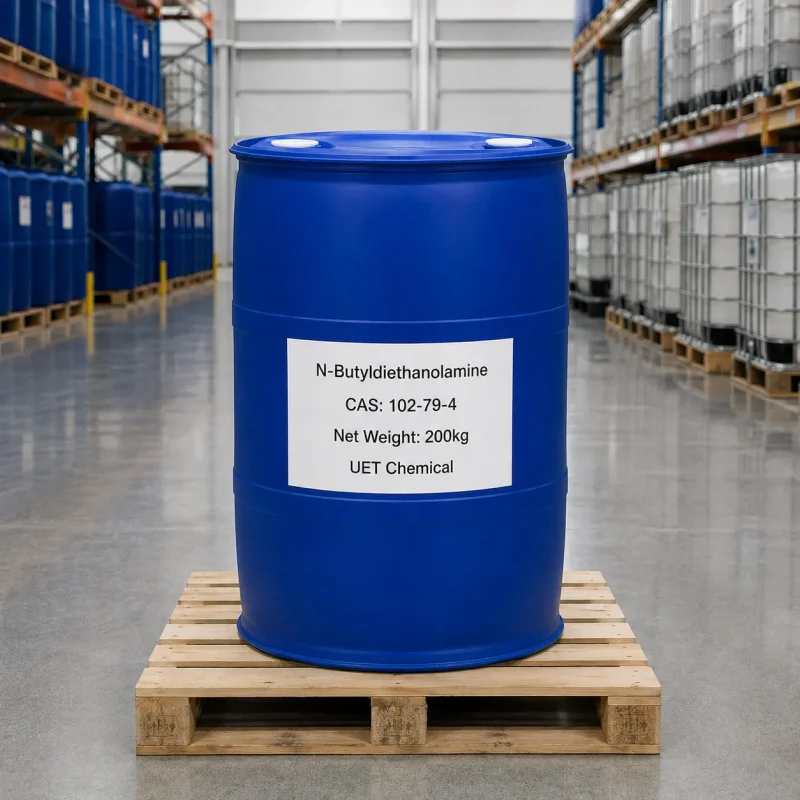
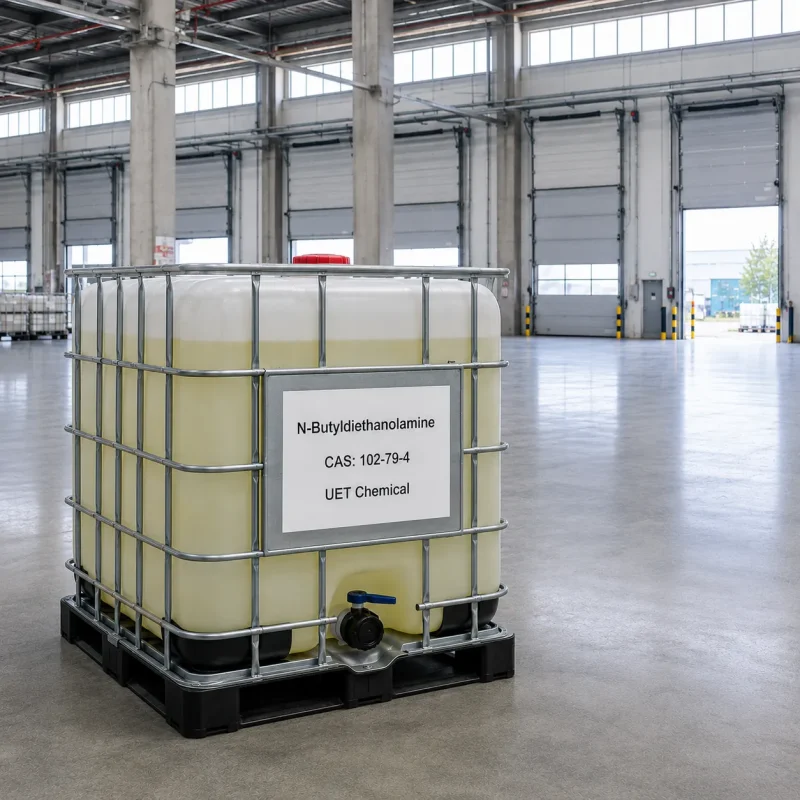
- Packaging: 200 kg (441 lb) HDPE drum, 1000 kg (2205 lb) IBC. Custom packaging available upon request.
- Main Applications: Gas sweetening, metalworking fluids, polyurethane catalysts, textile auxiliaries
Introduction to N-Butyldiethanolamine
N-Butyldiethanolamine is a tertiary alkanolamine composed of a central nitrogen atom bonded to one butyl chain and two hydroxyethyl groups. The molecular structure provides both an alkaline amine site and two polar hydroxyl groups. In aqueous environments, the molecule acts as a weak base, accepting protons to form water-soluble salts. Chemical plants utilize this liquid intermediate to synthesize surfactants, formulate corrosion inhibitors, and capture acidic gases. The material exists as a hygroscopic, clear liquid with a mild ammonia-like odor at room temperature.
Key Features of BDEA
- Tertiary amine structure: Lacks N-H bonds, allowing for selective reaction kinetics with hydrogen sulfide over carbon dioxide in gas scrubbing systems.
- Dual hydroxyl groups: Provide strong hydrogen bonding capabilities, ensuring complete miscibility with water and polar organic solvents.
- Aliphatic butyl chain: Modifies the hydrophobic-lipophilic balance, improving compatibility with non-polar oils in emulsion formulations.
BDEA Chemical & Physical Properties
| Property | Value |
|---|---|
| Molecular Formula | C8H19NO2 |
| Molecular Weight | 161.24 g/mol (161.24 lb/lbmol) |
| Appearance | Colorless to pale yellow clear liquid |
| Boiling Point | 165 °C (329 °F) at 15 mmHg |
| Density | 0.97 g/cm³ (8.09 lb/gal) at 20 °C (68 °F) |
| Flash Point | 154 °C (309 °F) closed cup |
| pH (10% aqueous) | 10.5 – 11.5 |
| Solubility | Completely miscible with water |
Applications of BDEA
Gas sweetening and scrubbing: Formulated into aqueous solutions at 20-50% concentrations to remove hydrogen sulfide from natural gas and refinery streams. The tertiary amine structure provides selective H2S absorption. Operators often cross-reference N-Methyldiethanolamine (MDEA) to design blended amine solvents that optimize regeneration energy and absorption kinetics.
Metalworking fluids: Acts as an alkaline reserve and emulsifier in water-soluble cutting oils. It neutralizes acidic byproducts generated during machining and prevents rust on ferrous metals. Formulators pair it with Triisopropanolamine (TIPA) to broaden the corrosion inhibition profile across different water hardness levels.
Polyurethane catalysis: Used as a co-catalyst in flexible and rigid foam production. The hydroxyl groups react with isocyanates, incorporating the amine permanently into the polymer matrix and eliminating long-term VOC emissions and odor issues in finished foams.
Storage & Safety Precautions for BDEA
- Oxidation and color control: Store drums tightly sealed and preferably blanketed with nitrogen. Exposure to air and light oxidizes the amine, turning the liquid dark yellow or brown. Facilities often run Calcium Chloride Anhydrous in warehouse dehumidifiers to maintain dry ambient conditions and protect bulk inventory from moisture ingress.
- Corrosion and PPE: The liquid is alkaline and corrosive to skin, eyes, and copper alloys. Wear chemical splash goggles, rubber aprons, and nitrile gloves during drum decanting. Use stainless steel or HDPE for storage tanks; avoid copper and brass fittings.
- Field note: When preparing aqueous amine blends, always add the BDEA slowly to cold water while stirring. Dumping water into concentrated amine generates excessive exothermic heat and can cause the solution to boil over or splash.
BDEA FAQ
Q: How does N-Butyldiethanolamine (BDEA) work in gas sweetening?
A: BDEA acts as a selective absorbent for hydrogen sulfide (H2S) in natural gas streams. The tertiary amine group reacts reversibly with acidic gases, while the hydroxyl groups keep the amine highly soluble in aqueous solutions, preventing precipitation in the scrubber tower.
Q: Is N-Butyldiethanolamine safe for metalworking fluids?
A: N-Butyldiethanolamine provides excellent corrosion inhibition and emulsion stability in water-based metalworking fluids. Its alkaline reserve neutralizes acidic byproducts generated during machining, protecting ferrous metals from rust and extending the coolant sump life.
Q: Why does BDEA turn yellow during storage?
A: BDEA oxidizes slowly when exposed to air and light, forming colored degradation products. To maintain water-white clarity, store N-Butyldiethanolamine in tightly sealed, opaque HDPE drums under a nitrogen blanket. Keep the warehouse temperature below 30 °C to slow oxidation.
Related products
Manufacturer & Exporter Since 2006
Get Tailored Chemical Raw Material Solutions — Reply Within 1 Hour
Factory-direct pricing, stable high-purity supply and complete compliance documentation for your industrial formulations.
- 1000+Products
- 200+QC Protocols
- 7–15Days Delivery
- Factory-Direct Pricing
- COA / TDS / SDS Included
- Free Samples for Testing
- 40+ Export Countries
Request a Free Quote
Our engineers reply within 1 hour during GMT+8 business hours.
Please include in your inquiry:
- Product name or CAS number
- Required quantity
- Destination country or port
- Preferred packaging