
Neodecanoic Acid CAS 26896-20-8
Neodecanoic Acid is a highly branched synthetic saturated carboxylic acid containing ten carbon atoms, solving the poor solubility and crystallization issues of metal soaps in non-polar solvents. Coating and plastic manufacturers rely on it for manufacturing alkyd paint driers, PVC heat stabilizers, and extreme-pressure grease thickeners. UETChem supplies this product with strict control over acid value and color, ensuring exceptional resin compatibility and long-term storage stability. Each shipment includes COA, TDS, SDS.
- CAS No: 26896-20-8
- Synonyms: Versatic 10 acid; Neoheptanoic acid (homologue mixture); Tertiary decanoic acid
- EINECS: 248-093-9
- Molecular Formula: C10H20O2 (isomer mixture)
- Molecular Weight: 172.27 g/mol (172.27 lb/lbmol)
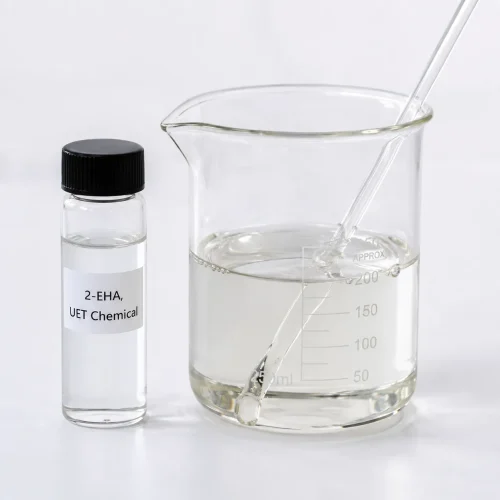
- Appearance: Colorless to pale yellow transparent liquid
- Acid Value: 320 – 330 mg KOH/g
- Density: 0.91 – 0.92 g/cm³ (7.6 – 7.7 lb/gal)
- Moisture: 0.1% max
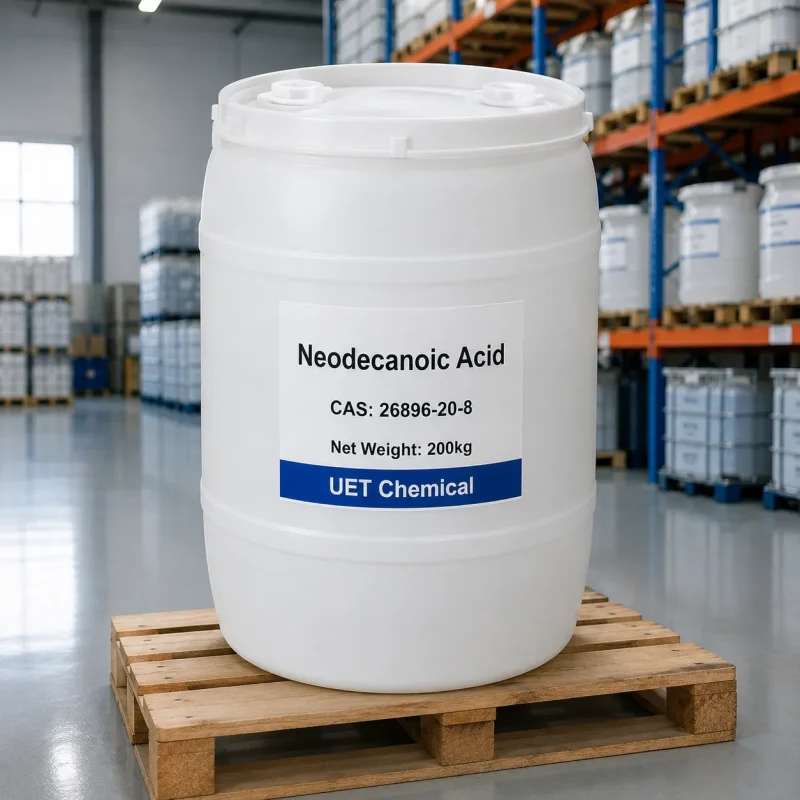
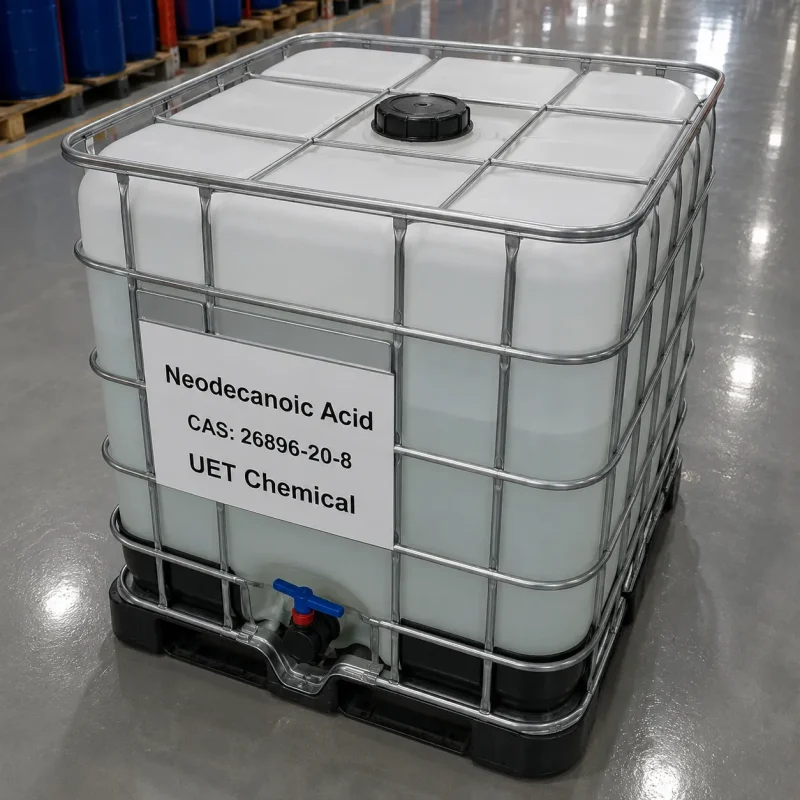
- Packaging: 190 kg (419 lb) HDPE drum, 1000 kg (2205 lb) IBC. Custom packaging available upon request.
- Main Applications: Paint driers, PVC stabilizers, lubricant additives, metalworking fluids
Introduction to Neodecanoic Acid
Neodecanoic Acid is a highly branched synthetic saturated carboxylic acid containing ten carbon atoms. The molecular structure features a quaternary carbon atom at the alpha position relative to the carboxyl group. This heavy branching prevents the molecules from packing tightly, keeping the material in a liquid state at room temperature. Chemical manufacturers utilize this C10 acid to synthesize metal carboxylates, commonly known as metal soaps. The substance presents as a colorless to pale yellow viscous liquid with a mild, characteristic fatty odor. The compound remains insoluble in water but dissolves readily in aliphatic and aromatic hydrocarbons, esters, and ketones.
Key Features of Neodecanoic Acid
- Alpha-branching structure: The quaternary carbon adjacent to the carboxyl group provides immense steric hindrance, protecting the ester or metal-carboxylate bond from hydrolysis.
- Liquid state at room temperature: Eliminates the need for melting or heating during the manufacturing of metal soaps and catalyst blends.
- High solvency power: Metal salts derived from this acid exhibit exceptional solubility in mineral spirits, alkyd resins, and polymer matrices without crystallizing out.
Neodecanoic Acid Chemical & Physical Properties
| Property | Value |
|---|---|
| Molecular Formula | C10H20O2 (isomer mixture) |
| Molecular Weight | 172.27 g/mol (172.27 lb/lbmol) |
| Appearance | Colorless to pale yellow transparent liquid |
| Acid Value | 320 – 330 mg KOH/g |
| Density | 0.91 – 0.92 g/cm³ (7.6 – 7.7 lb/gal) at 20 °C |
| Boiling Point | ~265 °C (509 °F) |
| Flash Point | > 100 °C (212 °F) closed cup |
Applications of Neodecanoic Acid
Paint driers and catalysts: Reacts with metal hydroxides to form neodecanoates of cobalt, zirconium, and manganese. These metal soaps act as primary and secondary driers in alkyd paints. Formulators often blend these liquid driers with resins like Bisphenol A Epoxy Resin to accelerate oxidative crosslinking in industrial coatings.
PVC heat stabilizers: Neutralized with Zinc Oxide to produce zinc neodecanoate. This highly soluble zinc soap acts as a primary heat stabilizer in rigid and flexible PVC compounds, scavenging labile chlorine atoms and preventing discoloration during extrusion.
Lubricant additives and grease thickeners: Used to manufacture metal soaps that thicken synthetic lubricating oils. The bulky alkyl chains provide excellent shear stability and water resistance in extreme pressure greases.
Storage & Safety Precautions for Neodecanoic Acid
- Moisture and storage: Store in tightly sealed HDPE or stainless steel drums between 10 °C and 30 °C (50 °F – 86 °F). Although stable, water ingress can cause cloudiness. Facilities run Calcium Chloride Anhydrous in warehouse dehumidifiers to maintain dry ambient conditions and protect bulk liquid inventory.
- Handling and PPE: Wear splash goggles and nitrile gloves. The liquid is mildly irritating to skin and eyes. Clean spills with absorbent clay to prevent slip hazards.
- Field note: When synthesizing metal soaps, pre-heat the acid slightly if crystallization occurs during cold transit. Pumping solid mass damages transfer equipment and ruins batch homogeneity.
Neodecanoic Acid FAQ
Q: How does Neodecanoic Acid improve PVC heat stabilizers?
A: Neodecanoic Acid reacts with zinc compounds to form highly soluble zinc neodecanoate. This liquid soap disperses uniformly in the PVC melt, rapidly scavenging labile chlorine atoms and preventing early discoloration. The steric bulk prevents the stabilizer from blooming to the surface.
Q: Why is Neodecanoic Acid preferred for alkyd paint driers?
A: Neodecanoic Acid produces liquid metal soaps that remain completely soluble in alkyd resins and mineral spirits. Unlike straight-chain acids, the bulky alpha-branched structure prevents crystallization, ensuring consistent drying performance and long shelf life in paint formulations.
Q: Does Neodecanoic Acid freeze during winter transit?
A: Neodecanoic Acid has a low pour point but can solidify if exposed to freezing temperatures below 5 °C. To restore the liquid state, gently warm the drums to 25 °C using warm air or a low-temperature band heater. Avoid localized high heat, which causes thermal degradation and darkening.
Related products
Manufacturer & Exporter Since 2006
Get Tailored Chemical Raw Material Solutions — Reply Within 1 Hour
Factory-direct pricing, stable high-purity supply and complete compliance documentation for your industrial formulations.
- 1000+Products
- 200+QC Protocols
- 7–15Days Delivery
- Factory-Direct Pricing
- COA / TDS / SDS Included
- Free Samples for Testing
- 40+ Export Countries
Request a Free Quote
Our engineers reply within 1 hour during GMT+8 business hours.
Please include in your inquiry:
- Product name or CAS number
- Required quantity
- Destination country or port
- Preferred packaging